It's taken me a while, but I've finally finished processing my new revenue acquisitions from INDYPEX, as well as a few others I've gotten from
ebay.
First are a pair of educational pieces that I bought solely to showcase how varied and slipshod the production of these early revenues was, and how important it is to view any and all high-value pieces with strong scrutiny.
In another thread, I posted this stamp and asked whether it was a legitimate R3b:
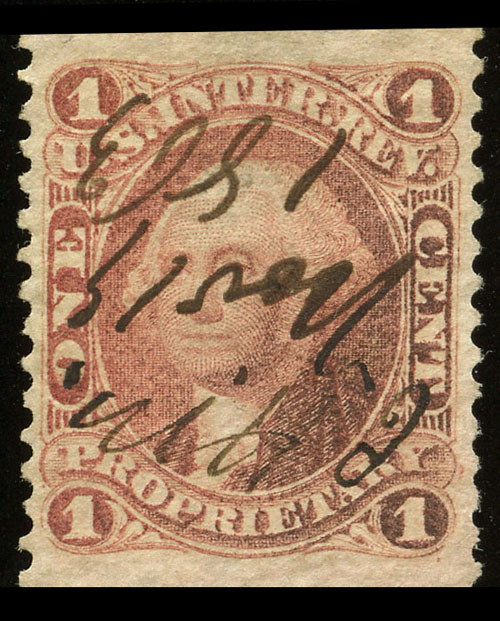
Outwardly, the margins at top and bottom appear sufficient to be a true part perf. Well, it was a trick question, as the image is a result of my digitally cropping the stamp below, which I picked up for a buck. The overly large top and bottom margins are the VERY thing that a faker would look for, trim off the top and bottom, thus turning a $1.00 stamp into a $250 stamp.
It's a scary proposition, because the margins above are as large as, or larger than, purported R3b's I've seen in major national dealer inventories...

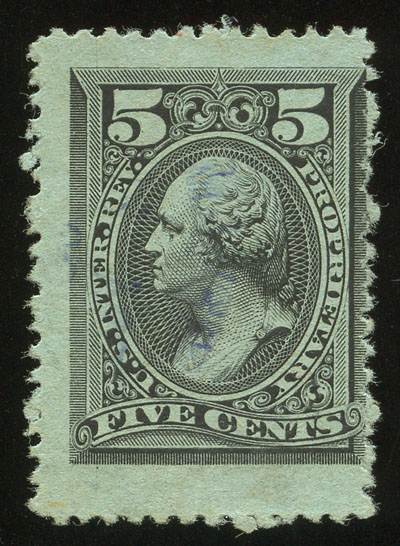
The next one is an RB16b. I bought it because of the 3 overly large margins, especially the top and bottom, which show how easily this could be turned into an extremely valuable RB16c roulette (RB16b catalogs for $125, whereas an RB16c catalogs $1,850.00). Now obviously this stamp itself would not be a good candidate for alteration because the right margin is into the design, but what about the other stamps from this same row on the sheet? Odds are that at least one or more would have better horizontal centering while retaining the same jumbo vertical margins.
Do not, under any circumstances, buy one of the expensive c roulettes without a major certificate.
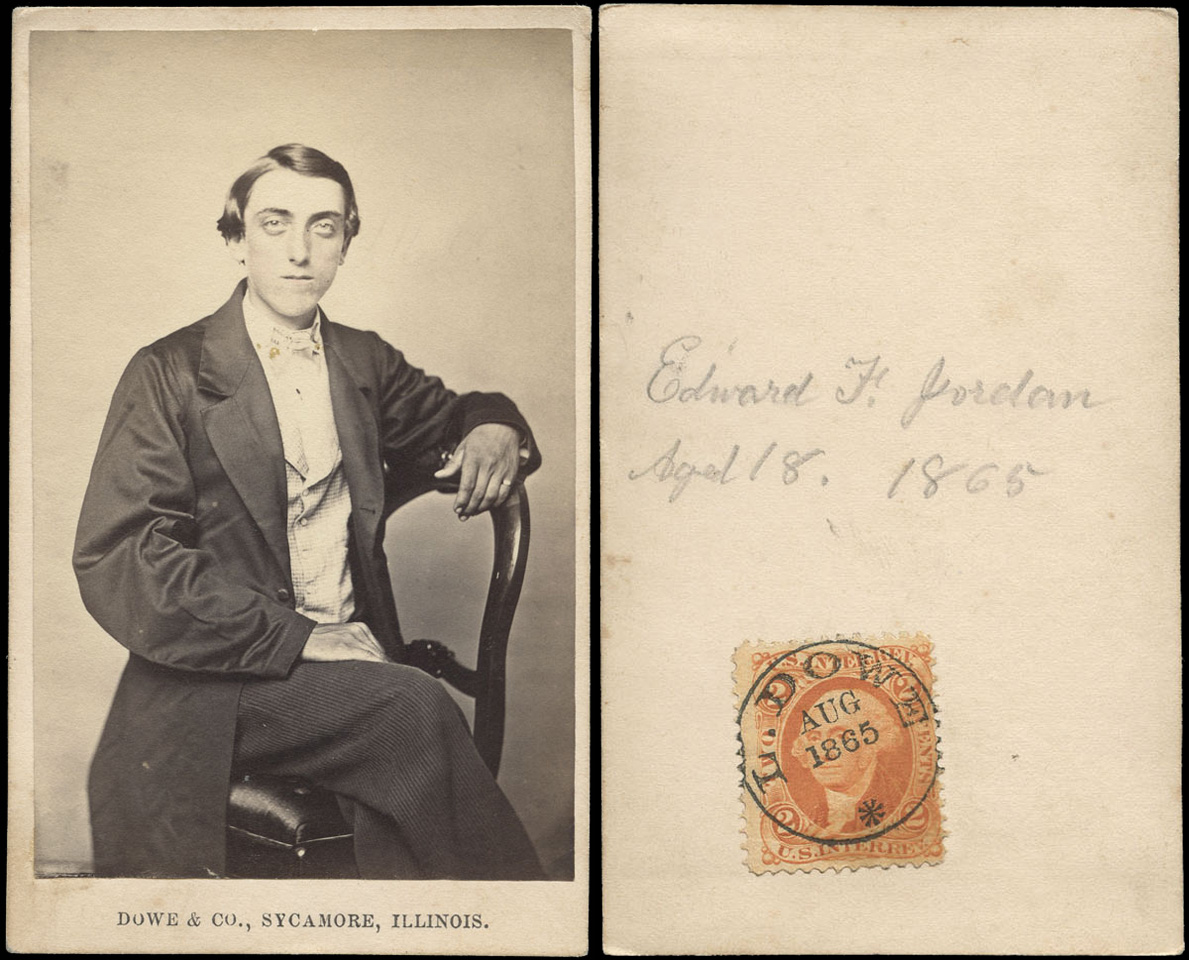
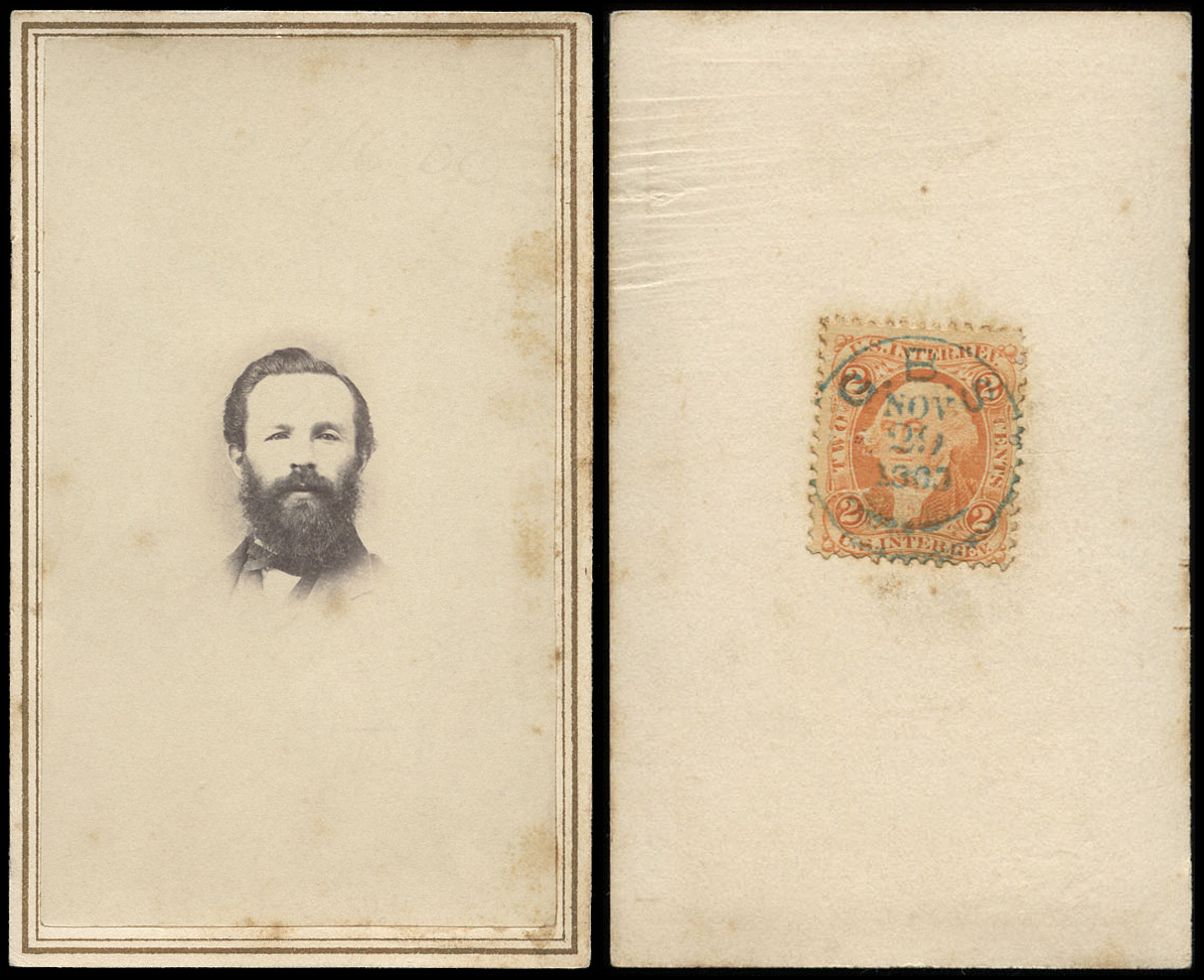
Next, a couple of CDVs (Carte de visite), or basically Civil War-era photographs with stamps that have nice handstamps. Note that the cancels are not tied to the photographs themselves. Unlike with covers, where this would be a sure sign of fakery, this was actually the norm with CDVs. Phtographers would precancel sheets of stamps, so that when affixed to the photos, they didn't have to worry about wet cancel ink offsetting onto the next photo stacked on top.
Next are some cancels.
This one is a shame, because the stamp catalogs $160, but the damage pretty much makes it useless, other than having a nice magenta cancel.
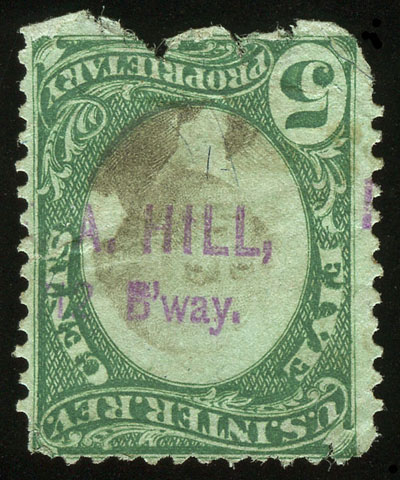
This one is a neat split strike.
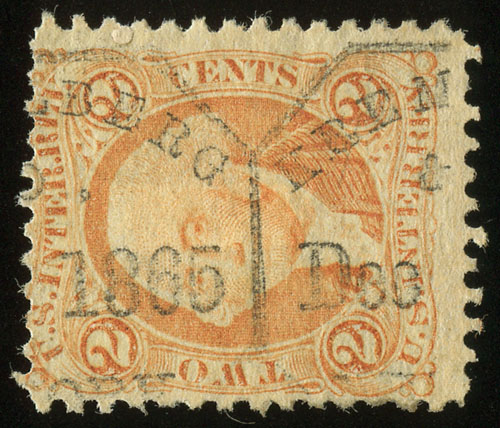
Not overly scarce, but a nice ornate late Adams Express Co. cancel.
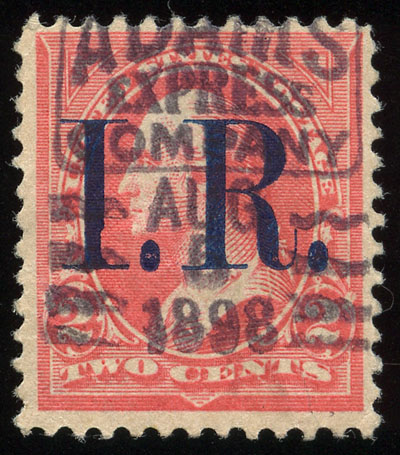
Triangular cancels are fairly unusual. I have no idea about the company in question.
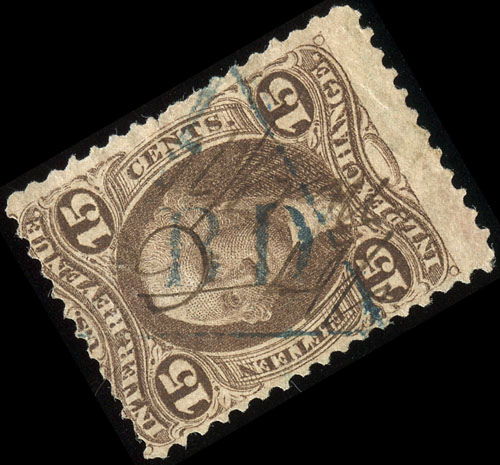
A couple of geometrical design cancels. I've seen these used on postage stamps of the period.
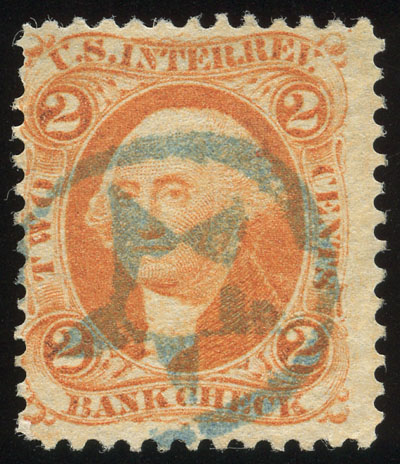
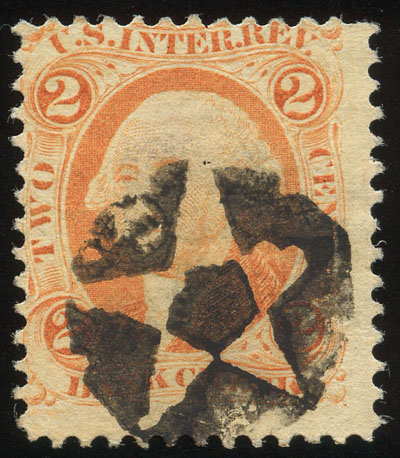
This one uses an unusual symbol or dingbat in the center of the cancel.
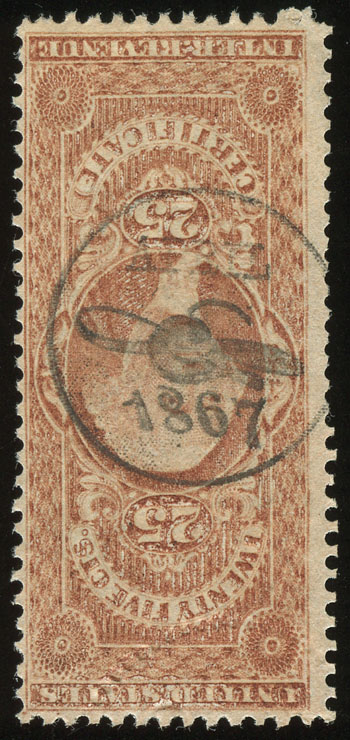
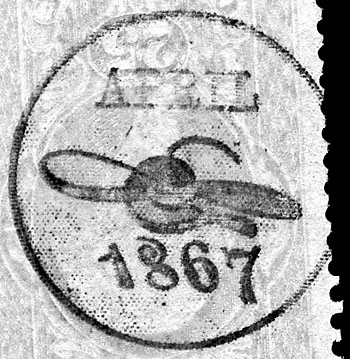
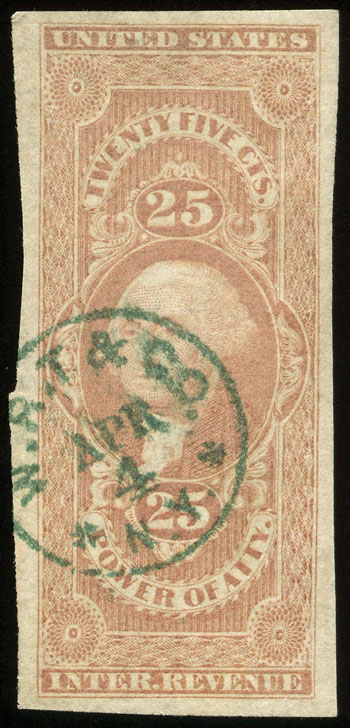
This one has a double strike, but what is curious is the boxed "O" or circle at bottom. Any ideas?
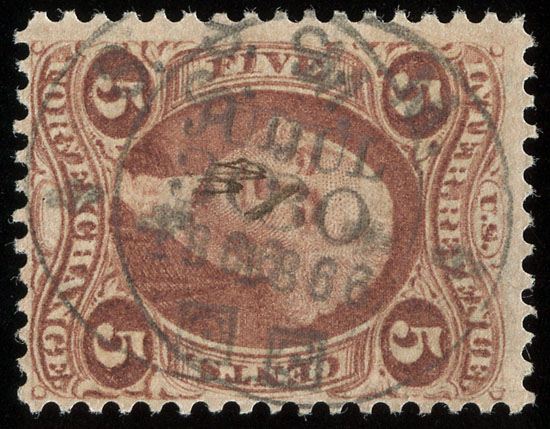
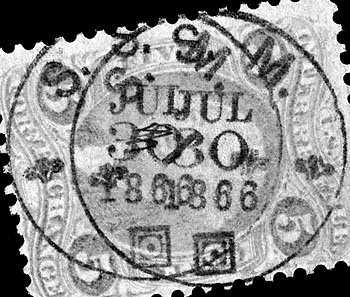
This one is has a neat boxed design, almost simulating the perforations of a stamp.
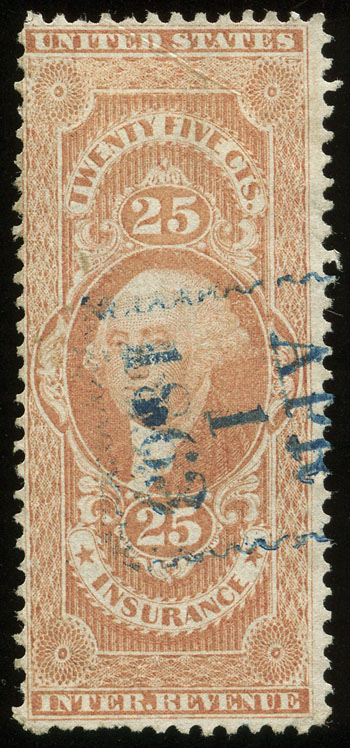
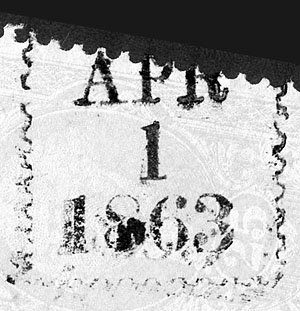
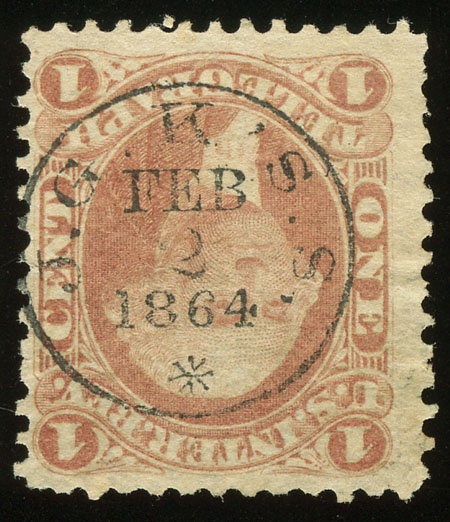
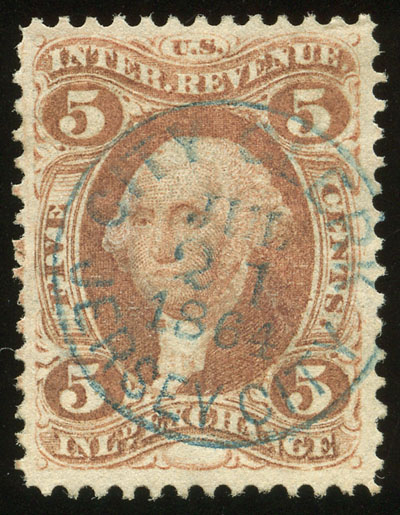
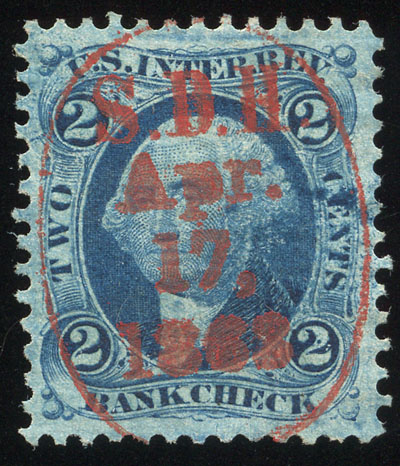
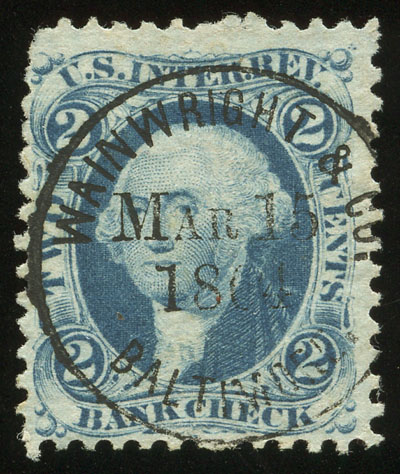
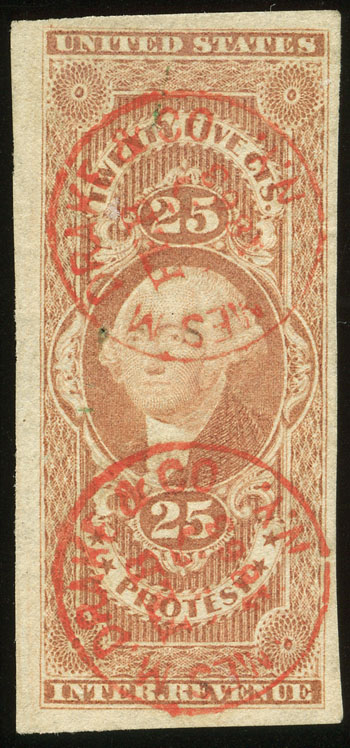
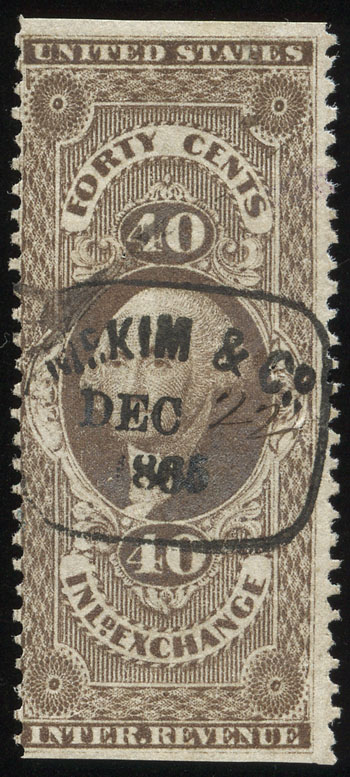
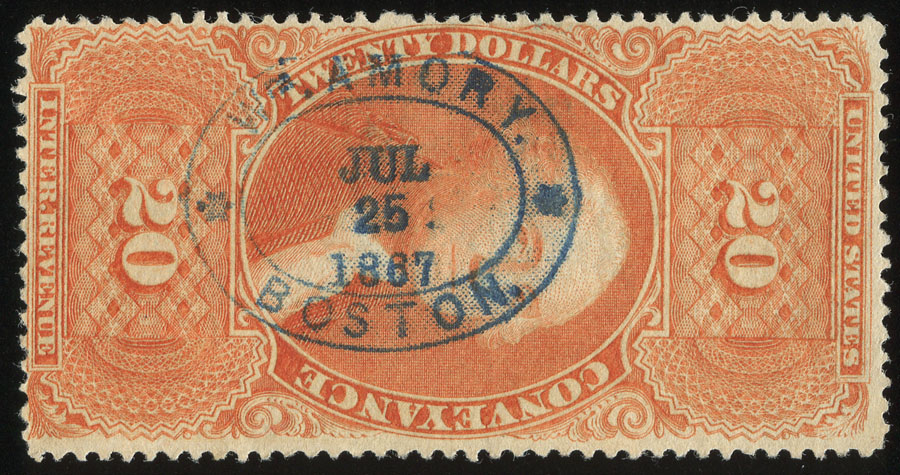
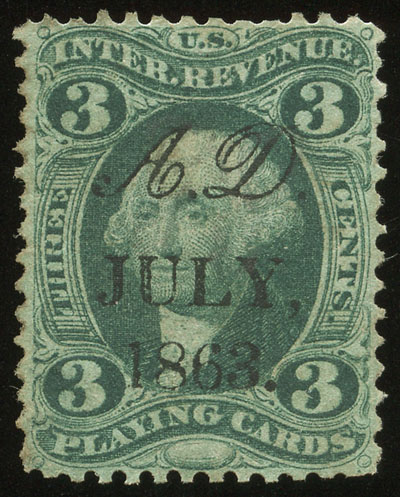
A bunch of random and sundry cancels that caught my eye due to design, strike, company/city, or color (like with postal cancels, cancels in green ink are exceptionally rare).
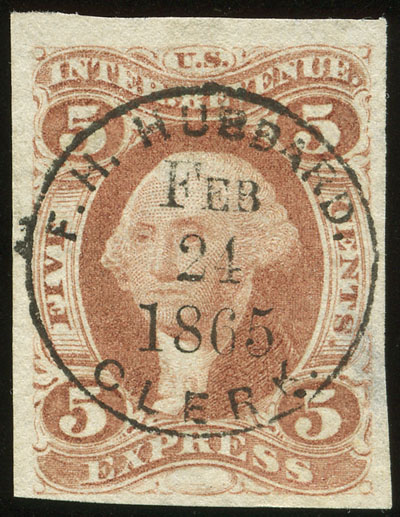
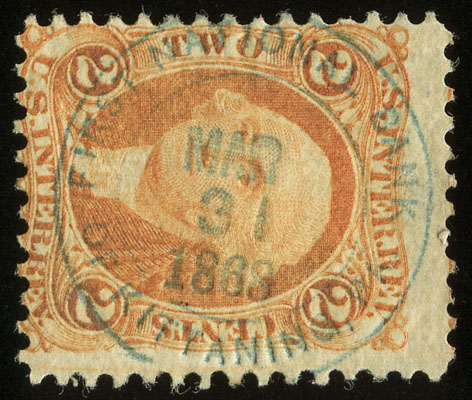
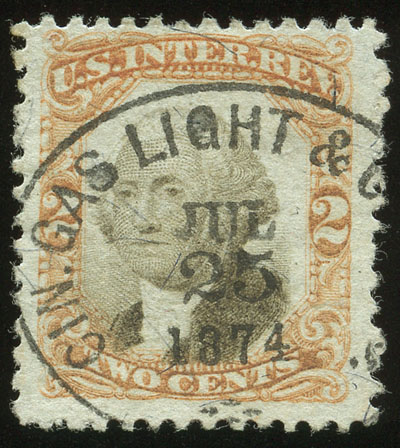
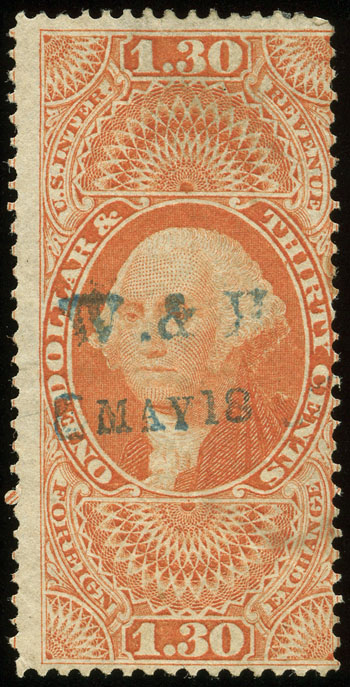
Now we get into 1st issue silk papers. This is an area I've been concentrating on for the last year or so, and keep an eye out for any and all that I can find, for several reasons:
1. Some of the denominations/types are more scarce than their catalog values imply, despite their having gotten a boost in Scott about 2 years ago.
2. Most dealers couldn't identify a real 1st issue silk paper if it bit them in the butt. The vast majority I find in dealer inventories are NOT silk papers, but are rather stamps with chunks of wood pulp showing, or have debris stuck to the back of the stamp.
This second point cuts both ways though... it creates opportunities for cherrypicking, if you know what to look for. Case in point: I was able to find six silk papers at INDYPEX not identified as such by the dealers selling them, meaning I was able to pick them up at less than 10% of Scott.
I've decided to start accumulating and imaging multiple examples of the various 1st issue silks, so that people can get a visual idea of what to look for. Even within the silk papers, there are variances in the length, thickness, and density of the blue silk fibres from one stamp to another. You may find a silk paper stamp that has 10-15 fibres, and on another type you may have cases where there is less than 1 fibre per stamp, e.g., in a block of 4 only 2 of the stamps show a blue fibre. Both are legitimate silk papers, but appear vastly different.
I have higher-resolution versions of these images on my website, where you may be able to see the blue silk threads clearer. In some cases you may see blue silk threads on the face of the stamp in addition to the back, but I have not indicated those in the images.
These are all new acquisitions:
R3d
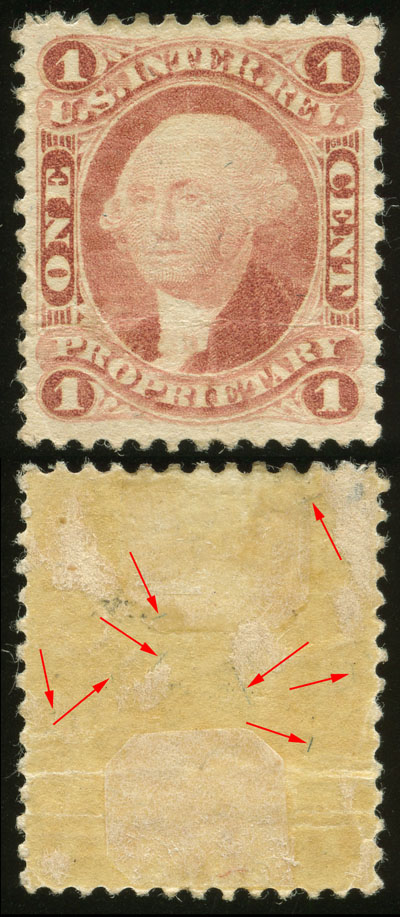
R10d
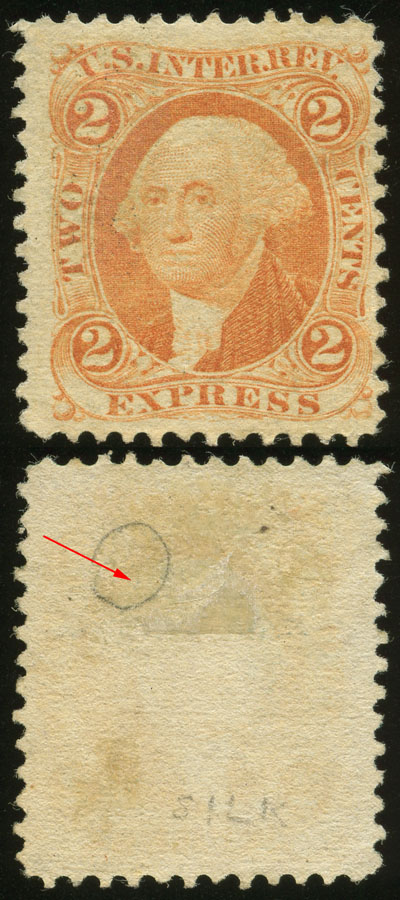
R16d
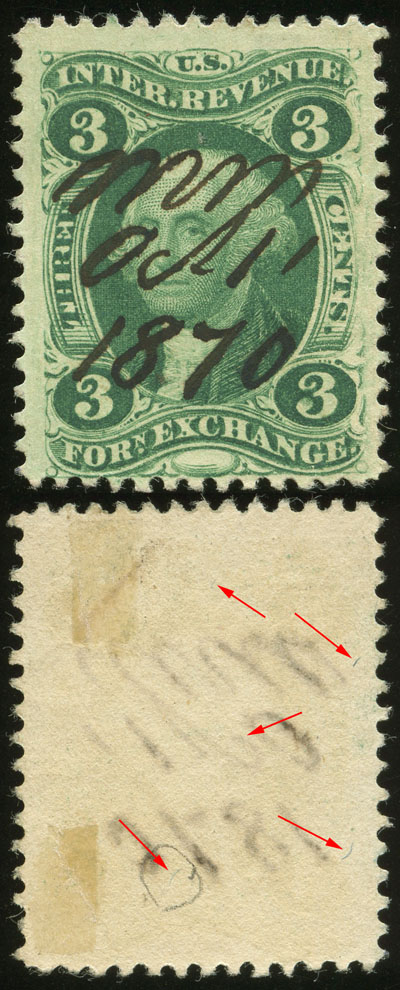
R18d
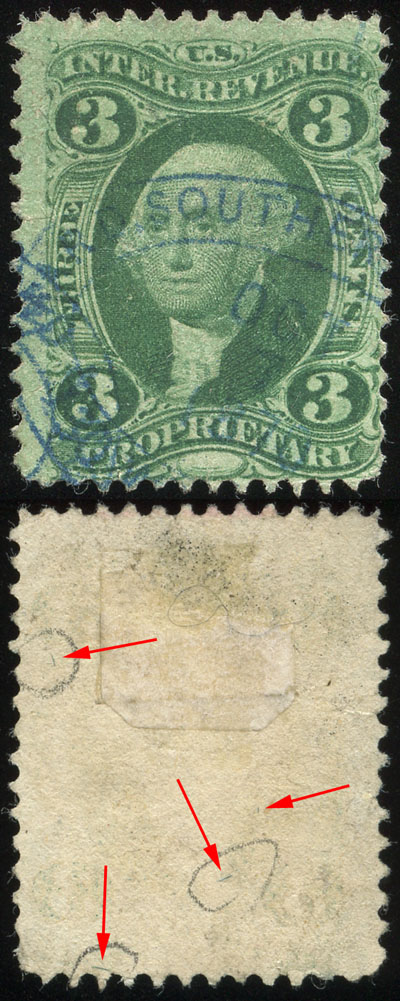
R18d
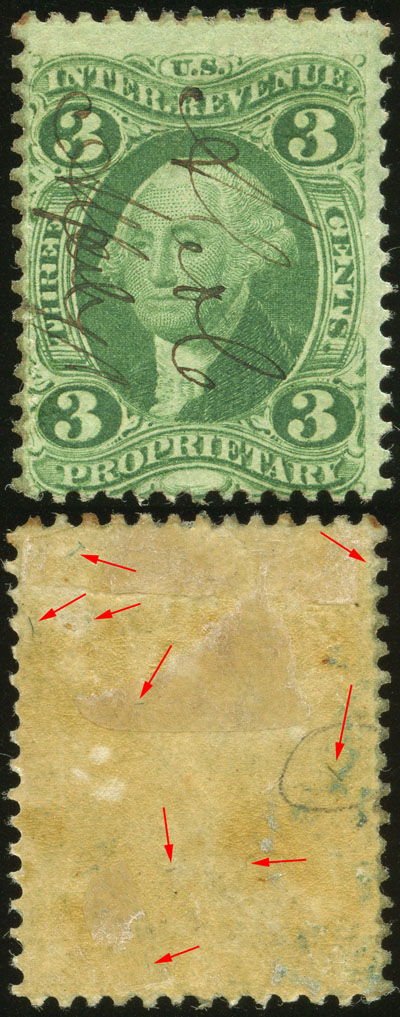
R22d
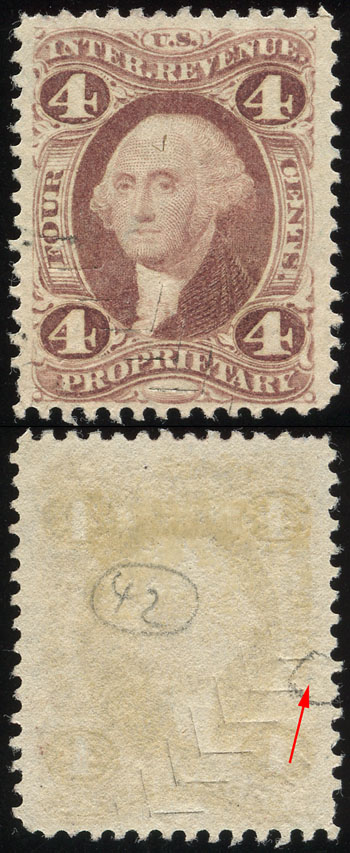
R30d
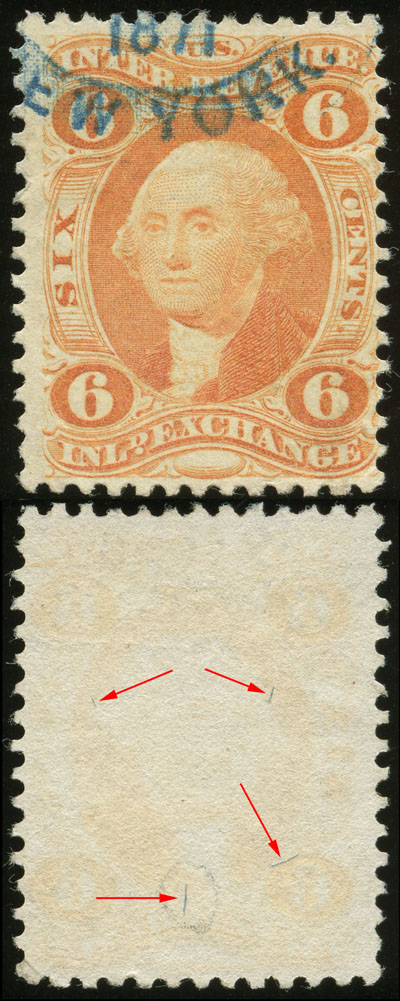
R30d
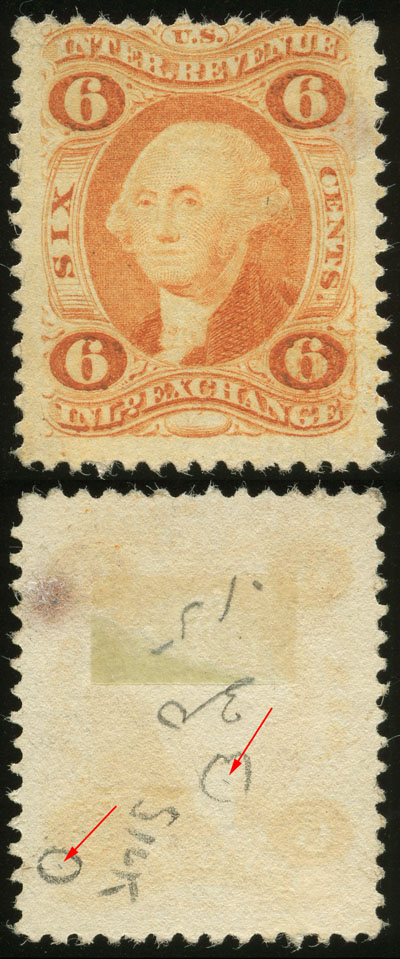
R89d
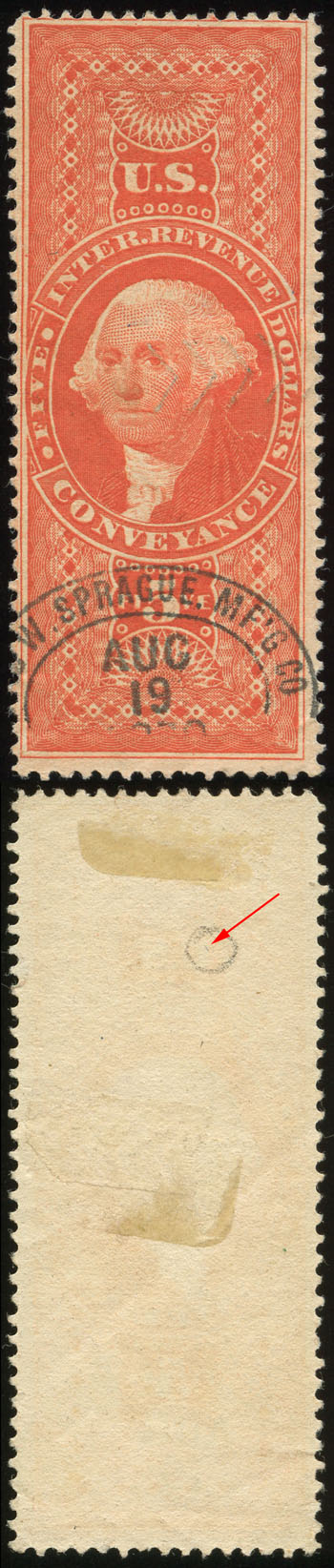
And lastly, the "neat stuff", or the pieces I was quite happy to find.
R78c DT. A nice example of double transfer, with the transfer quite prominant at top and at various points throughout.
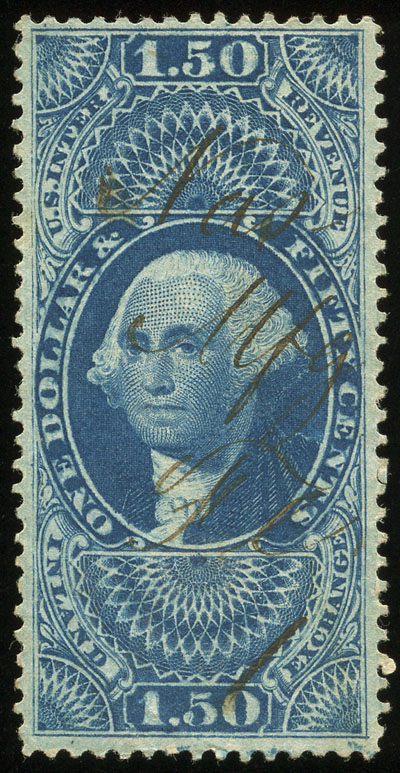
R112b. I've always liked the sewing machine perfs.
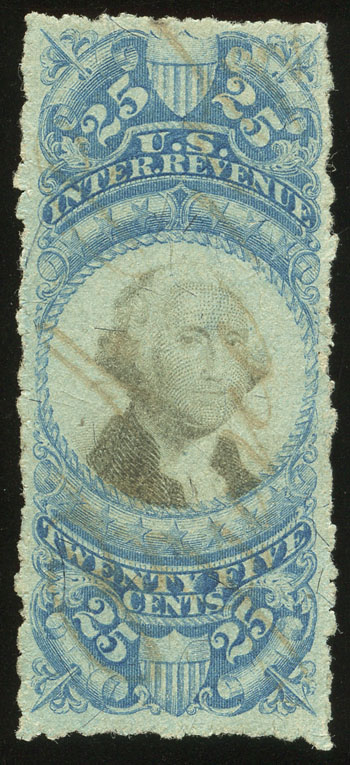
R13e. Another example of a dealer not paying attention to color differences. It's got a few creases, but rather than an R13c that catalogs 40 cents, the R13e catalogs $300.00.

R84c. A fairly common stamp, but this example has it all. Not only a strong bullseye cancel, but the brighest shade of blue I've ever seen this stamp appear in (the "violet" ink used in R84c is extremely stable and can appear in violet, brown, gray, green, blue, and all shades in between).
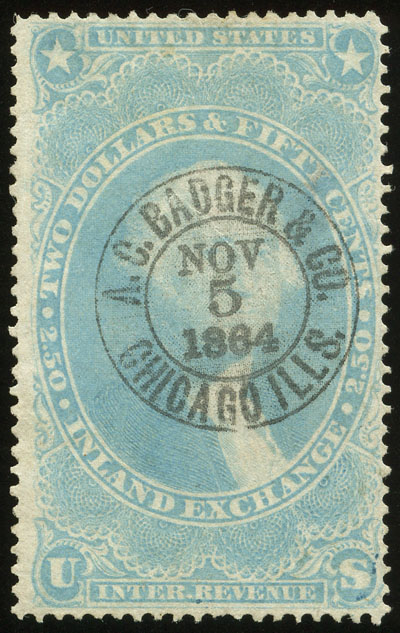
R40ce. It's beat to hell and back, with multiple faults, but it's a truly legitimate double impression. I already have one that is in much nicer condition, so why did I buy this? Simple: they almost never appear on the market, regardless of condition, and the population of known examples is very small. You just don't see them. The price in Scott has not been adjusted in 15+ years, and is almost universally ignored whenever one does come up. The price was right, so I figure it's not a bad long-term hold. They're just not out there.
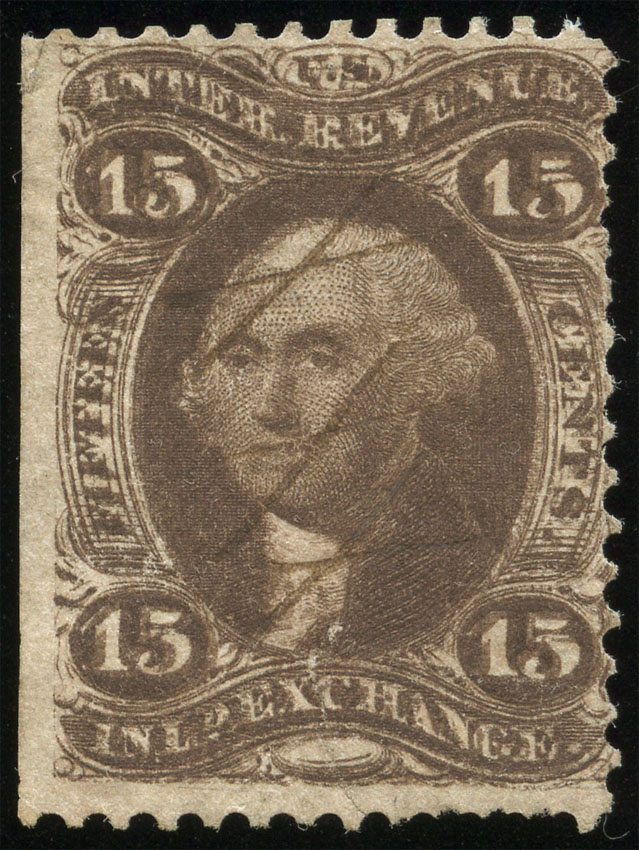
R150. You NEVER see these with socked-on-the-nose handstamp cancels. Ever. Go search though SAN, Siegel, and PFSearch. You won't find one. This one has a light cut cancel, which actually made it more affordable, and IMO doesn't detract from the overall presentation. If not for the cut cancel, it probably would have been priced in the $800-1,000 range.
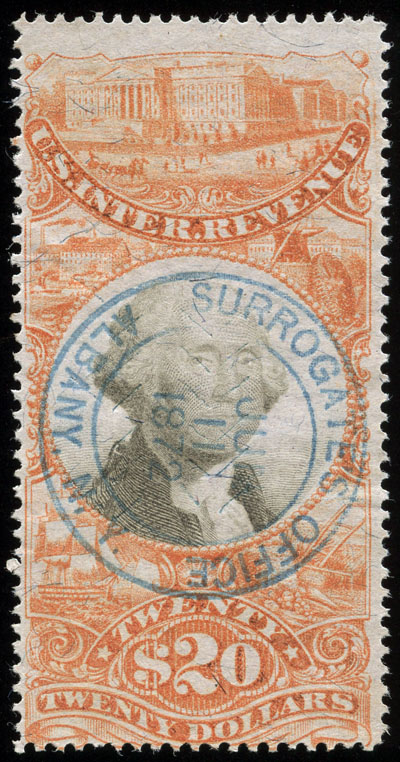
Until the next show...





 Posted 10/08/2011 01:19 am





