In January 1920,
Albanian leaders met in Lushnjë and laid the foundations of a new government. In February the government moved to Tirana and it became the capital. By December, with the help of Britain, Albania gained admission to the League of Nations as a sovereign and independent state (with the 1913 boundaries) winning international recognition for the first time.
At the start of the 1920s, Albanian society was divided by two apparently irreconcilable forces. One, made up mainly of deeply conservative landowning beys and tribal bajraktars who were tied to the Ottoman and feudal past, was led by Ahmed Bey Zogu, a chieftain from the Mat region of north-central Albania. The other, made up of liberal intellectuals, democratic politicians, and progressive merchants who looked to the West and wanted to modernize and Westernize Albania, was led by Fan. S. Noli, an American-educated bishop of the Orthodox Church. In the event, this East-West polarization of Albanian society was of such magnitude and complexity that neither leader could master and overcome it. (Besnik)
Albania's first elections were in 1921. From then until 1924 the country underwent frequent changes of government.
In July 1924 a peasant-backed insurgency won control of Tirana and Fan Noli became Prime Minister. He set out to build a Western-style democracy, including major land reform and modernization, but there were no funds in the treasury and no international recognition.
Six months later that government fell too, to the armed assault of Zogu, backed by the Yugoslav army. The son of a central highland chief and educated in Istanbul, Zogu started up the ladder of Turkish imperial power, but returned home at the time of Albanian independence. Having held a number of positions in the earlier Albanian governments, he maintained authority first as president (1925-28) and then, arguing that it would promote stability, had himself declared King Zog I.
http://www.mcclear.net/albanians_&_culture.htm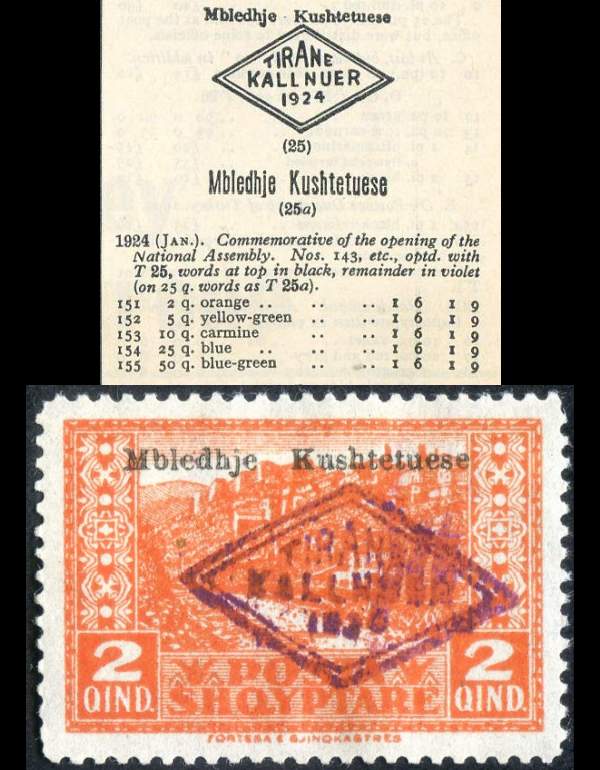





 Posted 11/05/2011 12:46 pm


