You are quite right rod, my apologies for the misconception.
The naming of the coin is not directly linked to the slave trade, but as you say it was as a result of much of the gold used in the coins originating from this part of Africa.
There are however numerous references to its involvement in slavery, and I offer this quoate from a recent book "World of a Slave - Encyclopaedia of the Material Life of Slaves in the United States" by Martha B Katz - Hyman and Kym S Rice.
"..the coins were so named because much of the gold used to produce them came from the Gold or Guinea coast of West Africa and was provided by the Royal African Company, which had been granted a monopoly of the Africa trade from 1672 until 1698. Coins produced from African gold bore the company's distinctive emblem below the monarch's head: an elephant or elephant and castellated howdah - an ornate canopied seat used for riding on camels or elephants.
All coins of this denomination, whether or not they bore the insignia of the Royal African company, came to be known as guineas.Because the company grew so prominently in the slave trade - to the extent that England was only second to Portugal and Brazil as the foremost exporter of slaves to the New World by the 17th century's end - guineas came to be associated with the traffic in human chattel. Another erason why the coins were linked to the slave trade may have been that some of the English entrepreneurs who originally were involved in mining African gold along the Guinea coast, later abandoned that venture to pursue what became a more lucrative trade in the seizure and export of native peoples from the adjacent Bight of Benin, which came to be known as the slave coast..."
I am not aware of any stamp which depicts a guinea coin on it - maybe there are thematic collectors out there that might prove otherwise?
The other coin that has not yet appeared in this discussion if the "farthing" or quarter of a penny which was in use from saxo times up to the end of 1960. The coin had the image of a wren on the reverse. There was never a British stamp of this value, or a postal rate that incorporated it (though I think early postal stationery cards cost an additional farthing on top of the postage). Some countries of the British Empire period did isssue stamps of this value and Malta issed a pictorial of a farthing value.
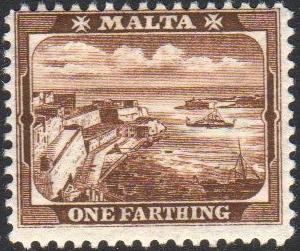





 Posted 01/09/2012 7:24 pm


