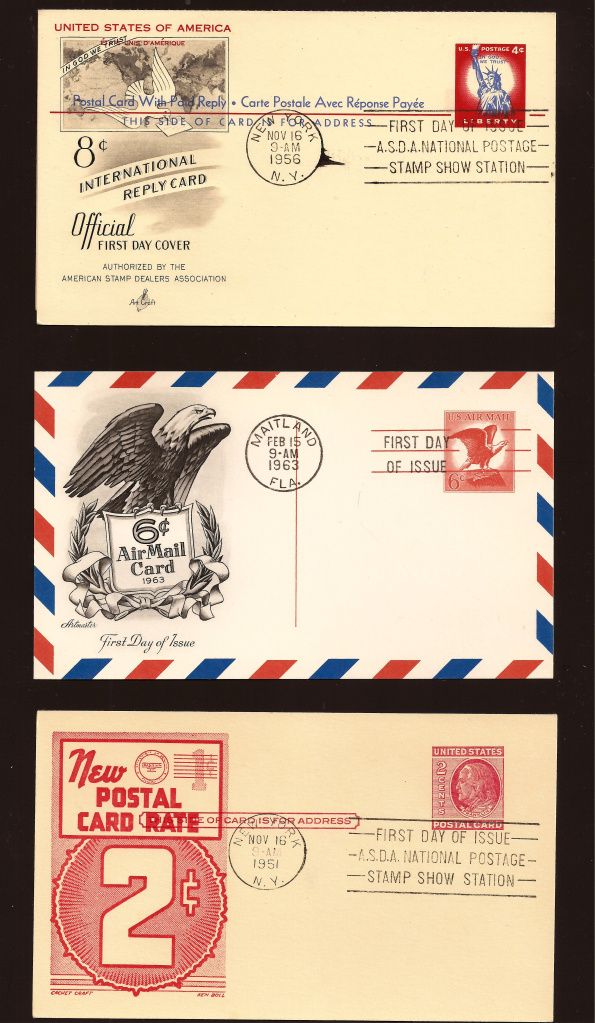
The two covers that you scanned are Artcraft, produced by the Washington Press, and are arguably the most common first day cover made today.
The "silk" first day cover have a "silk" image adhered to the cover (usually with a gold border around it). They are considered a bit more "exclusive" as less of them are made because it's a more involved process and, as with many kinds of cover collecting, some like them and others hate them, so it's more of a personal thing about their desirability.
Fleetwood had been an independent first day cover producer for a number of years and were recently bought out by Mystic, I believe. At one time, Fleetwood's cachets had been considered "better" in quality (and also higher cost) in that they were often multi-colored and some were produced on linen-based envelopes that gave a very nice appearance. As a result some found Fleetwood covers more desirable than the more common (and less expensive) ones from Artcraft, Artmaster, etc. However, as the years went on, Fleetwood began flooding the market with their wares and the values typically did not keep pace with the waning demand in first day cover collecting, so while they are nice looking, any perceived increase in value is marginal at best.
"Mystic" apparently sells their own line of first day covers (a quick check on
ebay lists a few). I don't have any of that type, but I suspect they are just another money making venture for the company, since the advent of cheap printing technologies allow virtually anybody to create their own cachets.
I'm not sure what a "Classic" first day cover is (in Mystic's terms) but I suspect it's a typical common first day cover of the generation in which they were made (i.e. Artcraft, Artmaster, Cachetcraft, House of Farnum, etc.) that were some of the more common cachetmakers of that time.
Some specialty covers (particularly the hand painted ones by notable artists) can command a significant premium over the value of a common one, often because they were created in very limited quantities. So it does pay to know the cachets and the artists, however, some of the catalogs that document many of these varieties can be very elusive to find and very expensive to acquire when they do come to market.





 Posted 05/23/2012 12:19 pm