| Author |
 Replies: 29 / Views: 10,564 Replies: 29 / Views: 10,564 |
|
|
|
Pillar Of The Community
1849 Posts |
|
|
Quote:
Does anyone have any suggestions as to who best can do so? Best is PSE or PSAG. PF is also good but takes longer. All 3 are highly recommended. |
Send note to Staff 
|
|
|
Rest in Peace
United States
763 Posts |
|
|
Quote:
Best is PSE or PSAG.
PF is also good but takes longer.
All 3 are highly recommended.
A not-unexpected biased opinion. In fact, I could do it for $5. and have it done in one day. I also specialized in multiple Banknote areas in my 45-year career including the 15c 1870-90 Stamp, New York Foreign Mail Cancellations (both of which I've written books on) and others and I examine nearly every Banknote stamp submitted to APEX (aside from whatever I get in my own expert service). |
|
Send note to Staff
|
|
|
Pillar Of The Community
United States
1946 Posts |
|
|
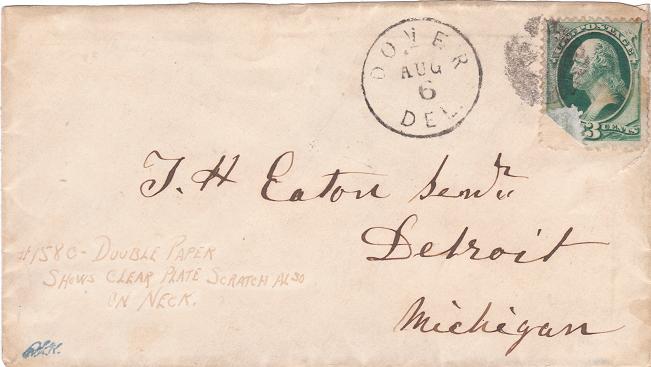
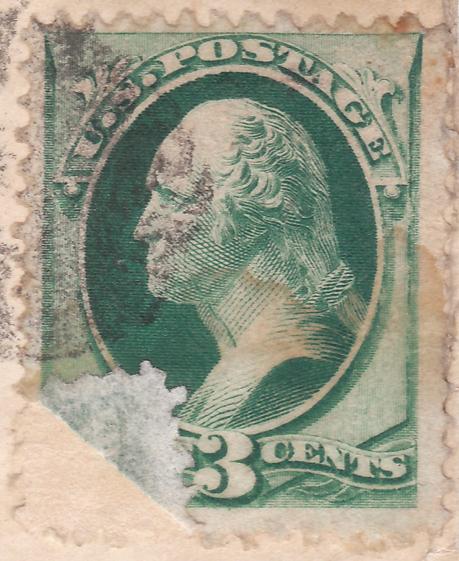
@jvalek - How do you intend to use the certificate? If you want to be sure in your own mind about the ID and/or grade of something, that is one thing. If you want a high profile cert that is going to be recognized as highly authoritative in the marketplace and will help you sell the item, that is something else.
Bill Weiss has a service that is quick and affordable and can give you a good sense about what something is. I would start with a cert from him that tells you whether or not to take it to the next level. That may be all you need, especially since there are numerous auction houses that will mention the fact that he has issued a cert in their description of an item. [Edit: Let me hasten to add that Bill distinguishes between a simple "opinion," for which the minimum is charged without issuing a certificate, and full certification for which a cert is issued. The fees are obviously different.]
However, if you are intent on establishing a provenance for your stamp, which you might well do if it is found to be a rarity (and a bonafide 30c on double paper might qualify) then you will want to pay the fees for a cert from one of the pre-eminent authorities. Here again though, if it's all about grade, then PSE gives you the most bang for the buck. Many auction houses, dealers, and well heeled collectors trust PSE grading above the competition. However, if it's about establishing the existence of a great rarity, then you want to go with the PF. They have the research capabilities and the track record that causes people to pay attention to their opinions, even when many thousands of dollars are at stake.
From where I sit as a Banknote specialist myself, the combo of starting with Bill Weiss and following up with the PF, asking them to certify the ID and the grade, if necessary, would be your best course whether you intend to sell the stamp or keep it for yourself. But beware of one thing: the PF does not charge a simple flat fee, but rather a percentage of the catalog value. A 165a has a dash for cat value, so the PF will poll its dealer members and consultants for a "reasonable" market value to use as the basis for their fees.
Those are my recommendations and reasons to you for this stamp (165a candidate). |
|
Send note to Staff
|
| Edited by essayk - 01/23/2015 09:20 am |
|
|
Valued Member
United States
7 Posts |
|
|
Pillar Of The Community
United States
3268 Posts |
|
|
Pillar Of The Community
United States
1414 Posts |
|
|
It may be that only one 30 cent 165a double paper example has been certified. Assuming others exist, the population is extremely small.
Clark |
|
Send note to Staff
|
| Edited by cfrphoto - 03/24/2015 10:59 pm |
|
|
Pillar Of The Community
United States
3268 Posts |
|
|
jvalek hasn't visited the board since Feb, perhaps still waiting on the certification. I would also like to read more on essyk's George Slone signed double paper Sc 166.
Would you know if Scott has added sub letters to the major numbers for the double papers? |
|
Send note to Staff
|
|
|
Pillar Of The Community
United States
1946 Posts |
|
|
You are venturing into an interesting question, Phil, one that has me doing some eyebrow raising and head scratching.
I have yet to learn the how or the why of this, but for reasons not known to me, Scott has given this 90c a special and separate treatment from the rest of the double papers. If you look in the Specialized at the numbers for stamps of the Continental Bank Note Co. (156-181 incl spec printings) you will see a double paper sublisting for every denomination except the 12c, 24c, and 90c. Presumably this reflects the fact that no examples of double paper for these three denominations are presently known.
The quandary, of course, is what do you do with a stamp that has been signed off by no less an authority than George Sloan? It appears that Sloan, or some group in association with him, did not feel that the upper layer met the same hardness standards as other double papers, and so it could not be a Continental 166. His/Their assessment of the upper layer impelled them to assert that it was a soft paper double paper, and so it is listed among the American Bank Note Co. products as a 191a.
To me this is a perfect example of the kind of confusion one can have by not properly observing, in the catalog, the stages in progress toward soft paper that took place during Continental's tenure of the contract. If you go back to the two exhibit pages I showed you earlier in this thread, I had taken the position already in 1991 that double paper is not all of one kind. Just how much variety there actually is has not been systematically investigated yet, to my knowledge.
Part of the problem is that some of the stamps on this paper are very rare and almost never encountered. Many, I think, go undetected. However, over time I have managed to get an example of most of the known denominations, excepting the 7c and the 30c, and will be doing a careful comparative study of them. I know of a few other students of the problem, but I am not privy to their work or progress since we are not in correspondence.
With that you know what I know about that 90c on double paper so far. |
|
Send note to Staff
|
| Edited by essayk - 03/25/2015 1:10 pm |
|
|
Pillar Of The Community
United States
3268 Posts |
|
|
Quote:
The quandary, of course, is what do you do with a stamp that has been signed off by no less an authority than George Sloan? It appears that Sloan, or some group in association with him, did not feel that the upper layer met the same hardness standards as other double papers, and so it could not be a Continental 166. His/Their assessment of the upper layer impelled them to assert that it was a soft paper double paper, and so it is listed among the American Bank Note Co. products as a 191a....
Part of the problem is that some of the stamps on this paper are very rare and almost never encountered. Many, I think, go undetected. Thank you essayk, so there are American soft paper double paper stamps as well as Continentals? I'm still having trouble identifing Continental double papers on cover, a bit easier off cover. |
|
Send note to Staff
|
| Edited by littleriverphil - 03/25/2015 1:50 pm |
|
|
Pillar Of The Community
United States
1946 Posts |
|
|
American did do some work with double paper, but that was later in conjunction with another patent. Whether or not American had anything to do with either of the grades of double paper we see prior to 1879 remains to be seen. I am dubious of that, but do not yet have a defensible basis for saying "no." The problem at the moment, however, is that the present listings of hard vs soft do not leave open an option for listing a comparatively soft double paper as a product of Continental. Hence the b-a-siterdized (mea culpa censors) listing of the 90c.
Edit comment: it's too bad that a perfectly functional word has been so prostituted in common speech that it can no longer be admitted to civil discourse. |
|
Send note to Staff
|
| Edited by essayk - 03/25/2015 3:29 pm |
|
|
Pillar Of The Community
United States
3268 Posts |
|
|
Quote:
it's too bad that a perfectly functional word has been so prostituted in common speech that it can no longer be admitted to civil discourse. Too true! |
|
Send note to Staff
|
|
|
Valued Member
United States
297 Posts |
|
|
Don't get me started on "myriad", "nonplussed" or "restive". Not to mention fewer vs. less, imply vs. infer or farther vs. further!  |
|
Send note to Staff
|
| Edited by Neeskens13 - 03/25/2015 5:15 pm |
|
|
Rest in Peace
United States
763 Posts |
|
|
Quote:
As long as we're on the subject of double paper and how to detect it, I just got this one a few days ago. What do you make of it?
I would love to see that stamp in person! There is a lot about it that doesn't make sense to me. First, Sloane was a highly regarded expert in his day. Among other things, along with George Howard and Sidney Harris they comprised the Expert Committee of the "VAMP" society (Vending and Affixing Machine Perforations - commonly called nowadays "Private Coils"). So I respect what's written on the back of that stamp. Based on the color and "look" of the stamp, I would lean more toward it being a 191 rather than a 166. But here's my questions; 1. The darker cancels at the bottom 2/3 of the stamp are obviously a "duplex" which was struck at the same time with one device. However, the cancel at the top is a completely different color shade. 2. The cancel at the top is apparantly (if my eyes aren't deceiving me) struck/applied **OVER** the area of the stamp that is whiter, indicating that whatever caused that white area was either there before the cancel was applied or the cancel is fake. 3. If it's fake, then that would indicate it's hiding something. So the questions are; A. What's it hiding? B. Is that whiter area what Sloane was referring to? Or is that white area independent of the double paper? C. If independent, then could that area at the top be a repair or added top margin with a fake cancel applied over it? |
|
Send note to Staff
|
|
|
Pillar Of The Community
United States
1946 Posts |
|
|
I will attend to the 90c asap, Bill, but I have three other projects in process right now (one of which was inspired by you) so I am taking your questions into advisement and will get back to you here. Part of the problem is that it is not easy to show an image of the layer separation, but I will figure something out. |
|
Send note to Staff
|
|
|
Replies: 29 / Views: 10,564 |
|




 Posted 01/22/2015 11:28 pm