Stamp Community Family of Web Sites
Thousands of stamps, consistently graded, competitively priced and hundreds of in-depth blog posts to read


Stamp Community Forum
 
Username:
Password:
Save Password
Forgot your Password?

This page may contain links that result in small commissions to keep this free site up and running.

Welcome Guest! Registering and/or logging in will remove the anchor (bottom) ads. It's Free!

Mystery Rotary 2c Washington

 
To participate in the forum you must log in or register.
Author Previous TopicReplies: 7 / Views: 1,809Next Topic  
Valued Member
United States
23 Posts
Posted 02/08/2015   1:54 pm  Show Profile Bookmark this topic Add coilfan to your friends list Get a Link to this Message
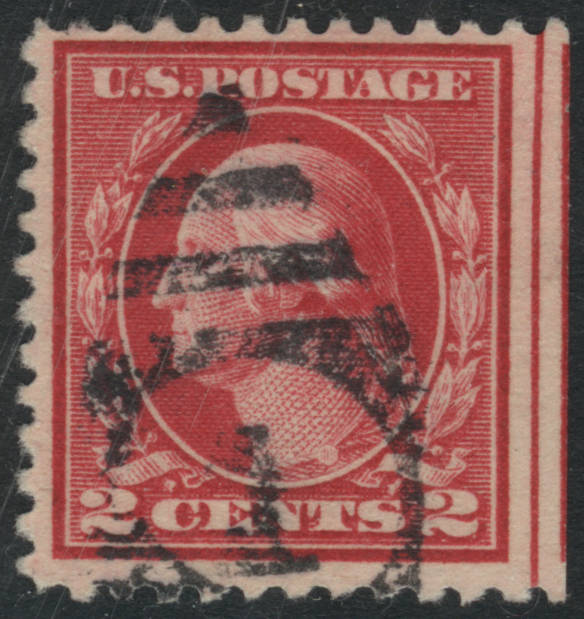
Can you help me ident this fella?

I'm wondering if its a real rotary or an anomaly of printing.

Perf 11, no obvious wm.

Obviously not a 546 type III, and impossibly a 459 with added perfs.

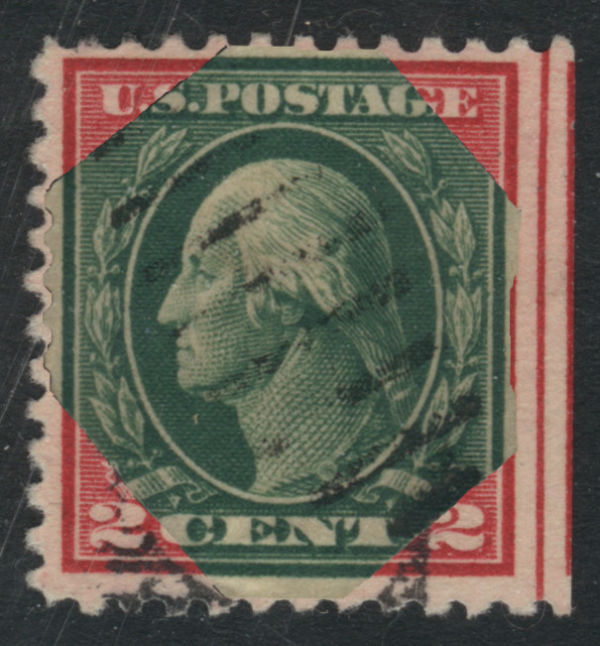
Is this a true rotary? Micrometer reads 19.57mm edge-to-edge width against a square at 90 degrees.

I scanned it with a flat plat template for visual aid.

Is this just a standard deviation?

I feel like i'm missing something obvious.


Send note to Staff

Pillar Of The Community
3859 Posts
Posted 02/08/2015   2:09 pm  Show Profile Bookmark this reply Add jogil to your friends list  Get a Link to this Reply
The fact that the stamp has a straight edge with guide line on the right makes it either flat plate printing or offset lithography printing with perforation 11.
Send note to Staff  Go to Top of Page
Edited by jogil - 02/08/2015 2:16 pm
Pillar Of The Community
Learn More...
United States
1270 Posts
Posted 02/08/2015   2:10 pm  Show Profile Bookmark this reply Add Al E. Gator to your friends list  Get a Link to this Reply
It's a #499e from a booklet pane. BPs are slightly wider that sheet printed stamps due to the manufacturing process being different from sheet stamps. I believe the paper grain was 90 degrees opposite for sheets when printing was done, which causes somewhat shorter, wider issues. The degree of the difference depends upon the shrinkage of the paper. Note you have a straight edge on the right indicating a BP.
Send note to Staff  Go to Top of Page
Valued Member
United States
23 Posts
Posted 02/08/2015   2:12 pm  Show Profile Bookmark this reply Add coilfan to your friends list  Get a Link to this Reply
Mystery Solved! Thanks to both of you.
Send note to Staff  Go to Top of Page
Pillar Of The Community
United States
1414 Posts
Posted 02/08/2015   2:20 pm  Show Profile Bookmark this reply Add cfrphoto to your friends list  Get a Link to this Reply

Quote:
either flat plate printing or offset lithography printing with perforation 11.


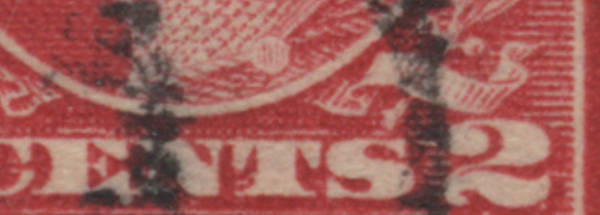
The stamp is clearly an engraved type I flat plate stamp. Because it is slightly wider, it would be a booklet pane single. The guideline places it from a position B, H, K or N booklet immediately to the left of the guideline. (See the booklet pane section in the Scott US Specialized Catalog.) Normal sheet stamps printed on vertical grain paper which would shrink in the horizontal direction. Booklet pane stamps were printed on horizontal grain paper which would shrink in the vertical direction.

It would be helpful to maintain more clarity in these discussions. Before commenting on the printing method, try a visual comparison with known stamps first. Guessing will just mislead and create confusion.

Clark
Send note to Staff  Go to Top of Page
Pillar Of The Community
United States
937 Posts
Posted 02/08/2015   2:23 pm  Show Profile Bookmark this reply Add Historical DNA Collector to your friends list  Get a Link to this Reply
Hello coilfan. Your stamp appears to be type I. The only type I that is 19.5+ mm is the #453 coil or the #459 imperforate. I think that your stamp is from a booklet. The paper grain orientation caused booklet stamps to be significantly wider than the sheet stamps. Try measuring the width again. Booklet stamps come close to 19.5mm in width and I've never found one to be 19.5 mm or more. I imagine using a micrometer to be difficult. I use calipers and even then it's nearly impossible for me to measure with them. I set my calipers to a certain width (19.5 or 22.5 mm) and then use them as a go-no-go tool.

It appears that I'm late to the party
Send note to Staff  Go to Top of Page
Ryan = HDNAC = DNA = HDC = Hysterical DNA Collector = Historical DNA Collector = me who just loves stamps :)
Edited by Historical DNA Collector - 02/08/2015 2:24 pm
Valued Member
United States
23 Posts
Posted 02/08/2015   2:32 pm  Show Profile Bookmark this reply Add coilfan to your friends list  Get a Link to this Reply
Yes, sorry, I used the digital calipers, the cheapo from harbor freight, and I did zero it first. I'll chalk it up to chinese math.
Send note to Staff  Go to Top of Page
Pillar Of The Community
1151 Posts
Posted 03/26/2015   12:59 am  Show Profile Bookmark this reply Add stampmaster to your friends list  Get a Link to this Reply
I always examine the reverse first, usually flat plate printed stamps have ink offset from the stacking of sheets!
Send note to Staff  Go to Top of Page
  Previous TopicReplies: 7 / Views: 1,809Next Topic  
 
To participate in the forum you must log in or register.

Go to Top of Page

Disclaimer: While a tremendous amount of effort goes into ensuring the accuracy of the information contained in this site, Stamp Community assumes no liability for errors. Copyright 2005 - 2026 Stamp Community Family - All rights reserved worldwide. Use of any images or content on this website without prior written permission of Stamp Community or the original lender is strictly prohibited.
Privacy Policy / Terms of Use    Advertise Here
Stamp Community Forum © 2007 - 2026 Stamp Community Forums
It took 0.3 seconds to lick this stamp. Powered By: Snitz Forums 2000 Version 3.4.05