| Author |
 Replies: 17 / Views: 4,425 Replies: 17 / Views: 4,425 |
|
Pillar Of The Community
United States
6449 Posts |
|
|
Scott doesn't call this a "major double transfer", but in terms of the number of features affected and the distance of the shifts, it's pretty dramatic. I already have this on a normal perforated stamp, but now on a part perf as well. Doubling in the "U.S." and "INTER. REVENUE" across the top, both top numerals, and "FIVE" and CENTS" down both sides. (The image below is 1600dpi, so if you double-click on it you'll get a much larger image.) 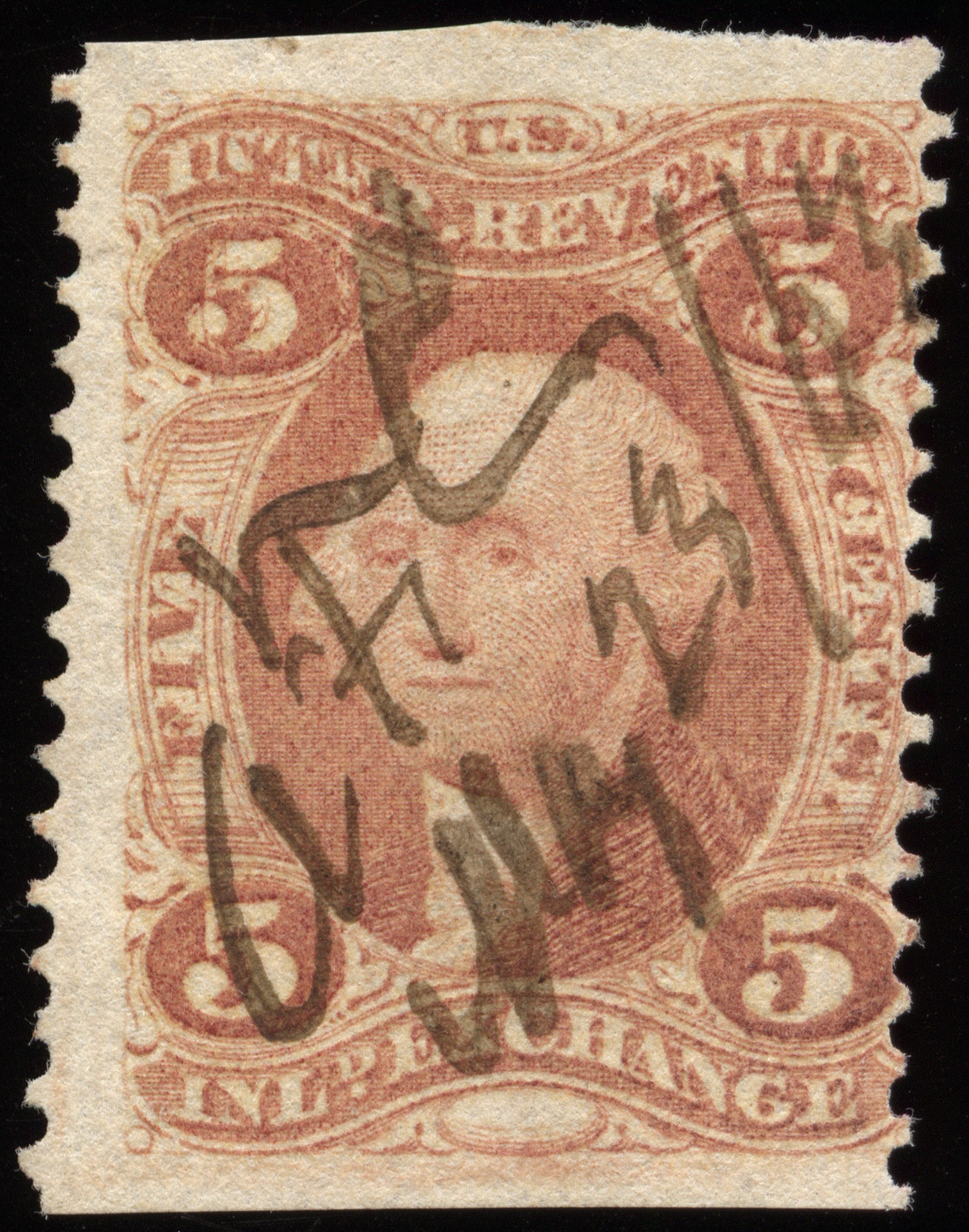 |
|
Send note to Staff
|
|
| Edited by revenuecollector - 11/04/2014 10:40 pm |
|
|
|
|
Bedrock Of The Community
United States
10672 Posts |
|
|
Valued Member
United States
202 Posts |
|
|
Pillar Of The Community

United States
856 Posts |
|
|
Bedrock Of The Community
United States
10672 Posts |
|
|
With all the first issue revenue plate varieties that are still unlisted, it's not surprising that it is not a major. This stamp has several double transfers, and a few would be called major if they were on postage stamps. |
Send note to Staff 
|
|
|
Pillar Of The Community
United States
6449 Posts |
|
|
Moving on to a more "minor" double transfer... I just noticed it now when scanning the stamp, which I bought for the stencil cancel. It wasn't marked as a DT. Scott lists a double transfer for RB2a, but I've never seen one, so I don't know what the diagnostics are. Look at both of the numerals... do you think this is the DT Scott is referring to? 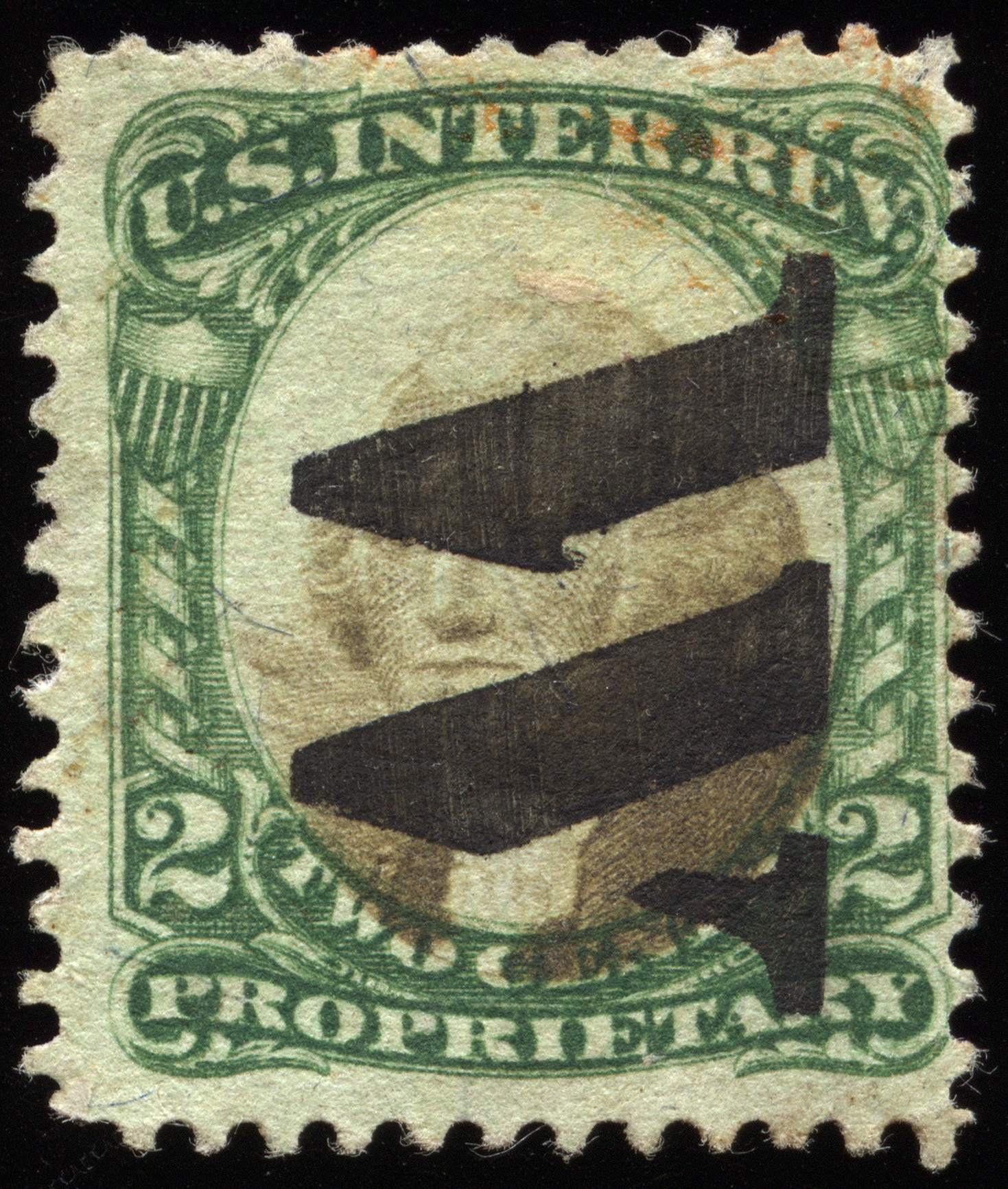 |
|
Send note to Staff
|
|
|
|
Bedrock Of The Community
United States
10672 Posts |
|
|
No, it's not. The DT on this stamp is visible in both numerals, some of the letters of the words TWO CENTS, and some of the letters in the word PROPRIETARY. Not a common DT to find. |
|
Send note to Staff
|
|
|
Pillar Of The Community
United States
6449 Posts |
|
|
So is this just a lesser state? If you view the image at full size, what's going on in the numerals does not look like inking anomalies to me. |
|
Send note to Staff
|
|
|
|
Bedrock Of The Community
United States
10672 Posts |
|
|
No, I think this is a different position with a minor DT in the numerals. Also it is in the ribbon on the left side on the three facing parts closest to the numeral. |
|
Send note to Staff
|
|
|
Bedrock Of The Community
United States
10672 Posts |
|
|
My information is that there are 7 double transfers of the border plate. There are no double transfers of the vignette plate. This example might be position 108; all the others are more major and mostly involve the lettering at the bottom with a couple having some doubling at the top |
|
Send note to Staff
|
|
|
Pillar Of The Community
United States
770 Posts |
|
|
Back to those first issues, is this just inking troubles or do you see a DT in the FIVE in the banner?  |
|
Send note to Staff
|
|
|
Bedrock Of The Community
United States
10672 Posts |
|
|
This is just a wet printing. The paper was too wet when the ink was applied and it spread and created a muddy print. |
|
Send note to Staff
|
|
|
Pillar Of The Community
United States
856 Posts |
|
|
revcollector, aside from your experience, what literature or other resources do you rely on for information about double transfers? |
|
Send note to Staff
|
|
|
Bedrock Of The Community
United States
10672 Posts |
|
|
For postage there is only one specialist work, the Encyclopedia of Plate Varieties on US Bureau Printed Postage Stamps by Loren French. Out of print and tough to get, it runs about $50 and up when you can find it. Profusely illustrated. Books like Brookman and Johl also mention which stamps have known DT's, but they have no images. For revenues, the Shift Hunter Letters, about $7-$8 from Eric Jackson or Richard Friedberg, and the Revenue Unit Columns from the American Philatelist, which ran in the 20's-40's. About $35-$40 from the same sources. Plus articles in The American Revenuer. |
|
Send note to Staff
|
| Edited by revcollector - 11/06/2014 9:19 pm |
|
|
Pillar Of The Community
United States
856 Posts |
|
|
Pillar Of The Community
United States
6449 Posts |
|
|
The Shift Hunter letters are available as a free download on my website: http://www.revenue-collector.com/references.shtmlAlso, while not complete, I have some plate variety reference pages with diagnostics indicated. The problem with most of the older print references is that the varieties are either described verbally or have crude line drawings rather than actual images of stamps. I personally find it difficult to translate those into what I should be looking for on a stamp, whereas seeing an image of an actual stamp makes a much clearer and more memorable impression. http://www.revenue-collector.com/varieties |
|
Send note to Staff
|
|
|
|
Replies: 17 / Views: 4,425 |
|




 Posted 11/04/2014 10:39 pm





