| Author |
 Replies: 28 / Views: 6,994 Replies: 28 / Views: 6,994 |
|
Valued Member
United States
69 Posts |
|
|
|
|
Pillar Of The Community
United States
937 Posts |
|
|
Hello SavStamp,
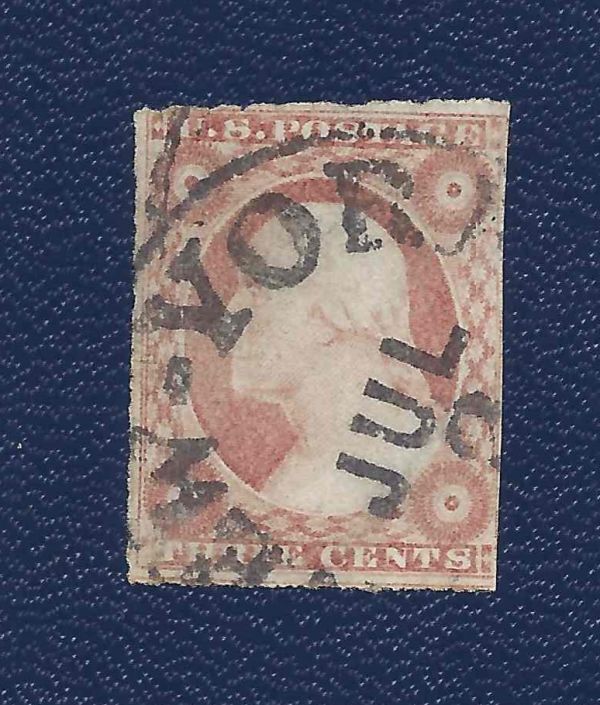
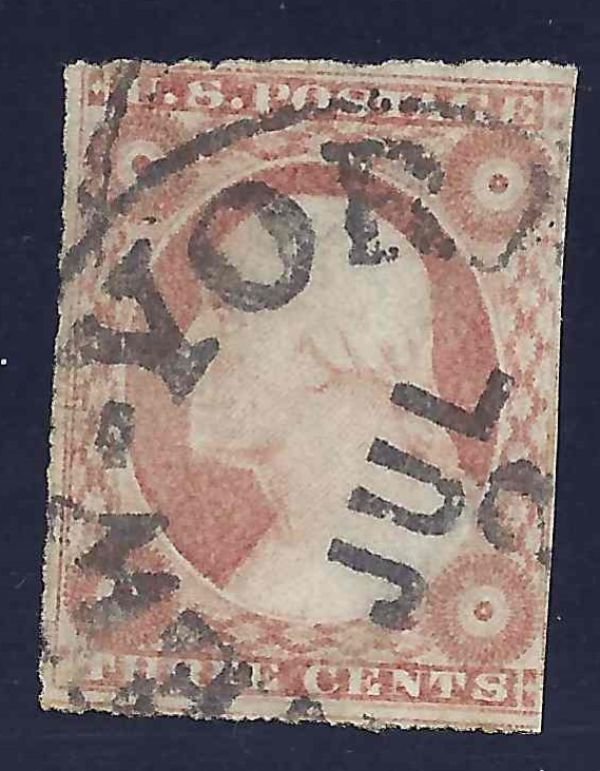
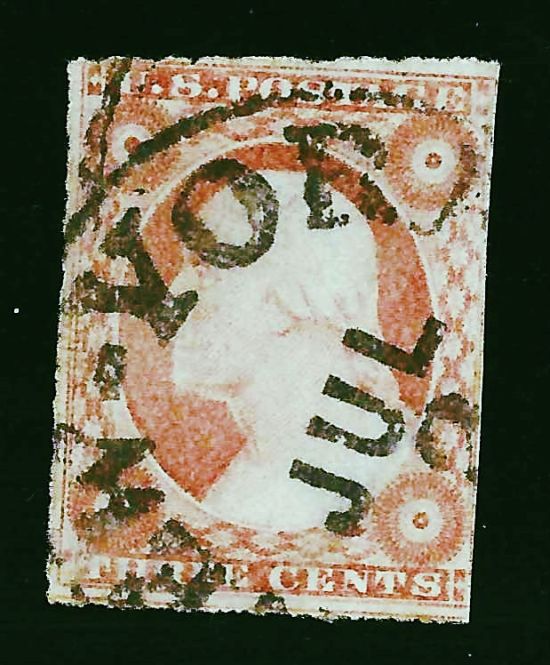
I'm still learning about these myself, but the image of your possible #10 is too small to know for certain. Can you crop a scan to just the stamp? You can use the SCF optimizer or set the width to around 1000 and the jpg save quality to around 30%. That would let us all see it in much better detail. |
Send note to Staff 
|
|
|
Pillar Of The Community
United States
2555 Posts |
|
|
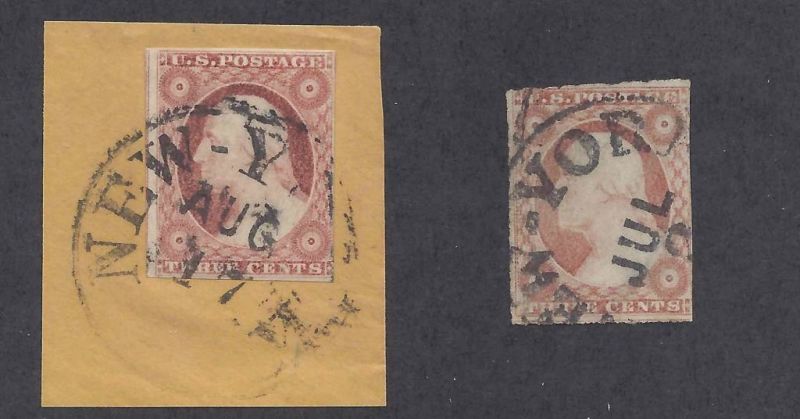
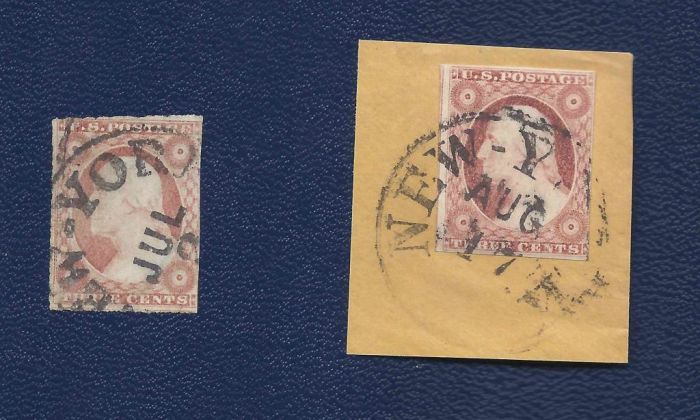
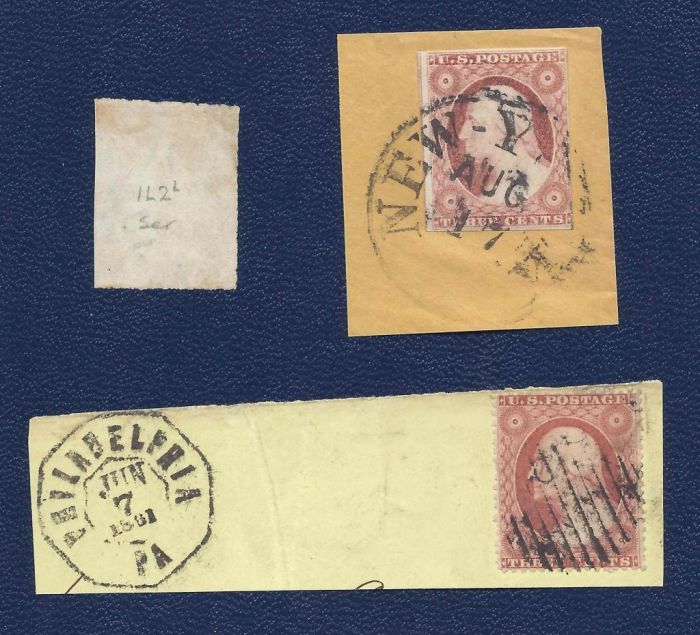
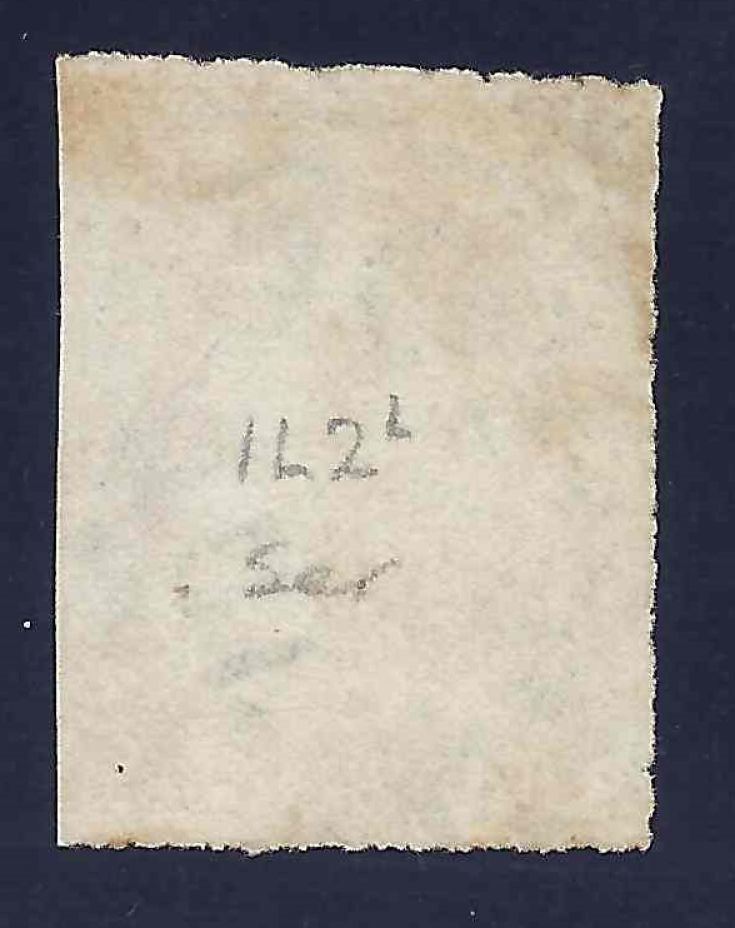
If the stamp is from 1L2L (which I can believe), then the stamp cannot be a #10A. That particular NYC CDS didn't appear until 1853 anyway. The stamp may have been plated by Steven Ruecker. |
|
Send note to Staff
|
|
|
Pillar Of The Community
United States
937 Posts |
|
|
SavStamp's NYC CDS is nearly identical to the one on my cover dated August 27, 1851. 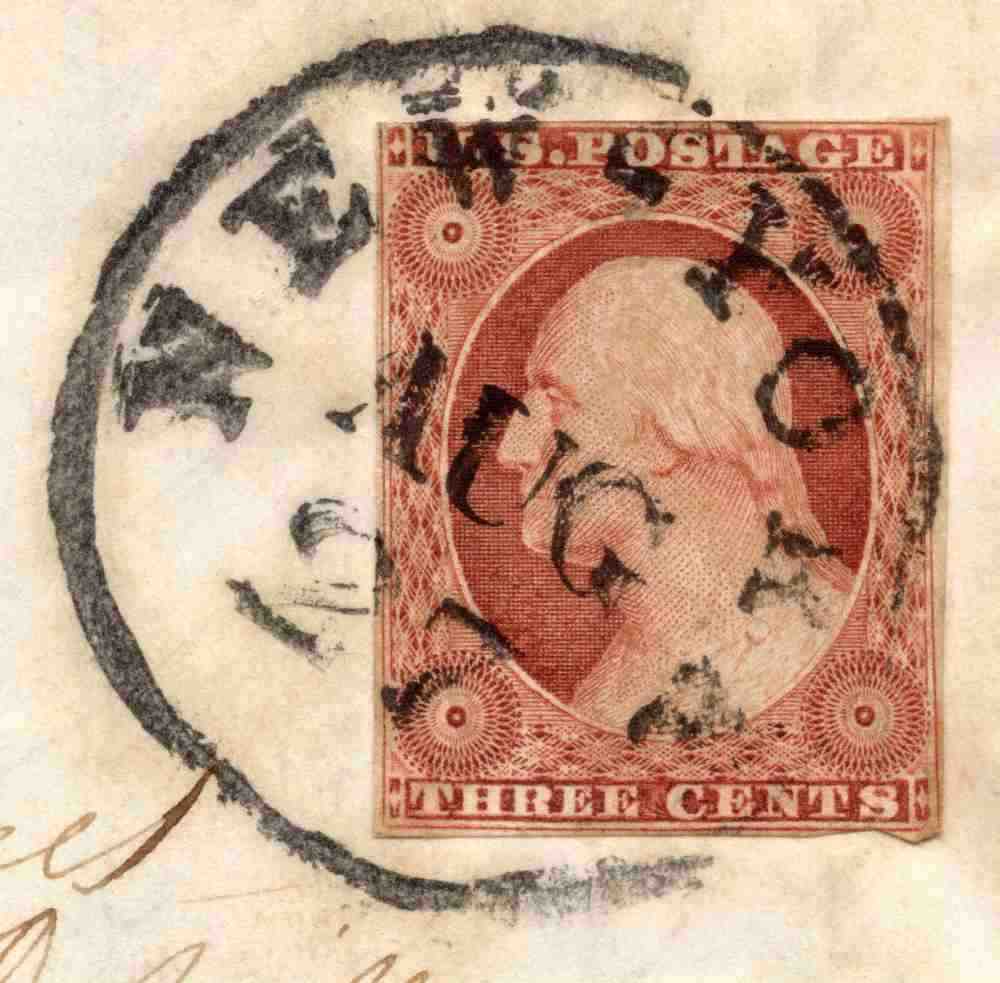 I am by no means an expert on these stamps and postmarks, but this brings some doubt to the earliest date of usage of this particular NYC CDS. Maybe I'm just missing a detail that makes the two different. |
|
Send note to Staff
|
| Edited by Historical DNA Collector - 11/06/2014 11:03 pm |
|
|
Pillar Of The Community
United States
2555 Posts |
|
|
DNA,
The NYC cancel you are showing was struck by a device put into use when the 1847's were the current postage. I am not sure when but perhaps around 1849-50. It was actually normally struck in Red until somewhere near the end of July '51. It was taken out of service sometime in late '52 according to my observations. Look at the cancels again. There are three distinct cancels shown in this thread. |
|
Send note to Staff
|
|
|
Rest in Peace
United States
7097 Posts |
|
|
That's a really interesting piece you have there! Thank you for showing it! -Jeff |
|
Send note to Staff
|
|
|
Pillar Of The Community
United States
937 Posts |
|
|
Jeff, thanks! It's not particularly special, but I do quite like it. Sinclair, It seems that I have more reading to do. I took a much closer look and can now see the differences. They're subtle, but they are there. 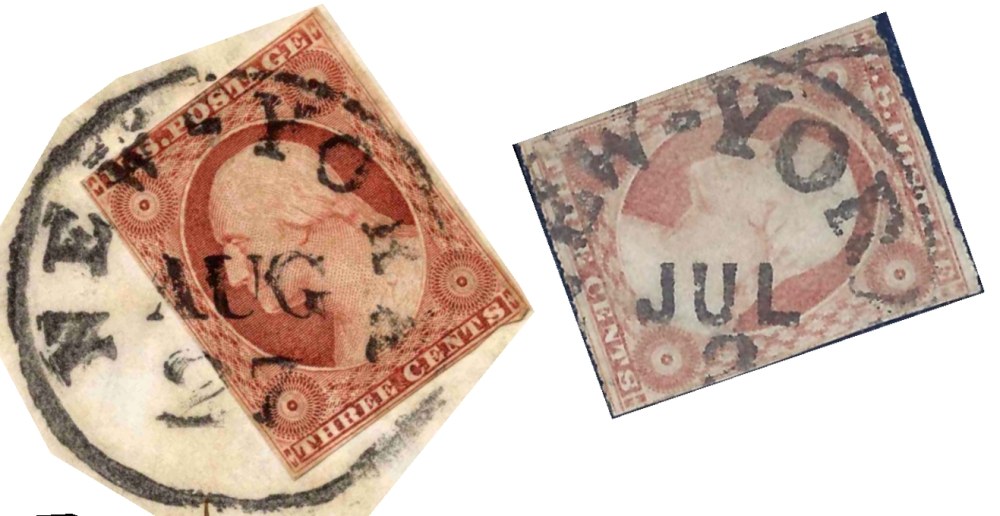 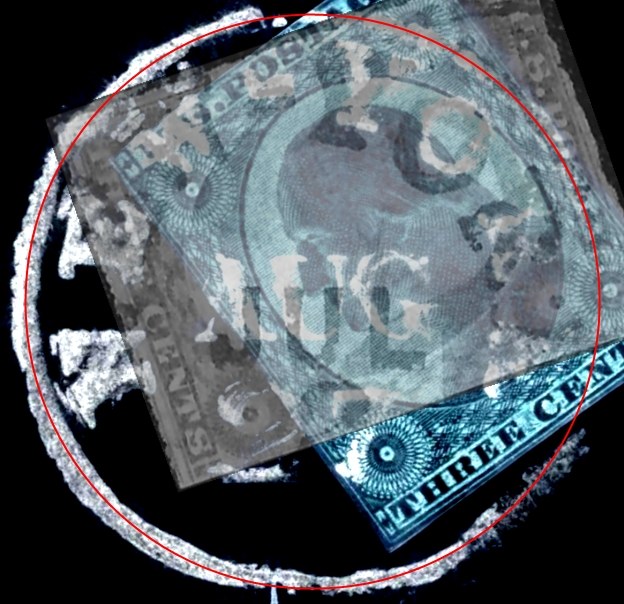 |
|
Send note to Staff
|
|
|
Valued Member
United States
69 Posts |
|
|
Great stuff guys, looks like our two CDS's are related, they appear really close. I tried to blow the image up more but I think it got blurry as I enlarged it. 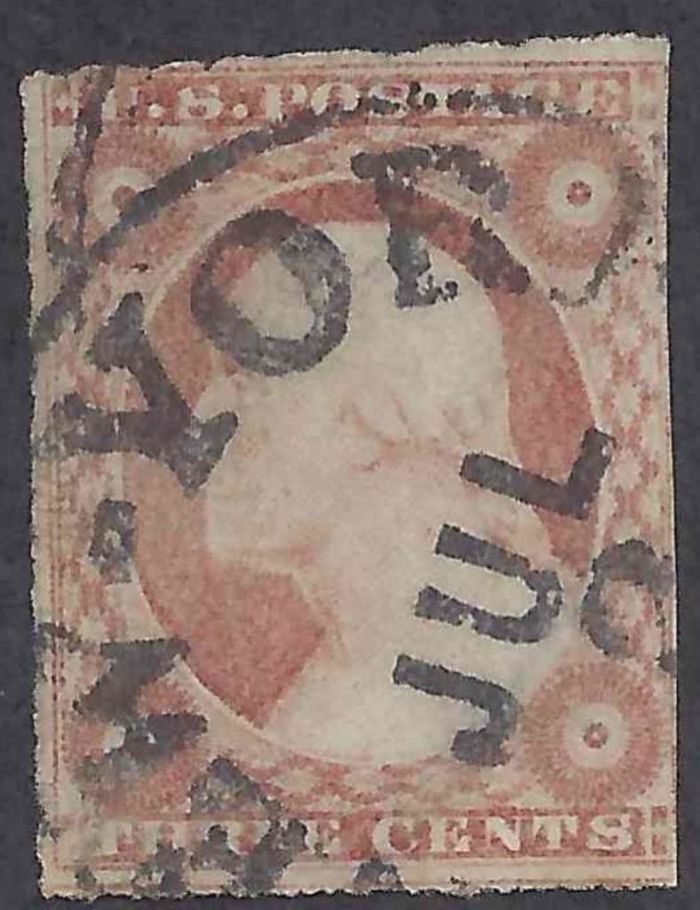 |
|
Send note to Staff
|
|
|
Pillar Of The Community
United States
937 Posts |
|
|
The longer that I stare at your stamp, the more puzzled I become. Three of your stamp's edges seem odd to me. They almost look similar to the "Baltimore Perforations" depicted here: http://www.theswedishtiger.com/11-scotts.htmlI do not know how to identify them, so my observation is most likely incorrect. I just don't know why the three edges would be so ragged. It appears that you scanned this stamp at a low dpi. Can you rescan it at 1200 dpi and post it here? |
|
Send note to Staff
|
| Edited by Historical DNA Collector - 11/07/2014 8:07 pm |
|
|
Valued Member
United States
69 Posts |
|
|
Pillar Of The Community
United States
1125 Posts |
|
|
OK, let's look at things logically.
They made the plates and printed some stamps in late 1851. The ink color was orange brown.
Now, the catalog gives a different number to the OBs than to the other colors - 10 vs. 11.
By the end of 1851, they did two things:
1 - they re-entered and changed the plates because they were wearing out too fast (due to the original ink formulation).
2 - they changed the ink formulation and color
Rather than just looking at the color, which is somewhat variable, as it was mixed by hand on a frequent basis, the catalog-powers-that-be decided that any stamp printed from one of the earliest (1851) plates was a good clue to point to whether something was a 10 or 11.
So, how can we identify a plate, without doing the hard work of "plating" the stamp.
Easy - start with the impression.
If a stamp was printed from one of the earliest plates in its earliest state, it would have a sharp impression.
Take a look at Washington's hair.
Can you see the difference between the amount of hair strands you can see in the Aug 27 print and the others?
I can.
If you can't see hair, you really don't need to go much further in deciding where a stamp is a 10 or 11. |
|
Send note to Staff
|
|
|
Pillar Of The Community
United States
937 Posts |
|
|
I agree that it's probably an 11. I can't make out the detail from the scans we've seen so far. You are probably much better at this. The plating is most likely accurate, which also points towards an 11.
Sinclair prompted me to look closer for the differences in the postmarks. After more research, it appears that the plated stamp's postmark is different than mine. There are quite a few possible postmarks that it could be. Unfortunately, there isn't enough of the postmark to know exactly what it is.
As for the rough edges, I hadn't thought of a steel ruler used to help tear them. The right edge could have been cut with scissors for many different reasons including separating a strip at a later date. I've still got my nose in the books and have a lot more to learn.
I have a habit of "typing out loud" at times. I apologize for the confusion. |
|
Send note to Staff
|
| Edited by Historical DNA Collector - 11/08/2014 11:42 am |
|
|
Pillar Of The Community
United States
1820 Posts |
|
|
Valued Member
United States
69 Posts |
|
|
New Member
United States
4 Posts |
|
|
Pillar Of The Community
United States
937 Posts |
|
|
Welcome ser1851,
Are you the same Steven Ruecker mentioned by Sinclair and dudley? If so, I want to thank you for the great resource that your site is.
|
|
Send note to Staff
|
| Edited by Historical DNA Collector - 11/08/2014 11:06 pm |
|
|
Replies: 28 / Views: 6,994 |
|




 Posted 11/06/2014 8:53 pm