| Author |
 Replies: 11 / Views: 3,105 Replies: 11 / Views: 3,105 |
|
|
Pillar Of The Community
621 Posts |
|
|
I'm looking for a plausible scenario for the creation of this EFO. 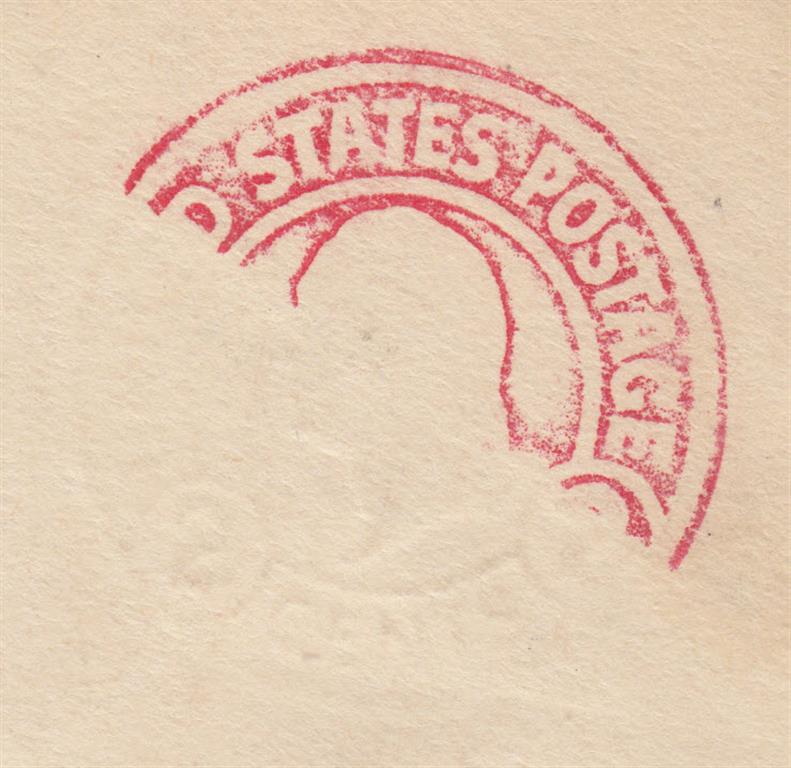 The UR half shares all the attributes of a disengaged cylinder kiss (no embossing). The LL half has all the characteristics of an albino (embossing with no ink). Anyone venture a guess? |
|
Send note to Staff
|
|
|
|
|
Pillar Of The Community
United States
2947 Posts |
|
|
I wonder if the press operators calibrated the cylinders in a way that could cause this? |
Send note to Staff 
|
|
|
Bedrock Of The Community
United States
10812 Posts |
|
|
It looks like some foreign matter adhered to the left side, the line between ink and no ink is perfectly straight. |
|
Send note to Staff
|
|
|
Pillar Of The Community
United States
6461 Posts |
|
|
Likely a piece of paper or cardboard, as it was sufficient to prevent the die from inking, but not rigid enough (metal, wood) to prevent the die from making an impression in the paper. |
|
Send note to Staff
|
|
|
|
Pillar Of The Community
621 Posts |
|
|
So, a partial albino scenario, like the following, but with minimal pressure from the cylinder. Minimal enough to get the "kiss" type ink impression? 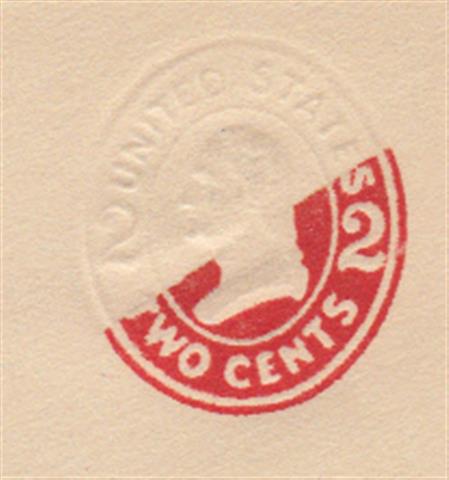 The object obscuring the stamp is most probably the next envelope blank. Or 2. Now two blanks would go a long ways towards dampening the embossing, especially if the pressure was mostly off. |
|
Send note to Staff
|
|
|
Pillar Of The Community
United States
2947 Posts |
|
|
Your first image appears to be perfectly in half. Hard to imagine this being random. Anythings possable... |
|
Send note to Staff
|
|
|
Pillar Of The Community
United States
604 Posts |
|
|
The explanation for the partial albino is very well known among envelope EFO aficionados. The under inked portion of the cylinder can be explained but a disengaged cylinder combined with the envelope blank "kissing" the inked die. What Thomas is hoping to find is an explanation of how both happen at the same time. |
|
Send note to Staff
|
Bill Lehr
US Postal Stationery Specialist |
|
|
Pillar Of The Community
United States
2947 Posts |
|
|
jobi01, understood, I was just musing about how it's done, in this case, perfectly in half. Thought this might give a clue that it wasn't random. That leads back to my first post in this thread. |
|
Send note to Staff
|
|
|
Pillar Of The Community
621 Posts |
|
|
stampcrow, Is cylinder calibration something you have experience with? I do not. |
|
Send note to Staff
|
|
|
Pillar Of The Community
United States
2947 Posts |
|
|
ThomasGalloway, No not press cyclinders. But I did work for Eastman Kodak on film base production. We dealt with 54" width pressure rollers, calender rollers etc. We applied coatings with rollers, and controlled sheet conveyance with others.. Anyway, some of these things the pressure was applied with hydraulic or mechanical cylinders (pressure adjusted with hand turned screws). It all had to be calibrated before product was made and monitored during production with adjustments often needed.
Our process was a continuous sheet process. Much different then what I imagine the process for making these embossed env. But, there had to have been, pressure adjustments made or mechanical set up adjustments made before and probably during any long repetitive usage.
Revcollector is probably correct. Whatever created the albino side may have been thick enough to have caused the other side to just kiss. It just struck me that it looked to perfect. |
|
Send note to Staff
|
| Edited by stampcrow - 12/22/2014 8:51 pm |
|
|
Pillar Of The Community
621 Posts |
|
|
"Our process was a continuous sheet process. Much different then what I imagine the process for making these embossed env."
During certain periods, U.S. envelopes were made on web-fed presses. However, this one was made on a sheet-fed press. As the envelope blank went through the press, it was printed top down. So, as enticing as the idea is of something thick causing the kiss print, it is hard to envision the top part of the stamp not being made under pressure, at least until the (thick) obstructing object came along to create the albino portion.
However, if the pressure is substantially off (as kiss prints go, this one is fairly strong, so things are close), AND you have a thick overlay on the bottom (lower left) half of the stamp area, that thick object may actually add to the pressure - enough to create the weak embossing.
Plausible? |
|
Send note to Staff
|
|
|
Pillar Of The Community
United States
2947 Posts |
|
|
Plausible? Yes, I think so. Unless we can find a write up of there operating procedures, we may never know for sure. It's a great piece though. |
|
Send note to Staff
|
|
| |
Replies: 11 / Views: 3,105 |
|




 Posted 12/19/2014 7:26 pm





