Stamp Community Family of Web Sites
Thousands of stamps, consistently graded, competitively priced and hundreds of in-depth blog posts to read


Stamp Community Forum
 
Username:
Password:
Save Password
Forgot your Password?

This page may contain links that result in small commissions to keep this free site up and running.

Welcome Guest! Registering and/or logging in will remove the anchor (bottom) ads. It's Free!

National Parks - Perforated Guide Lines

 
To participate in the forum you must log in or register.
Author Previous TopicReplies: 11 / Views: 2,227Next Topic  
Pillar Of The Community
6327 Posts
Posted 01/24/2015   3:09 pm  Show Profile Bookmark this topic Add John Becker to your friends list Get a Link to this Message
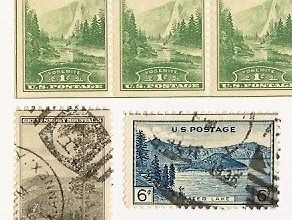
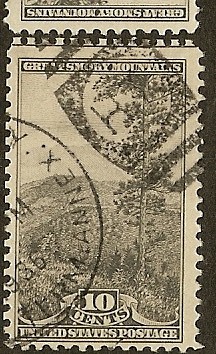
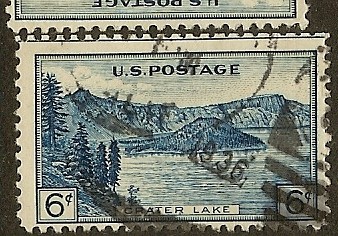
Explanation sought: The standard literature states that the National Parks stamps were printed in sheets of 200 and cut into post office panes of 50 along the UN-perforated guidelines as shown on the 1 cent value here. BUT I have found 2 used singles, the 6 & 10 cents stamps also here (out of about 1200 stamps examined) with perforated guidelines similar to the way the Byrd sheets were fully perforated along the guide lines and cut into panes. How? Why?

Why?
Send note to Staff

Pillar Of The Community
3859 Posts
Posted 01/25/2015   04:05 am  Show Profile Bookmark this reply Add jogil to your friends list  Get a Link to this Reply
Sometimes straight edges were privately perforated to remove them but still have the guide lines showing. Do you have a close up of these perforated sides?
Send note to Staff  Go to Top of Page
Edited by jogil - 01/25/2015 04:05 am
Pillar Of The Community
United States
3156 Posts
Posted 01/25/2015   12:49 pm  Show Profile Bookmark this reply Add littleriverphil to your friends list  Get a Link to this Reply
See the note following 751 in the Scott Specialized about the Special Printings 752-771 issued in sheets of 200, including guide line.
Send note to Staff  Go to Top of Page
Pillar Of The Community
6327 Posts
Posted 01/26/2015   10:36 pm  Show Profile Bookmark this reply Add John Becker to your friends list  Get a Link to this Reply


Here are 2 additional scans. I don't believe the Scott Specialized notes help much here, as they were part of the "standard literature" already consulted. But now I see Herman Herst's article "Farley's Follies: The Collector and the Postage Versions" in the August 1991 issue of the United States Specialist, which says, in part: "Scrap … became a problem. Postage brokers supplied the answer. They were happy to buy the unwanted portions of the Farleys at three-fourths of face value. It was possible to take a loss of that magnitude on the scrap and to have it compensated by the premium on the position blocks. … Almost every printer owned a perforating machine and a pot of mucilage for gumming. They stepped right in buying the Farley scrap, perforating and gumming it, and either using it on their own mail or selling it profitably for full face value or slightly less." Indeed, his article is in response to a 2 cent perf 15 example.

So several possibilities come to mind:

1) The 2 stamps are from the Scott 740-749 series and perfed entirely by the USPOD, down the guide lines like the Byrd issue for a small part of the press run. Now I think very unlikely.

2) The 2 stamps are from the Scott 756-765 series, Farley imperforate special printings, but privately perforated (and likely also gummed at one time) as described by Herst.

I now lean very strongly toward #2. I note on the 6 cent: scissor-cut perfs along the guide line at a slight angle to the guide line, so NOT a machine-cut trim parallel to the guide line like the PO would do. Torn perfs on the other 3 sides. Very good perf match to the normal stamp next to it.

And on the 10 cent: the perfs are cut very squarely along the top guide line and left side, and torn perfs on the left and bottom. Unusual hole-shape along the left side in particular. Slightly off-gauge compared to the normal 10 cent aligned with it.

Agree/disagree? Does anyone else have other private perfed Farley examples to share?
Send note to Staff  Go to Top of Page
Pillar Of The Community
United States
2544 Posts
Posted 01/26/2015   11:30 pm  Show Profile Bookmark this reply Add chasa to your friends list  Get a Link to this Reply
disagree, my guess is option 3 - these were natural straight edges, and reperforated
Send note to Staff  Go to Top of Page
Rest in Peace
United States
7097 Posts
Posted 01/27/2015   07:11 am  Show Profile Bookmark this reply Add I_Love_Stamps to your friends list  Get a Link to this Reply
I looked through quite a few pages of the farley's and it although it's a fact these were not perforated on the cut-lines on the re-issues (or perforated issues)

My 2 examples:

I know the stamp is trash but but I gave a nice forum member my good one cause he needed it.

Scott #749 10˘ Great Smokey Mountains (North Carolina), perf. 11, unwatrmarked - 07/24/34

scanned @1200 d.p.i.


Scott #741 2˘ Grand Canyon (Arizona), Perf. 11, unwatrmarked - 10/08/34

scanned @1200 d.p.i. click for larger image

I know it's very difficult to see on this scan but I can see it here so it is there.
Send note to Staff  Go to Top of Page
Edited by I_Love_Stamps - 01/27/2015 07:16 am
Pillar Of The Community
1849 Posts
Posted 01/27/2015   07:14 am  Show Profile Bookmark this reply Add kevin504 to your friends list  Get a Link to this Reply
Option 3 is again == CORRECT!
1000%

But why would one reperf such a cheap stamp???
Practice for the more expensive items???
Send note to Staff  Go to Top of Page
Pillar Of The Community
1849 Posts
Posted 01/27/2015   07:16 am  Show Profile Bookmark this reply Add kevin504 to your friends list  Get a Link to this Reply
ILS....correct.
While I was typing you posted images.
Very good!
Send note to Staff  Go to Top of Page
Pillar Of The Community
6327 Posts
Posted 01/28/2015   12:42 am  Show Profile Bookmark this reply Add John Becker to your friends list  Get a Link to this Reply


OK, so let's talk about Option 3. I am not trying to be argumentative, but rather to play devil's advocate to get at the truth by building on facts.

It is common knowledge that many straight-edge stamps such as the Columbians are reperfed to improve their appearance, value to the unwary, etc. Yes, finding a Columbian with perfs along a guide line is an obvious tip-off to a reperf job.

Herst presents a story of how, when and why that is consistent with the stamps found. This seems like a good place to start as an explanation – documentation that it was done. To draw an ethical distinction from Herst's article, the National Parks perfing would have been done at the time (in the mid-1930s in the middle of the Depression) for business purposes to recover revenue, NOT decades after the issue date to deceive collectors. So to disagree with Kevin, it seems unlikely these stamps were recent "practice jobs".

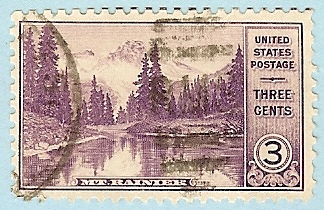
So far none of the proponents of #3 has woven much fabric to state what they believe the stamps started as - whether a sheet stamp perforated on 2-3 sides or an imperforate Farley special printing which was fully privately perfed. Any comments about the size/shape/gauge of the perf holes on any of the 4 sides? Any comments on the cutting along the top of the 6 cent stamp (and now a 3 cent stamp also) not being parallel to the guide line – clearly NOT a natural straight-edge?

To look further, the 6 cent and 10 cent stamps both have 1936 cancel dates. I got out a microscope and examined the ink behavior around the interior of the perf holes on the 6 cent stamp to possibly determine "which came first, the cancel or the hole?" For comparison, I cut across a similar used stamp to see the ink-soak patterns under two different conditions on the same test-stamp: 1) when a cancel overlaps an existing hole and can soak into the edge of the paper and 2) a fresh cut edge which has the ink primarily on the surface only. This is very similar to some of the techniques used for determining regummed stamps. I am unable to photograph/scan this comparison, but it appeared consistent against several examples that the holes came first, thus prior to the 1936 cancels.
Send note to Staff  Go to Top of Page
Pillar Of The Community
1849 Posts
Posted 01/28/2015   07:15 am  Show Profile Bookmark this reply Add kevin504 to your friends list  Get a Link to this Reply
Jonh Becker.....
http://www.ebay.com/itm/740-749-2-C...em2c889ad18a

Above is a link to ALL sheet of the NP.
You can see clearly how they were divided.
They were printed in sheets of 200 (like the imperf Farleys)
but were cut into sheets of 50. Each sheet had a DOUBLE straight edge. There were NONE issued perfed in sheets of 200.

I took a guess on why anyone would reperf a cheap stamp....
Practice for better stamps!
What else could it be???

These shown are both reperfed.

++++++++++++++++++++++++++++++++++++++
Who else has any?
My guess is none....
Since both came from 1 place it seems logical that
both were tampered with by the same person....thus
they are together.
Send note to Staff  Go to Top of Page
Pillar Of The Community
United States
1942 Posts
Posted 01/28/2015   07:55 am  Show Profile Bookmark this reply Add essayk to your friends list  Get a Link to this Reply
John Becker, welcome to the SCF US classics forum. I hope you enjoy your stay, challenges and/or disagreements notwithstanding. Allow me to add two things to this discussion, which for the most part is out of my range.

1. Let us not forget the footnote in Scott just ahead of #752 which says that in 1940 the USPOD offered to gum full sheets of the imperf reprints for collectors submitting them for that service. Once the stamps were so gummed, what was to stop a collector from having them privately perforated to his or her specifications? John is reminding us that Pat Herst relates that such private perfing was done. Since it is highly probable that the gauge of the private perfs was not the same as regular government issues, side by side comparison should show a mismatch even though the gauge was internally consistent on a particular stamp. If all this be so, what was to stop a private contractor from perfing on the cut lines printed between the panes?

2. To discriminate privately perfed reprints from "reperfed" government issue straight edges it is not sufficient merely to compare the perfs on a cut line with another stamp alone. Those perfs need to be compared with top/bottom and left/right perfs on the stamp itself for internal consistency. For this the perf test developed by Ken Srail becomes invaluable.

John, you will do well to familiarize yourself with the Srail test if you have not already done so. Here is a link to a thread in SCF that applies the test, among other things, and has comment and caveats from Ken Srail himself on its use. https://goscf.com/t/39330

If that doesn't help you can search this forum on "srail test" and get exposed to it that way. Once you know how to do internal comparisons of the stamps in question you can discriminate privately perfed reprints from reperfed government issues.

My suggestion here is based on the understanding that if the perfs on the straight edge do not match up with the perfs on the other three sides, but that most of those other perfs do match up with a known gov't issue, then the stamp was reperforated. But if the perfs on all four sides match up then it was privately perfed. That said, if there were privately perfed sheets that gauged the same as the perfs the USPOD was using, then I don't know how you would distinguish them. Similarly, you cannot readily apply this test to a stamp with compound private perfs if such a thing exists.
Send note to Staff  Go to Top of Page
Edited by essayk - 01/28/2015 07:58 am
Pillar Of The Community
6327 Posts
Posted 01/28/2015   11:19 am  Show Profile Bookmark this reply Add John Becker to your friends list  Get a Link to this Reply
Hi Essayk,

Thank you for your reply. It shows you have read and digested the dialog thoroughly and it is the first to offer real substance to the discussion other than to parrot the Scott catalog and tell us what we already knew about the sheet/pane format. Although I have collected for almost 40 years these 3 stamps are beyond my experiences. I have no idea how they came to me, but likely in small shoebox lots acquired many years ago.

For the 6 cent and 10 cent with 1936 cancel dates, they were used before the USPOD offered the gumming, to they would have private gumming also, now long gone from being soaked. Still consistent with Herst's narrative.

Yes, I have heard of the Srail test, although not at the full-detail level. That will be the next experiment when I get more spare time. Good to point out that additional tool. It would be interesting to see the perf 15 example that prompted Herst to write his article in the first place.
Send note to Staff  Go to Top of Page
  Previous TopicReplies: 11 / Views: 2,227Next Topic  
 
To participate in the forum you must log in or register.

Go to Top of Page

Disclaimer: While a tremendous amount of effort goes into ensuring the accuracy of the information contained in this site, Stamp Community assumes no liability for errors. Copyright 2005 - 2026 Stamp Community Family - All rights reserved worldwide. Use of any images or content on this website without prior written permission of Stamp Community or the original lender is strictly prohibited.
Privacy Policy / Terms of Use    Advertise Here
Stamp Community Forum © 2007 - 2026 Stamp Community Forums
It took 0.33 seconds to lick this stamp. Powered By: Snitz Forums 2000 Version 3.4.05