| Author |
 Replies: 16 / Views: 3,255 Replies: 16 / Views: 3,255 |
|
Pillar Of The Community
Australia
1658 Posts |
|
|
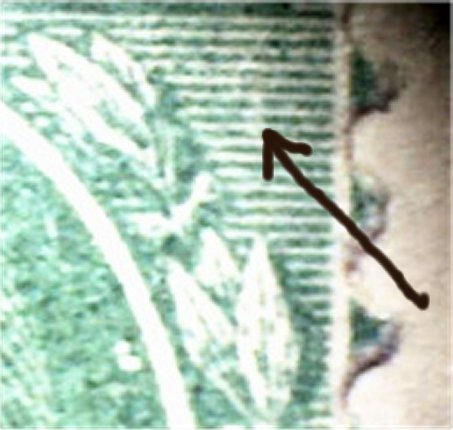
I gave this thread one common name as there are many plate varieties in U.S. stamps and to the very few it may be an interesting topic,Also this being the first American classic study I've done it may seem a bit boring,I really don't know how many of you are interested in plate varieties and there variations and if there are some of you that it may interest I can keep this tread posted from time to time with what I find among my collection. This variety I found on a 1920 cover is a # 405 B 6 tied with what I think is a #498 (the Relief B 6 is a 1912-14 regular issue S.L.Watermark). There are horizontal lines numbered from top to bottom that lead in to the left and right border,On K 8 the right hand edge (where the lines meet the border)show small gaps or missing sections of line to border and this is what gives this variation it's designation    Had to edit due to the stamp being a B 6 instead of a K 8 |
|
Send note to Staff
|
| Edited by nuggethill - 03/13/2009 11:41 pm |
|
|
|
|
Pillar Of The Community
USA
1881 Posts |
|
|
Pillar Of The Community
Australia
1658 Posts |
|
|
Sorry mate had my wife rushing me to take her shopping,didn't have time to proof read/edit which I have done now,Thanks Tom  |
Send note to Staff 
|
|
|
Pillar Of The Community
United States
1566 Posts |
|
|
I'm not following you for some reason. Both the 405 & 486 have a space between the horizontal lines and the square border line.
Now the 405 is a flat plate and the 486 is a rotary press.
Your stamp is perfed into the square border.
Maybe it is time for to buy the Encyclopedia of Plate Varieties on U.S. Bureau-Printed Postage Stamps. |
|
Send note to Staff
|
|
|
Pillar Of The Community
USA
1881 Posts |
|
|
All Washington/Franklins show a gap inside the border. The frame on the one you show only looks broken because of the perf holes.
|
|
Send note to Staff
|
|
|
Pillar Of The Community
United States
1566 Posts |
|
|
Pillar Of The Community
Australia
1658 Posts |
|
|
I see your point,I did look at where the lines terminated and called it a border and not a termination point,so where the lines terminated at the ends this is where I'm trying to focus your attention,Where the lines show thin this is related to the relief K 8 (this should read B 6) which is an exact match from the plate Not a problem if you want more clarification  |
|
Send note to Staff
|
| Edited by nuggethill - 03/13/2009 11:47 pm |
|
|
Pillar Of The Community
USA
1881 Posts |
|
|
Pillar Of The Community
Australia
1658 Posts |
|
|
Pillar Of The Community
USA
1881 Posts |
|
|
Yup......that helps alot...now, if you don't mind....please explain K8. |
|
Send note to Staff
|
|
|
Pillar Of The Community
United States
1566 Posts |
|
|
You peaked my interest. The 405 used the "A" plates and there were some with a cracked plate and even a double transfer. That is about all of my knowledge. |
|
Send note to Staff
|
|
|
Pillar Of The Community
Australia
1658 Posts |
|
|
It works like this Tom Relief A is nomal with no breaks Relief B has breaks and they are listed in this way B 1 49l (left of line 49) #405 #408 this means the break is in B 1 on the left side of line 49 on both #405 and #408. |
|
Send note to Staff
|
| Edited by nuggethill - 03/13/2009 11:45 pm |
|
|
Pillar Of The Community
Australia
1658 Posts |
|
|
Tom the double transfers were rife in #498 with the H block being good examples. |
|
Send note to Staff
|
|
|
Pillar Of The Community
United States
1566 Posts |
|
|
I wasn't following the conversation on this one well so it puzzled me. So tonight as I was working on a game plan for an upcoming basketball game I decided it was late enough and went to bed. However as is very usual for me the first hour in bed is spent reading.
It is always a choice between three topics; the Civil War, The Israeli conflict and stamps. Tonight I was luck and it was stamps.
There in front of me on the first page I flipped too was the answer to the thread. Yes we are talking about Plate Varieties. This plate variety is a common RELIEF BREAK that is well documented, so much so that I should of understood it sooner.
First of all a relief break occurs when a piece of steel breaks off of the transfer roll containing the image. When this piece of steel breaks off the result is a stamp has a part of it where the ink doesn't transfer when it should.
In other words the unprinted area of the stamps relates to the part of the transfer roll that broke off. There are many well known relief breaks such as the broken circle in the 5 cent Huguenot-Walloon stamp.
The less spectacular relief break is the 1 cent flat plate Washington to be more exact the 405 and 408. They have little pieces of the horizontal shading lines broken off. So if you would look at the horizontal lines they would form a uneven vertical line because of the relief breaks. Without the relief breaks this line would be an even vertical line at the ends of the horizontal shading lines.
Now we now what a Relief Break is and I can now go to bed knowing one more thing about stamps all due to a late night of working on some basketball plays.
While these are interesting and adds to the variety of these stamps they are not an official list number by Scott. |
|
Send note to Staff
|
|
|
Pillar Of The Community

Canada
3963 Posts |
|
|
Boy stamps sure can be complicatied. Though I don't collect varieties, I am intrigues by them and the collectors who take the time to do so. Thanks for the lesson guys. Dianne |
|
Send note to Staff
|
Don't grumble that the roses have thorns, be thankful that the thorns have roses |
|
|
Pillar Of The Community
Australia
1658 Posts |
|
|
Thanks M K well done mate,that's a better answer than I could ever come up with on plate variety's regards mate |
|
Send note to Staff
|
|
|
Replies: 16 / Views: 3,255 |
|




 Posted 03/13/2009 5:33 pm