| Author |
 Replies: 17 / Views: 4,601 Replies: 17 / Views: 4,601 |
|
Valued Member
United States
105 Posts |
|
|
I'm trying to narrow down which catalog number this stamp is. I think its either the National Bank Note 154 or the Continental Bank Note 165. The stamp appears to be on a hard paper and has no grill. The 154 is listed as black with the 165 being gray black. The 165 is supposed to have the characteristics of a ribbed paper with the 154 being a white wove paper. I can't really tell the difference between the two stamps so any help would be appreciated. 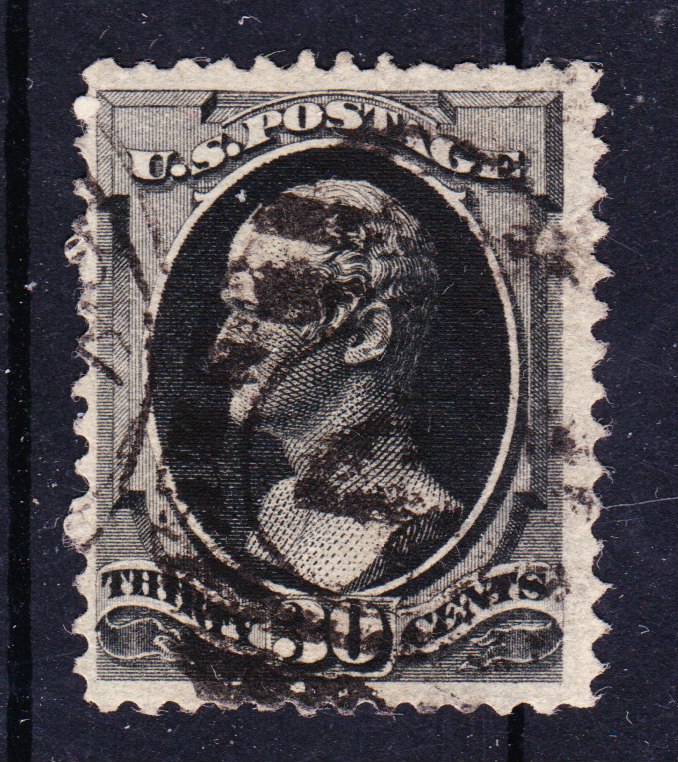 |
|
Send note to Staff
|
|
|
|
|
Pillar Of The Community
United States
1946 Posts |
|
|
It looks like soft paper to me. Are you sure it isn't a #190? What tests have you done?
The main discrimination between 154 and 165 is color, and doing that via pictures online is not at all reliable. If a 30c is indeed on ribbed paper (few are, most are not) then that puts it in the camp of the Continental Bank Note Company as a #165 irrespective of how the color looks to you. The trick there is in knowing how to spot ribbed paper.
For this one though I suggest you check the paper for hardness.
|
Send note to Staff 
|
|
|
Valued Member
129 Posts |
|
|
For what it is worth, here's a shade comparison of a certified #154 on the left, jmdregs scan, and a certified #165 (all from different scanners and resolutions). Based on a scientific 2 foot eye squint, it appears to be a closer match to the #154 ... or the #190. Hope you get lucky and the paper test makes a "hard" landing.  |
|
Send note to Staff
|
|
|
Pillar Of The Community
United States
2423 Posts |
|
|
Pillar Of The Community
United States
1946 Posts |
|
|
Not sure what kind of "irregular" you have in mind, KGB, but the prominence of loose fibers sticking out of the perf tips is a common indication of soft paper. So is the textured "graininess" of the unprinted paper, which you can see in comparing the left and middle images Carl put up (the right image has too much blur). The deep black of the print also leans toward soft. All of these would need to be checked out against the actual stamp, but based on the images it looks like it is going to be soft paper. Checking it with transillumination and with a blacklight (UV) are two more definitive tests, and then there is the old snap test which is good some of the time. Last, and probably least, for me anyway, is the identification and dating of the cancellation to see into which usage period the stamp falls.
As you can see, there are lots of things that can help pin down the paper type.
|
|
Send note to Staff
|
|
|
Pillar Of The Community
United States
2423 Posts |
|
|
Thanks, essay. You are always informative.
As for `irregular,` I`m not sure what I mean. The perfs seem to be a variety of lengths after being torn. I guess that`s what I`m trying to describe. |
|
Send note to Staff
|
|
|
Valued Member
United States
105 Posts |
|
|
Thanks a lot for the help. I realize you can only tell so much from a scan. I did give the stamp the "snap" test and it seemed kind of stiff and made me lean toward the stamp being a 154. However, I'm not at all sure what a soft paper would feel like when tested in this manner. Additionally there does not appear to be any ribbing present which would be indicative of a 165.....then again, I'm not sure I would recognize ribbing if I saw it. I also looked at BillW2's posting of 7/04/2014 wherein he posted two photographs detailing stamps printed on hard and soft paper respectively. The soft paper in the photo shows a "mottled" appearance with the hard paper being solid. The Michel catalog associates the deep black shading of the stamp with the NBN issues which also suggests that it possibly is a 154. I really don't know if the stamp could be a 190. I've noted Essayk"s comments to Billw2's posting and I think the only way to resolve this is to put the stamp under a UV light source....I'll try to find a bulb at the local big box store this weekend and see what it reveals. Thanks |
|
Send note to Staff
|
|
|
Moderator

United States
12330 Posts |
|
|
Pillar Of The Community
United States
1614 Posts |
|
|
Here's a great pic someone (and I apologize for not remembering who) posted here before comparing hard and soft paper by using background lighting. All I did was add the text to it  |
|
Send note to Staff
|
|
|
Valued Member
United States
105 Posts |
|
|
Thanks Mike33. This is Billw2's posting that I was referring to. I've also tried comparing the posting's mottled stamp to some of the pictures of a 190 on stamps2go but I don't see a lot of mottle on the stamps2go depictions. |
|
Send note to Staff
|
|
|
Valued Member
United States
105 Posts |
|
|
I've ordered an LED long wave UV flashlight from Home Depot.....detects scorpions too. Its supposed to be good for stamp screening etc. Who knew? I'll let you know how it works. http://www.homedepot.com/p/Unbrande...21/203772119"Some of the many uses of UV Light (black light) Scorpion Illumination/Pest Control Security/ID and document Verification Forgery Detection Mineral lighting and identification Antique inspection Art forgery/repair tests Club hand stamp screening Machinery Leaks Glass and glass repair inspection Party fun for posters, etc. Pet and pest stains Reading invisible fluorescent inks Crime scene investigation Hospitality industry sanitary checks Charge glow in the dark stars Includes three AAA batteries. Great size for occasional scorpion inspections. See scorpions from a few feet away. No need to get close to the pests. •UV light makes scorpions glow, see scorpions and eliminate them •Many other uses, detect pet stains and counterfeit currency" |
|
Send note to Staff
|
|
|
Pillar Of The Community
United States
2423 Posts |
|
|
Scorpions? You must be a topical collector... |
|
Send note to Staff
|
| Edited by KGB - 12/12/2015 3:09 pm |
|
|
Pillar Of The Community
United States
1946 Posts |
|
|
jmdregs
Getting a longwave UV lamp is a good move, provided it is really that. However, many kinds of "blacklight" bulbs and lamps are sold that are not true UV. They make certain types of fluorescent paint shine, do not have the full range of energy for producing the frequencies useful for stamps. I have no idea what you may be seeing in the places you are looking, but I urge you to keep in mind that they are not all to be trusted.
And when you do get a good UV lamp, do you know what to expect to see? I know the topic has been discussed here before, an a search might turn up some instructive images to help inform you.
In the meantime, can you give us a picture of your stamp with light shining through it? |
|
Send note to Staff
|
|
|
Pillar Of The Community
United States
578 Posts |
|
|
Based on the shade and look of the perfs (i.e. separation/cut,) I'd say 95%++ likely it's soft paper Scott 190. Agree 100% with essayk's assessment of this stamp.
IMO, you don't need a UV light to decipher this one. Simply do as essayk requested and snap a picture with it facing a strong light source. If you want to prove it to yourself, do the "light" test placing this one between stamps that "have" to be on hard paper (like 1869's) and stamps that "have" to be soft paper (like Scott 210.) You'll quickly see where this one falls... |
|
Send note to Staff
|
|
|
Valued Member
United States
105 Posts |
|
|
Here's a photo of the back of the stamp with backlighting. I'm not sure how useful this is as I can't tell anything from it. This is my first time trying to use a camera on a stamp. I think my technique probably needs refinement. Thanks 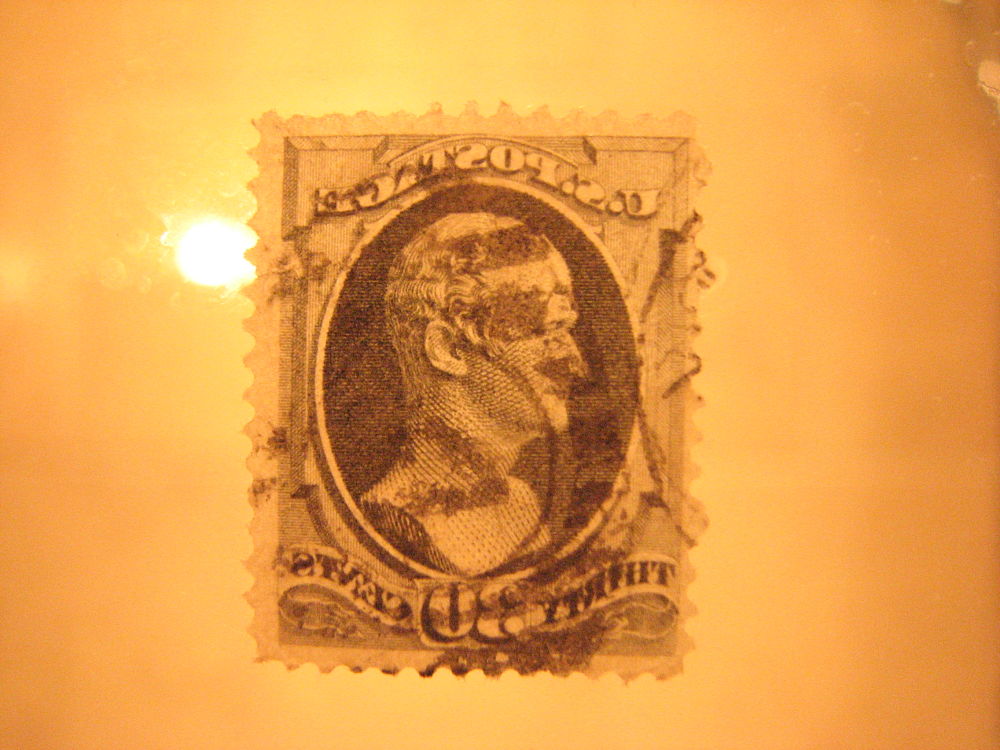 |
|
Send note to Staff
|
|
|
Pillar Of The Community
United States
1946 Posts |
|
|
Quote:
This is my first time trying to use a camera on a stamp. I think my technique probably needs refinement. Nice effort, but mixed results. We need to see more stamp and less light source in the actual picture. ALL the light in the shot should come from behind the stamp. Too much ambient light from the side we are looking at will wash out the details we are trying to see. What kind of camera and lens are you using for this? I ask only to get a sense about how much image control is actually in your hands. |
|
Send note to Staff
|
|
|
Replies: 17 / Views: 4,601 |
|




 Posted 12/11/2015 10:25 am


