Quote:
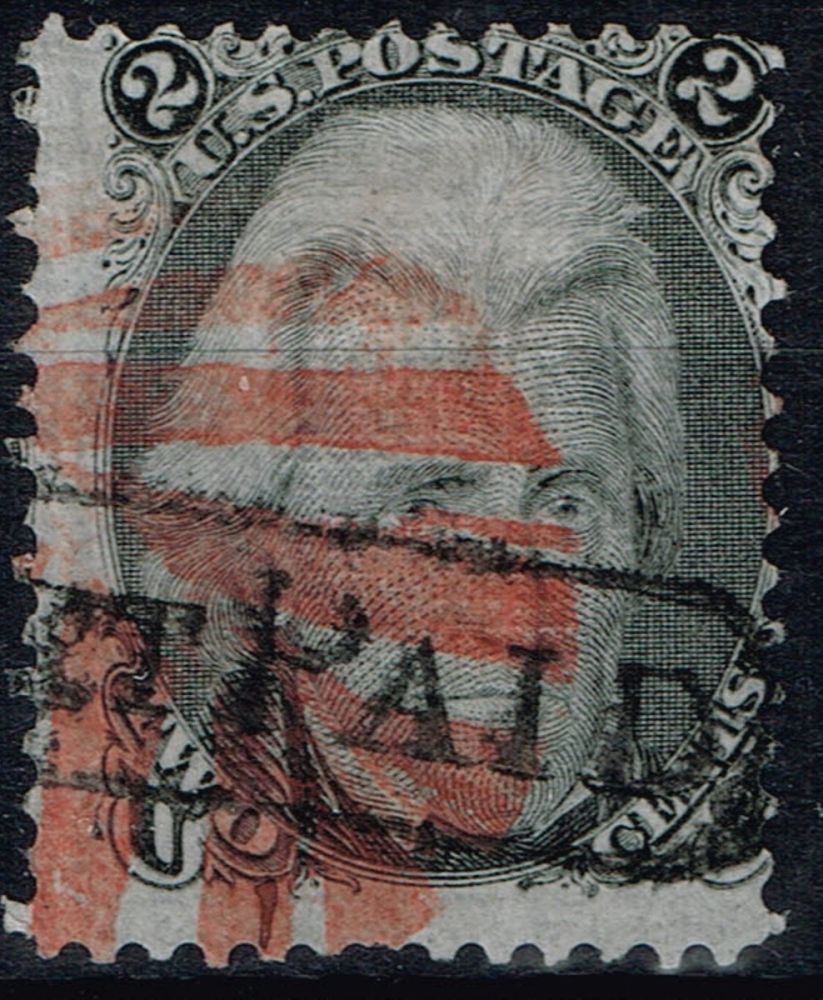
Would it be safe to say the cancel is a NYFM cancel?
No. NY Foreign Mail cancellations are cancellations on New York City mail to foreign destinations. This is not one of them. If the letter was mailed in NYC, the red cancellation could be considered a NYFM cancellation, but we have no way to know that, as it is not one of the distinctive ones that jumps out as NYFM. Baltimore often used red cancellations on foreign mail (see:
http://www.cgpostal.com/12cent/slide71.jpg )
The Exchange Offices (in NY, Boston, and other cities) handled the rating and routing of mail from all over the country on its way to foreign destinations. They would look at the amount paid, any routing designations by the sender, and the treaty rates by different carriers and decide if:
a) there was enough postage for the destination for the weight of the letter
b) the fastest way to route the letter, given the amount of postage. In some cases, there might be enough to send a letter by way of London, but not enough to send it direct mail to the destination country by another treaty, even though that would be faster.
c) the amount of the postage that would be retained by the US for services and the amount credited to the foreign government for the services provided.
For example, a letter to GB up to 1868 cost 24c per 1/2 oz. Of that, 5c was for US internal postage, 16c was for transatlantic carriage, and 3c was for GB internal postage. If a prepaid letter was routed on a ship under contract to the US Gov't (an American Packet), the US would retain 21c of the postage. If routed on a ship under contract to the British Gov't (a British Packet), GB would get 19c credit (the US keeping the 5c internal). For unpaid mail, the markings would represent debits due from the other. The countries would "settle up" periodically (I don't remember the frequency). After the UPU came into effect, these debits/credits went away.
In this case, the letter was Short Paid - It didn't have enough postage to take it to the destination - either too few stamps, or too much weight. The Exchange office marked it such, justifying why they treated the letter as unpaid and why the postage would be due from the recipient.
Clear(er)?
Chip





 Posted 12/13/2015 7:09 pm