Just to clarify (and complicate things)...
The convention used for the number sequence in perforations is actually clockwise starting from the top (i.e., for rectangular stamps -- top, right, bottom, left; e.g., perf 12x11x12x11). When all 4 sides are the same, or opposite sides are the same, then the additional numbers for each side are not necessary. Almost all stamps fall into those 2 categories.
There are some very unusual (not rare) examples of all 4 sides having different perforations. The classic example is the perforation varieties of the 1906 stamps of Bosnia and Herzegovina. Because the actual 4-sided compound perforation will vary according to plate position, Scott does not elaborate and list out all the known combinations (only puts the known perforation numbers in the listing header). The perforation 13 variety listed in Scott for that stamp is perforated 13 on ALL sides (and is actually rather difficult to find).
Which brings about a comment on how Scott lists perforations, because eventually you will run into this. When a perforation variety is listed with the stamp catalog number, that perforation applies ONLY to that stamp. When multiple perforations are listed in the HEADER, sometimes Scott will tell you in the header which stamp has which perforation. However, if only multiple perforations are listed in the header, that means that the stamps in that block of listings are known to exist in one or more of those perforations, and Scott has chosen not to assign minor Scott numbers to them. When the header says "also compounds", that means that various combinations of the stated perforations are also known to exist, but are too many to list.
So in the 3 examples you listed, it does make a minor difference whether they are listed with a specific stamp, or in the header of a block of listings. When no perforation is listed, then the perforation from the preceding listing applies.
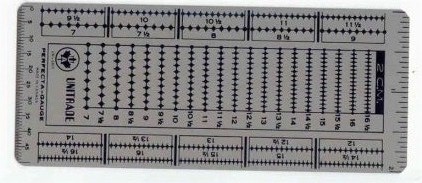
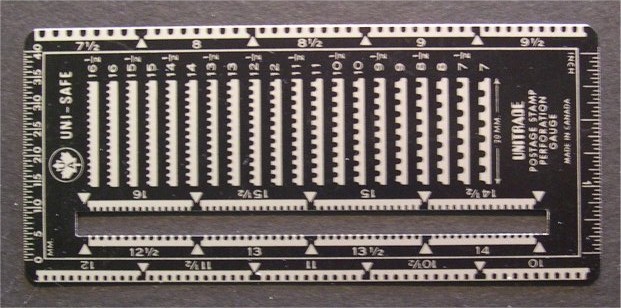
Finally, except for modern US stamps, Scott uses 0.5 increments in measuring perforations. Unfortunately, quite a few stamps actually were perforated with X.25 or X.75, especially the British Commonwealth issues of the 1960s. This may cause you some confusion when measuring (at least it confused me). Most of the European catalogs will list the ACTUAL decimal perforation (not rounded off).
Sometimes you have to forget the teeth and just enjoy your stamps!
No question is too simple! It's my replies that make it complicated!

k





 Posted 05/19/2009 05:54 am