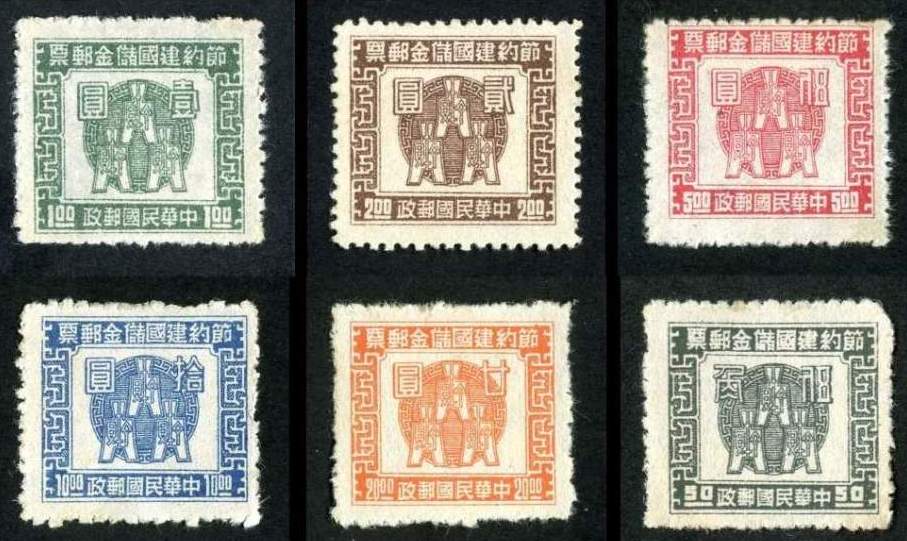
No, they are not Manchurian. They were issued by the Chinese central post office, although local provincial overprints were also made.
They are not revenues in the sense that they were not used to pay a fee or tax, although their intended purpose was to generate revenue or cash flow for the government. I guess it depends on what definition you use for "revenue stamps". Typically, they are simply called postal savings stamps. They are not given an "R" prefix in Scott, but rather a "PS" prefix. However, most people I know will also refer to them as revenue stamps.
The US used to have postal savings stamps from 1911-1966. The postal savings systems worked slightly differently among different countries. But basically, the post office operated as a bank. Postal patrons could open up a "savings account" at the post office. Postal savings stamps could be purchased and then redeemed as a deposit to that account (or in the case of the US, also redeemed for bonds...). Bottom line, the main beneficiary of the "postal bank" was not loans to private businesses, but essentially a loan to the government. Again, different variations of this among different countries.
The postal savings system still exists in many countries. I have some relatives in Asia who still have postal savings accounts.

k





 Posted 06/04/2009 09:57 am


 all.
all.
