| Author |
 Replies: 17 / Views: 8,851 Replies: 17 / Views: 8,851 |
|
Valued Member
United States
90 Posts |
|
|
|
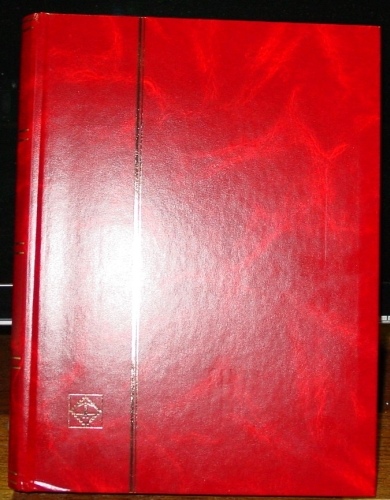
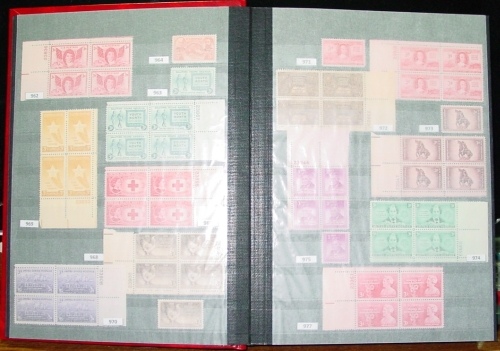
I am hesitating between the 64 lighthouse stockbook or vario with 3 binders. I tried the stockbook and it is an excellent product but I have never tried that vario. What would you recommend? are the varios sheets good materials? does they have glassine sheets ?
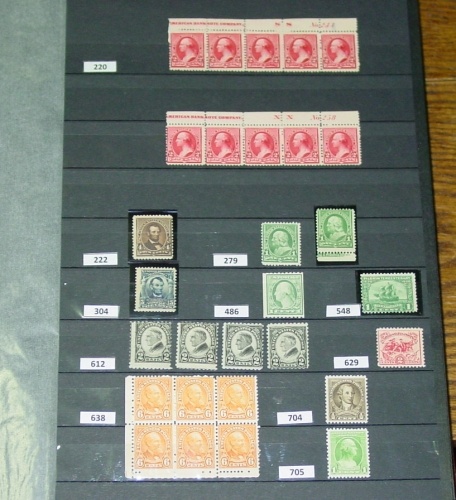
maybe you can post some pictures of your collection.
|
|
Send note to Staff
|
|
|
|
|
Valued Member
United States
373 Posts |
|
|
trabz,
I looked at the Vario system. Having my stamps in an really nice leather album with a slipcase would really be a nice thing to see, but I can do one better.
I will be purchasing the stock pages (and you can find them cheaper) and buying binders from a stationary store. You can get the binders in different colors, sizes, and ring sizes, depending on how many pages you want per binder. Some of the binders come with a view panel for the front, back and spine. The panels can be used to slip in a fancy designed page in the front. For ex. the information on what countries the binders holds, if they are commemorative, what years the binder covers, etc. It's really your choice on what you would want on the front.
I'd personally would rather invest my money in the stamps than what I am storing them in. Leather albums are nice, but vinyl works just as well.
Donna |
Send note to Staff 
|
|
|
Pillar Of The Community
United States
2480 Posts |
|
|
Valued Member
Canada
322 Posts |
|
|
I use just stockbooks and nothing else. I find that stockbooks are the better item than the binders and they are a better method of storing and displaying stamps. Of course this is just my opinion of course. |
|
Send note to Staff
|
|
|
Bedrock Of The Community
Australia
38679 Posts |
|
|
Drumming the mantra on joining stamp clubs,
I'll be selling the above stock book at my club's next meeting..$8
|
|
Send note to Staff
|
|
|
Pillar Of The Community
750 Posts |
|
|
Pillar Of The Community
Australia
4031 Posts |
|
|
Hi! trabz
I use both stock books and stock sheets.
Stock books are great for single, normal size stamps.
Using used stamps I can get about 25 stamps per strip.
It makes a stock book a very cheap storage system as well.
I really like my stock books.
Stock sheets are very good for extra large stamps and blocks of stamps.
I use stock sheets to keep my KGVs safe as I work with them.
It is to me the safest way to put a stamp in a strip.
Many old stock sheets that I come across have hole damage. Even totally broken.
My 5c worth! KGV |
|
Send note to Staff
|
| Edited by KGV Collector - 08/19/2010 11:44 pm |
|
|
Pillar Of The Community
Finland
753 Posts |
|
|
In the end, I'd say it depends on personal preferences and budget. Stock books are notably cheaper way to build a collection than any loose leafed system; which is why use them. But investing to quality / brands is a must in both worlds - otherwise you might end up ruining your collection for good.
As a word of warning, I can say that 64 pagers are not possibly the best kind of stockbooks for long term usage. They might get spine problems at some point of their life (usually after 10 years of usage); never seen that occur with 32 pagers (or thinner ones neither). |
|
Send note to Staff
|
|
|
|
Bedrock Of The Community
Australia
38679 Posts |
|
|
...Perth, Australia Edwin  Lots of good advice here, all different and all pertinent, a lot has to do with taste. Since my collection is mainly used, I find hingeing in albums the only way, I like the tactile feel as you flip through the pages and the display is satisfying. I used stock books for 10 years and never really liked that fashion, although I would readily agree it is the best method for stamp husbandry. |
|
Send note to Staff
|
|
|
Valued Member
Canada
290 Posts |
|
|
For my "A" List stamps, I use Vario or other good stamp collector pages...... usually the seven strip per page kind.
They work well and since they're plastic, no chance of humidity causing stmps to stick to the page.
Static problems are something else and you just have to be careful not to lose a stamp that wants to stick to the plastic or fly away on its own.
Another, draw-backs is space limitations for over-size stamps; but, they can be over-come by using different size strip pages.
I put my vario sheets into the plastic page covers, then cover those pages with three-sided plastic covers.
The 5mm, no-glare sheets from Staples are preferred; but, I also use 3mm sheets and try to stay away from using anything thinner.
Yes, it makes for a heavy album; but, the peace of mind of a well-protected collection is a good trade-off for the extra lifting.
I also use paper-backed albums (like the Lighthouse pictured above) with stamp slots, with and without glassine page covers. Those are used mainly for my "B" list stamps.
Black backing is preferred of course for display of perfs and general eye-appeal.
Then, there are photo album pages which can work well especially if they're black-backed and have good quality clear plastic.
Yes, those wide slots lend themselves to stamps falling out.
That can be fixed by using silicone cement (spread thinly) at the bottom of vertical slots, leaving space for inserting stamps. (of course, use the cement sparingly and let it dry before inserting stamps)
I also have a mini-sealer version of the larger food-sealer units which heats up to seal photo page slots; but, it can be difficult to use because the opening won't easily handle the size of the photo pages.
For other storage in bulk, I prefer tin or plastic boxes.
Tip for fighting humidity: those little "Sorb-it" containers (2cm diameter x 2.5 cm tall) what come with some medications; or, use other such absorbent packets with silica or whatever in them.
A classic case of TMI, but isn't that what the forum is all about?
|
|
Send note to Staff
|
|
|
Pillar Of The Community
United States
6756 Posts |
|
|
I use both stockbooks and Vario-type stockpages pretty extensively. There are numerous pros and cons to both, and those pros/cons are pretty dependent upon exactly what kind of stamps you plan on placing in them. I can only make the following warnings: 1. avoid buying used stockbooks/pages unless you have a means of testing for mold/mildew 2. stamps placed in stockpages should be COMPLETELY covered by the strip; it is usually not a good idea to have a stamp extending above the bottom of the strip above (you may start seeing bends in the stamp in a few years); this is rarely a problem with quality stockbooks 3. NEVER store stockbooks/stockpages lying flat; ALWAYS store them vertically and do not pack them tightly 4. if you don't want to buy expensive dustcases, then just stick a piece of cardstock/plastic above the tops of your stockbooks/albums; dust adhesion is a notable problem with the Vario pages -- you can use fabric softener sheets to sweep away the dust (do not wipe with force, just sort of sweep it or gently swab it across any dusty stockpages). Quote:
As a word of warning, I can say that 64 pagers are not possibly the best kind of stockbooks for long term usage. They might get spine problems at some point of their life (usually after 10 years of usage); never seen that occur with 32 pagers (or thinner ones neither). This is an excellent point by scb! The bindings on most 64-page stockbooks just don't last, even with modest use. I use mostly 32-page and 48-page stockbooks with no problems. I would really advise AGAINST buying 64-page stockbooks. |
|
Send note to Staff
|
| Edited by khj - 08/20/2010 6:18 pm |
|
|
Pillar Of The Community
Finland
753 Posts |
|
|
Quote:
1. avoid buying used stockbooks/pages unless you have a means of testing for mold/mildew Just to add to this one... Some tips to suspect that something is wrong: Smell the book / page - if there's any musty odor, then I'd be very cautious. Check the pages visually - any spots or toning, especially on edges - is a sign of problems. White background pages are usually very easy to check, but noticing spots or toning on black background pages is virtually impossible without any tools. Digg up the UV-light, and check the pages under it. If will show plenty of interesting things. And remember the follow the safety instructions when using any UV-light! But as a general advice, I'd definitely stick with new stock books...Old ones may pose other issues too (such as too acid paper, use of non-archive safe materials etc) |
|
Send note to Staff
|
|
| Edited by scb - 08/21/2010 12:33 am |
|
|
Pillar Of The Community
United States
6756 Posts |
|
|
Quote:
Digg up the UV-light, and check the pages under it. If will show plenty of interesting things. And remember the follow the safety instructions when using any UV-light! Use long-wavelength UV to detect mold/mildew. |
|
Send note to Staff
|
|
|
Valued Member
United States
373 Posts |
|
|
Quote:
I put my vario sheets into the plastic page covers, then cover those pages with three-sided plastic covers.
The 5mm, no-glare sheets from Staples are preferred; but, I also use 3mm sheets and try to stay away from using anything thinner. VNBer, That it an excellent idea. Being I am using the binder's from Staples I was wondering how to go about placing and an overleaf for the pages. I just ordered stock sheets that same as you are using. Thanks!  |
|
Send note to Staff
|
|
|
Valued Member
United States
99 Posts |
|
|
I like the Vario pages and 3 ring notebook method for the best stamps. I also use stockbooks but prefer the Vario. |
|
Send note to Staff
|
|
|
Valued Member
USA
246 Posts |
|
|
I'm guessing I don't know what Vario means.
For my best stamps, I have a 3 ring binder and use black stock pages. They can be anywhere from 7 strips to 1 strip per page. That gives me flexibility.
My understanding of stockbooks is that they all have the same number of strips. That would be a serious constraint for me. |
|
Send note to Staff
|
|
|
Replies: 17 / Views: 8,851 |
|




 Posted 08/19/2010 3:51 pm