| Author |
 Replies: 12 / Views: 4,457 Replies: 12 / Views: 4,457 |
|
|
Pillar Of The Community
Canada
737 Posts |
|
|
While sorting through a recent purchase of a few stock pages full of stamps from Ecuador, I was surprised to find this double perforation error. That isn't the kind of thing I normally see with my "buy piles of stamps" method. I've seen many mint stamps for sale with double perforations, but I've never been too keen on those - "printer's waste philately" is not really my thing (although I must admit, I do collect modern Canadian mint imperforates and I have a few other major errors as well). Has anybody else come across any postally used double perforation errors? Ryan  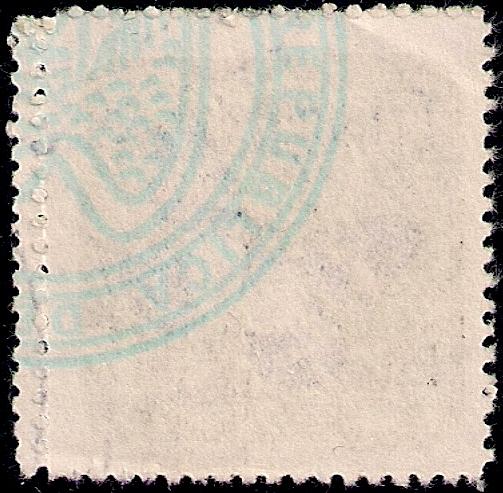 |
|
Send note to Staff
|
|
|
|
|
Bedrock Of The Community
Australia
38679 Posts |
|
|
Great 20/20 vision there, in spotting that  Alas, no. all I have is a non postally used unissued for Montenegro : 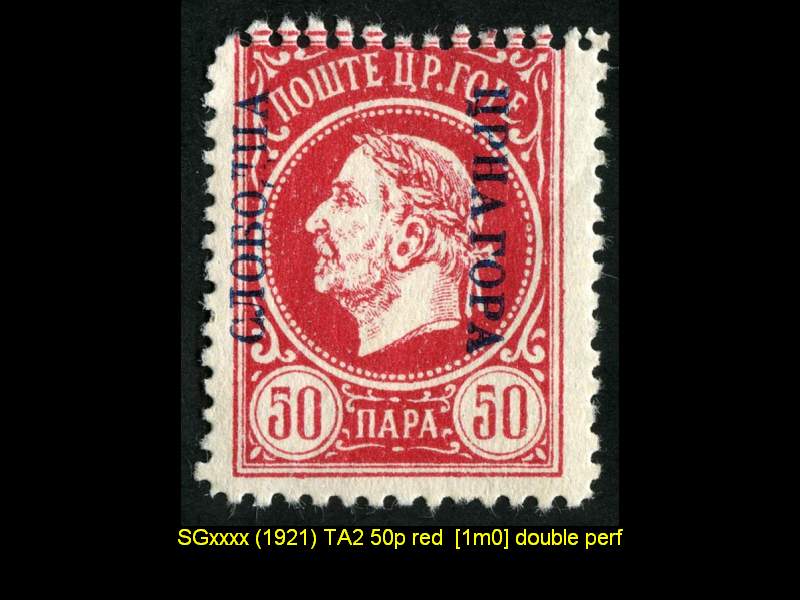 |
Send note to Staff 
|
|
|
Pillar Of The Community
Finland
753 Posts |
|
|
Pillar Of The Community
Australia
3547 Posts |
|
|
This one from the 1931 definitive set of Charkhari isn't used either, and it isn't really quite halal - probably came out the back rather than the front door of the printers - but the full strip of nine looks pretty spectacular  |
|
Send note to Staff
|
|
|
Pillar Of The Community
United States
6756 Posts |
|
|
OK, you caught my interest and I am a little confused. A double-perforation error would suggest that the stamp went through the perforation twice.
I look at the pics (Ecuadorian stamp and Chinese postage due) and see a gutter. Please explain how they are double-perforation errors and not gutters.
I can imagine a scenario where a loose perforation wheel could produce what would appear to be a gutter; but then again back to my original request -- how did you determine it was a double-perforation error (or a perforation freak) and not a gutter? Keep in mind that I do NOT know the pane/sheet layout for these stamps -- that is one reason why I ask this question. Thanks. |
|
Send note to Staff
|
|
|
Pillar Of The Community
United States
6756 Posts |
|
|
I didn't see Tonymacg's post when I was typing. I can definitely see how that is a multiple-perforation error.
The Ecuadorian and Chinese stamps, I don't know enough about. |
|
Send note to Staff
|
| Edited by khj - 09/03/2010 03:29 am |
|
|
Pillar Of The Community
Australia
3547 Posts |
|
|
There's an interesting variation on this theme from Cochin (and I'm 99% sure Travancore, too, Rodney), with a short, diagonal row of perforations in the corner of the sheet.  You sometimes see a couple of these rows. I don't know the purpose: was it to loosely hold the sheets together for some reason? |
|
Send note to Staff
|
|
|
Pillar Of The Community
Canada
737 Posts |
|
|
Quote:
I look at the pics (Ecuadorian stamp and Chinese postage due) and see a gutter. Please explain how they are double-perforation errors and not gutters. I have a few copies of that Ecuador stamp and others in the series, and the width of the double-perfed stamp is the same as the others - removing the "gutter" section would make that stamp much narrower than the others. As with you, I know nothing of the details of this stamp regarding layout nor do I know anything about the perforation machine used. The second (correctly perforated) stamp shows that the design has quite large margins when properly centred - the incorrectly perforated stamp is centred to the left, so the extra perforation row on the right side just happens by chance to make it look like it might belong. Ryan  |
|
Send note to Staff
|
|
|
Pillar Of The Community
Canada
737 Posts |
|
|
Quote:
I look at the pics (Ecuadorian stamp and Chinese postage due) and see a gutter. Looking more closely at the scan of Keijo's Chinese stamp shown on his blog, you can see the border of the design on the tips of two perfs, the topmost one and the third one down. So, the "gutter" piece actually belonged to the neighbour stamp (wherever it is now). Ryan |
|
Send note to Staff
|
|
|
Pillar Of The Community
United States
6756 Posts |
|
|
I guess I should re-phrase my confusion. If it is a double-perforation error, would I not expect to see the same type of perforation shift on the left side of the stamp? Then again, I do not know how many columns/rows they perforated at one time for these issues. On the Ecuadorian stamp, OK, I can see how the user might have separated the stamp on both left/right sides using the rightmost perforations, therefore leaving no trace of the double-perforation on the left side. However, on the Chinese postage due, I would expect to see a column of perforations along the left frame of the stamp. I will agree there is a possibility that the rightmost extra perforations just happens to be the edge of the perforator when it when through the perforator a 2nd time. A lot of times when I see these parallel perforations, unless I've seen the pane layout, it's hard for me to tell right away whether it is a freak perforation, a genuine double-perforation error, a natural gutter, or just some previous owner playing around and putting in an extra column/row of perforations. Now all the perforations (including the additional perforations) on the stamps everyone showed are clearly genuine (not faked). I was just curious how you all made the determination that they were double-perforation errors and not a gutter or single perforation freak. Thanks for posting the pics! Definitely keepers.  k |
|
Send note to Staff
|
|
|
Pillar Of The Community
Finland
753 Posts |
|
|
@Kim... Actually I didn't know which my item was first place either. But afterwards I've been educated twice by "more knowledgeable" collectors, who have specialized to China - both have strongly suggested the item being a perf freak, and not a gutter. Below is a straight quote from a discussion related to this stamp: Quote:Sorry to disappoint you folks, but that ain't no gutter pair. This is a postage due stamp printed by Central Trust Engraving and Printing Works in Chongqing (or Chungking in old speak) and issued some time after the rate increase on 1 October 1945. According to Chan, a complete sheet consisted of 800 stamps divided into 4 panes of 200 stamps each (10 x 20). I believe these were guillotined before delivery to post offices, as Ma only mentions the 200 stamp sheet format. Ma also states that here was no inscription in the margins.
You will note from scb's image that these stamps were line perforated. They are notoriously difficult to find well centred as they were printed during the latter part of the Japanese occupation of China when conditions were less than ideal. (There was a war going on, after all.) Double perforations, imperf between and imperf margins are relatively common (compared to many other stamps). You will also note that the adjacent stamp can be seen on the right-hand perfs. If you measure the distance between the two stamps, you'll find that this corresponds to the normal distance between two adjacent stamps, hence not a gutter pair. I'm guessing that this stamp was double perforated, either accidentally or intentionally.Credits/Source: http://www.myphilately.com/blg_view...log_id=3029, comment by Warrigal (a China specialist) |
|
Send note to Staff
|
|
| Edited by scb - 09/03/2010 3:22 pm |
|
|
Pillar Of The Community
United States
6756 Posts |
|
|
Pillar Of The Community
United States
6756 Posts |
|
|
Thanks to all who replied -- Ryan, Rod222, Tonymacg, Scb... ...can't learn if I don't ask!  k |
|
Send note to Staff
|
|
| |
Replies: 12 / Views: 4,457 |
|




 Posted 09/02/2010 5:50 pm


