To participate in the forum you must log in or register.
| Author |
 Replies: 73 / Views: 11,674 Replies: 73 / Views: 11,674 |
|
|
|
Pillar Of The Community
Netherlands
6530 Posts |
|
|
Quote:
Trient (Trieste, now Italy) Trient is Trento, also in Italy. The German name for Trieste is Triest. |
Send note to Staff 
|
|
|
Valued Member
Germany
65 Posts |
|
|
1994 – what do we have here, there's even a card from Munich. That's where I ended my annual voyage back then. 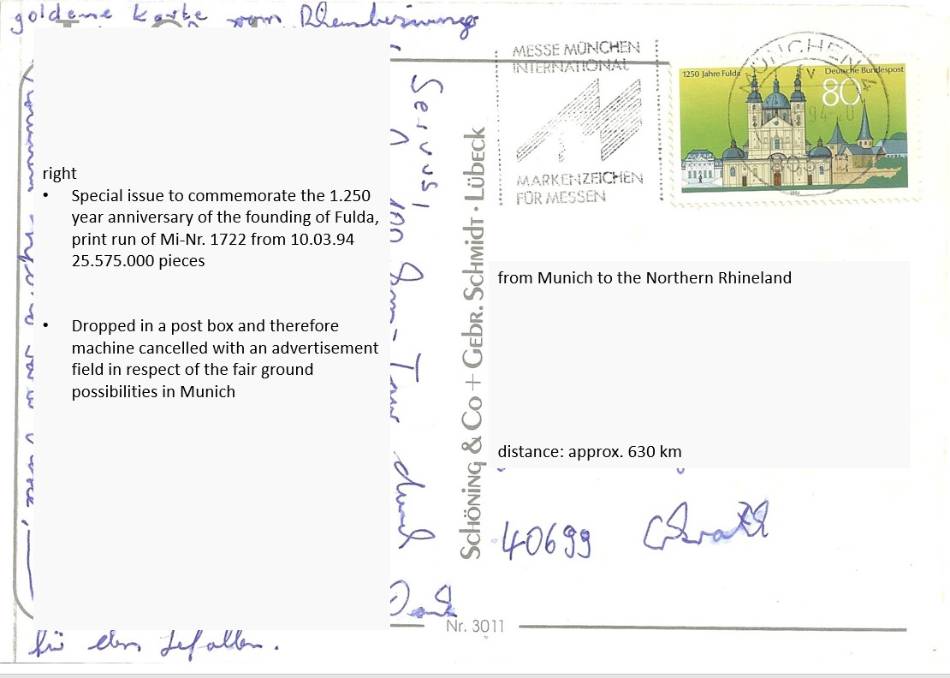 It is an impressively beautiful city. I was there for the first time in 1991, and when I got off the underground station at Odeonsplatz, my jaw dropped – Theatinerkirche, Feldherrnhalle, Residenz – what a presentation. Modesty certainly doesn't seem to be the typical Bavaria character; rather, they show what they have to offer in a very baroque and self-evident way. 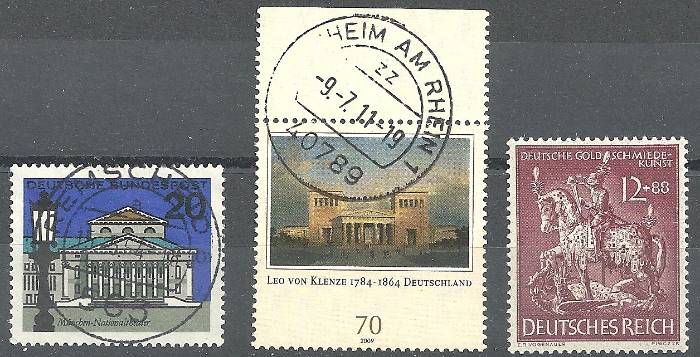 Left: Left: the National Theatre next to the Residenz, an impressive opera house that I had the opportunity to visit in person. Centre: Leo von Klenze's Propylaea / a monument glorifying the Greek struggle for freedom, modelled on the gate buildings of the Acropolis in Athens. Bavaria sent a prince to take over the regency after their 1830 independence. The building is located on the Königsplatz in Munich and is part of an impressive architectural ensemble. Right: the original can be found in the Munich Residenz. See for yourself and book a tour (I did so in 1991, stood in front of the original and said to myself, '…wait a minute you have seen this before, isn't it displayed on a1943 issue of Germany?...') And here is a perhaps amusing anecdote: back in 1994 in the evening, we went out to celebrate and have dinner. And somehow, over a few beers, we ended up in an international group with a couple of Italians. There was laughter and drinking, and the atmosphere was cheerful and exuberant. And when we raised our glasses to drink to our good health once again, a Japanese man from a small tour group could no longer remain in his seat. Excitedly, he raised his glass towards our group and greeted us warmly and effusively. We returned the friendly gesture. Our Japanese traveller was visibly moved and bowed deeply in the Far Eastern style, showing genuine respect. I felt this a warm and bonding moment. I had completely forgotten about this episode, but a quick glance at the card brought back the memories of the event and frolicsome evening. Now, this is all - though decades ago - still too modern for you? Then let me conclude with a reference to Bavaria's postal sovereignty (until 1920) by taking a look at a few very early Bavarian stamps from the 19th century. 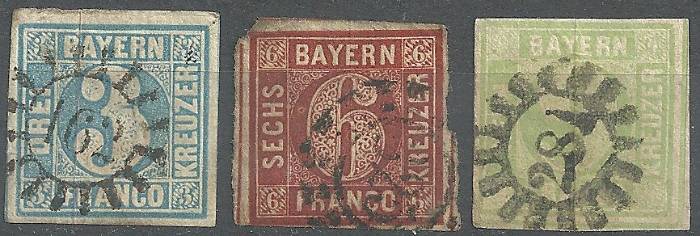 |
|
Send note to Staff
|
|
|
Valued Member
Germany
65 Posts |
|
|
1996 - I toured the German Baltic Sea coast. I already gave a report about it in a short article (from 15.11.2022 on page 1), but I couldn't produce a philatelic proof at the time. But now I've found something. From in between the way of a day's travel - a short stop to post my mail: from Garz - a village on the island of Rügen. 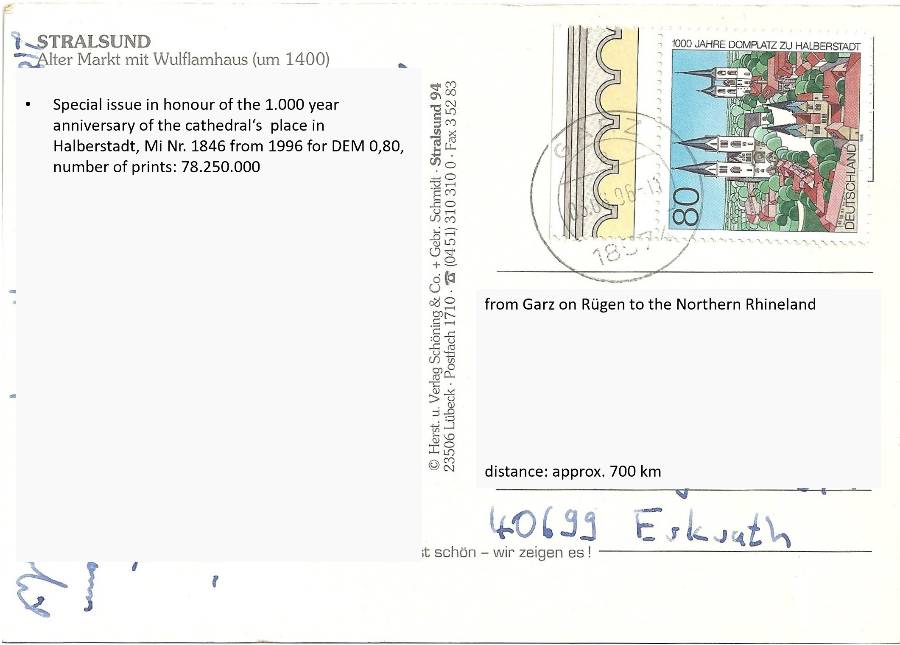 Rügen and Sylt are said to be competing in the question which of the islands is the most beautiful in Germany. However, Rügen is the larger of the two and therefore inevitably the more eclectic one. The place is also dear to me, because it was home for my grandfather for over twenty years. The spa architecture on the island in the coastal villages is simply impressive, and in 1995 I stayed in the lively town of Binz, which boasts with many magnificent villas. Displaying fantastic architecture and workmanship, definitely worth a visit. Perhaps a few more quotes on the region. 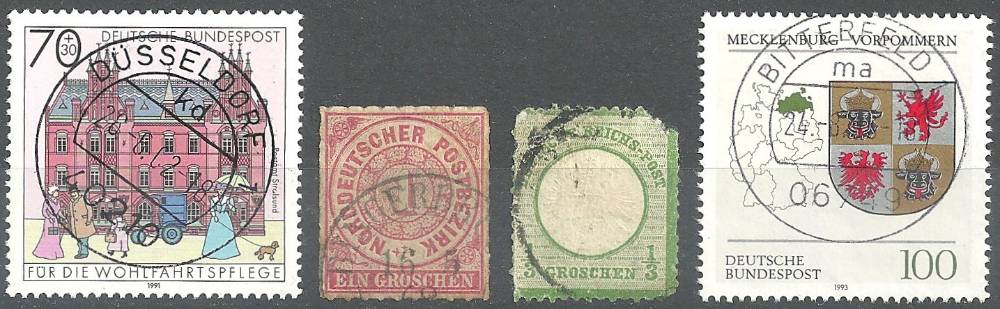 Left: Left: Anyone travelling to Rügen usually has to pass through Stralsund. Here is the historic post office in Stralsund, which members my family will have used, as it was only a short boat trip from my grandfather's home to Stralsund. Centre: Old historical stuff. I don't really understand why people sometimes limit themselves to old issues. To my taste, they are graphically less inspiring. In any case, the one on the left was from the North German Postal Union and the one on the right from the German Empire - both in the Thaler currency of North Germany and Prussia - were valid on Rügen at their time. Right: issue in honour of the Federal States in Germany - here Mecklenburg-Western Pomerania including the island of Rügen. Something to smile about: not a single postmark matches to the places discussed (the postmarks are from the Lower Rhineland, Rhineland-Palatinate and Saxony-Anhalt). But I have here a special item, which is very dear to me and fits perfectly to the journey, because I carried on my travel by boat from Sassnitz on Rügen to go to Trelleborg in Sweden by the ferry route shown on the stamp. The item was sent to my grandfather by a former neighbour, posted in Göhren on Rügen and stamped with an impressive special postmark - what a tease! And the envelope was given to me then, right at the beginning of my stampcollecting activities. Of course, I was much impressed very happy about it. And so, I already knew in 1979 which route I would have to take 16 years later, if I ever wanted to go to Sweden. And you may believe me, when I say that I actually remembered the depiction on the stamp and the thus disclosed possible route when I was planning my trip. 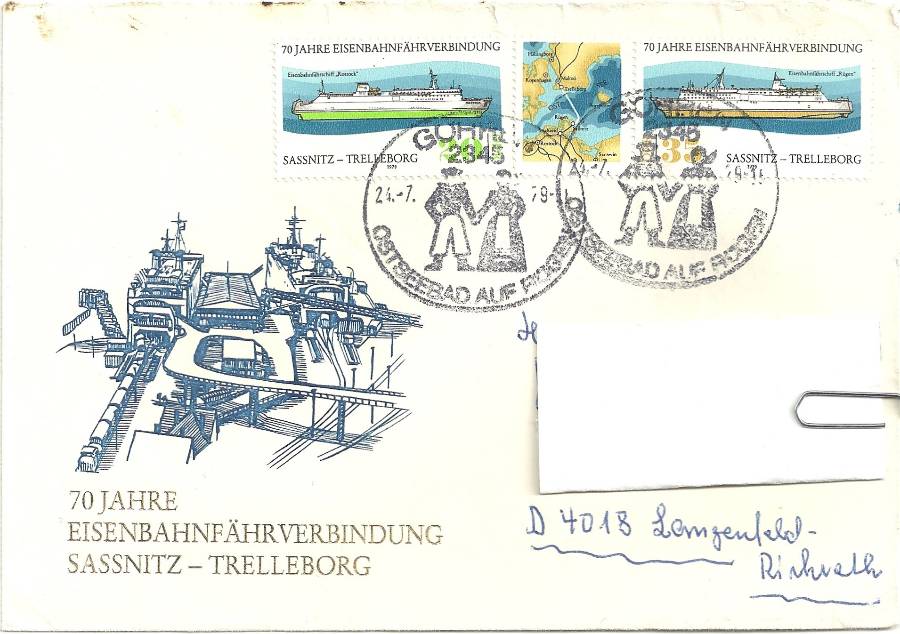 |
|
Send note to Staff
|
| Edited by Bendix - 10/15/2025 2:39 pm |
|
|
Valued Member
Germany
65 Posts |
|
|
1998 - right, by then I went on a very short cycling tour (from Oberursel at the foot of the Feldberg north of Frankfurt on Main to the Rhineland) and used the necessity to go home from a business event as an opportunity for a short sports vacation (healthy mind in a healthy body). 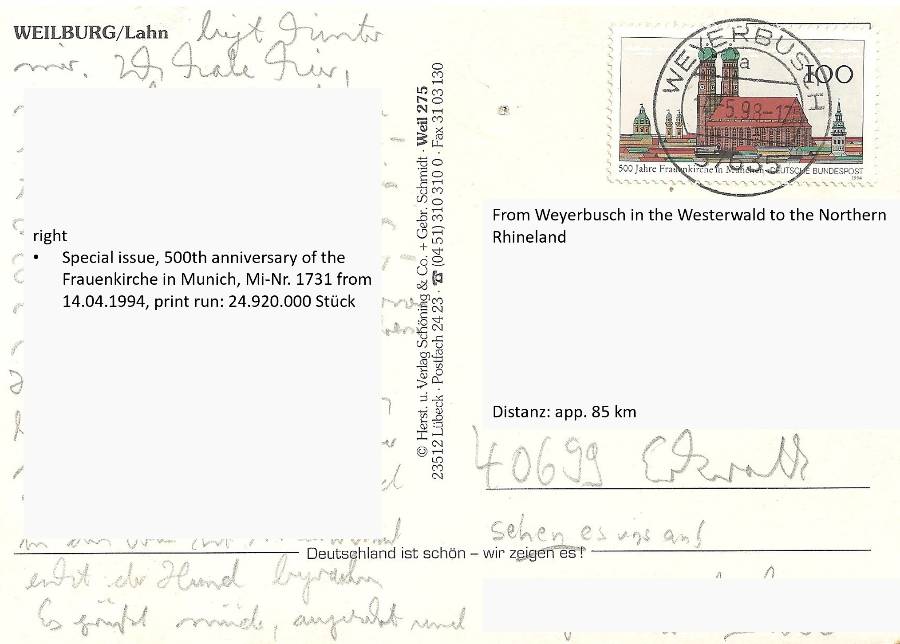 Now, let's have a look • postcard displaying a sight of Weilburg at the Lahn • Postmark of Weyerbusch, a village of 300 souls located in Rhineland-Palatine on their territory on the right hand side of the river Rhein in the low mountain area of the Westerwald • stamp displaying the Frauenkirche in Munich • recipient in the Northern Rhineland • postcard produced by the company Schöning from Lübeck So it seems to have been an all German event. And I just realise on dealing with the matter, that I followed the historic "Cologne High Military and Escort Road." Impressive! By the way, Friedrich Wilhelm Raiffeisen was mayor of Weyerbusch for three years. Raiffeisen was the spiritual father (for rural agricultural communities) of the German cooperative movement (pool interest and get organised to help yourself), which gave rise to a number of local union banks and agricultural trading companies which still play an important role in Germany today. 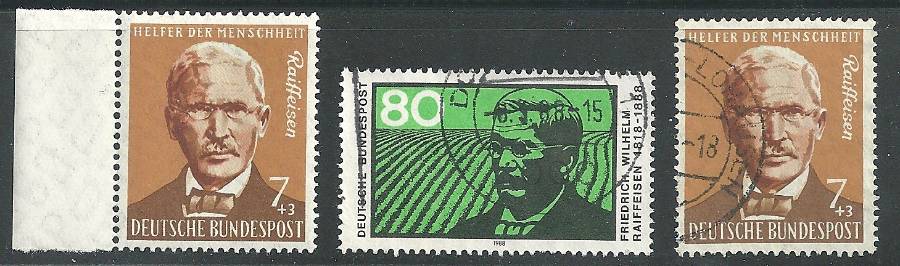 He has been honoured in Germany by the release of special issues: • Left and right: stamp for 7 Pfennig and a welfare surcharge of 3 Pfennig of 1958 which was a part of the welfare set of four different stamps from 1958 in honour of agriculture. Print run: 6.650.000 • Middle: stamp für 80 Pfennig from 1988 honouring the 100th anniversary of Raiffeisen's death. Print run: 35.150.000 |
|
Send note to Staff
|
|
|
Valued Member
Germany
65 Posts |
|
|
1999 - I was on my way to the Netherlands (see reports from 15.07. and 15.08.2023 on page 2) I used the 100 km to the frontier to inform friends of the start of a new tour. 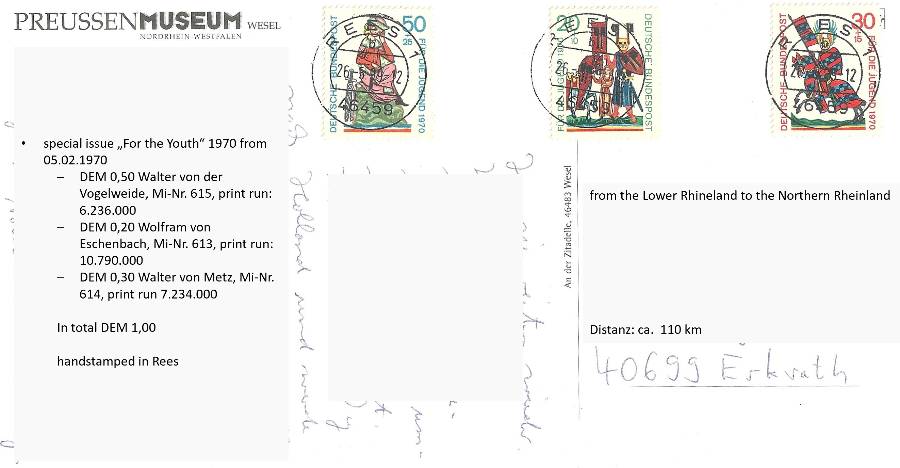 In 1999 the end of the validity of DEM-nominated stamps was to be seen at the horizon and formerly unattainable stamps (such with surcharge from the beginning of the 1970ies) could be bought at 80% of the nominal postal value. I then had stocked up on them and used them up at my leisure whenever I had the opportunity. One of my favourite sets from the 1970s is the 1970 youth stamps-issue, which features illustrations from the famous Manesse Codex from the Middle Ages (a collection of songs and poems created around 1300, the original is kept in Heidelberg). The poets are depicted performing their customary activities, thus glorifying the knightly life. Our ancestors of nobility back then armed themselves with iron, and as you would expect of men, they showed off properly. Instead of fancy Mercedes cars, they rode impressive horses, and their armour was elaborately designed. They - while the farmers were working in the fields - would often ride ou and compete with their peers in tournaments, i.e., playful battles that were not without danger but did not necessarily lead to death. And that ride outs we callend "aventures". The adventure was born. In doing so, man was able to kill two birds with one stone: publicly give his same-sex competitor a punch on the nose and be admired for that by the rather passive women in the stands. This is still a very popular image in today's culture. Watch a modern movie. I did that yesterday. In it, a constantly smoking and drinking protagonist in his late 40s constantly drove his tuned Ford Mustang through Los Angeles constantly over 6000 rpm (the speed limit there by the way is 65 miles per hour, approx. 105 km/h). He kills or neutralises approximately 100 enemies in 120 minutes, and sleeps with four women. All this supposedly within 48 hours. I need at times to write to the production company and inform them that there is no need to drive in first gear in a stick shift car all the time (...take advice of a German stick shift driver: press the clutch…! That is the pedal in the middle). That is of course an extreme example. But the truth is, every guy has in degrees something like that in his head. Who doesn't want to prevail in combat and then be loved for that by beautiful women? In any case, I was on a knightly adventure trip (not on horseback, but on a gold-painted 20-year-old racing bicycle, not in armour but definitely in some colourful cycling jersey), and the stamps were just perfectly matching for that (in one way to poke fun at myself, but there was certainly a bit of seriousness involved as well, or let's better say vanity). But what good is an fantastic adventure if no one knows about it? So let's send out messages and report on it. From Amsterdam 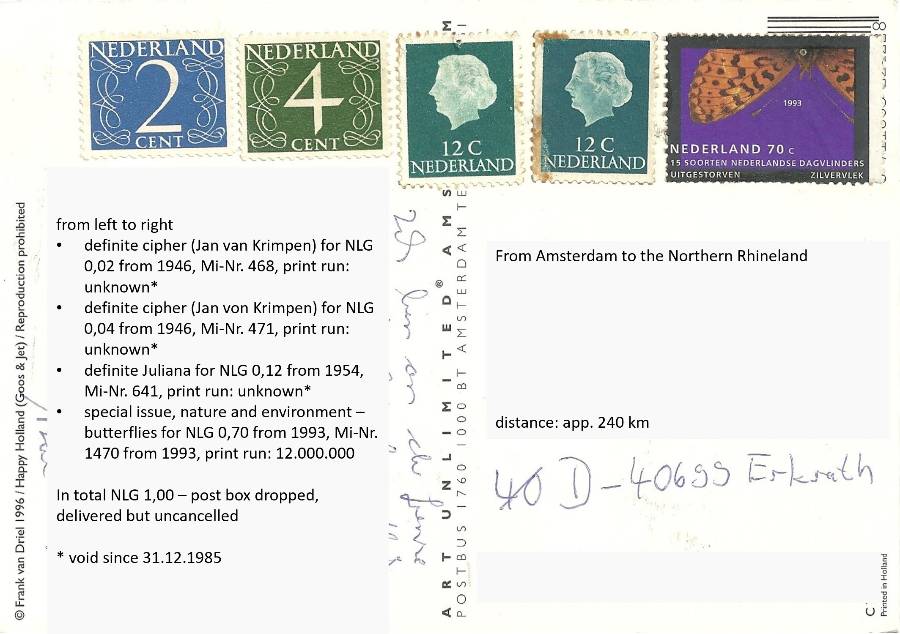 And to prevent you from being bored and distract you from the miserable quality of the item, here's an anecdote: as a bicycle tourist with luggage, I ended up in the finish of a real bike race. And I came in first, arriving five minutes ahead of the pack. There were barriers with spectators on the left and right, but no one stopped me. Five minutes later, I was surrounded by serious cyclists of the competition. From Domburg, Zeeland 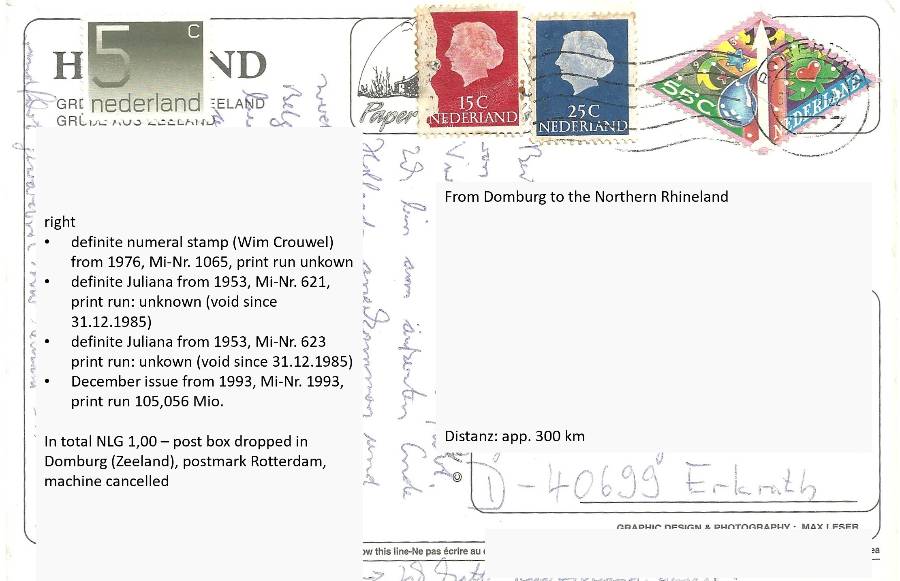 Here, I managed to ride away from an impending thunderstorm at a fantastic speed and that over a distance of over 60 km. The wind from the back was so strong that it practically propelled me over the impressive local seaside flood barriers. Thanks to the Dutch cycle path system (respect!), I was able to ride without any barriers and nearly without any forced stops. I also passed sections on the road that were under resurfacing. While the car lanes were halved and the cars were to slow down, there was free passage on the bike lane (unthinkable in Germany). From Brussels 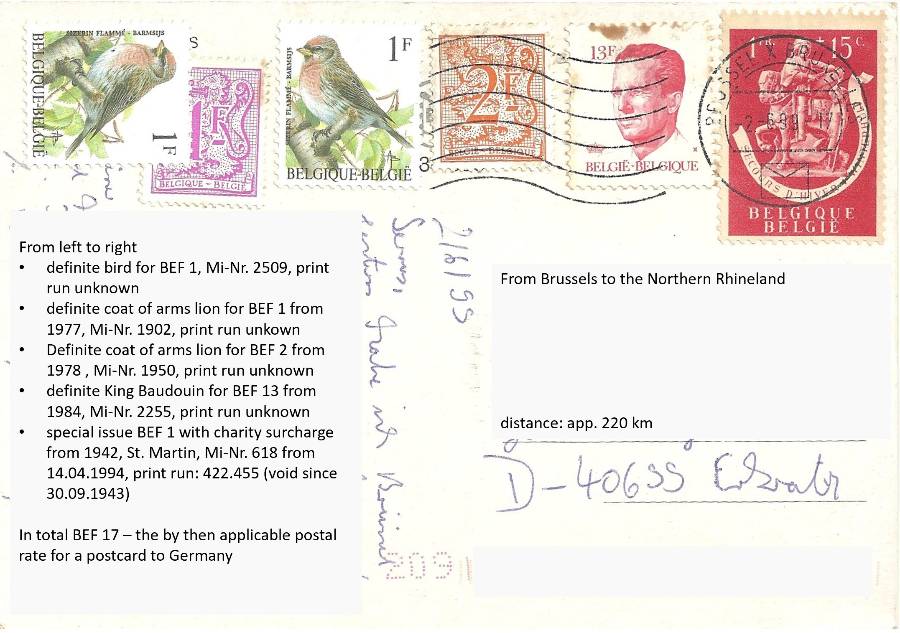 Where I ended up on my bike in a huge, busy, six-lane roundabout paved with cobblestones (it's like being sucked into a deadly maelstrom) and made it out alive. Well, I had promised adventures, hadn't I? And that's exactly what the knights did. They stuck their noses outside the front door, roamed around, and then came back with stories and experiences. As it is, not all of these were completely true; in fact, I fear very few were. In any case, one thing is certain: men never miss an opportunity to embellish the truth (if you take the number of enemies supposedly defeated and multiply it by the corresponding stories, the world would probably be deserted). The same applies to our stamps: if you multiply the number of expensive stamps on offer, you arrive at a figure that exceeds the total print run of this rarities. So, some of the items offered will be forgeries. Whether my story is true is a matter of faith - after all, I would have been young and foolish enough at the time to have done such a thing. In any case, there is philatelic evidence enough (and I simply covered up the poor quality of the last three items with lots of text). |
|
Send note to Staff
|
|
|
Valued Member
Germany
65 Posts |
|
|
Today, I'll show you how to inform friends properly that you're going on vacation and traveling by plane. First, the packing must have gone well. Then you have to make it to the airport in good time. Once you have succeeded, you buy a card, arrange stamps on it, and look for the post office at the airport (which used to be a matter of course years ago, but unfortunately is not so common today anymore). 2001 – we are going to Portugal, to Faro on the Algarve. As luck would have it (which is, of course, a massive understatement; in fact it was deliberately schemed), I had the right quantity of an issue from 1969 commemorating the airmail service at hand. Since it was 2001, the German mark was still in use, and all stamps issued by the Western German Postal Administration from 1969 on (with the exception of those bearing the inscription "Berlin") were still valid. 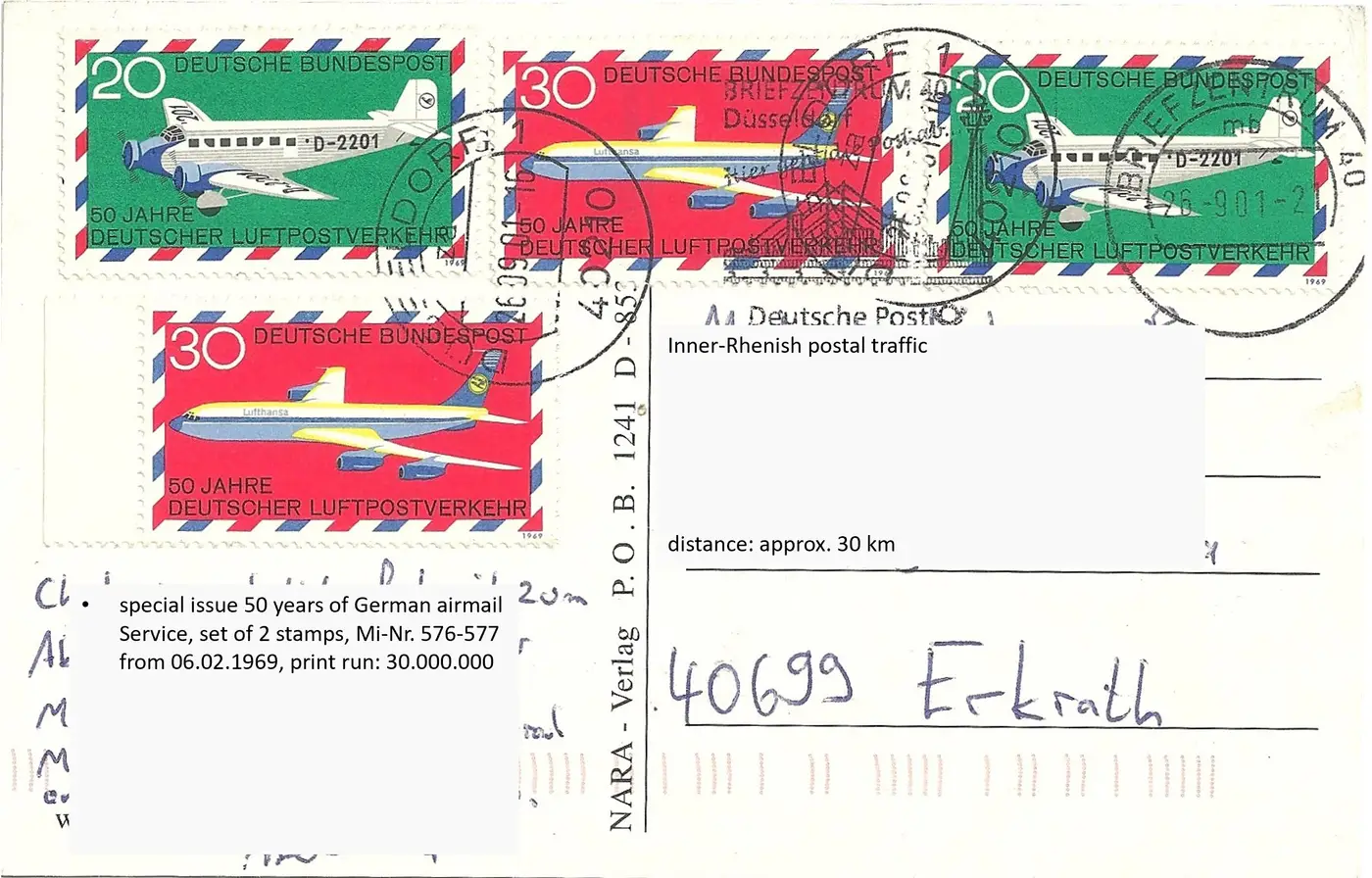 There was a postal agency at Düsseldorf Airport, which I visited, and they cancelled the stamps with their local postmark in an exemplary manner. Unfortunately, it then went through the stamping machine at the mail center again. 2002 – again to Portugal, this time to Porto, and the flight went from Frankfurt, I had forgotten that totally, but there is proof. That was on April 30, 2002. The Euro had already been introduced, but DEM stamps were still valid. And in my stamp collection, I found a nice issue related to aviation. So, I did something unheard of: I simply used it. 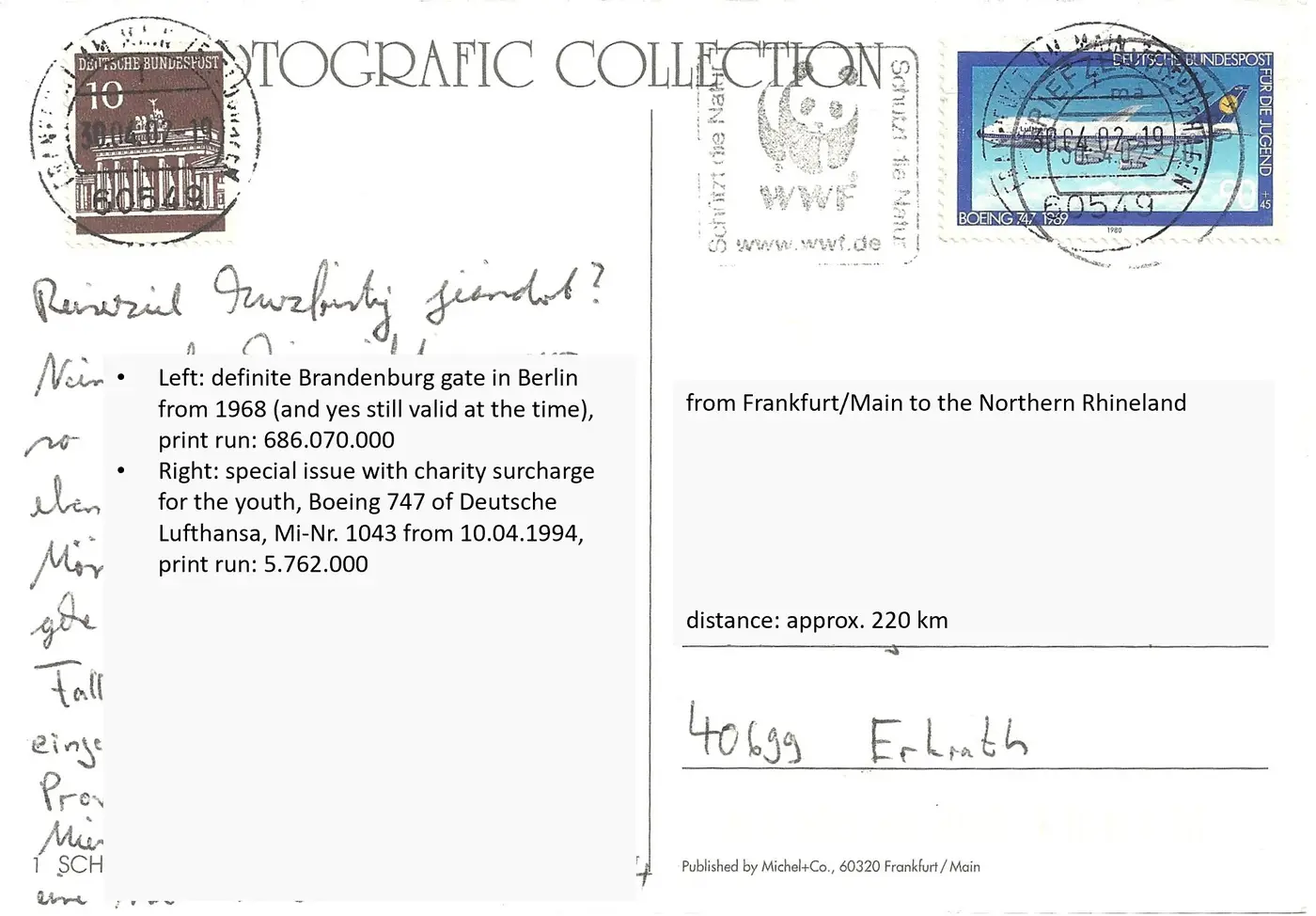 Unfortunately, double cancellation was applied again. At least no one will claim that these are just pieces cancelled to order that never made it through the perilous paths of actual postal delivery. As a matter of principle, I don't show anything like that. The cards and the author in my posts here in this section have always been on site (and - knock on wood - have so far found their way home save and sound). |
|
Send note to Staff
|
|
|
Valued Member
Germany
65 Posts |
|
|
The year is 2003 – it' springtime. Bundle up and off we go. 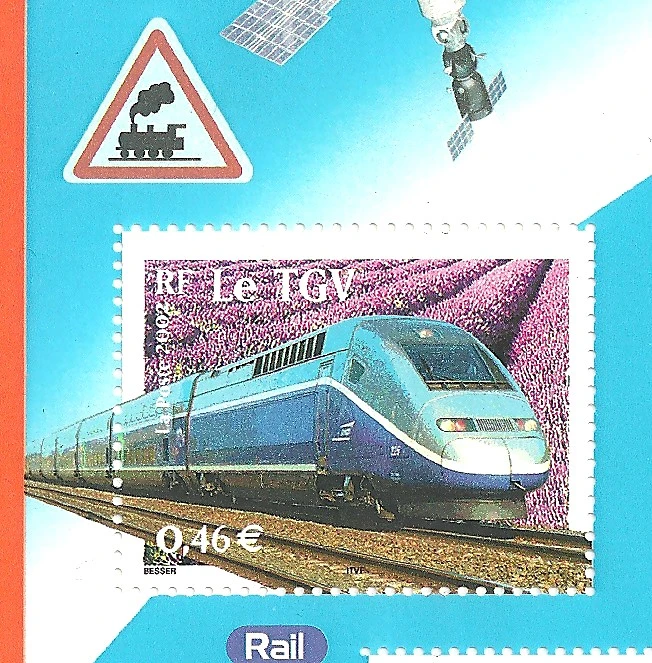 In twelve hours back to Pau. The mission: collecting mountain passes. Laruns, 1.200 residents, in the French Pyrenees, if you need peace and quiet, this is the place for you. There was a simple accommodation in a guesthouse, food, and a pinball machine (!)—these are sometimes to be found in French joints. And, of course, Laruns had a "Bureau de Poste" with a "tampon ronde"- a round stamp. 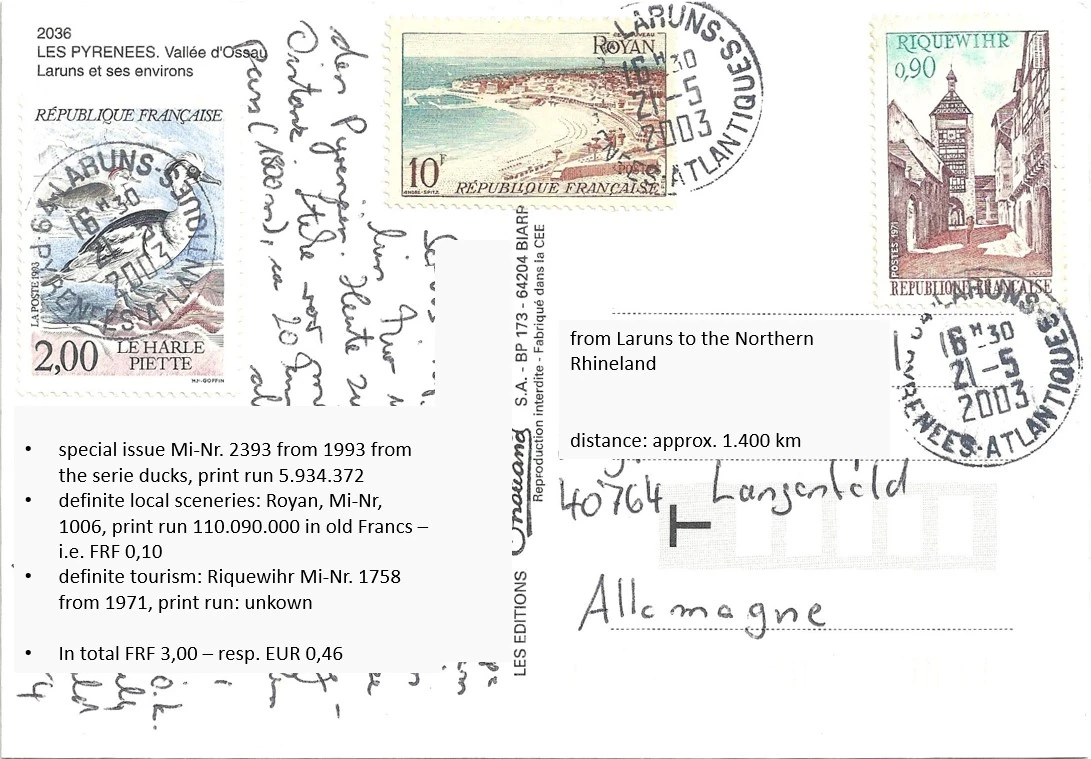 Something to smile about: take a look at the stamp designs - not one of them matches the destination. In fact, Laruns has been honoured with a special stamp (it's incredible what one can find in one's collection), and there is a narrow-gauge railway there. And in the neighbouring valley is the famous pilgrimage site of Lourdes. 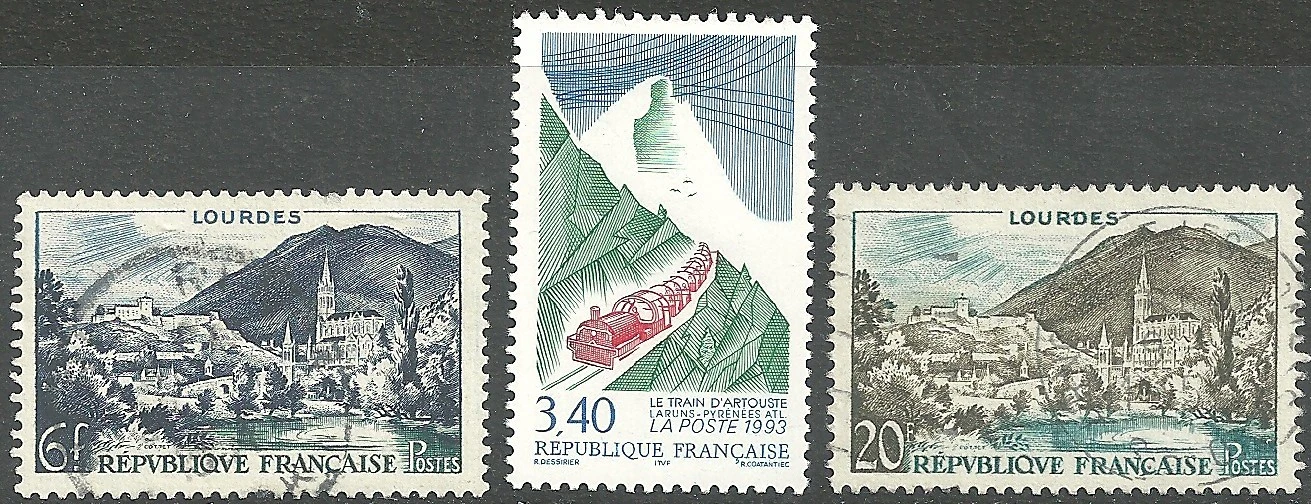 In Laruns the ascend to the pass begins or more precise it is halfway to the Col de Portalet. With his 1.794 m, it is a first category mountain pass in cycling, so it's quite a beast – in this case it's best to take a deep breath and push up slowly but determinedly (on a bike) or, depending on your choice of transport, push down/pull (the accelerator/throttle). And with that, we once again leave France. If I might have anything old for you? Yes, I do—here is Mi-No. 22a from 1862 and Mi-No. 28a from 1867—Napoleon III. 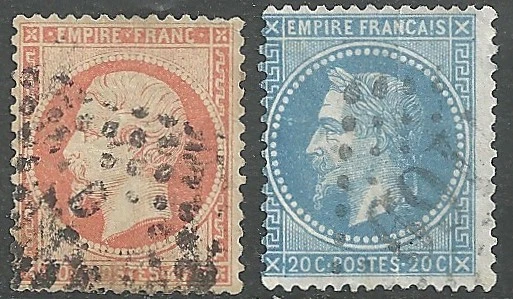 Well, the old stuff is good for all sorts of things and always fits in some way. In the 19th century, there were mostly only these uniform designs, and they usually featured the head of state. And that person rules over the whole country. Including our town in the Pyrenees. Of course, this makes them good keywords for anything, but in my opinion they can't compete with the graphic diversity and art to be found from the 1930s onwards. Presumably, the classics are popular because at least their prices have remained stable (For now!). Napoleon III (nephew of the first) certainly had an eventful life, determining the fate of France (dictatorially, but initially democratically legitimised) for over 20 years and consolidating many foreign possessions. He then made the mistake of losing to the Prussians in 1870 (he was not criticised for waging war per se, but he made the mistake not to win it) and was quickly deposed after losing a decisive battle in the course of which he was even being taken prisoner. I invite you to compare the designs (left without laurel wreath - right with). It is interesting to see how the design on the right-hand stamp appears significantly more delicate than the previous design. À bientôt! |
|
Send note to Staff
|
|
|
Valued Member
Germany
65 Posts |
|
|
It will be no surprise that on the top of the Col de Portalet-mountain pass we enter Spanish territory again. And for all readers of this blog who might have asked themselves, what came of the baby-king mentioned my contribution of February 15, 2025 I have this information: 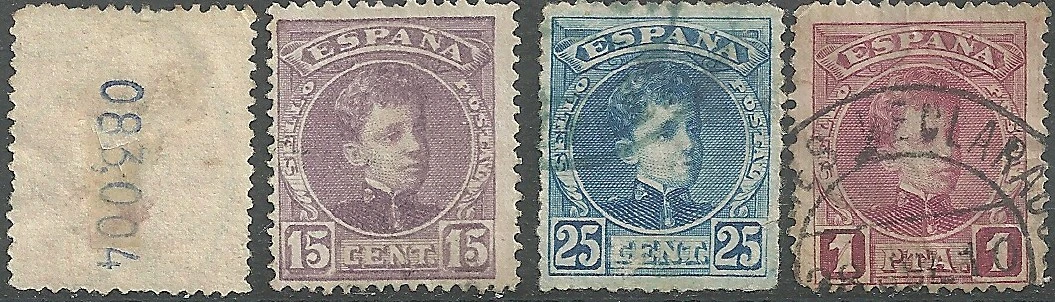 Everyone is probably familiar with the scene of visiting relatives with children when you haven't seen each other for a while. "How you have grown" is the usual comment. I hope I have exemplified it now to you. By the way, the expression "grown" only applies to the child king; Spain actually shrank during this period. In 1898, the US fought for and won Spain's remaining colonies in the Pacific and the Americas. The Germans also acquired a few islands (the Mariana and Caroline Islands), but they bought them from the Spanish (for 17 million marks). The stamps have genuine postage and usage value, consequently they were printed in millions. The Spanish count their print runs. The 10 centavos stamp (shown with its reverse side) has a print run of 242 million, the 1 peseta stamp of 11 million. With regard to the control numbers on the reverse side, a co-collector once informed me: In principle, Spanish stamps from 1901 to 1931/32 (with the exception of a few small denominations of 1 and 2 cts) always have a control number on the reverse side that corresponds to the respective sheet number. But let's leave that aside and focus on the natural beauty of the area, as we are in the Ordesa and Monte Perdido National Park. The highest peaks mark the border between France and Spain. This guarantees breathtaking panoramas. Of course, the Spanish postal service did not miss the opportunity to depict this fantastic place – from the Landmarks series (at ESP 0.15 – an inexpensive cultural ambassador, I dare say, namely at the time of issue approx. DEM 0.01 or EUR 0.0009 in 2002 when the euro was introduced. 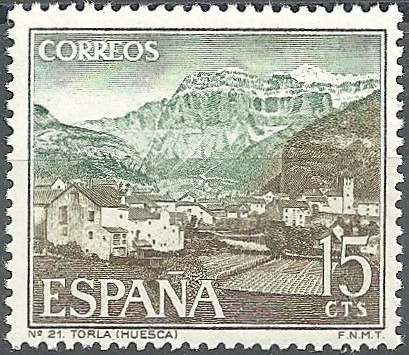 The national roads 260a and 260 run reliably. and as I recall it pleasantly quiet, dotted with impressive views through the Pyrenees along 3,000-meter peaks. Are there post offices in such remote areas? Of course, for example in Biescas and Ainsa, where I consigned the following items to the hands of the local postmasters for delivery. 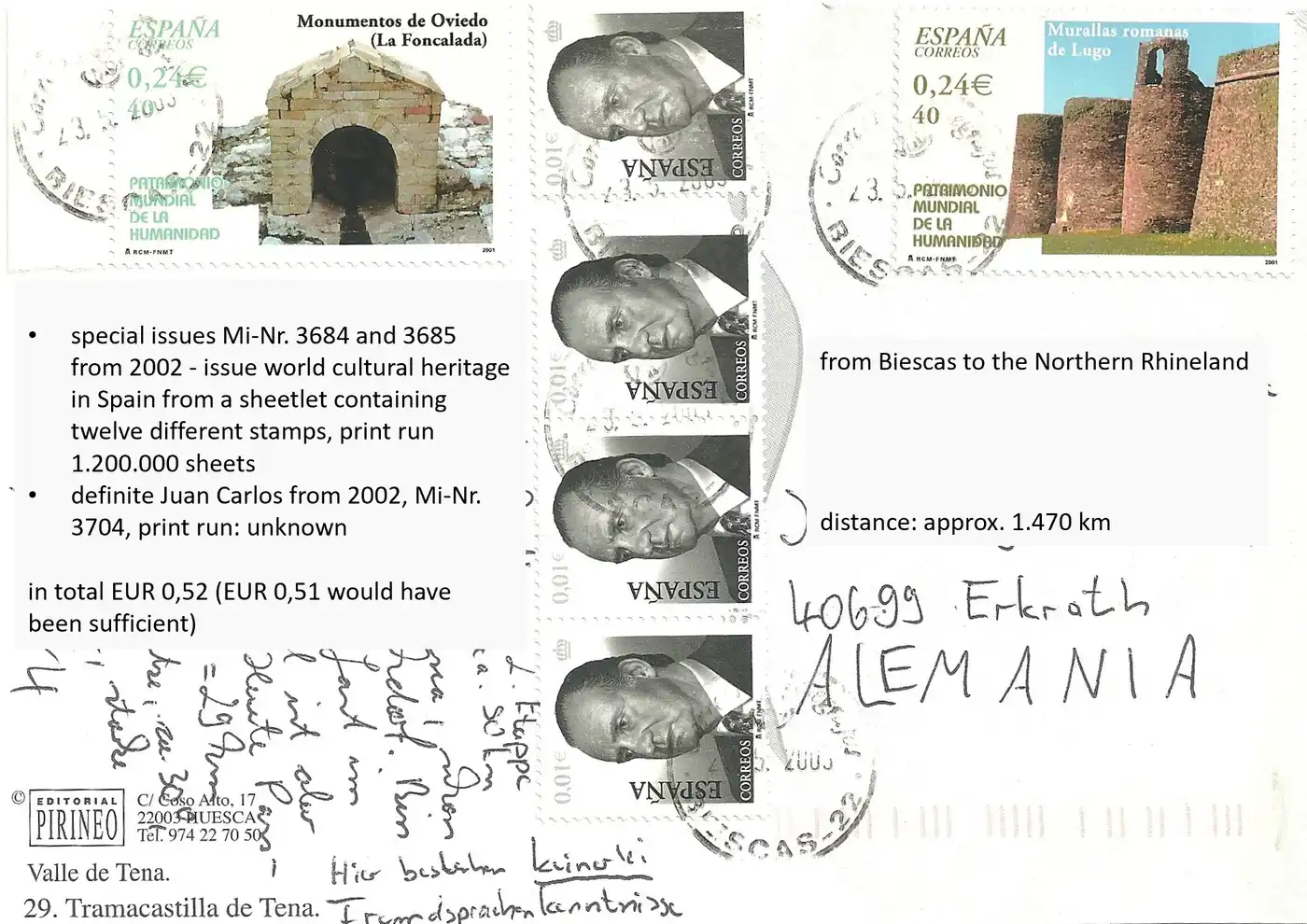 The Stamps were bought in 2002 in Ribadasella und Coruna – yes, this object of utility called stamp is a handy thing. One can buy it, store it and use is, where and when one needs it, or – and I love this thought even more – when one is in the mood for it. As in regards to Spain, that means we have to start a fight against windmills, oh pardon me - I meant to say against the all-present postal labels. I think - at the time - I suceeded.. And be sure of that, the fight will be continuously kept up. 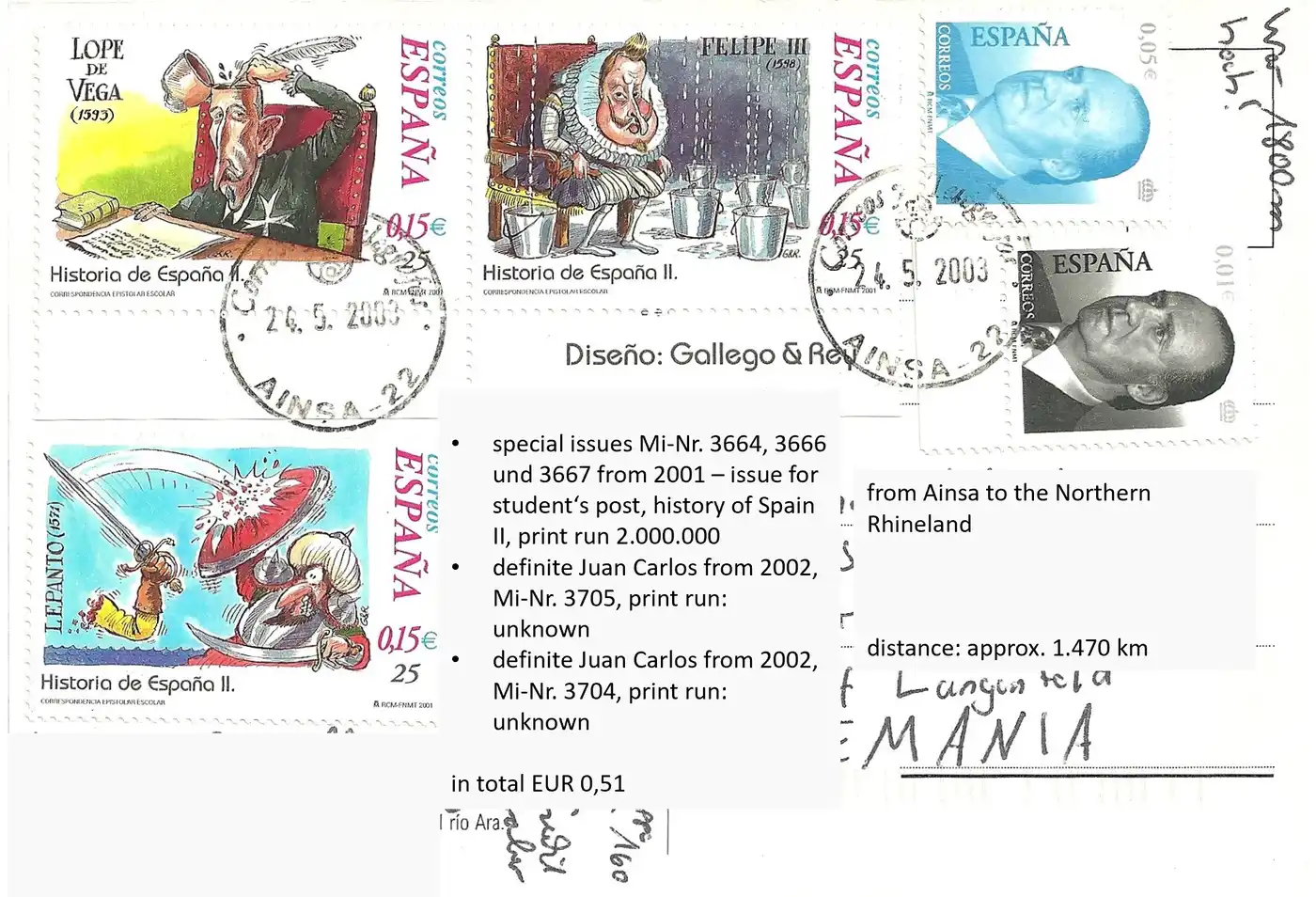 |
|
Send note to Staff
|
|
|
Valued Member
Germany
65 Posts |
|
|
It's not only the mountains that make the pyrenee area worth to visit and travel, but also the typical style of architecture and arts. The Gothic style, however, played in this region, which in earlier times apparently was difficult to reach, hardly any role. The Romanesque style and even the pre-Romanesque predominates, clearly evident in the religious buildings and in my opinion well matching to the region and very typical of the southern side of the pyrenees. 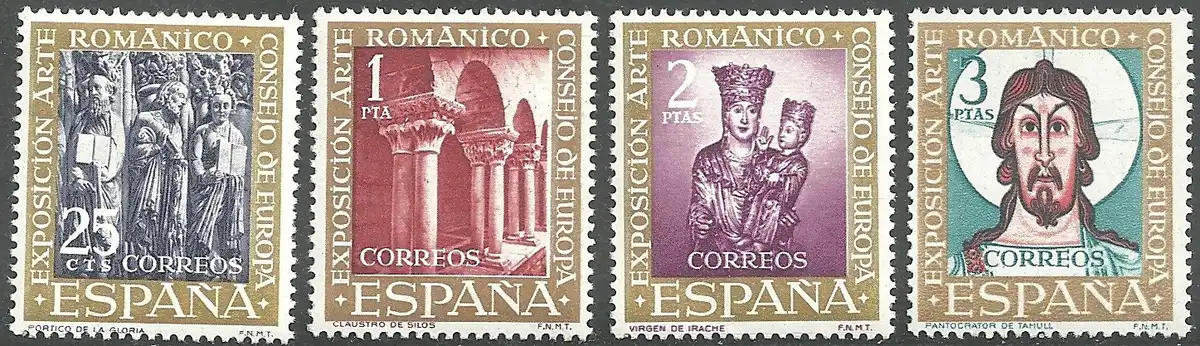 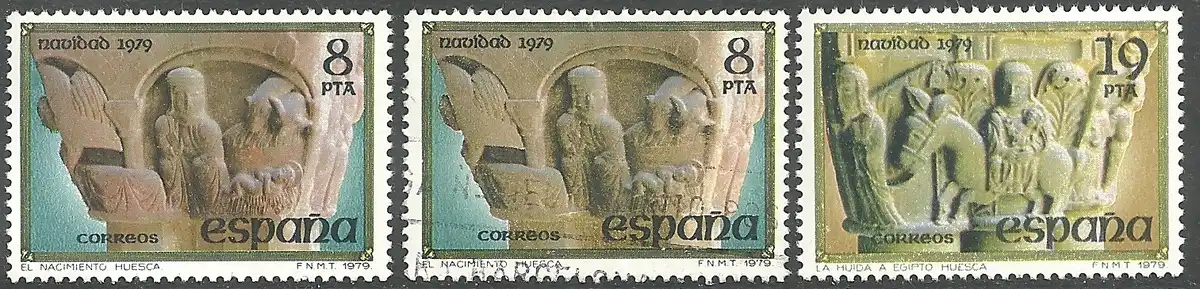 And of course, the mountains are a diverse place, including in terms of climate - once again everything from 5 degrees to 32 degrees could be experienced. The route winds its way through the mountain ranges, each one a nature reserve. And there aren't many border crossings to France. Over three hundred kilometers, I counted just three passes (which is why I didn't go via Lourdes – as that would have been a dead end). Wild animals thrive here. However, the animals depicted on the Spanish stamps below made no appearance - neither along the road nor as a dish on a plate in the evening. Here, this should match - another Pyrenees stamp that caught my eye in my collection, one that captures the panorama almost photographically (though I prefer the intaglio stamp from my previous post). 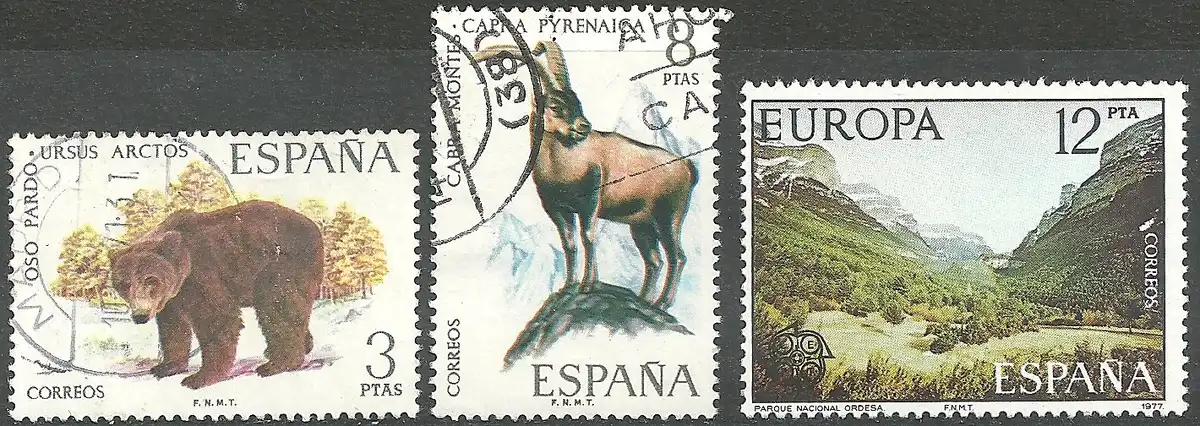 Stopover in La Seu d'Urgell, the first stop on now Catalonian soil. 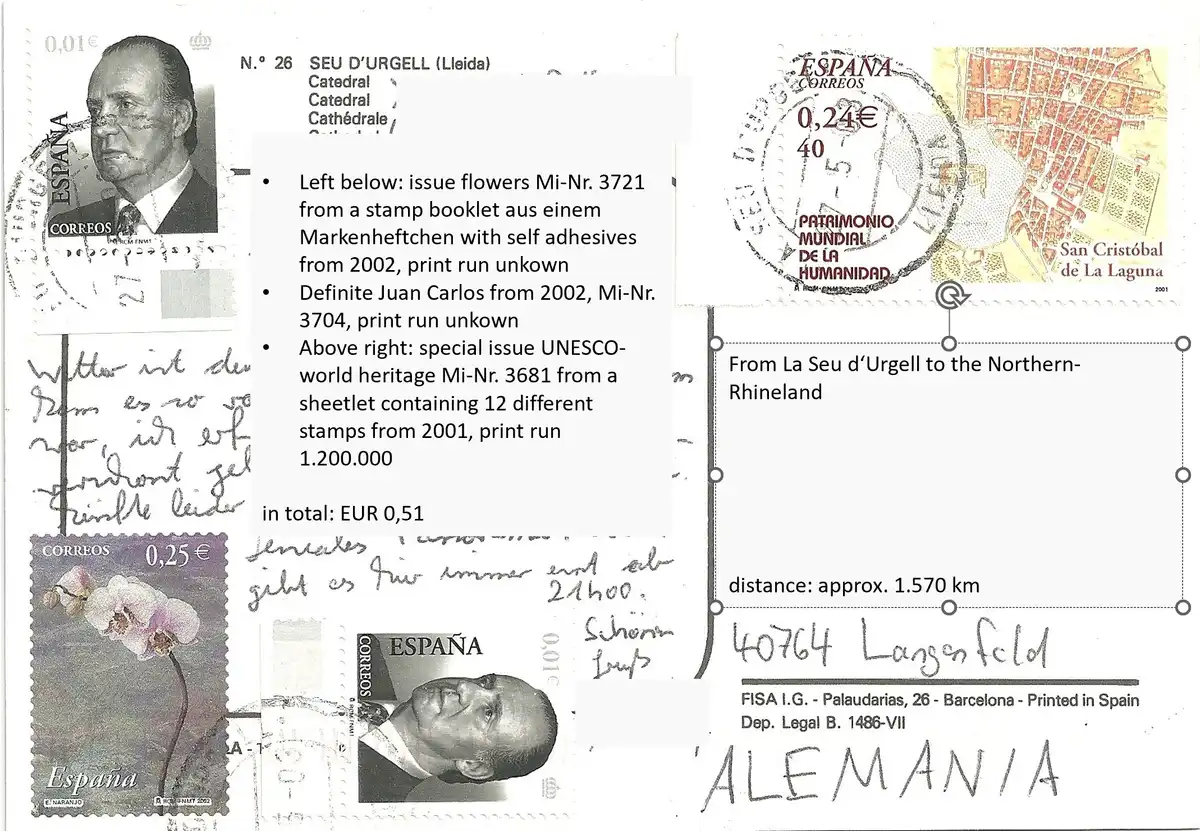 Now, anyone who follows the track of the tour on the map, and considers the fact that Urgell is a major west/east and north/south road hub, and recalls the hobby of our fellow traveller, already knows what will come next. Right? |
|
Send note to Staff
|
|
|
Pillar Of The Community
Netherlands
6530 Posts |
|
|
I love the Romanesque.
Money in Spain had a neat little hobby of tearing down old churches and building bigger ones in the latest style. This part of Spain, together with Asturias and Cantabria was re-conquered early or never conquered. So there were Romanesque churches and monasteries.
The reconquest moved people and money South and to the coastal areas. The population did not grow and there was no need for bigger churches. The Gothic allowed for more monumental structures. Nobility and money had settled elsewhere when the Gothic replaced the Romanesque. So, there was neither necessity to rebuilt nor ego to replace. That helped the Romanesque beauty of the region to escape destruction.
The Seu of La Seu d'Urgell is a beautiful structure. Andorra, that is on the doorstep, is an open-air Romanesque museum and a place where you must send a postcard both through Correos and La Poste. |
|
Send note to Staff
|
| Edited by NSK - 04/16/2026 2:08 pm |
|
|
Pillar Of The Community
Netherlands
6530 Posts |
|
|
The cloisters on that 1 pta. stamp from a set of stamps issued in 1973. 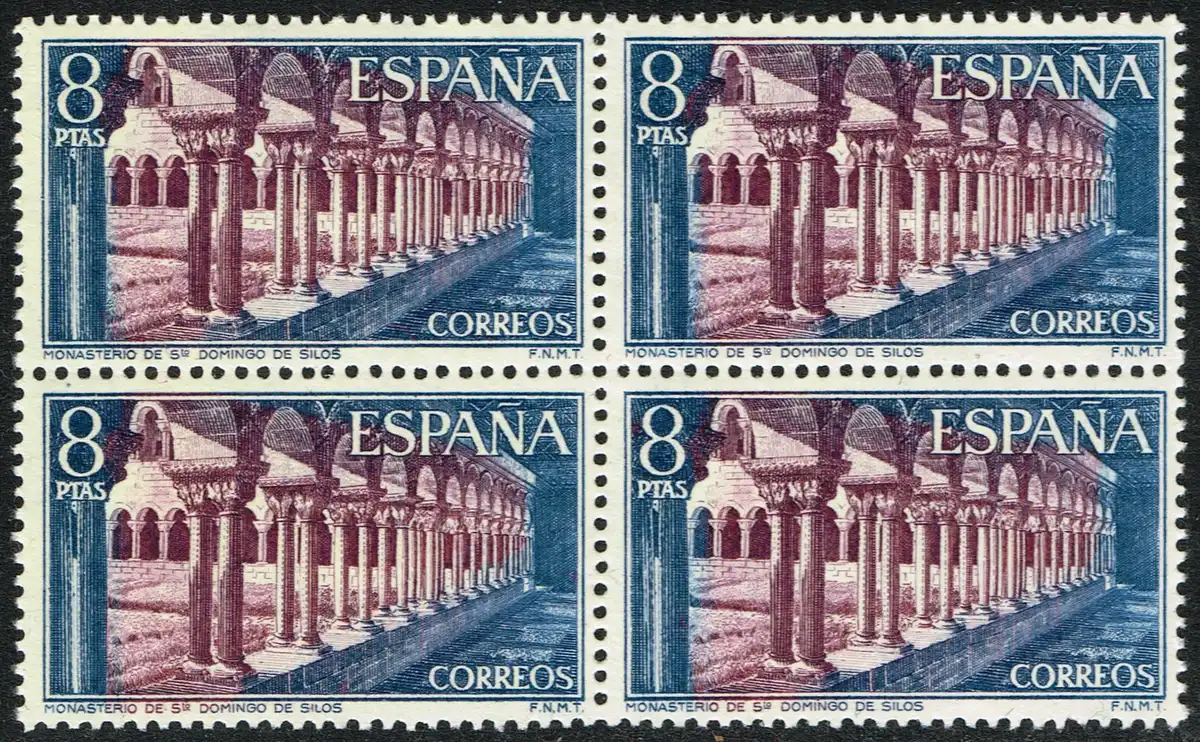 |
|
Send note to Staff
|
| Edited by NSK - 04/16/2026 2:18 pm |
|
|
Valued Member
Germany
65 Posts |
|
|
Allright, we are here: 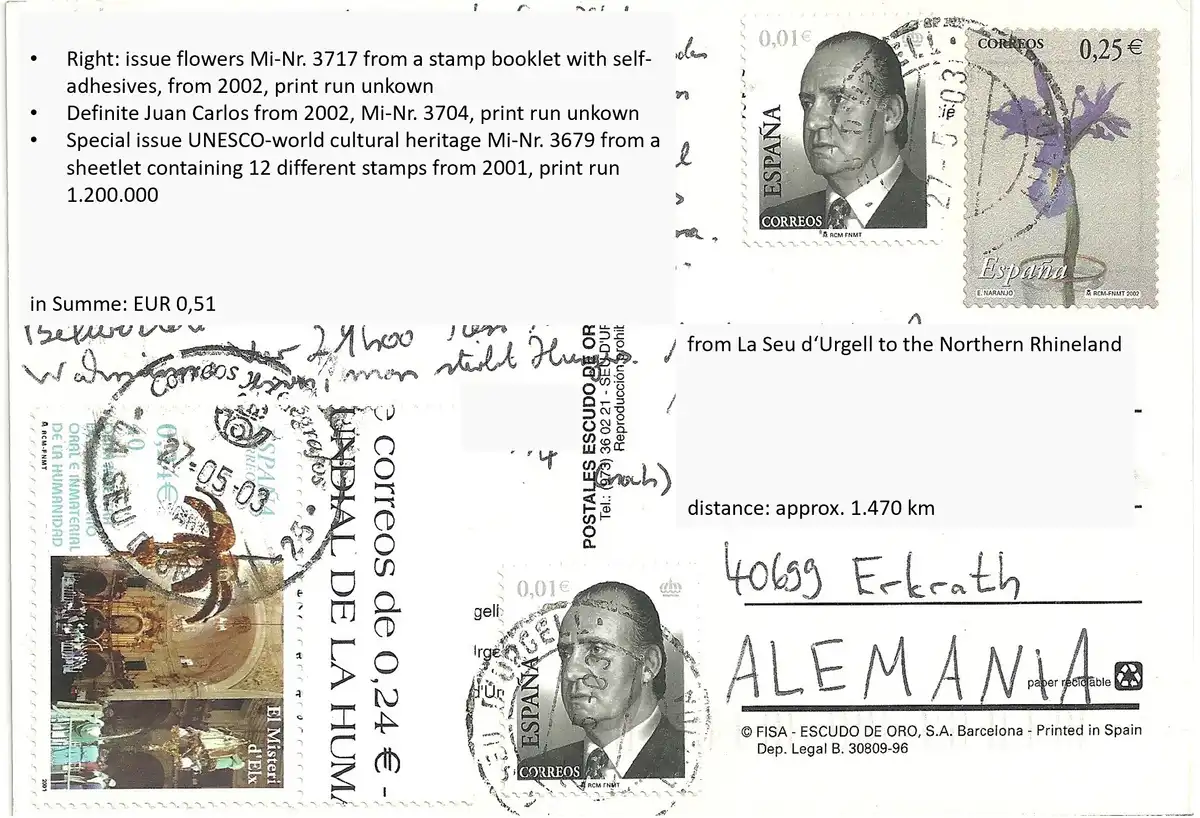 La Seu means "bishop's seat." And the Bishop of La Seu d'Urgell is also the nominal head of state, alongside with the French president - not of Spain or Catalonia, of course, but of the territory of Andorra. Andorra- there it is, that exotic little land. Squeezed between Spain and France, which apparently couldn't agree on who should rule the territory. Perhaps it didn't matter at all, because I can't see how control of it could have been economically or militarily important. Well, for us stamp collectors, this has become a major issue since the decision (in 1928) to issue own stamps for this remote part of the world (apparently, they had managed without them before). So, once again, stamps for a microstate. As if that weren't bad enough, due to Andorra's co-administration, there are also issues from two postal administrations: namely, Andorra under the Spanish postal service and Andorra under the French postal service. Since I was already in the area, I decided to head north. In regards to the local stamps that alone was, of course, a must. However, another factor of no small importance for trophy hunters is the fact that Andorra is home of the highest pass in the Pyrenees. So, anyone who wants to say one has conquered the Pyrenees simply can't miss the Pas de la Casa. But softly - first we are heading with pounding heart toward the Spanish–Andorrian border. No mistakes now. A quick glance at the calendar: a weekday, no holidays—excellent, so the post offices should be open. Off we go. But for now, let's say "Adios" to Spain (it was impressive, diverse, and exciting) - as a token of gratitude, here's a brief tribute in the form of three admittedly completely haply quotes 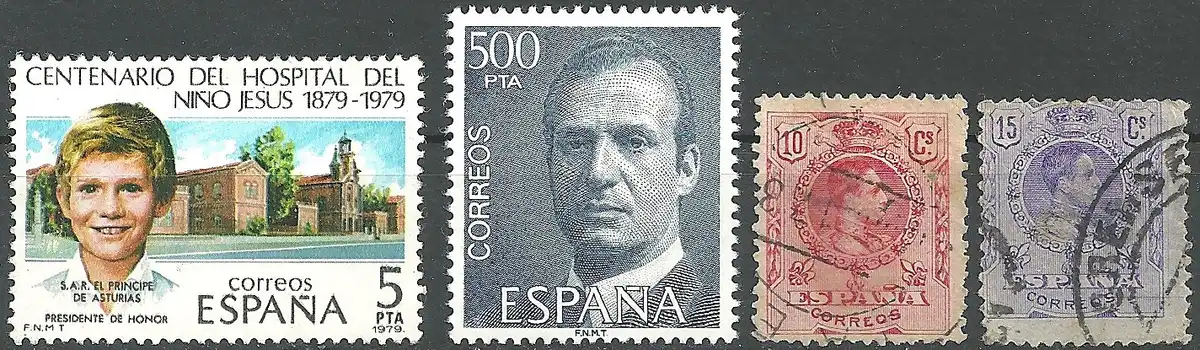 • left: has the same age as me, but in contrast to me, he's made it – that is to say on stamps: the current King Felipe • middle: Juan Carlos I: The king at the time I was in Spain. A stately man -one must give him that - depicted in a typical, awe-inspiring, proud portrait as a man in his mid-to-late forties. Here, by the way, is the highest denomination: ESP 500, representing the considerable amount of DEM 9. I'll just quote him briefly here: he once said to Hugo Chávez (the socialist downrunner leader of Venezuela, once considered the Switzerland of South America, who was notorious for his endless, rambling speeches), with whom he attended a summit of Hispanic leaders in South America at which Hugo Chavez once again didn't find an end to an address. Juan Carlos said laudably: "Why don't you shut up for once!" • right: again something old: Alfons der XIII – It's amazing what people attribute to these potentates – he is said to have been a promoter of the contemporary Spanish tourism but on the other side also of militarism. Perhaps we shouldn't over-interpret things. In the modern era, a society cannot be forced to submit to the will of a ruler who isn't an absolute monarch - in any case, we encounter him again here on classic stamps - today, something from 1909 Who arrives at the border might be surprised by a traffic jam and the unusually thorough border checks. After quiet days, things suddenly became more hectic. Traffic increased to an annoying degree. I wondered, "My goodness, what are they looking for?" Well, Andorra is—or rather, was—a haven for money laundering, tax evasion, and customs fraud. Typical ministate. For a start, let's look at few stamps. We are still close to the Spanish border, so I show some issues of the Spanish Post for Andorra. Today devaluated as by the introduction of the Euro they were declared void. I'll spare you my usual critical remarks in that regard, but I'm gritting my teeth. 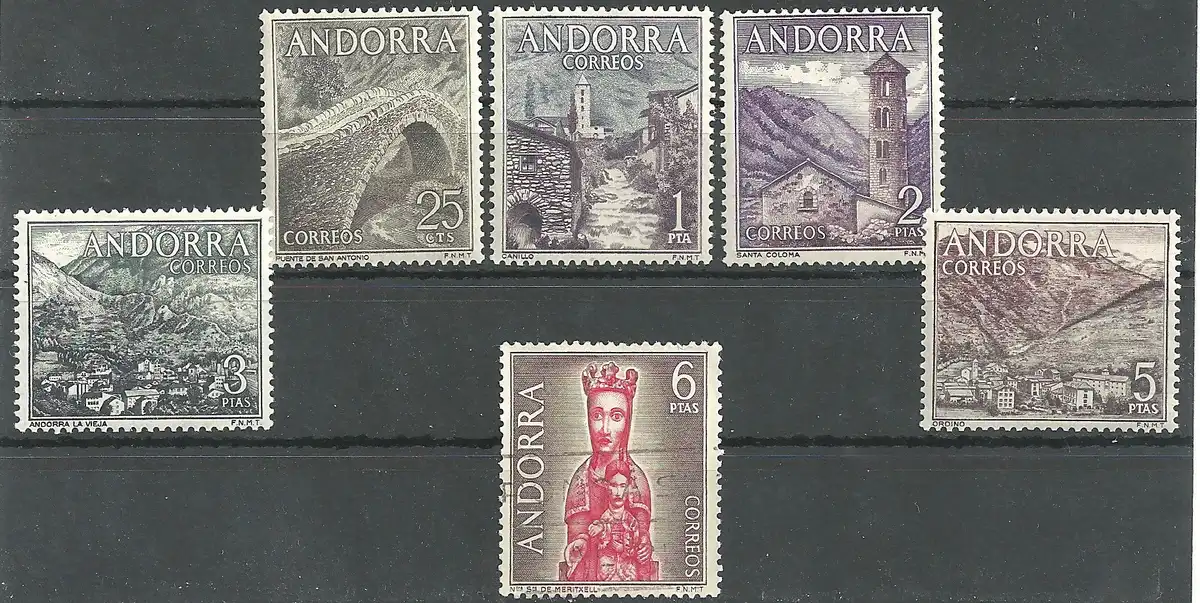 These are postage stamps issued by the Spanish postal service in the design of the Spanish landmarks series. They're very beautiful and really make an appetite for a visit. However, the depictions are somewhat overly romanticized, as Andorra's population has since grown significantly. So, Andorra la Vella is no longer the compact settlement depicted on the 3-peseta stamp. But the panoramas are well captured and give an idea of the impressive height of the surrounding mountain range. As small as Andorra is, the pre-Romanesque art of this region - which was difficult to reach for centuries - is impressive, of which many stamps of Andorra bear witness, including the Madonna of Meritxell on the 6-peseta stamp. And of course, I needed some modern issues. Less than five kilometer later, I arrived in St. Julia de Loria, where there was a Spanish post office right on the road (if you take the old part of the road through the village). I pulled my brake levers and went inside. 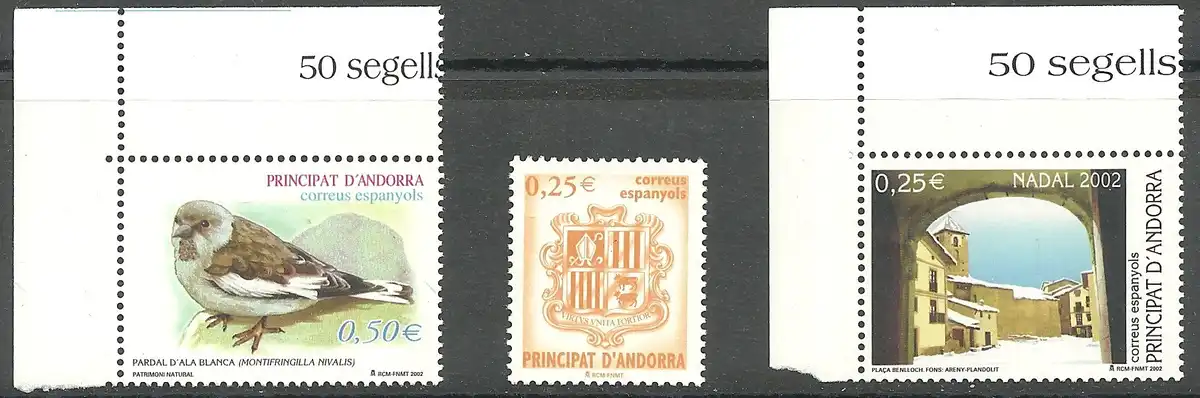 No rarities – don't hesitate to laugh, but these things were bought locally, which is for me a sensation in itself (when have you been in Andorra the last time). Admittedly it could have been more plentiful, but Andorra-Town was still to come. One main road stretches through all Andorra and – by jove – it is heavily frequented. Stressfull! But Andorra-Town was not far away and was soon to be arrived at. I found it difficult to navigate in the town and looking for the post office took quite a while (back then it was before the mobile phone era). Wrote some cards and then I wanted to post them with much enthusiasm in the Spanish post office. But my mood was not reciprocated, I was just a nuisance to them. There were simply too many more important things for the postal workers to do; they were busy counting EUR 500 bills that other customers were placing on the counter in large numbers. In Spanish slang, the bills were nicknamed "Bin Laden" (because everyone knew they existed- but no one ever saw them in everyday life). However, in Andorra, that was apparently the banknote of choice. I was amazed and realised what the customs officials of Spain and France were looking for when I entered and left the country (…slush money…). My postcards were quickly but not very diligently stamped by hand, then I had to put them on a pile (they were later machine-stamped again – which didn't surprise me). And as to stamps, they either didn't have any stamps or didn't want to show me any; in any case, we didn't come together - disappointing, I need to say. 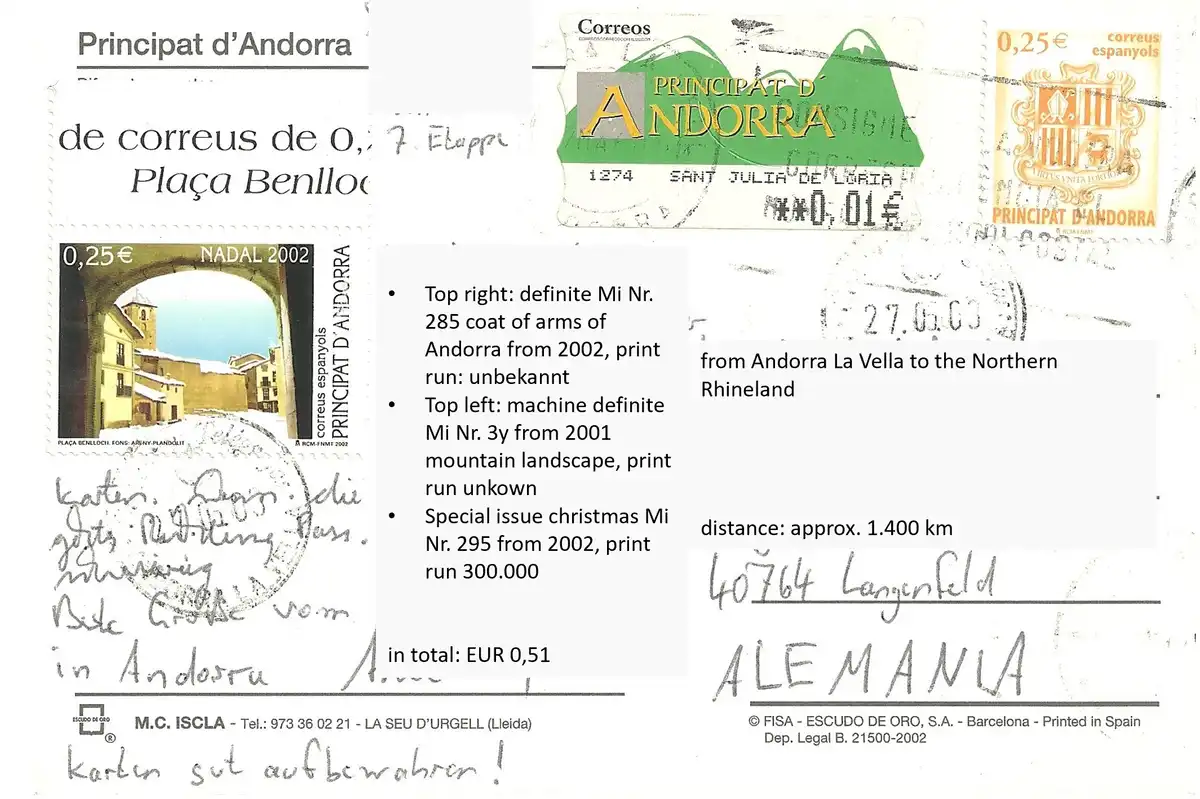 Andorra la Vella was also an arduous place. Andorra is a small, enclosed country surrounded by high peaks. At the time of the launch of own stamps (1928 by the Spaniards and 1931 by the French), Andorra had a population of about 6.000. Life was hard, austere, and centered on agriculture, which is why emigration from Andorra was always high. It wasn't until 1913 that a paved road was built to Spain, and to France in 1933. Unbelievable! Since then, the population has grown to 77.000, and you can feel that when looking at the contemporary valley. After the vast open spaces and nature one could lavishly enjoy on the Spanish side of the Pyrenees, Andorra feels noticeably cramped. Steep valleys and heavy traffic don't exactly help to improve the air quality. But let us go and visit the French post office next, in the coming report. 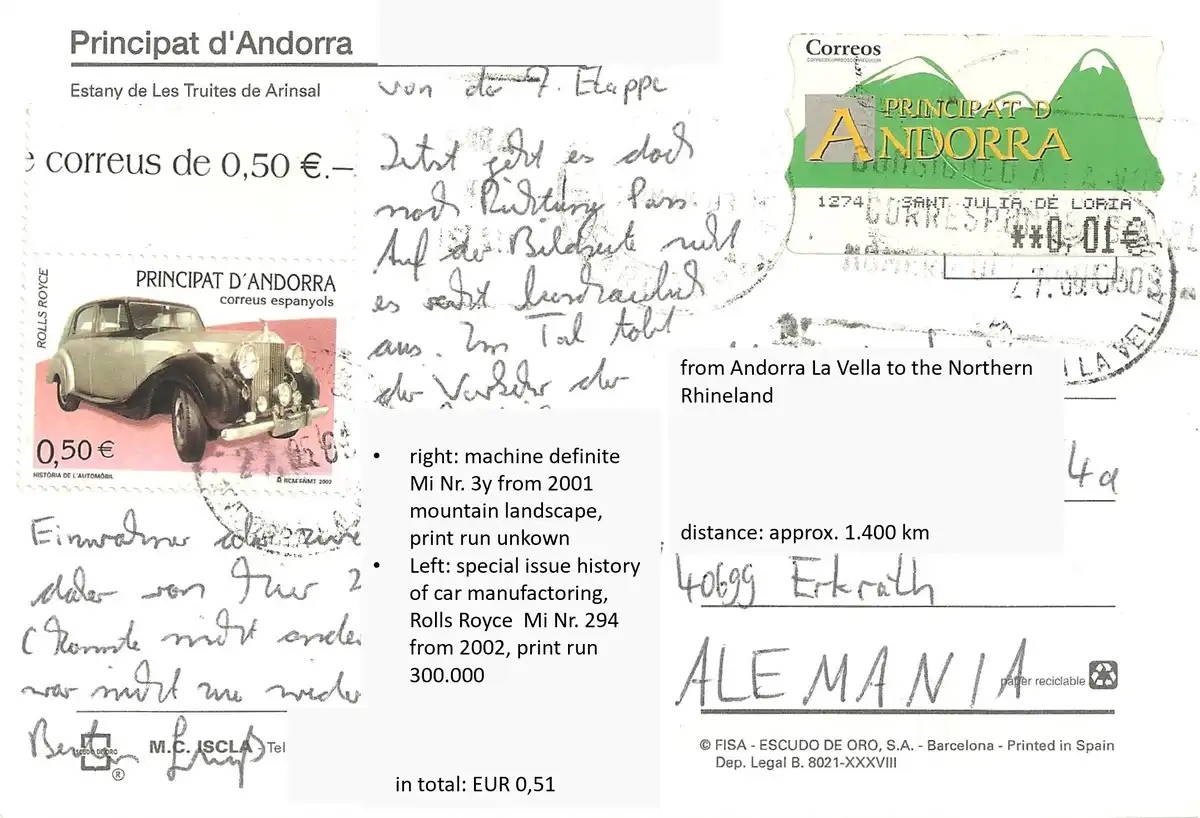 |
|
Send note to Staff
|
|
|
Valued Member
Germany
65 Posts |
|
|
French postal administration in Andorra – according to Michel there are 939 specimen as per the end of 2024. They have started with own issues in 1931, these were overprints of French definite issues. The print run was small, the low nominal issues of the series are to be found in many worldwide beginners' collections, as for example the half centime-issue which had a print run of merely 30.000. Only one year later there was an issue with regional sights. I have the impression they did that foremost for the purpose to market the issues to collectors, the more so as local inner-andorran mail was free of charge. There shall be small states (Liechtenstein, Monaco, San Marino) to which the sale of stamps was an important source of income for governmental coffers. 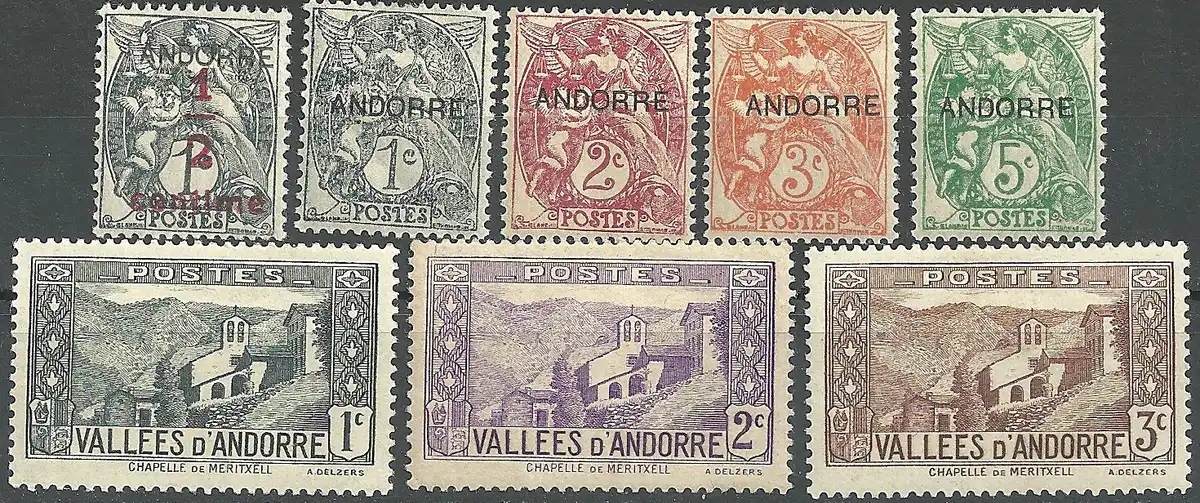 The French post in Andorra follows French rules and that means that all stamps are valid for postage permanently, as are the specimen shown above. Merveilleuse! But let's go back to my visit of the local post office at the time. At the French post office in Andorra la Vella everything went well. There was swag and the post card home was cancelled picture-perfectly. Mes Complimènts! 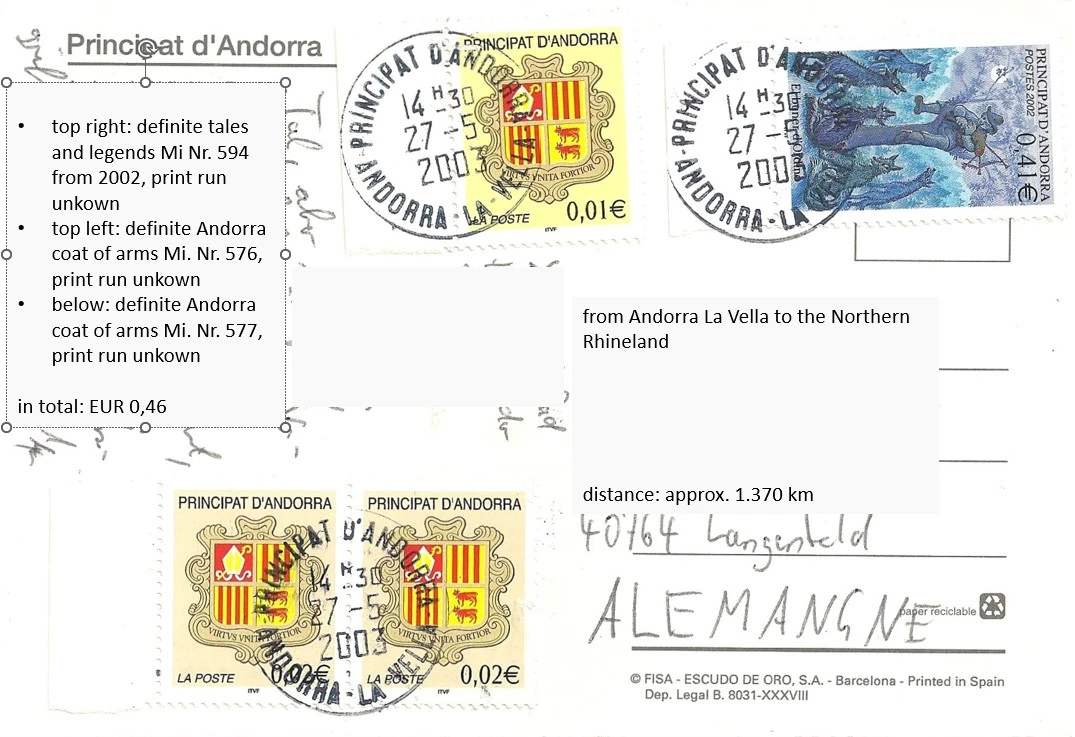 Here are some of the spoils. 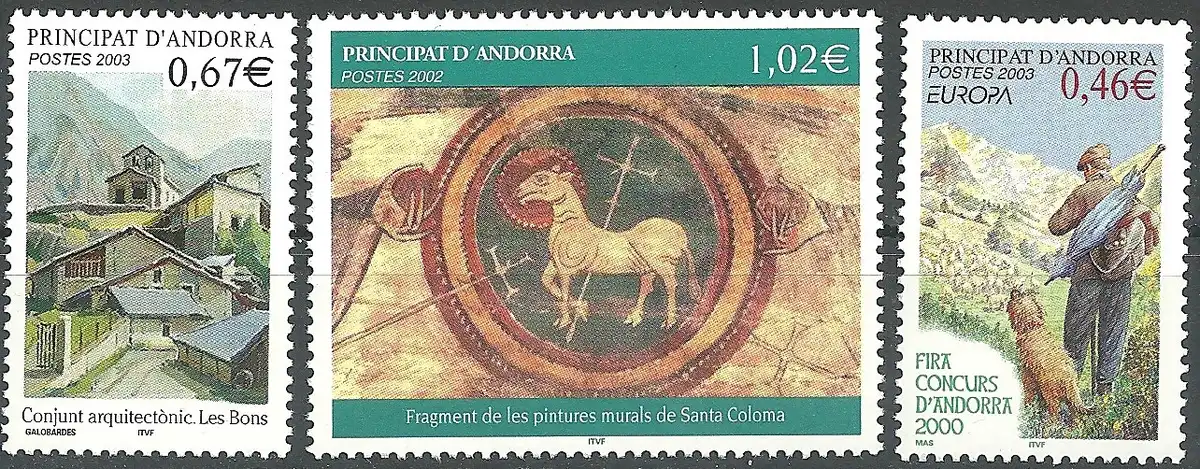 Well, that's done. I was quite glad to be able to exit Andorra la Vella. North of the centre one arrives at a parting of the ways. One can either go North in the direction to Massina / Ordino (which would be a dead end) or further to the Northeast along the river Envalira through the Envalira valley. I found the route to be quite steep and strenuous, but one can check all that online these days, so apparently it's a route with average gradients. But it was chilly, and the stops at the post offices took quite a bit of time. So, I chose to find a place to stay in Soldeu in the afternoon earlier than usual, thus I was able to add a pair of gloves and a wool cap to my gear (typical of lowlanders, traveling to the high mountains insufficiently equipped – often in shorts and sandals—really reckless). I would like to conclude my today's report with two special stamps featuring pre-Romanesque (5th–11th century) frescoes, for which Andorra is quite famous and which are frequently depicted on Andorran stamps. These have been celebrated and printed in large format by the French postal service. Magnificent and sublime! 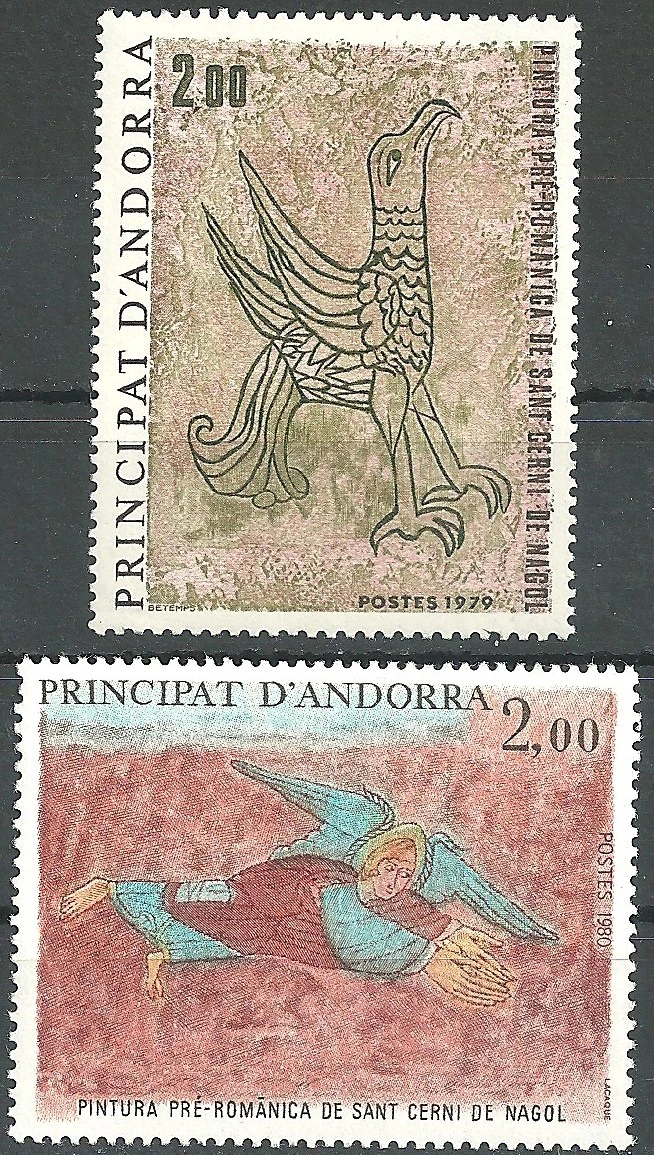 Can you really frank mail like that? Yes, dear label and barcode enthusiasts, it's possible—provided you have something like that at hand. As mentioned, all French issues of Andorra are valid for postage on a permanent basis at their face value. |
|
Send note to Staff
|
|
|
Replies: 73 / Views: 11,674 |
|
|
To participate in the forum you must log in or register. | |
Disclaimer: While a tremendous amount of effort goes into ensuring the accuracy of the information contained in this site, Stamp Community assumes no liability for errors. Copyright 2005 - 2026 Stamp Community Family - All rights reserved worldwide. Use of any images or content on this website without prior written permission of Stamp Community or the original lender is strictly prohibited.
Privacy Policy / Terms of Use Advertise Here |
| Stamp Community Forum |
© 2007 - 2026 Stamp Community Forums |
| It took 0.19 seconds to lick this stamp. |
 |
|




 Posted 08/16/2025 01:52 am


