| Author |
 Replies: 833 / Views: 76,290 Replies: 833 / Views: 76,290 |
|
|
|
Pillar Of The Community
United States
1819 Posts |
|
|
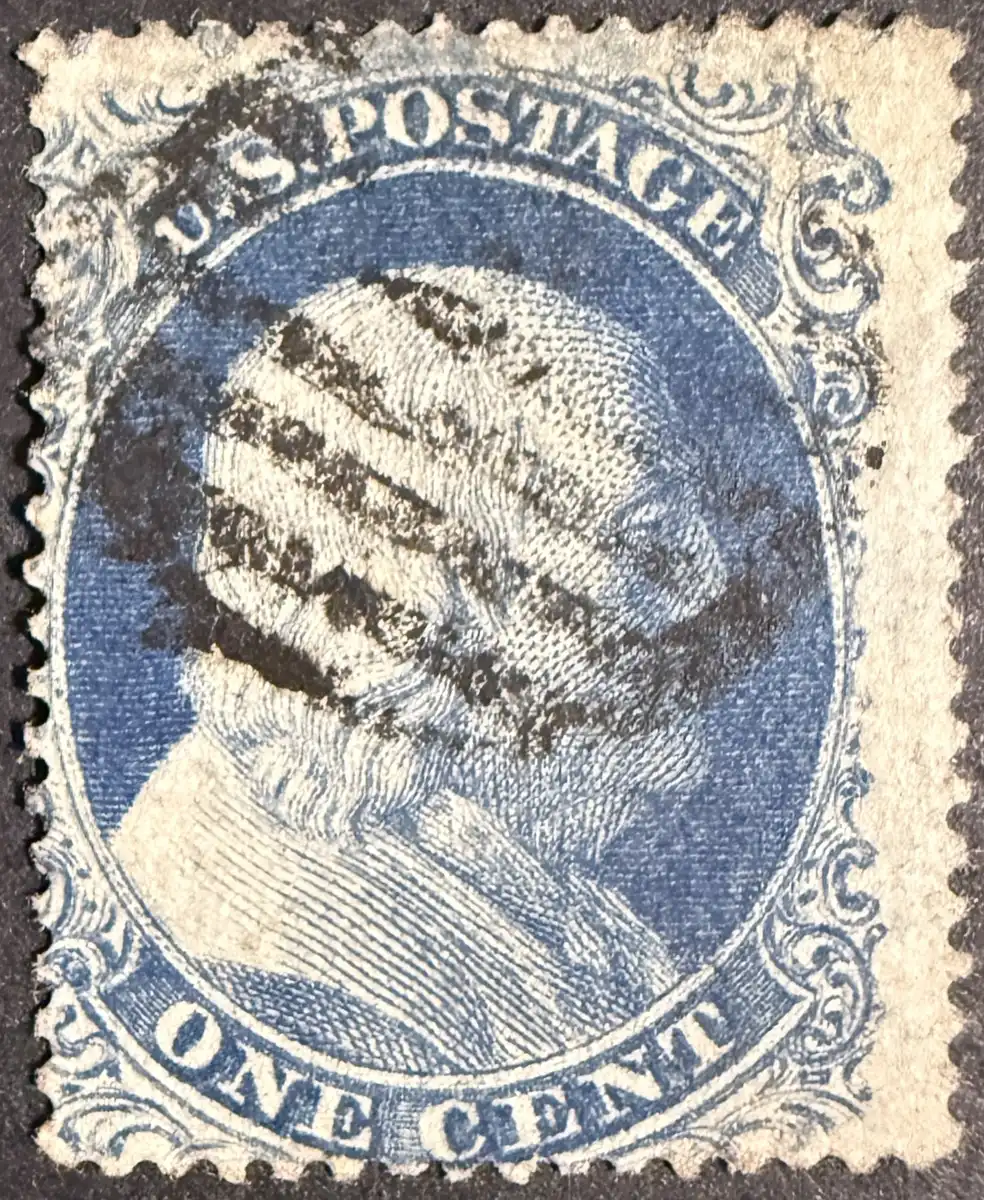
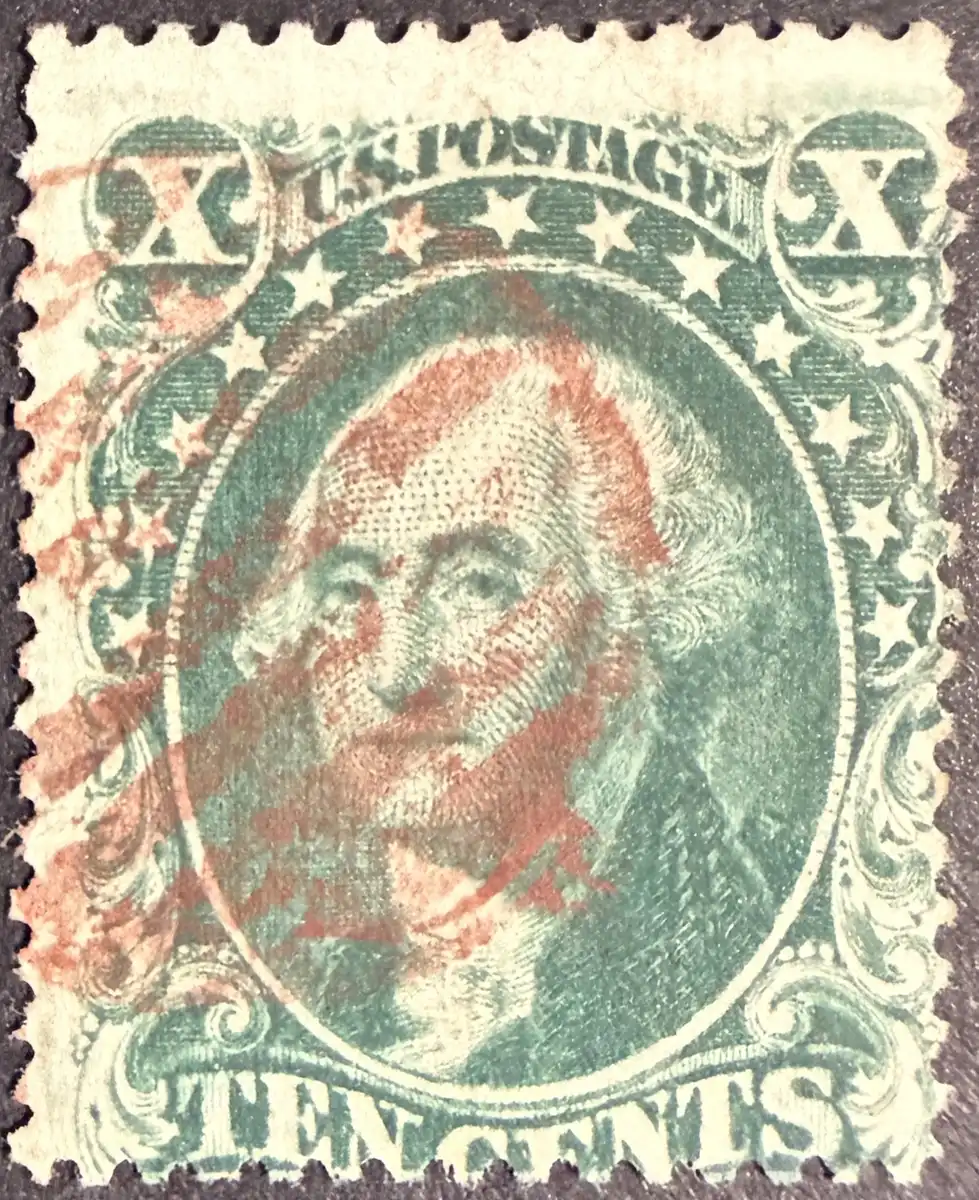
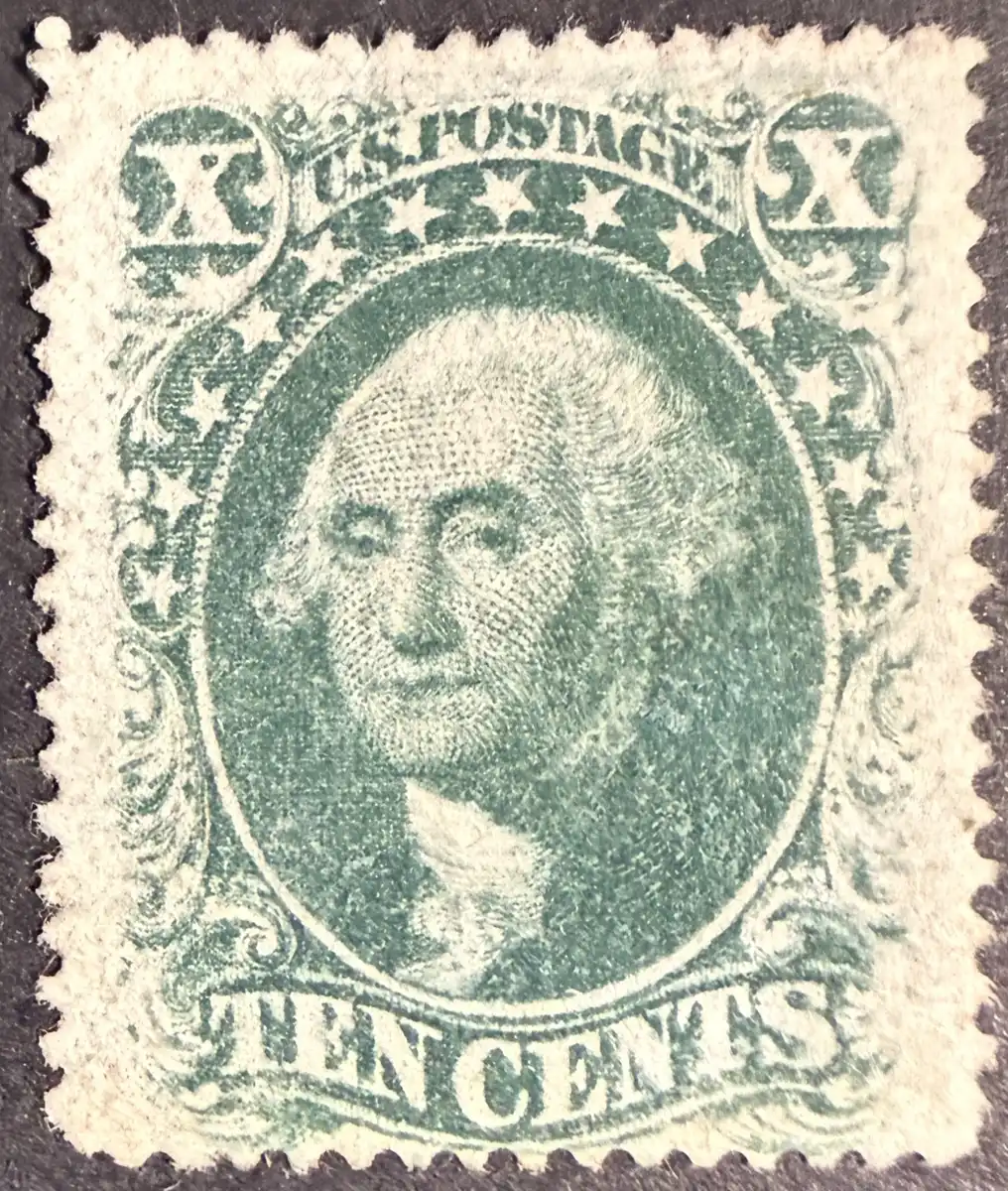
Solomon, wrt identifying 91R10: It is an F relief, so either from the sixth or tenth row of one of the Type V plates (5, 7, 8, 9 or 10). The heavy dot in the lower arc of the C in CENTS is a consistent feature of the bottom row of Plate 10. Since the stamp shows part of another stamp at left with no perforations in between is it clearly a straddle pane stamp. Plate 10 alone among the Type V plates had no center lline, only guide marks at the top and bottom of the plate between panes (which you see at lower left). Thus Plate 10, bottom row, column 1 right pane = 91R10.
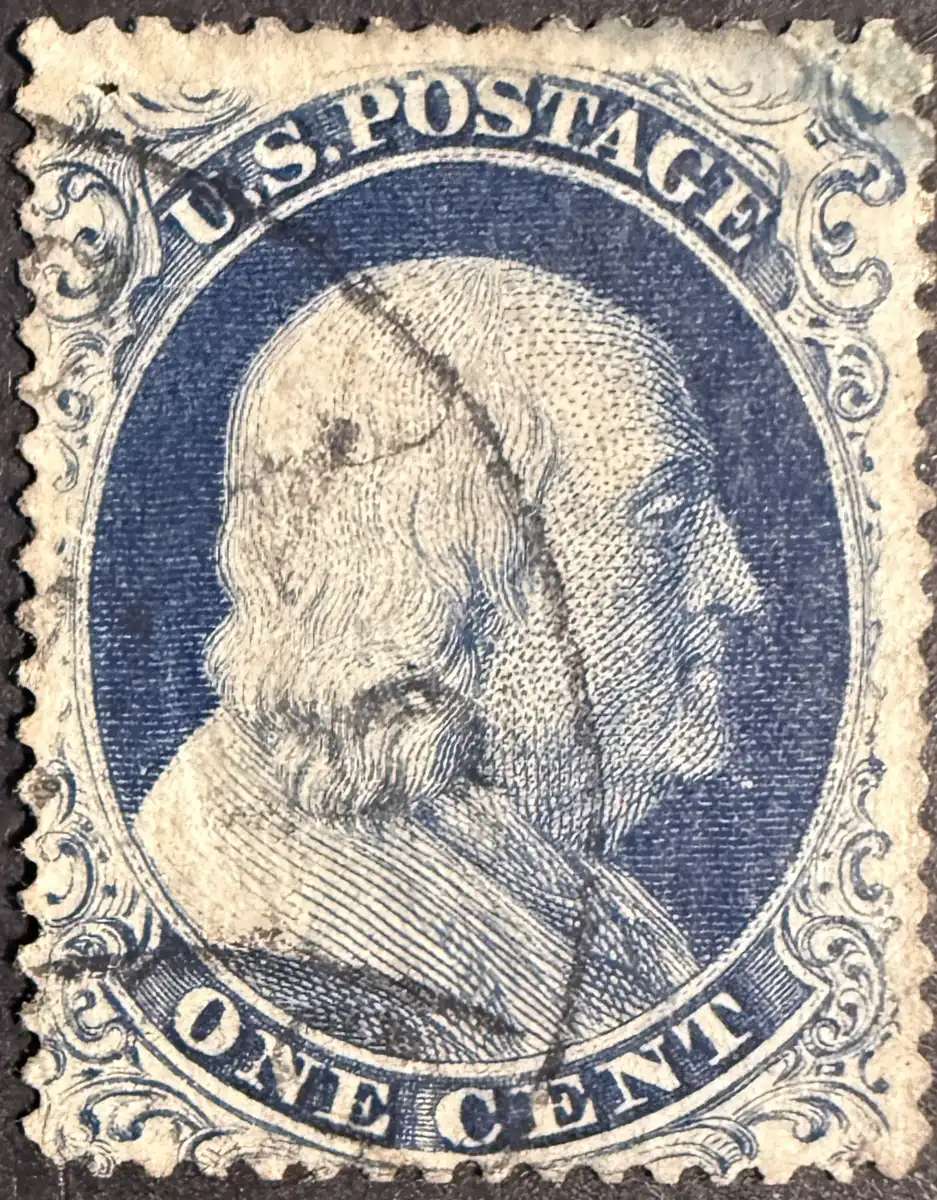
The marks on Type V stamps that are normally called bruises (which your stamp has) are in fact not caused by something hitting the plate, as you would expect according to the normal definition of a bruise, but rather (according to recent research) by a chemical deterioration of the plate's surface. The specifics do not pertain here (I can point you to a source if you like), but what is important is that the "bruising" pattern differs consistently for each relief. That is to say, not all Type V stamps show this bruising (depending on the state of the plate), but those that do show consistent patterns according to relief. The bruise on your stamp across the middle of the back of Franklin's head (sometimes called the "baseball cap" bruise) is an indicator of Relief F.
There is no hard and fast rule about how much design completeness defines Type V vs. Type Va. Plating is the only sure way. The completeness of the lower right ornament is a good indicator, but top row stamps from Plate 8, for example, also show a high degree of completeness here, and they are all Type V. Since all Type Va stamps come from Plate 5 they show the typical Plate 5 sharpness of design and deepness of color. |
Send note to Staff 
|
|
|
Valued Member
148 Posts |
|
|
Dudley, thank you for such a comprehensive answer! Everything you stated is very easy to understand. The amount of trimming is not the proof, it is only a clue that leads us to the definitive proof which is the plate number then the position. Totally makes sense! And I can see why plating could be such a fun hobby. I have one more question about this extra divot that connects the right side ornament and the banner. When looking through the loupe, it actually looks like part of the design, but of course it's not. Could it be a very small plate crack? 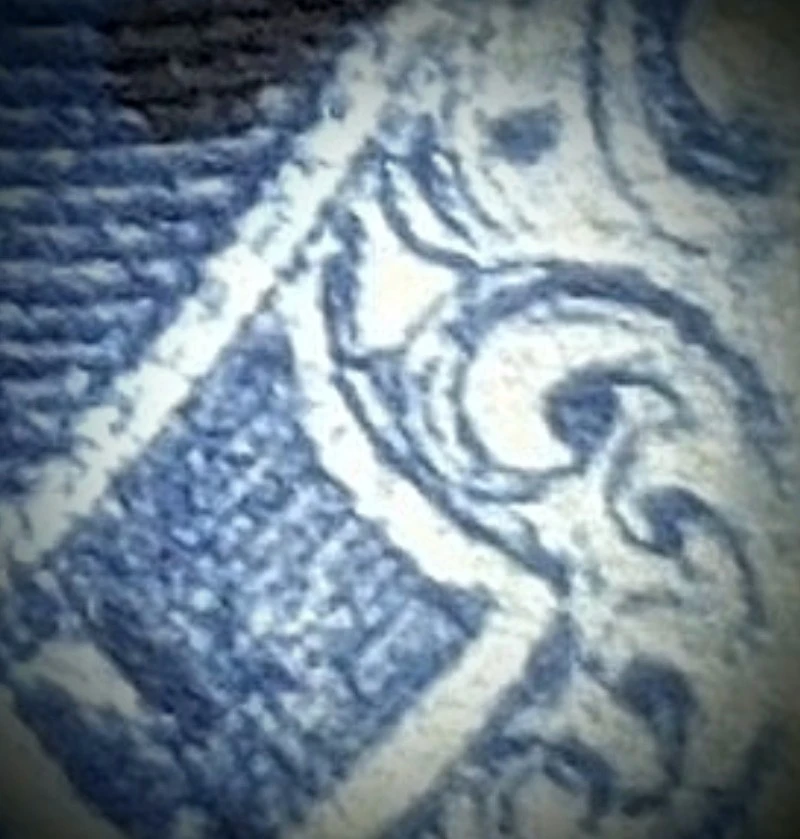 |
|
Send note to Staff
|
| Edited by solomons_prayer - 08/31/2026 11:01 am |
|
|
Valued Member
9 Posts |
|
|
Dudley,
At the risk of seeming terribly egotistical, I offer a correction to your characterization of what I think is your reference to my articles on relief bruises. As you know, they are not evidence of "chemical deterioration of the plate's surface," but rather systemic features on the transfer roll that are made visible due to chemical reactions between the ink and the sizing in the paper. If I am mistaken in my reference to your meaning, and you can point me to recent scholarship discussing deterioration of the plate due to chemicals (after all, my Chronicle articles are from 2016), then I would be glad to learn of the citation. Nonetheless, it is always good to see the baseball cap relief bruise so nicely rendered.
Best,
David Zlowe |
|
Send note to Staff
|
| Edited by daz24 - 09/01/2026 6:43 pm |
|
|
Pillar Of The Community
United States
3528 Posts |
|
|
Dave, its good to see that you are still around. Feel free to post more often  Share a few of your items maybe. |
|
Send note to Staff
|
|
|
Pillar Of The Community
United States
1819 Posts |
|
|
David, thank you for the correction. I was indeed referring to your articles but was recalling the info off the top of my head rather than going back to check. Too lazy. My apologies. |
|
Send note to Staff
|
|
|
Pillar Of The Community
United States
1109 Posts |
|
|
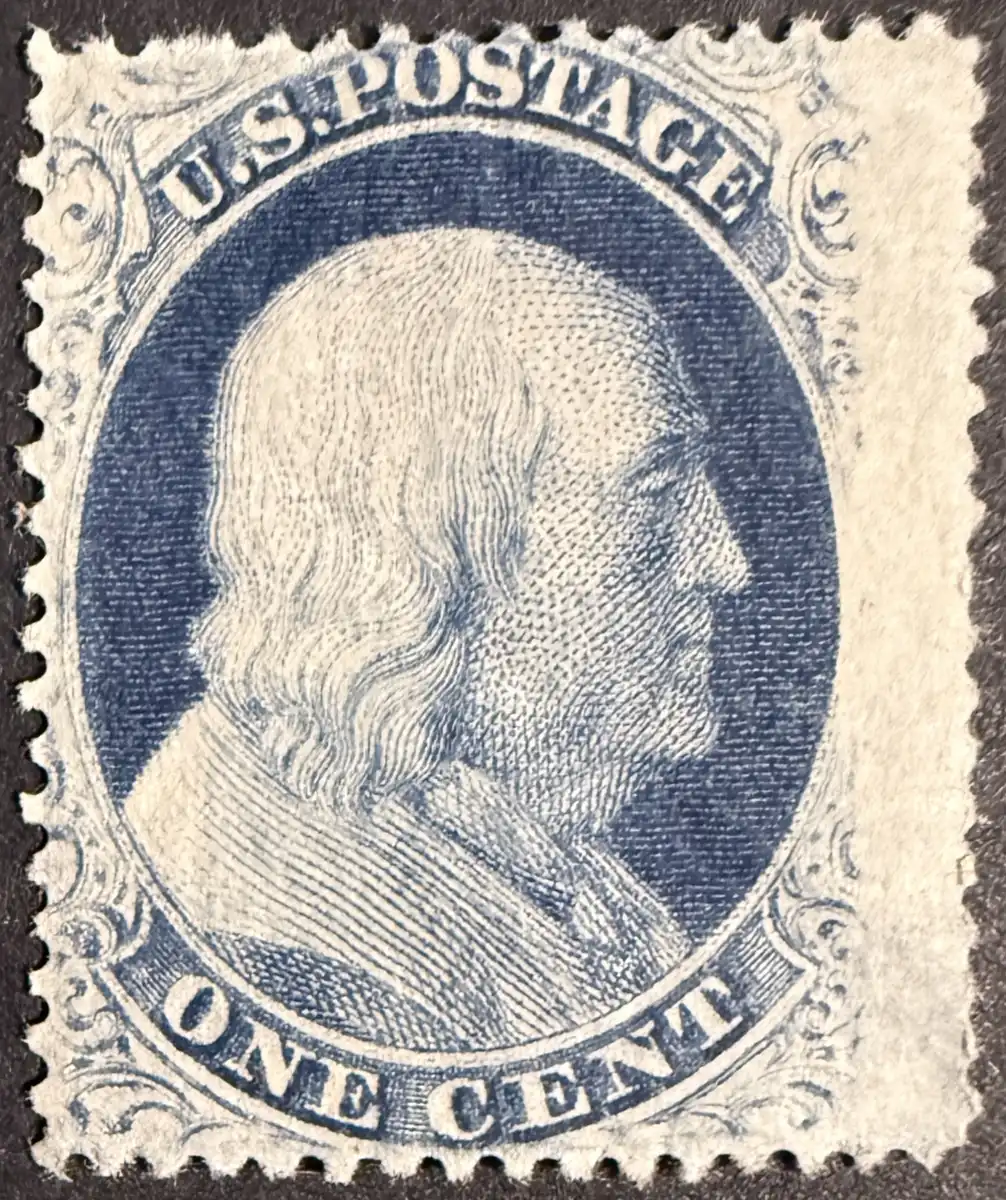
This was marked as Scott #22 Type IIIa. I have doubts. The outer circle at the bottom seems mostly there, but no sign of a recut. Not much to see for the top circle due to the perforations. I know it's a space filler for the most part, but would like to properly identify if possible. 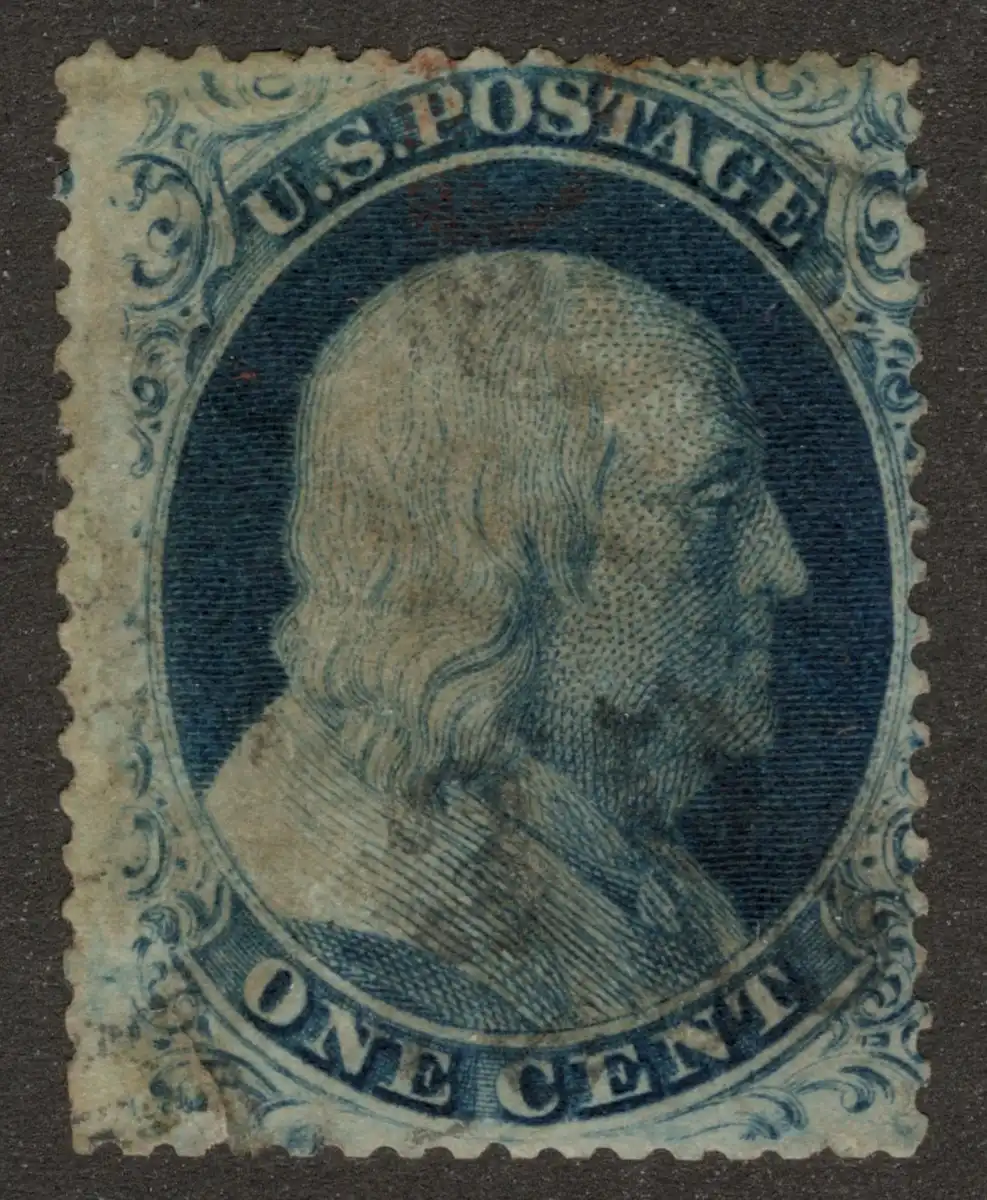 |
|
Send note to Staff
|
|
|
Valued Member
United States
92 Posts |
|
|
Pillar Of The Community
United States
1819 Posts |
|
|
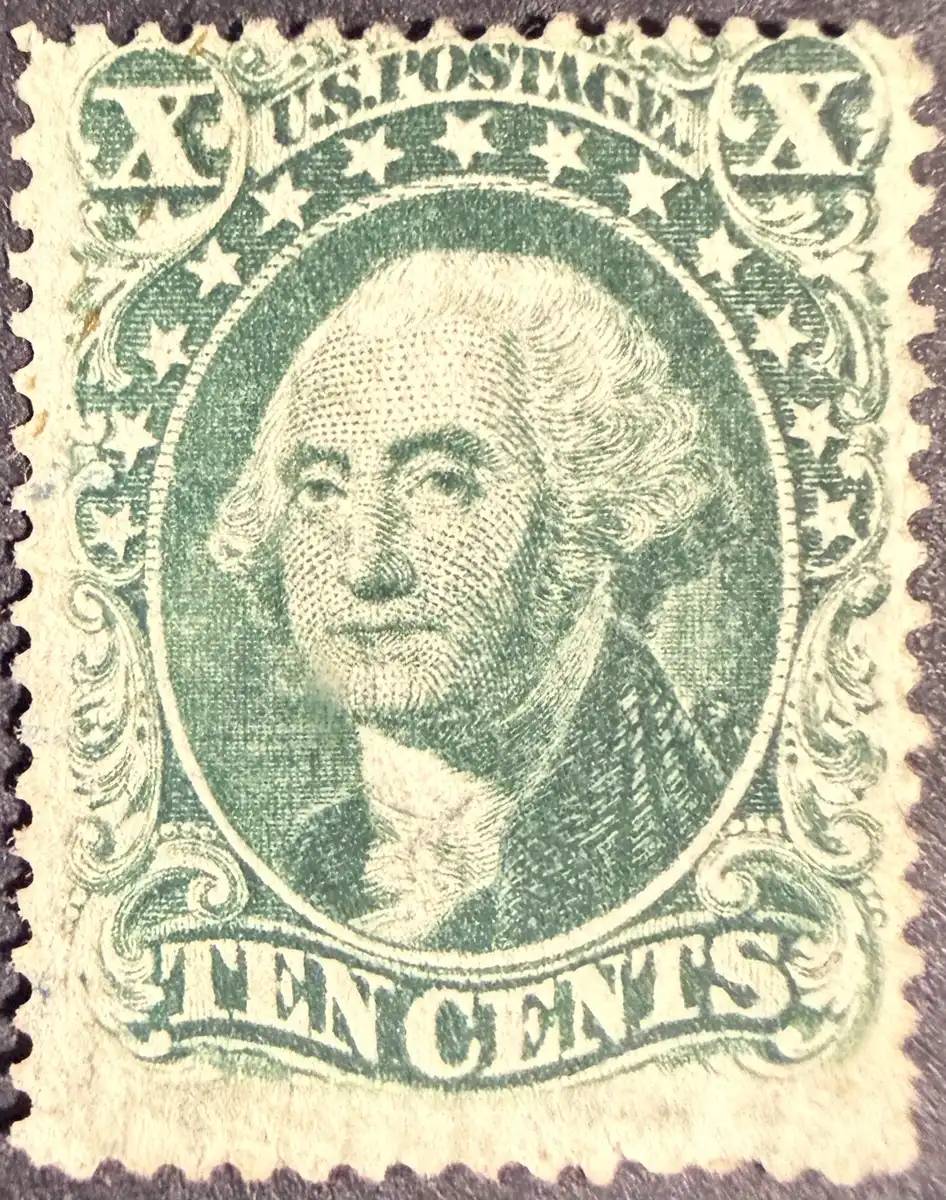
Phade122, the #20 is a B Relief from Plate 12 if that helps. The second One-Cent Franklin is an F Relief from Plate 4. The middle 10-cent stamp is #33; it is a B Relief, and all #34's on the plate that come from B Reliefs are recut at top, which this stamp is not. |
|
Send note to Staff
|
|
|
Replies: 833 / Views: 76,290 |
|




 Posted 08/30/2026 8:04 pm