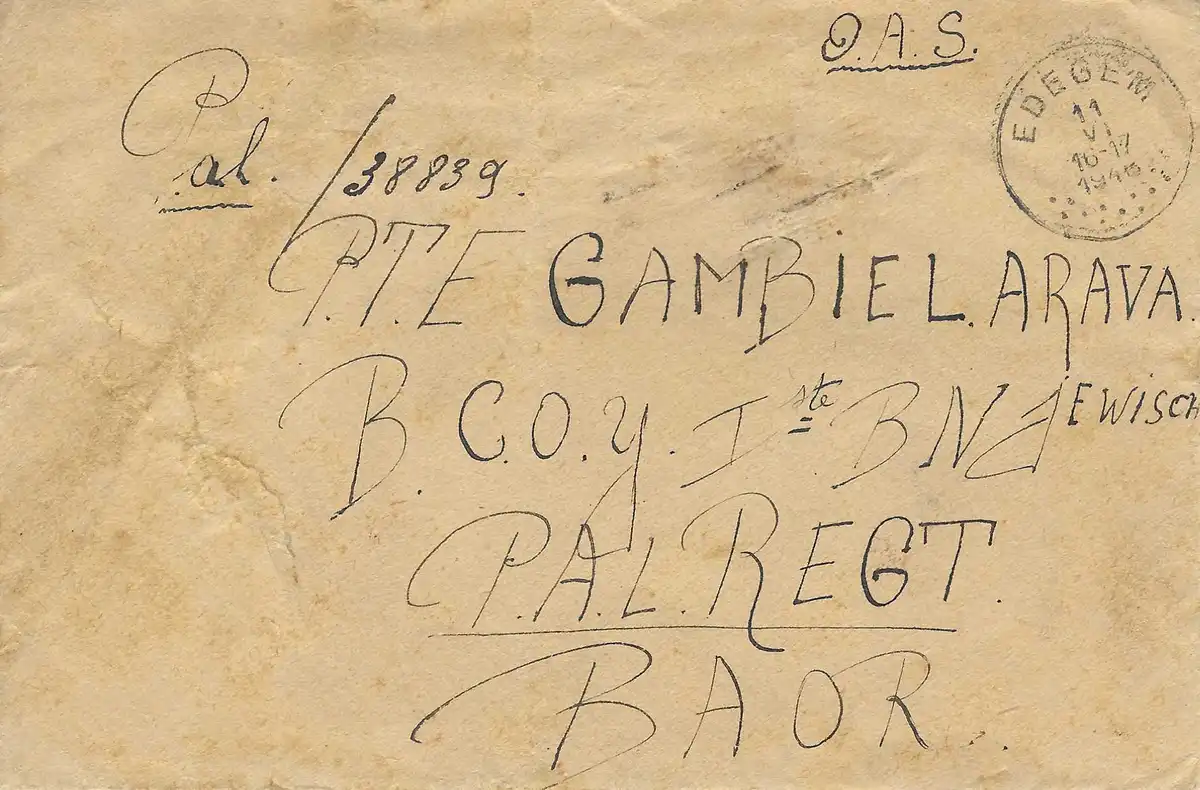
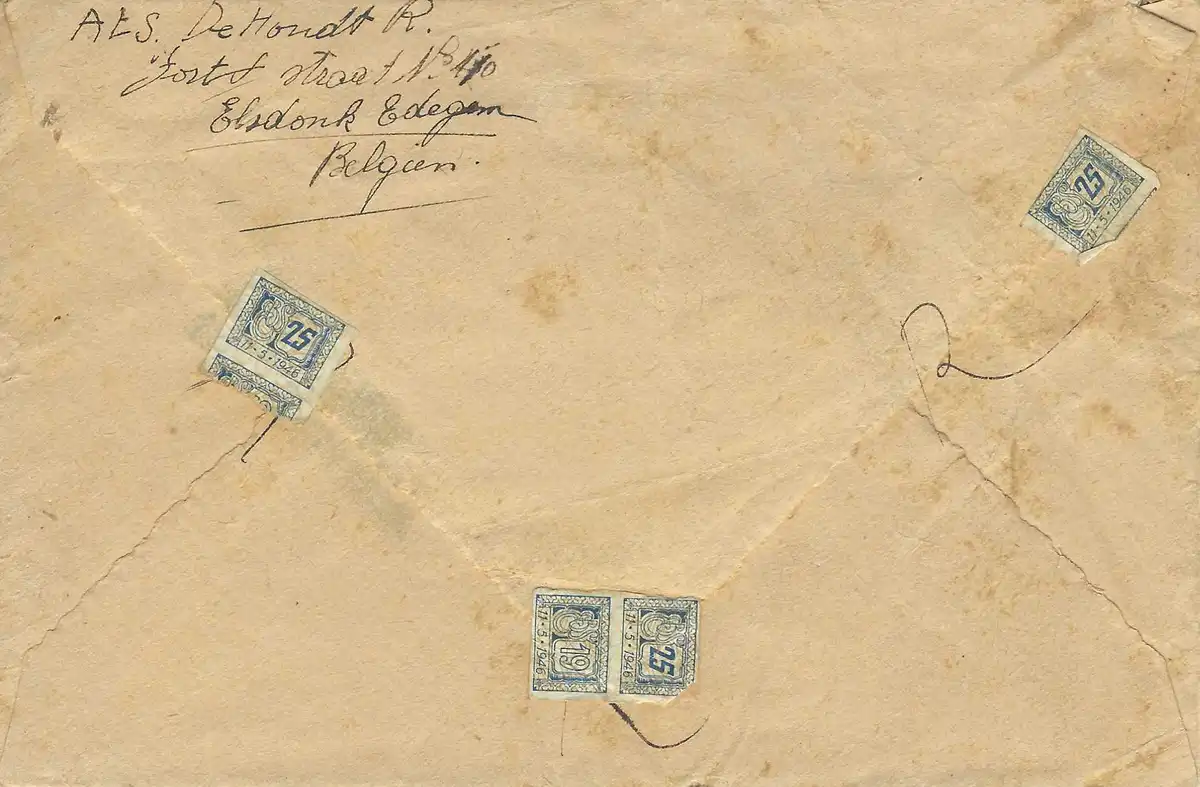
AI generated, mostly: The reasons why this cover traveled completely free of postage stamps are rooted in its military nature: 1. The Addressee: The Jewish Brigade The letter is addressed to: • PTE [Private] GAMBIEL ARAVA (Service No. Pal/38839) • B. COY. [Company], 1st BN. [Battalion] JEWISH REGT [Regiment] (originally written as PAL REGT - Palestine Regiment) • B.A.O.R. [British Army of the Rhine] This is a piece of mail to a soldier in the Jewish Brigade Group. Formed by the British Army in late 1944, it was composed of Jewish volunteers from Mandatory Palestine. By mid-1945, the Brigade was transferred to Germany as part of the British Army of the Rhine (BAOR) to perform occupation duties and guard DP (Displaced Persons) camps. 2. Why Was It Free? The letter is not a Prisoner of War (POW) cover. Instead, it was sent under Concessionary Military Mail privileges. • O.A.S. (On Active Service): Notice the hand-drawn initials O.A.S. underlined at the top center. Under British Imperial and Allied military regulations, active-duty personnel stationed abroad—and family members sending mail to them or from them via official military postal networks—were entirely exempt from paying civilian postage fees. • The Route: This was handled entirely within the British Forces Post Office (BFPO) network or allied field post offices rather than the standard public civilian mail track, eliminating the need for regular adhesive stamps. 3. The "Labels" are Actually School/Youth Savings Stamps The small square stamps on the back feature numerals (25 and 19) inside a decorative frame. If you look closely at the fine print or their historical issue profile: • The Date on the Stamps: Notice the stamped date running diagonally or vertically along the left edge of each label: "11-5-1946" (May 11, 1946). • The Purpose: In immediate post-WWII Belgium, the government and local schools issued these small-value savings stamps (denominated in centimes or francs) to children and citizens. People bought them for small change to paste into savings books to raise funds for rebuilding the country, or as part of a school charity drive. • Why They Are on the Envelope: They have no postal value. The sender pasted them on the back purely as a decorative element or a symbolic gesture of support, which was a very common practice for family mail sent to troops abroad during and just after the war. 4. The Return Address (Top Left) The sender handwritten their return address in crisp, vintage cursive: • Sender: Abs. [Absender / Sender] Detondt R. • Street: Fort-straat N. 40 • Neighborhood/City: Elsdonk Edegem, Belgieën (Belgium) The Local Connection: Elsdonk is a historic neighborhood within the municipality of Edegem. This perfectly aligns with the front of the cover, which was postmarked at the local Edegem post office exactly one month later on June 11, 1946 (11 VI 1946).
Disclaimer: While a tremendous amount of effort goes into ensuring the accuracy of the information contained in this site, Stamp Community assumes no liability for errors. Copyright 2005 - 2026 Stamp Community Family - All rights reserved worldwide. Use of any images or content on this website without prior written permission of Stamp Community or the original lender is strictly prohibited. Privacy Policy / Terms of UseAdvertise Here



 Replies: 1 / Views: 61


 Posted Today 6 Hrs 25 Min ago