Stamp Community Family of Web Sites
Thousands of stamps, consistently graded, competitively priced and hundreds of in-depth blog posts to read


Stamp Community Forum
 
Username:
Password:
Save Password
Forgot your Password?

This page may contain links that result in small commissions to keep this free site up and running.

Welcome Guest! Registering and/or logging in will remove the anchor (bottom) ads. It's Free!

King George V Imprimaturs

 
To participate in the forum you must log in or register.
Author Replies: 2 / Views: 22Next Topic  
Pillar Of The Community
Netherlands
6676 Posts
Posted Today  33 Min ago  Show Profile Bookmark this topic Add NSK to your friends list Get a Link to this Message
On 19 February 1969, Queen Elizabeth II opened the National Postal Museum ['NPM'] at the King Edward Building. The building housed London's main post office for most of the twentieth century. After the sale of the building in 1998, the NPM was closed. The Post Office's Heritage unit retained the collections and combined the management of the museum and archive. In 2004, the Post Office transferred the work of the heritage unit to an independent trust, the British Postal Museum and Archive ['BPMA'].

To fund a new premises for the postal museum, the BPMA offered duplicates to its collection for sale at auction. The sale included elements of duplicate registration sheets. On 11 July 2013 a sale took place at Sotheby's, and a further sale was planned for February 2014. The sale raised less than 10% of the expected funds, with 162 of 191 lots remaining unsold. The new Postal Museum opened at Calthorpe House near the Mount Pleasant sorting Office in Central London, on 28 July 2017.

When a new plate was ready for use, up to six sheets of stamps were printed from the new plate. These were printed on imperforate watermarked paper and in the colour of the issue. For early issues, these sheets were ungummed. Later, gummed paper was used. One sheet was submitted for approval to Somerset House. Once approved it was archived. These registration sheets also are known as imprimatur (to be printed) sheets. Elements of such sheets, also, are known as imprimaturs.

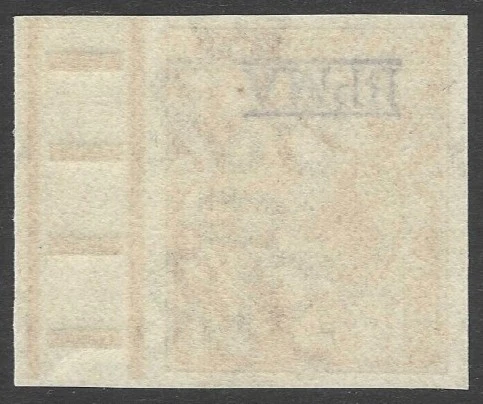
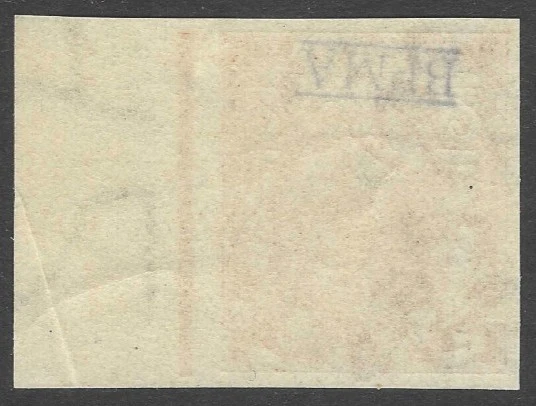
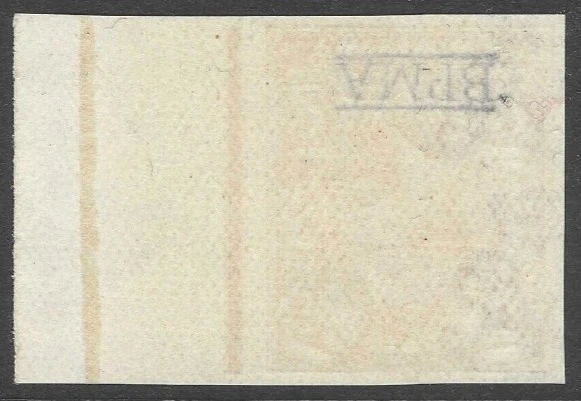
The ensuing posts show imprimaturs of King George V stamps of the Mackennal type from the BPMA archive sales. The stamps were backstamped by the BPMA.
Send note to Staff

Pillar Of The Community
Netherlands
6676 Posts
Posted Today  27 Min ago  Show Profile Bookmark this reply Add NSK to your friends list  Get a Link to this Reply
The first stamps of King George V's reign were designed by Bertram Mackennal. The portrait of the monarch was based on a photograph by the court photographers W. & D. Downey. The stamps were disliked and soon replaced by stamps that used an adaptation of the coinage and medal profile heads of the King by Bertram Mackennal. The frames of the stamps were designed by Bertram Mackennal (½d. – 4d.) and George William Eve (5d. – 1s.). The stamps are known as "Profile Head" and "Mackennals."

The stamps, initially, were printed on paper with a crown over the script royal cipher "GvR" arranged vertically, such that the watermarks appeared aligned vertically on each stamp. The watermark is known as "Royal Cipher" or "Simple Cipher." The stamps were surface printed by Harrison and Sons. Some, also, were printed by the stamp printing branch of the Inland Revenue at Somerset House.

Stamp books containing panes of six stamps printed by Harrison and Sons, also, were issued. The panes were printed in sheets with alternating columns printed in inverted and upright directions. Roughly half of all stamps from stamp books have the watermark inverted. In reality, all stamps had the watermark upright with half of them having the portrait printed inverted.

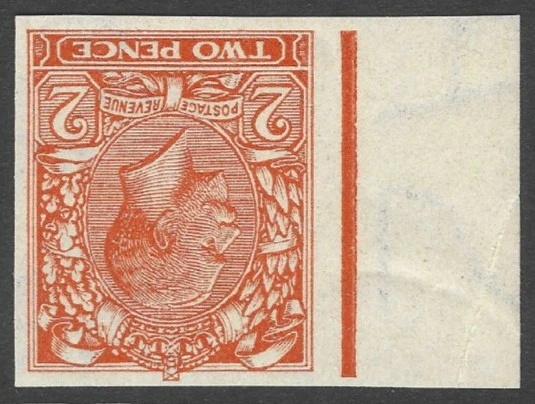
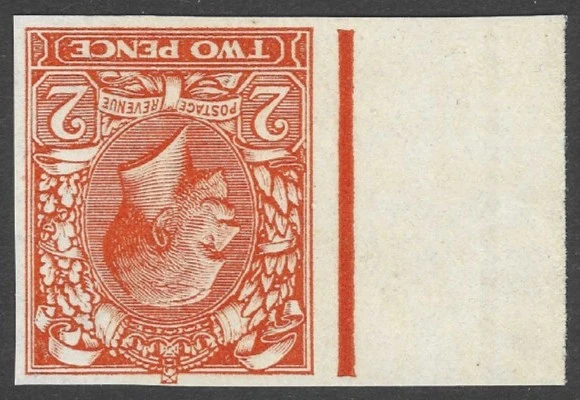
The following are imprimaturs of the "Royal Cipher" stamps from sheets of stamp book panes, with 'inverted' watermark from the BPMA sales. I am showing the stamps such that the watermarks are upright. All stamps have a sheet margin or gutter margin to the left in relation to the portrait. These would have served as binding margins.

April 1914, ½d green (showing part of the marginal "POSTAGE" watermark)


April 1914, 1d red (showing part of the marginal "POSTAGE" watermark)
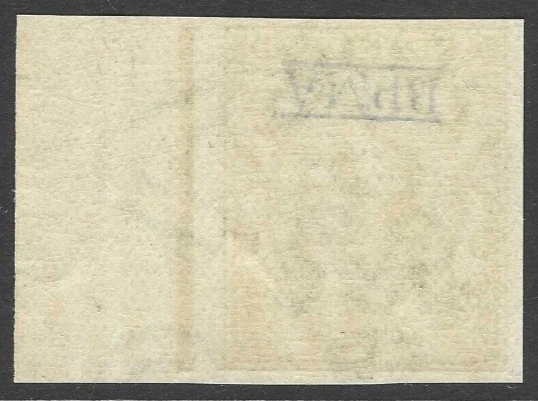

October 1918, 1½d red-brown (with part gutter margin)


July 1920, 2d orange, Type I (showing part of the marginal "POSTAGE" watermark)
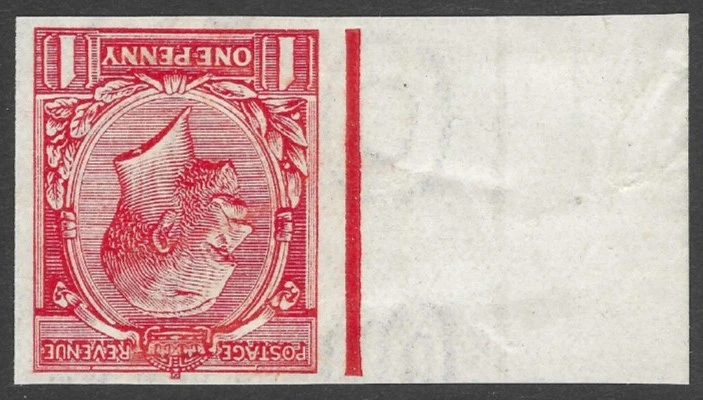

August 1921, 2d orange, Type II (showing part of the marginal "POSTAGE" watermark)
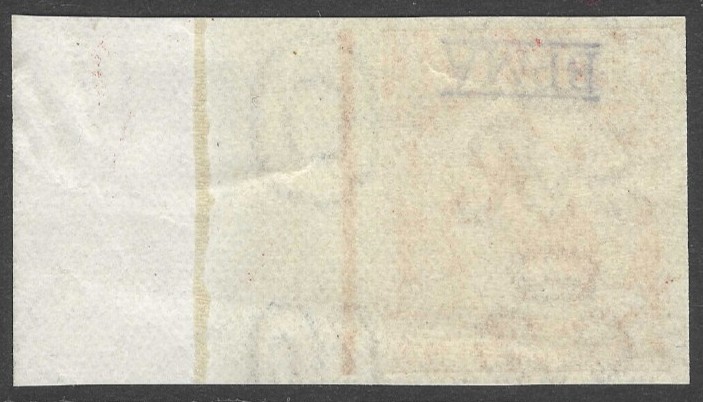
Send note to Staff  Go to Top of Page
Pillar Of The Community
United States
3552 Posts
Posted Today  8 Min ago  Show Profile Bookmark this reply Add txstamp to your friends list  Get a Link to this Reply
Neat. Those are really nice; and good background info.
Send note to Staff  Go to Top of Page
  Replies: 2 / Views: 22Next Topic  
 
To participate in the forum you must log in or register.

Go to Top of Page

Disclaimer: While a tremendous amount of effort goes into ensuring the accuracy of the information contained in this site, Stamp Community assumes no liability for errors. Copyright 2005 - 2026 Stamp Community Family - All rights reserved worldwide. Use of any images or content on this website without prior written permission of Stamp Community or the original lender is strictly prohibited.
Privacy Policy / Terms of Use    Advertise Here
Stamp Community Forum © 2007 - 2026 Stamp Community Forums
It took 0.11 seconds to lick this stamp. Powered By: Snitz Forums 2000 Version 3.4.05