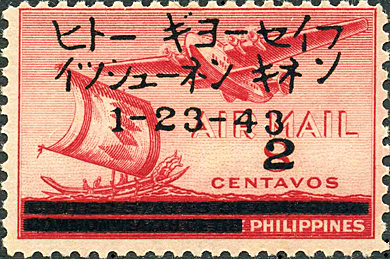
This has always been a favorite topic of mine, so I'll post a few more in hopes of reviving this thread. The theme du jour is overprints used as cover-up. The Soviet hammer and sickle a few posts back is a good example.
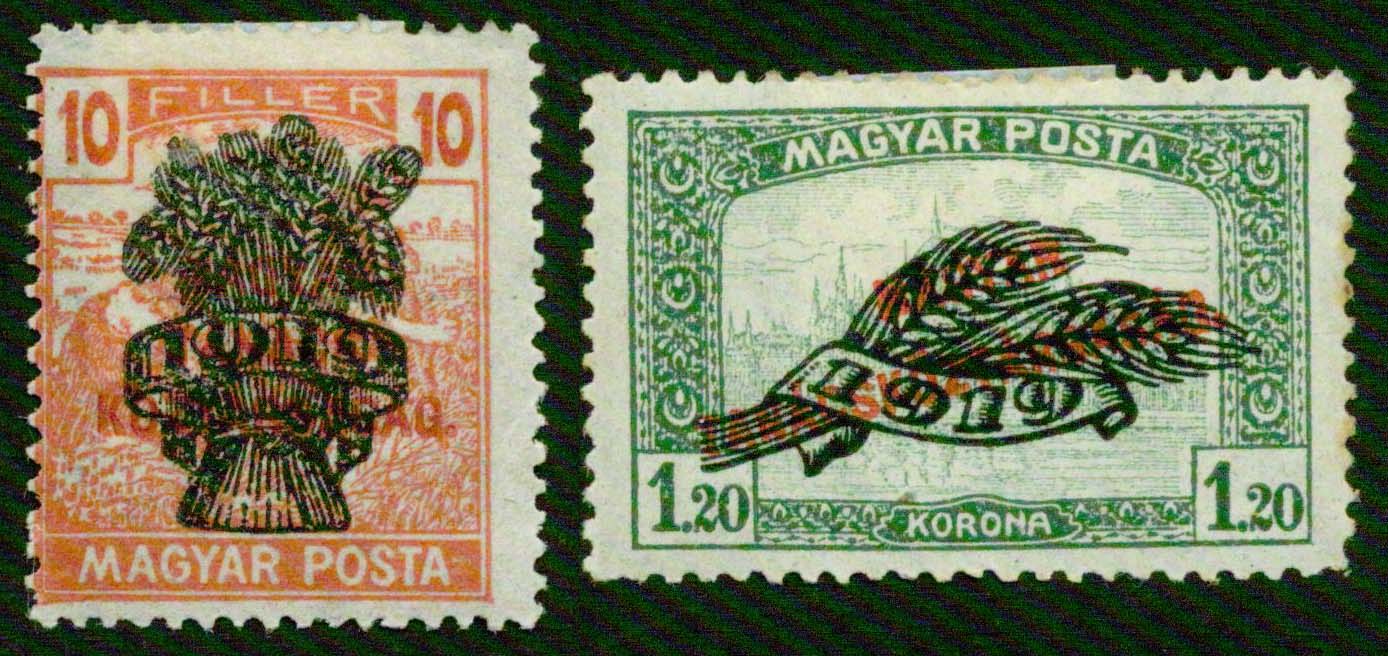
In Hungary, following a short-lived republic, the Soviets briefly took control in 1918 and stamps were overprint in red – "Magyar Tanacskoztarsasag" or "Hungarian Soviet Republic." But the Hungarians thought better of that idea and successfully fought to regain self-government at the end of 1919. In January 1920, Hungary cleverly used an overprint of wheat sheaves to obliterate the previous Soviet overprint and reissued the stamps again.
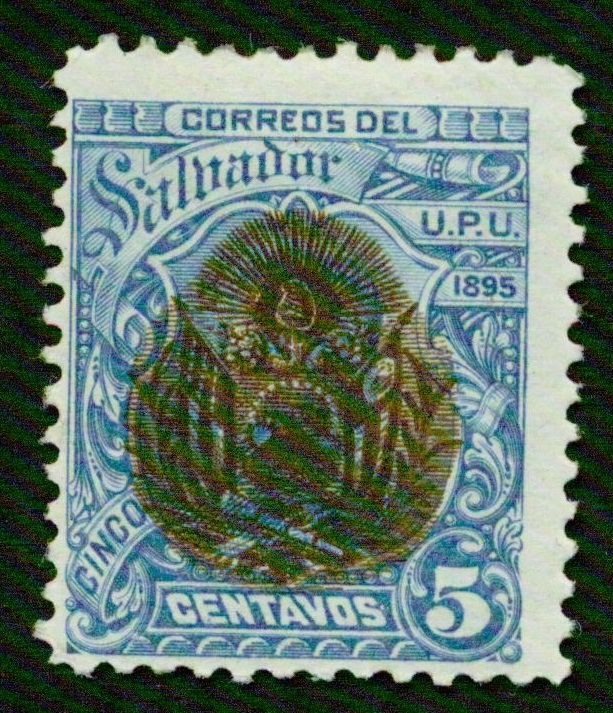
Several of the 1895 Salvadoran UPU series were never actually issued without an overprint. The stamp originally portrayed Gen. Antonio Ezeta, who also happened to be the brother of the President Carlos Ezeta. However, shortly after the stamps were printed President Ezeta was overthrown. Rather than scrap the issue, postal authorities decided to simply overprint the portrait with a finely detailed national crest and release it anyway.
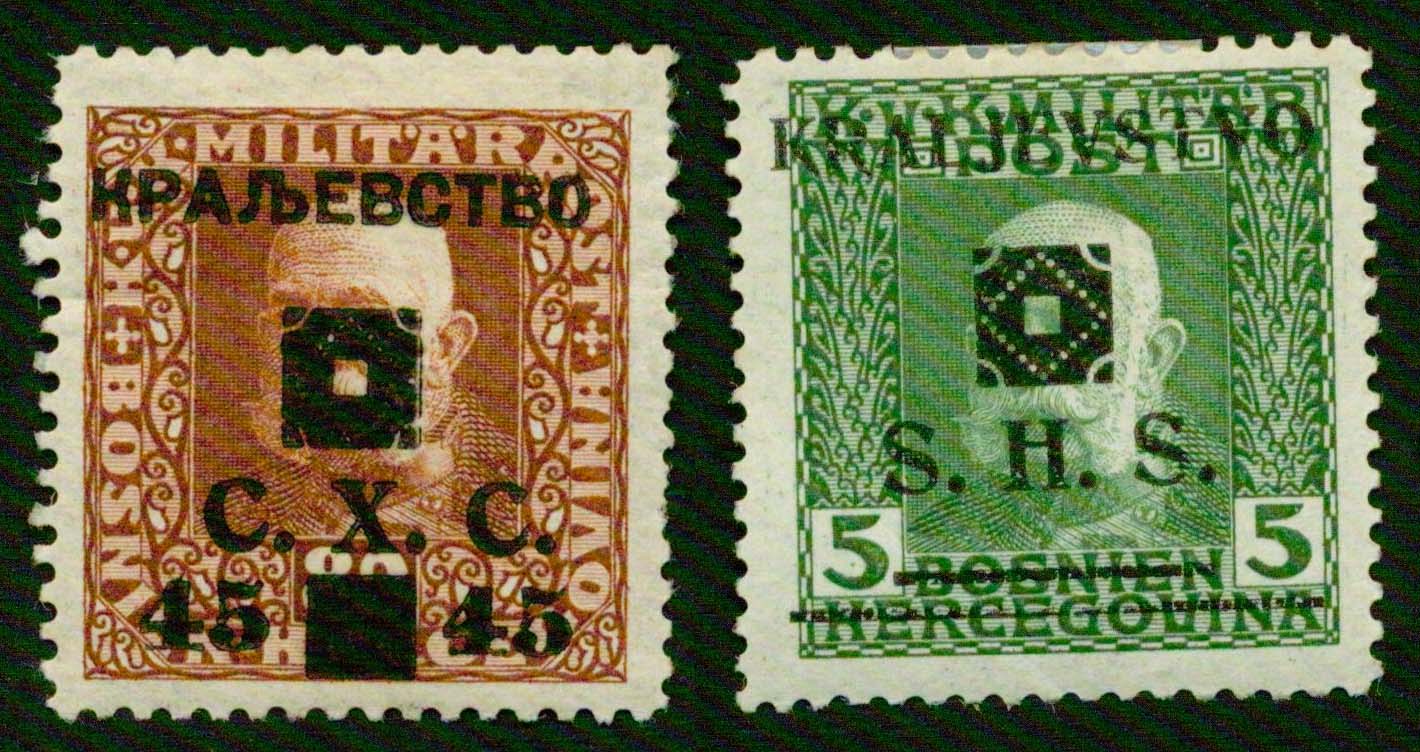
As the Austro-Hungarian Empire dissolved in 1918, the Balkan states came together as the kingdom of the Serbs, Croats and Slovenes (SHS or CXC in Cyrillic), later known as Yugoslavia. Appropriated Austrian stamps were overprinted with new denominations and country name. The stamp featuring Emperor Franz Josef was the only one of the series to also receive an undignified block over his face.
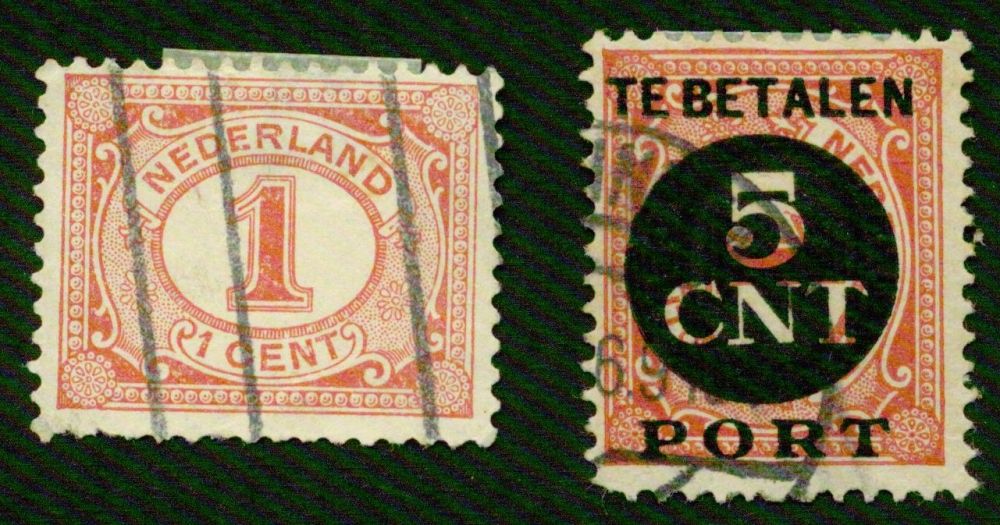
The last example is from the Netherlands, a postage due from 1924. Initially it was hard to understand the necessity of such a heavy overprint, blocking out nearly the entire stamp design. Then I realized that the vertical overprint was placed on a horizontal stamp! Why this "mask" was used to change the stamp's original orientation is a mystery.





 Posted 02/05/2016 8:38 pm