| Author |
 Replies: 18 / Views: 3,446 Replies: 18 / Views: 3,446 |
|
Valued Member
United States
6 Posts |
|
|
Hello Everyone. I have just registered today after stumbling across the site and must say I have enjoyed the candor, expertise and obvious honesty amongst members in the posts I have read. I feel a bit cheesy because I am not a stamp collector, but I do need some help as I have an album I acquired some years ago and have decided to sell it. While reviewing the stamps in order to try and put a fair value on the album I came across a stamp in the 1865-1909 section on the Turkey page. I have scoured the web and all indications seem to confirm that this is an 1865 Duloz. I would appreciate any and all opinions from members, particularly if I would need to have the stamp certified and where and how much this may cost. An estimate of the stamp's value would also be useful. I hope the picture is helpful and I look forward your comments. Thank you. 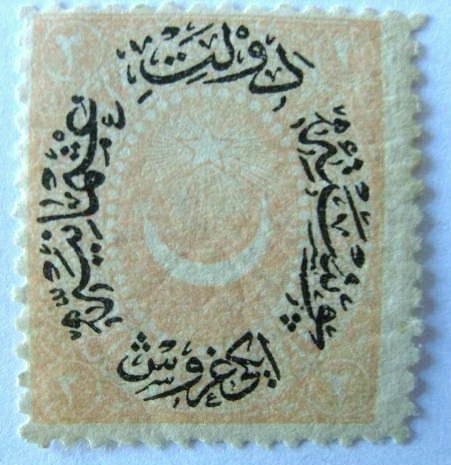 |
|
Send note to Staff
|
|
|
|
|
Pillar Of The Community
United States
6756 Posts |
|
|
 Welcome to Stamp Community Forum, lancsman! Thank you for your kind words for the Forum! You made me pull out my Turkey collection for this one. Assuming I IDed it correctly when I put it together, the stamp is Turkey #65 (issued around 1881-1882) and valued at $3 in the 2010 Scott catalog. If the ID is correct, then it is not worth the expense of certification. However, early Turkish stamps have been moving up in catalog value in the past couple of years after a very very long time of stagnation. For example, in the 2006 Scott catalog, it was at the catalog minimum value of 20c. Scott has finally gotten around to making a half decent update for Turkey; now if they would only re-edit the Turkey listings so that it wouldn't be so confusing! Nigel is much better at Turkish stamps than I am. I quit putting my Turkish collection in order after a splitting headache sorting/figuring out the zillion and half overprints/surcharges. So I will leave it up to him and the others to either confirm or correct.  Kim |
Send note to Staff 
|
| Edited by khj - 10/09/2010 2:22 pm |
|
|
Valued Member
United States
6 Posts |
|
|
Thanks khj your input is most welcome and I can sympathise with you on the splitting headache!
Since I posted I have learned that the stamp in question was first issued in 1865 but then was used again in later years with some small modifications. I am going to have to find someone who can read the overprint as that should tell me what the original postage value was, and maybe the date of issue - oops, here comes that headache again.......
Thanks,lancs. |
|
Send note to Staff
|
|
|
Pillar Of The Community
United States
6756 Posts |
|
|
The overprint shows well in your pic, but the stamp color is not clear. It looked to me like the white numeral in the corners is the Turkish "2". That is the original stamp denomination.
I cannot read the surcharged value, and for most of these surcharged stamps, Scott doesn't list the surcharge value -- only the original stamp denomination. |
|
Send note to Staff
|
|
|
Pillar Of The Community
United Kingdom
3220 Posts |
|
|
Hi lancsman and Kim! I agree with Kim. This is Scott #65 / SG 95. Its face value is 2 piastres and it was issued in May 1881. The Turkish/Arabic numeral 2 is in the circle in each of the four corners. The SG describes it as "pale red" while Scott calls it "pale salmon". In the 2006 SG Part 16 catalogue it was priced at £1.60 unused and 60p used. |
|
Send note to Staff
|
| Edited by nigelc - 10/09/2010 3:23 pm |
|
|
Pillar Of The Community
United States
6756 Posts |
|
|
Thanks for the confirmation and additional info, Nigel!
I find varying color descriptions interesting (if not annoying). In my old Scott International Junior (c1940s), the color is described as "flesh". |
|
Send note to Staff
|
| Edited by khj - 10/09/2010 3:29 pm |
|
|
Pillar Of The Community
United Kingdom
3220 Posts |
|
|
Quote:
I find varying color descriptions interesting (if not annoying). In my old Scott International Junior (c1940s), the color is described as "flesh". The Turkish Pulko catalogue also describes this stamp as "flesh"! |
|
Send note to Staff
|
|
|
Pillar Of The Community
United Kingdom
3220 Posts |
|
|
Quote:
The overprint shows well in your pic, but the stamp color is not clear. It looked to me like the white numeral in the corners is the Turkish "2". That is the original stamp denomination.
I cannot read the surcharged value, and for most of these surcharged stamps, Scott doesn't list the surcharge value -- only the original stamp denomination. Hi Kim, I missed this post of yours while I was writing mine. I suspect Scott is wrong in calling most of these overprints "surcharges". I don't believe there were any changes in value (apart from the 1876 surcharges of course). |
|
Send note to Staff
|
| Edited by nigelc - 10/09/2010 3:41 pm |
|
|
Pillar Of The Community
United States
6756 Posts |
|
|
Scott may have confused themselves and many of us with their footnote just above #8 and immediately after #52. It seems to imply that the bottom part of those overprints are a surcharged value. |
|
Send note to Staff
|
| Edited by khj - 10/09/2010 3:56 pm |
|
|
Pillar Of The Community
United States
6756 Posts |
|
|
Pillar Of The Community
United Kingdom
3220 Posts |
|
|
Quote:
(To balance out Nigel, I've deleted my original post and kept my duplicate post -- see below! )
I've now updated my duplicate post above on your surcharge point. Quote:
I forgot you had the Pulko catalog! Is that in English? There are brief translations into English including the colours for each stamp. |
|
Send note to Staff
|
|
|
Pillar Of The Community
United States
6756 Posts |
|
|
Thanks for the info on the Pulko. A lot of times, I'm hesitant to purchase catalogs because of the language issues.
I've updated my duplicate post after your surcharge reply to balance things out again! |
|
Send note to Staff
|
|
|
Valued Member
United States
6 Posts |
|
|
Thanks nigelc and khj, your discussions and information have given me the info. I needed. I agree that color descriptions can be misleading particularly as they tend to be largely subjective, and digital reproductions for posting add another shade variable. My uploaded image came out a bit "warmer" or "redder" than the actual stamp but the term "flesh" or "pink salmon" seem to fit it pretty well. I thought for a few hours that my stamp may have been in the same league as the one below advertised on Delcampe at $175 U.S. fixed price, but apparently not so as the color is different and the "used" state of that stamp (see image) may have made the stamp more desireable - who knows - and I'm still learning. The person who gets my album will need $175 less than I thought so that is good news for them. Thanks again for your input.  |
|
Send note to Staff
|
|
|
Pillar Of The Community
United Kingdom
3220 Posts |
|
|
Hello lancsman,
I had a look at this Delcampe listing. I'm afraid the seller has misidentified this stamp. It's stated to be SG 16 but that is a 25 piastre stamp (not a 1 piastre one as shown) and has a different overprint. The one in the picture looks more like SG 66 which is priced at 60p used in my catalogue. This is listed as yellow in both SG and Scott but all my copies and the one shown here look to my eyes as shades of orange. |
|
Send note to Staff
|
|
|
Pillar Of The Community
United States
6756 Posts |
|
|
I just took a look at the one I had sorted in my Turkey collection. It's not anywhere as orange as the one shown in the pic above. It is more pale, more like yellow orange.
I remember reading somewhere that a few of the Turkish stamps were issued in different colors as revenues. Any possibility this might be one of them, Nigel (or anyone)? |
|
Send note to Staff
|
|
|
Pillar Of The Community
United Kingdom
3220 Posts |
|
|
Quote:
I just took a look at the one I had sorted in my Turkey collection. It's not anywhere as orange as the one shown in the pic above. It is more pale, more like yellow orange.
I remember reading somewhere that a few of the Turkish stamps were issued in different colors as revenues. Any possibility this might be one of them, Nigel (or anyone)? Kim, I agree with you about the yellow orange shades. I think this is one is just darker than usual and/or maybe oxidised. I'll have another look at mine in natural light tomorrow. I don't believe this is a revenue. The first Crete stamps were reissued in bistre-yellow as revenues but I don't remember Turkey doing this (although many of the early designs were also issued in black/brown/yellow brown colours as postage dues). |
|
Send note to Staff
|
|
|
Replies: 18 / Views: 3,446 |
|



 Posted 10/09/2010 11:54 am


