Here is some more info :
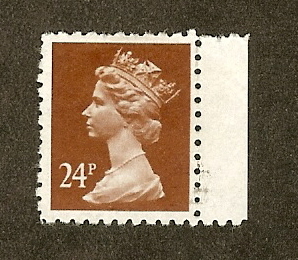
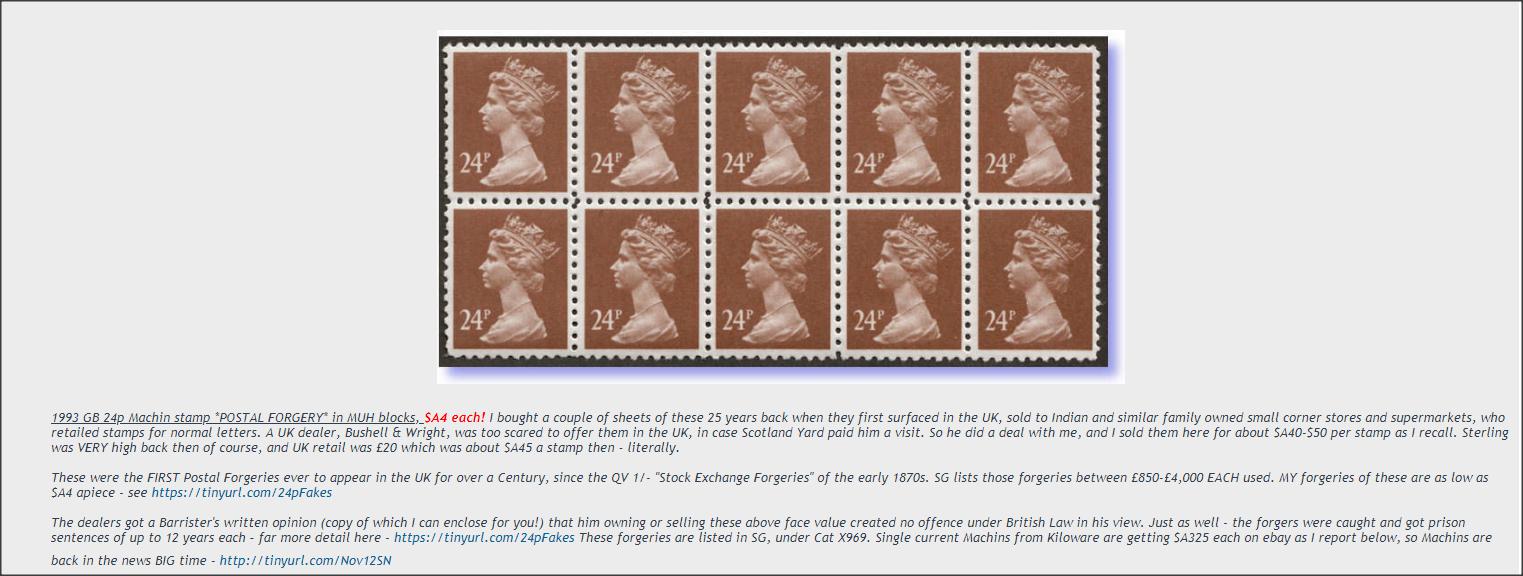
24p Machin Forgery
In the late 1980's, when stamps started to be sold in retail outlets other than post offices, the scope for forgers to produce stamps was immense. The origin of the 24p forgery is unclear but most were distributed and used in or around London.
It is believed that the stamps were sold to small businesses and corner shops, and generally any places where stamps could be sold and distributed without many questions being asked. Because of the low profit margins offered to retailers by Royal Mail, disreputable small shops were all too eager to snap up the forgeries at huge discounts.
The stamps in themselves were very well printed and to the naked eye an ordinary user would not tell the difference. They were let down immensely by the perforations which were 11x11 rather than the usual 14x15. This made them instantly noticeable as fake to all post office staff, which then caught the attention of the media. The paper was also of a very bad quality and lacked the glossy finish of normal stamps. Had the paper and perforation issues been resolved, many experts believe that the forgeries would have remained undetected. Obviously the distribution network for the stamps was also badly organised and raised many questions as to their origin.
Not much is known about the forger or the printing methods. Several arrests were made, and certainly the printing stopped, but no official announcements were ever made, probably at the request of the post office. People interested in this subject may find other details readily available on the internet, but for legal reasons I am not prepared to speculate. I believe one such philatelic magazine did once attempt to publish a full article on this subject, and its writers go down in history as the first stamp collectors to be sued for slander!
Mark Steele
taken from :
http://www.thetenoclockshow.co.uk/c...view/142/43/I have a copy of the forgery used on piece... somewhere, I will see if I can find it and put up a scan.





 Posted 02/01/2011 11:29 pm