| Author |
 Replies: 14 / Views: 8,704 Replies: 14 / Views: 8,704 |
|
|
Pillar Of The Community
Canada
1227 Posts |
|
|
|
I have noticed in my Unitrade catalogue that some Canadian stamps are described as wet or dry printing (eg. #105 - 1 cent KGV "Admiral"). I haven't been able to find an explanation of how to determine the difference. Could someone please explain what I should be looking for if I had a #105 yellow, Die 1 in front of me so I could say whether it was wet or dry printing. Thanks Mike
|
|
Send note to Staff
|
|
|
|
|
Moderator

United States
4788 Posts |
|
|
Pillar Of The Community
Canada
1227 Posts |
|
|
KirkS, thanks for the informative link. I now should be better equipped to discern the difference in the two types of printing. Regards Mike |
Send note to Staff 
|
|
|
Moderator
United States
4788 Posts |
|
|
Mike -- it's one of those things that is difficult to understand UNTIL you have the two stamps side-by-side -- then you can see it. I had a similar experience with U.S. Official stamps printed on "thin hard paper" versus the "soft porous paper." After I finally held both in my hand, it was much easier. This is one of the times when a fellow collector, local dealer, or stamp club can be a huge asset. Unfortunately for me, I believe I'm the lone collector in my neck of the woods  KirkS |
|
Send note to Staff
|
|
|
Pillar Of The Community
United States
2547 Posts |
|
|
Pillar Of The Community
Canada
1227 Posts |
|
|
Russ, thanks for the additional link. Every bit of information is most appreciated. Regards Mike |
|
Send note to Staff
|
|
|
Pillar Of The Community
Canada
737 Posts |
|
|
Quote:mhc99, here is another link that may be helpful http://www.dglphilatelics.com/adm_wetdry.html As explained above, the width is different on wet and dry Admiral printings, with the dry printings being about 1/2 mm wider. I have taken a damaged Admiral stamp and trimmed the bottom off of it - this gives me a template I can just stick over top of any Admiral stamp and quickly figure out which type of printing it is based on its width. Over time, you can end up with a number of these templates - various US wet / dry printings and flat plate / rotary printings, French early 20th century for flat plate / rotary printings, Machins for value tablet settings, etc. Ryan 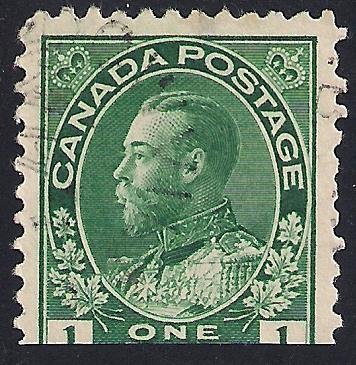 |
|
Send note to Staff
|
|
|
Moderator
United States
4788 Posts |
|
|
Pillar Of The Community
3860 Posts |
|
|
Wet flat plate printed stamps tend to have a smaller stamp design than dry flat plate printed stamps since wet printed stamps have some paper shrinkage where as dry printed stamps do not. |
|
Send note to Staff
|
| Edited by jogil - 06/12/2013 07:39 am |
|
|
Valued Member
China
316 Posts |
|
|
Ryan, I am a bit confused. If you cut the bottom off the stamp to mimic a wet printed stamp and you said the wet printed stamp is .5 mm less width, shouldn't the sides be trimmed to reduce the width of the stamp instead of the length? |
|
Send note to Staff
|
|
|
Valued Member
Canada
94 Posts |
|
|
Tom; the image on the stamp is going to wider/shorter on a wet printed stamp than on a dry printed stamp. You can't trim off any paper to make a stamp look wet printed.
In wet printing the image is impressed on damp paper. The older inks used to stick better to the damp paper. When the paper dried, the image shrank about half a millimeter. The sheet weren't perf'ed until they were dry so the physical size of the stamp (including the margins) is pretty close to the same in wet and dry printings. In 1922, during the Admiral years, they started printing onto dry, pre-gummed paper. With this printing process there was no shrinking of the image. Dry printed stamps should actually be pretty close to the size of the impression on the printing plate. The wet printed stamps would be smaller than the impression on the printing plate. |
|
Send note to Staff
|
|
|
Valued Member
China
316 Posts |
|
|
Ah, so you put the cut template stamp on top of the stamp in question to see if the printed portion is smaller. Got it. I thought the entire stamp shrunk.
|
|
Send note to Staff
|
|
|
Pillar Of The Community
3860 Posts |
|
|
For the Admiral Canada stamps, there is a difference between the wet flat plate printing and dry flat plate printing in that the size of the stamp design differs with the wet being slightly smaller than the dry because of wet paper shrinkage after drying. Similar differences occur between wet flat plate and dry flat plate U.S. Canal Zone stamps. Also, there is a similar difference in the size of the design between U.S. B.E.P. Hoe flat plate press wet printing and U.S. B.E.P. Stickney rotary press wet printing in that the flat plate stamp designs are slightly smaller/shorter than the rotary press stamp designs (either horizontally or vertically) since wet paper shrinks on drying for both types but the longer curved rotary press stretched printing plates make its design slightly wider or longer than for flat plate printing. |
|
Send note to Staff
|
| Edited by jogil - 06/17/2013 07:12 am |
|
|
Valued Member
Canada
66 Posts |
|
|
New Member
Canada
3 Posts |
|
|
this is all good information! I like the using a cut stamp as a template idea on the admirals. I will use that idea. |
|
Send note to Staff
|
|
| |
Replies: 14 / Views: 8,704 |
|




 Posted 02/02/2011 12:57 pm


