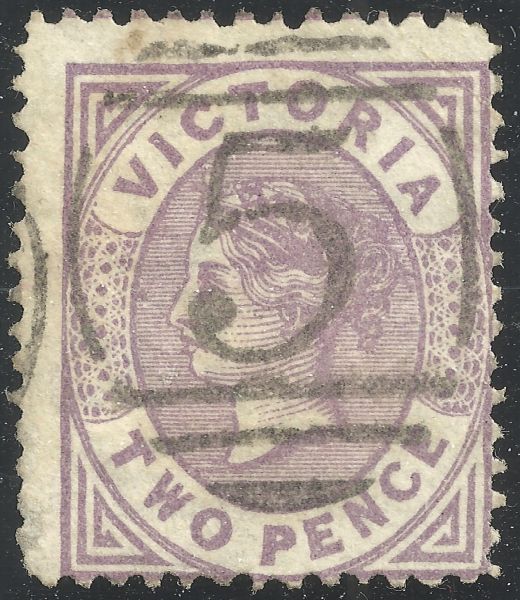
Given Rod's perforation measurements, the original stamp would be classified as Perf 13.
Perf 13 is used to describe any of 5 perforation machines that were in use between 1864 & 1880. 3 single line cutters gauging 12.75 (or thereabouts) and 2 converted comb machines of the same gauge.
I mentioned a machine that was repaired in 1879 - I believe this the most likely candidate for your stamp. This comb perf machine was a conversion of a 12.75 single line machine. The comb was only a single vertical line with top & bottom pins the width of one stamp - so the sheet was fed in sideways, the pins perforated one side (lets say the left side if fed in right way up,) and the top & bottom of one column. The sheet was then fed in the width of one stamp, and again perforated just a single vertical line (this time it's the right side of the first vertical column and the left side of the second vertical column if you're following me) and the top & bottom... and so it went. So the distinction of this type of comb compared to a single line machine is not an easy one, as only one side will appear comb - as yours does on the left side.
This machine after the repair produced some stamps that appear to be compound, gauging around the 12.5 x up to 13.25. This matches what we see with your stamp. So I think we can say there's a fair probability it was this very machine that perforated your stamp. For the purpose of simple nomenclature, it's just called perf 13.
Hope my explanation isn't confusing.

Balf





 Posted 05/26/2011 01:32 am


 )
)