Time for another slice of little-known philatelic history!
Brac is a small island off the coast of what is now Croatia.
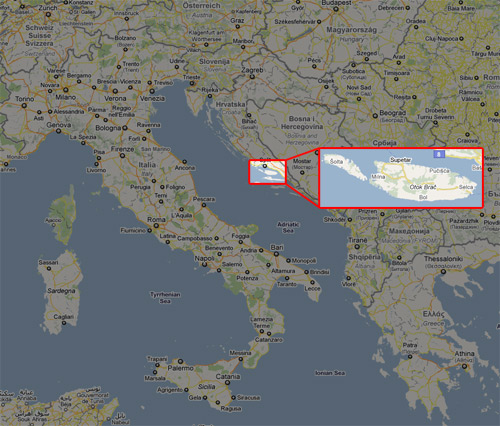
At the outbreak of WWII, Brac was part of Yugoslavia. In 1941, Italian troops occupied the island as part of their drive into the Adriatic territories. Over the next two years, partisans fought an effective guerrilla war against the Italians in an effort to end the occupation.
With the Italian capitulation in 1943, Germany launched Operation Morgenwind to take over the occupation of the island. From January - July 1944, the Germans fought an ongoing battle for control of the island with the local partisans. By July 1944, German forces were in retreat across the Eastern Front, so the occupying forces were withdrawn. Post-war, Brac became part of the Socialist Federal Republic of Yugoslavia, and is today a popular tourist destination in Croatia.
So what's this have to do with philately, you ask?!?
In January 1944, a small group of German officers decided to commission the printing of local postage for Brac, ostensibly as charity issues to benefit the local populace, but in actuality to make a profit for themselves. They officers had no authority to order the printing, as the issues were never authorized by the German Army's Feldpostmeister.
A local print shop was ordered to produce the stamps, but was only equipped to overprint existing stamps. It was therefore decided to overprint stamps of the former Yugoslavia.
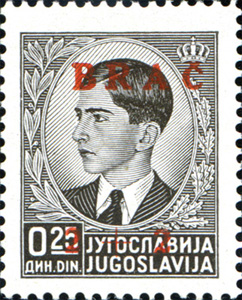
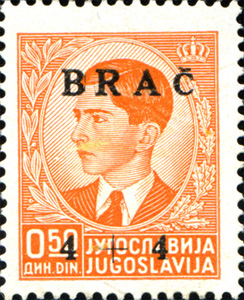
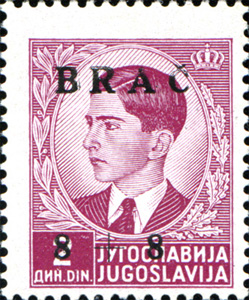
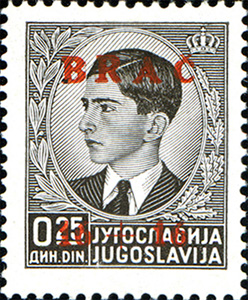
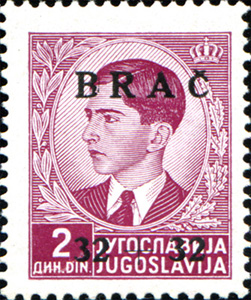
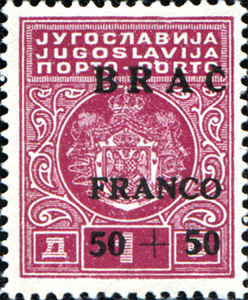
Quantities printed were:
2+2 Kune -- 400
4+4 Kune -- 400
8+8 Kune -- 500
16+16 Kune -- 400
32+32 Kune -- 500
50+50 Kune -- 500
After printing, 50 sets were left in Dubrovnik, and the remainder transported to Brac, where a few were actually used. Of those transported to Brac but not used, it's believed that all were destroyed during the battle for the island in June 1944.
The 50 sets left in Dubrovnik eventually came into the possession of local philatelist Erwin Zwerger. All known unused copies are believed to have come from these 50 sets.





 Posted 06/02/2011 6:41 pm


