| Author |
 Replies: 1,052 / Views: 231,691 Replies: 1,052 / Views: 231,691 |
|
|
|
Pillar Of The Community
2343 Posts |
|
|
Pillar Of The Community
2343 Posts |
|
|
Pillar Of The Community
2343 Posts |
|
|
Pillar Of The Community
2343 Posts |
|
|
Barcelona, January 7th, 1917. Catalonia's Rowing Championship. The complete set on white paper. There's another version on pink paper. 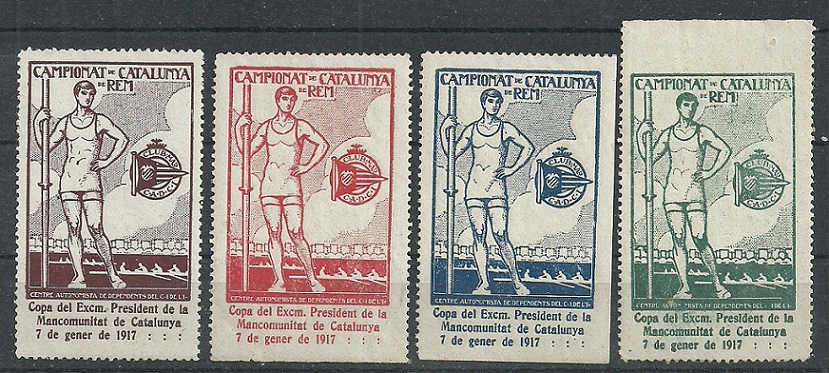 |
Send note to Staff 
|
|
|
Pillar Of The Community
2343 Posts |
|
|
Sant Feliu de Codines (40 km N of Barcelona), October 10th, 1966. 8th Barcelona province Esperanto Congress. The cinderella shows the town belfry and the nearby "Cingle de Gallifa" (Gallifa's Cliff). On the top of it lies the hermit of "Our Lady of Echology". This little cinderella is relevant to me as my family used to spend the summers on a village juat above Gallifa's Cliff and this was my teenager's landscape. 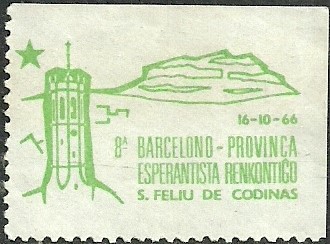 |
|
Send note to Staff
|
| Edited by Cursus - 03/09/2018 04:10 am |
|
|
Pillar Of The Community
2343 Posts |
|
|
Ripoll, June 1935. The two colours of the Esperanto cinderella issue, showing Ripoll's monastery. 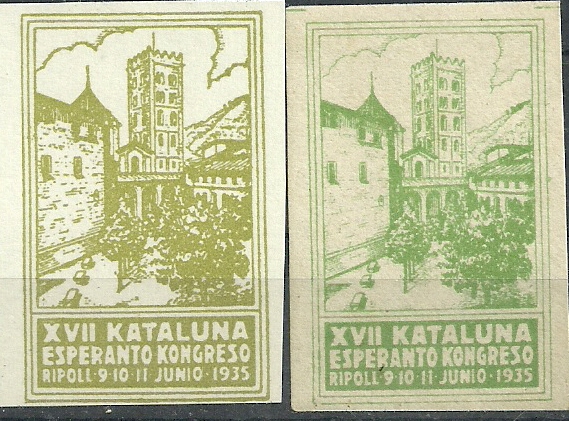 |
|
Send note to Staff
|
|
|
Pillar Of The Community
2343 Posts |
|
|
Pillar Of The Community
2343 Posts |
|
|
Pillar Of The Community
2343 Posts |
|
|
Pillar Of The Community
2343 Posts |
|
|
Pillar Of The Community
United States
1430 Posts |
|
|
Quote:
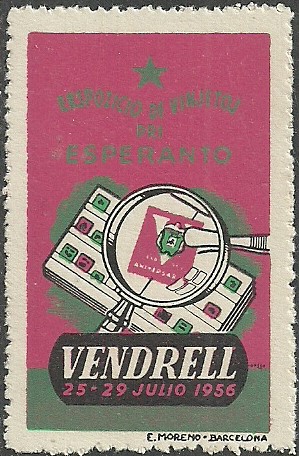
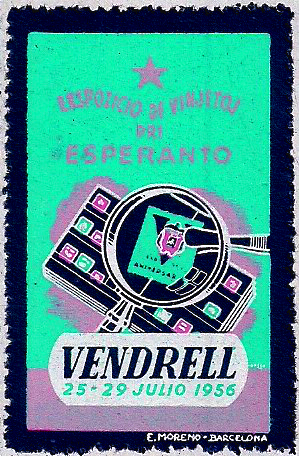
El Vendrell, July 1956. Esperanto cinderella exhibition. This is an interesting poster stamp, Cursus, but the color combination makes the inscription incredibly difficult to read — even for someone who doesn't have red-green color blindness. I've been trying to decipher the last word of the top line, but with no success. It certainly isn't "glumarkoj," but is it perhaps "etikedoj"? |
|
Send note to Staff
|
|
|
Pillar Of The Community
United States
3224 Posts |
|
|
Pillar Of The Community
2343 Posts |
|
|
What a good idea, to reverse colours to ease reading. But, it actually sais "vinjitoj". Which, I guess, should mean "poster stamp" or "cinderella" in Esperanto. |
|
Send note to Staff
|
|
|
Pillar Of The Community
2343 Posts |
|
|
As we've reached the 125.000 readings milestone, I'm showing one of my latest adquisitions: the first regular booklet of the "Àlbum Catalunya", issued on April, 6th, 1933. 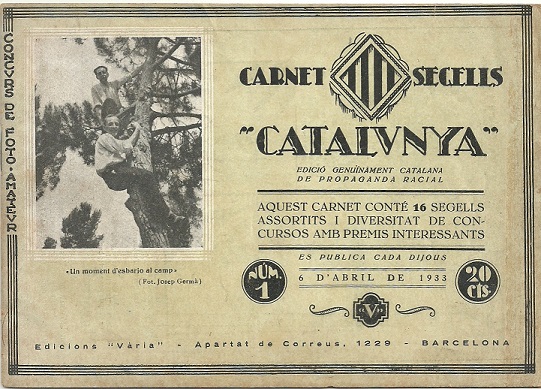 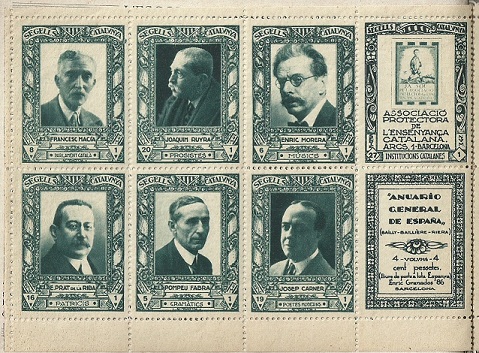 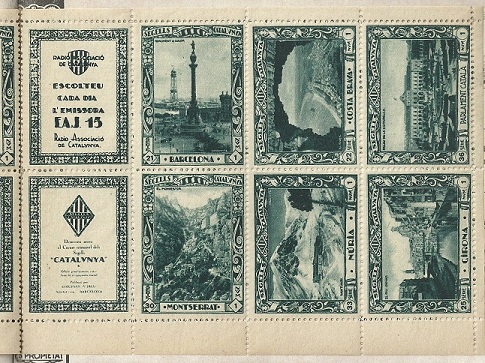 On the first cinderella pane, we can see the President of Catalonia, Francesc Macià, who was to die later that year(upper left). Below him a former Catalonia's President, Enric Prat de la Riba and next to the later Pompeu Fabra, considered "father" of the modern Catalan Language. This year, we celebrate 150 years since P. Fabra's birth and 80 years from his death in exile. On the second pane there are some views of Catalonia: C. Columbus monument in Barcelona, the Catalan coast, Catalonia's Parliament's Building (Barcelona), the monastery of Montserrat, Nuria's mountain ressort and a view of the city of girona. The booklet price, was 20 cents of pesseta, which was our currency. The word actually, means "little piece" or "small coin" (nowadays, we should write "peceta") and it was first mint in Barcelona on early XVIII century. |
|
Send note to Staff
|
|
|
Pillar Of The Community
United States
1430 Posts |
|
|
Thanks, hy-brasil, that did the trick! Quote:
What a good idea, to reverse colours to ease reading. But, it actually sais "vinjitoj". Which, I guess, should mean "poster stamp" or "cinderella" in Esperanto. That's an "e" in the middle, so it's actually vinjetoj — which is Esperanto for "vignettes". The Plena Ilustrita Vortaro de Esperanto defines vinjeto as (1) a small ornamental design, placed sometimes at the beginning, sometimes at the end of a book or chapter; (2) in medieval manuscripts, an initial letter, often ornamented with grapevines. That explains why "vignettes" are etymologically "little grapevines"! The French term vignette, however, is also often applied to poster stamps.The word that Richard Hirsch uses for poster stamps in his Katalogo de la Tuta Esperanto-Filatelio is glumarkoj, literally "adhesive stamps". |
|
Send note to Staff
|
|
|
Replies: 1,052 / Views: 231,691 |
|




 Posted 02/24/2018 06:34 am