| Author |
 Replies: 1,052 / Views: 231,652 Replies: 1,052 / Views: 231,652 |
|
|
|
Pillar Of The Community
2343 Posts |
|
|
Hi Michael.
Thank you very much for your words. I hope that you and your family, both in Israel and UK, are fine.
Things in Catalonia, are slowly improving, although it will take quite long (some months) to be back to full normality. We hope that we've already been over the worst. I'm ok, but fed-up of being locked.
Thanks God, we've got stamps and cinderellas!
I appreciate also very much your view about this very modest thread, as you're someone that knows a lot more than myself on cindys. Take care! |
Send note to Staff 
|
|
|
Pillar Of The Community
2343 Posts |
|
|
Pillar Of The Community
2343 Posts |
|
|
Bedrock Of The Community
Australia
38679 Posts |
|
|
Lovely items, Cursus.
Must have taken some effort and organisation by the Trader's Guild.
Art work, printing, papers, perforation and guillotining.
|
|
Send note to Staff
|
|
|
Pillar Of The Community
2343 Posts |
|
|
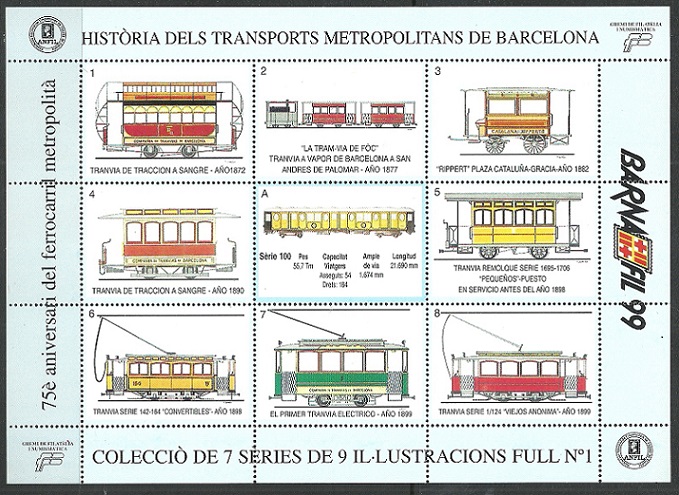
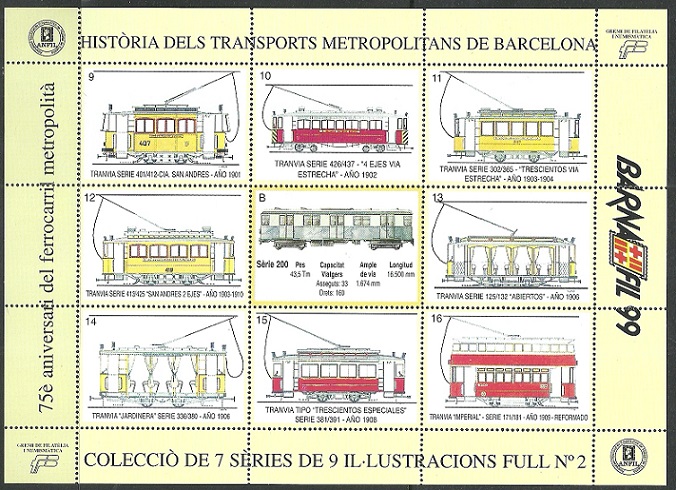
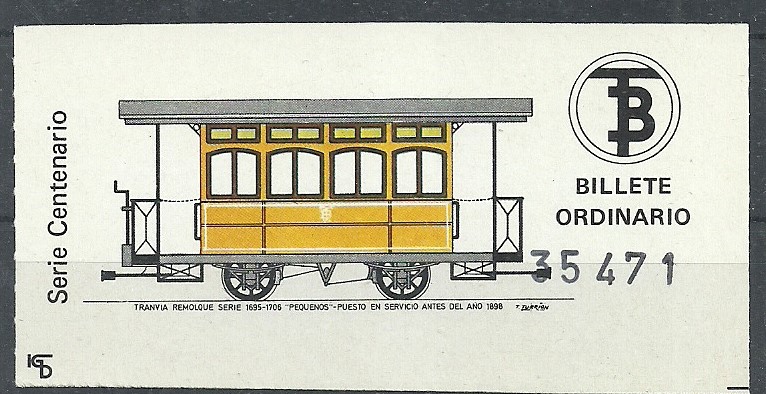
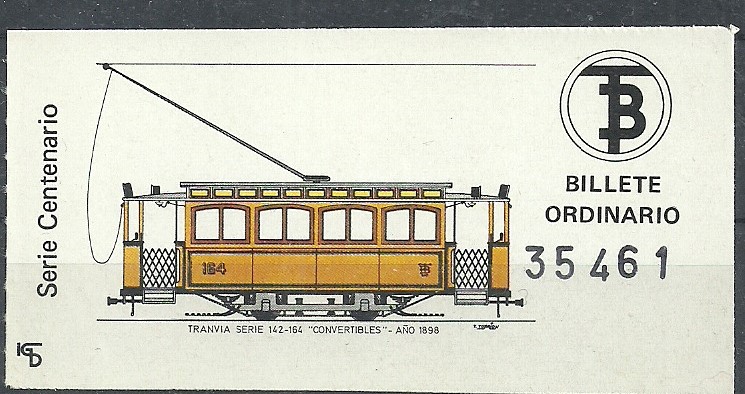
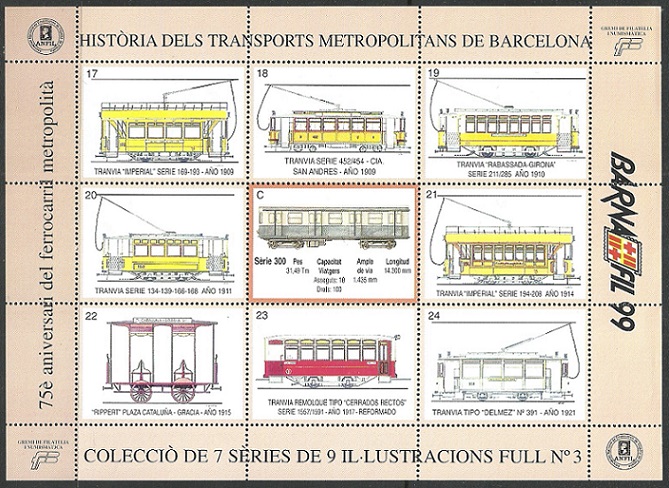
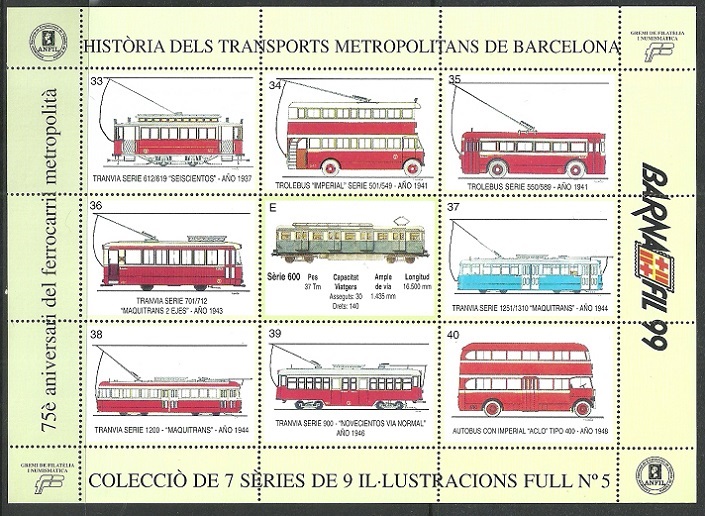
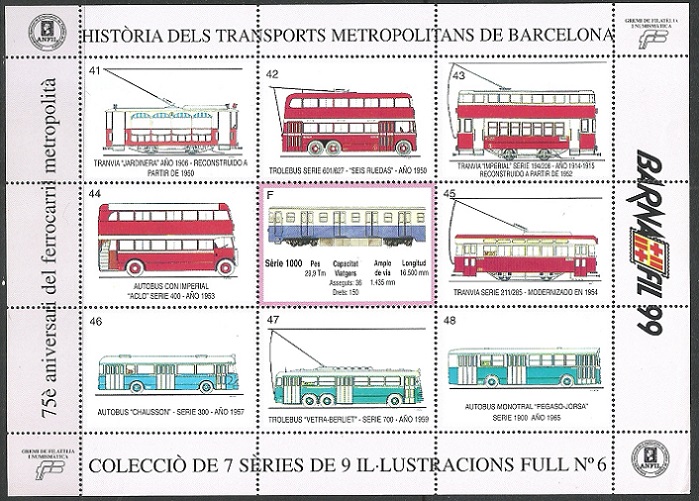
Yes, they did a good job. And there are still 5 more to show. 3 of this same series and two of the underground.
For sure, cinderella issuing was a very good bussiness for them, as they issued a lot of them. Well done, quite easy to find, and not too expensive. |
|
Send note to Staff
|
|
|
Pillar Of The Community
2343 Posts |
|
|
Pillar Of The Community
2343 Posts |
|
|
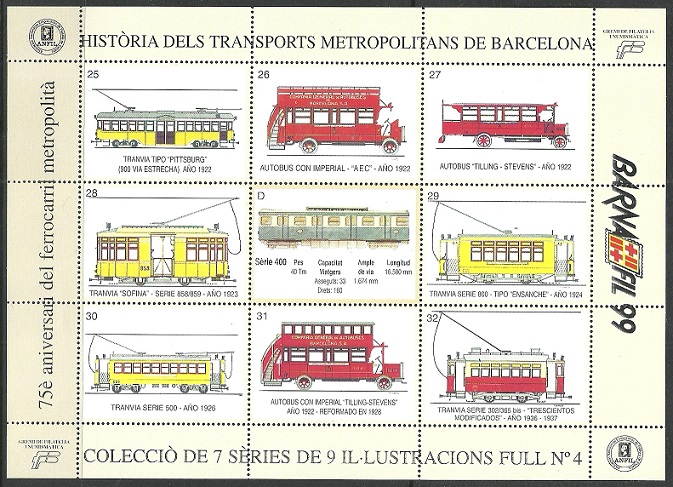
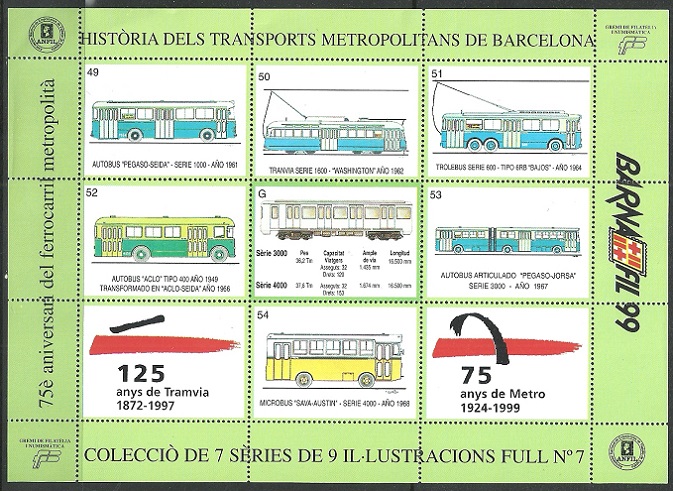
Another mini-sheet of the same exhibition, this time imperforated, devoted to the 75 years of Barcelona underground.  |
|
Send note to Staff
|
|
|
Pillar Of The Community
2343 Posts |
|
|
Bedrock Of The Community
Australia
38679 Posts |
|
|
Pillar Of The Community
2343 Posts |
|
|
Very interesting Rod, thank you for the information. We, Catalan, are known for being serious, hard-working people. But, we also like to have some fun. Mainly, if the fun for the others, means money for you. The Paris cabaret, Moulin Rouge, was set by a Catalan.
Going to Paronella Park, by the time it was built, Gaudí was also working with reinforced concrete and the letters advertising Paronella Park seem to mímic those of Park Güell in Barcelona. Perhaps, we should set a Gaudi's franchise all around the world? For many years (just when I was growing there) people from Barcelona, didn't care that much for Gaudi's buildings. My own grandpa, did not take his architecture seriously... |
|
Send note to Staff
|
|
|
Pillar Of The Community
2343 Posts |
|
|
Let's finish with the Barnafil cinderellas. This one showing some working aspects of Barcelona underground, as it was in 1999.  Pretty much the same as today. |
|
Send note to Staff
|
|
|
Pillar Of The Community
2343 Posts |
|
|
Keeping-on with the Album Catalunya stamps, we reach page 32, showing Barcelona monuments, as they were in 1933. As far as I know, eight of the ten depicted monuments still exist, albeit, some have changed location. Not bad after nearly 90 years, for a city that has suffered a evolution, a war and 40years of dictatorship (plus 45 of a, so-called, "democracy")  Jacint Verdaguer (1845-1902). Priest and best known Catalan poet. The monument dates from 1924 on the crossing of two Barcelona's main avenues: Avinguda Diagonal and Passeig de Sant Joan.  Rafael Casanova (1660-1743) Lawyer and patriot. The moument, by Rosend Novas, was built in 1888 at the Saló de Sant Joan (today, Passeig de Lluis Companys). In 1914, it was transfered to the Ronda de Sant Pere. In 1939, after the war, and due to the political significance of Casanova, the fascist regime ordered its destruction. But, somehow, the major of Barcelona managed to hide the monument in a city store. It reappeared in 1976, after the dictator's death, when someone, rememebered that. The monument, today, stands again at the Ronda de Sant Pere site and many flowers are offered to Rafael Casanova on Catalonia's National Day. |
|
Send note to Staff
|
| Edited by Cursus - 05/03/2020 01:00 am |
|
|
Pillar Of The Community
2343 Posts |
|
|
 Josep Anselm Clavé (1824-1874) father of Catalan choral music. Te monument by J. Vilaseca and M. Fluxà, dates from 1888. Originaly, it was at the Rambla de Catalunya/València; but, in 1960 it was moved to passeig de Sant Joan/Travessera de Gràcia.  Bonaventura Carles Aribau (1798-1862). His poem "Oda a la Pàtria" is considered the start of Catalan Cultural Renaissance. The cinderella shows the original stone monument by J. Vilaseca and M. Fluxà, dated from 1884. In 1934, two years after this picture was taken, the statue was replaced by a bronze-cast copy. |
|
Send note to Staff
|
| Edited by Cursus - 05/04/2020 04:18 am |
|
|
Pillar Of The Community
2343 Posts |
|
|
 Frederic Soler, "Pitarra" (1839/95) playwriter. The monument, by Agustí Querol, stands from 1906 at the Theater square on the lower part of the Rambles.  Roger de Llúria (1250-1305), admiral of the Catalan navy on the Sicillian wars against France (XIII-XIV centuries). Monument, from 1873 by Josep Reynés. It stands on the Passeig de Lluis Companys. |
|
Send note to Staff
|
|
|
Pillar Of The Community
2343 Posts |
|
|
 Bartomeu Robert (1842-1902) major of Barcelona and a reference of Catalan nationalism. The monument by Domènech I Montaner and Josep Llimona was originally placed in 1910 at University square in. Due to the policitical sgnificance of Dr. Robert, in 1940 the fascist dictatorship ordered it demolition and destruction. Instead, it was kept hidden until,after the dictator's death, it was recovered. But due to (claimed) structural problems on the original site it was transfered to a more excentric place, Tetuan square in 1985.  Guifré I (840-897) count of Barcelona, Urgell, Besalú and Cerdanya on today's Catalonia. Founder of the Catalan National Dinasty. The monument, by Venaci Vallmitjana, was placed in 1888 at the Passeig de Lluis Companys. Due to the polical significance of Count Guifré, his statue was destroyed after the fall of Barcelona in 1939 and the bronze was used to cast a religious image. |
|
Send note to Staff
|
| Edited by Cursus - 05/06/2020 01:41 am |
|
|
Replies: 1,052 / Views: 231,652 |
|




 Posted 04/18/2020 04:46 am