| Author |
 Replies: 181 / Views: 24,863 Replies: 181 / Views: 24,863 |
|
|
|
Pillar Of The Community
United States
7103 Posts |
|
|
Pillar Of The Community
2340 Posts |
|
|
The 2006 Estonian National Opera minisheet, gone (properly) from Tallinn to Barcelona.  |
Send note to Staff 
|
|
|
Bedrock Of The Community
Australia
38679 Posts |
|
|
Pillar Of The Community
2340 Posts |
|
|
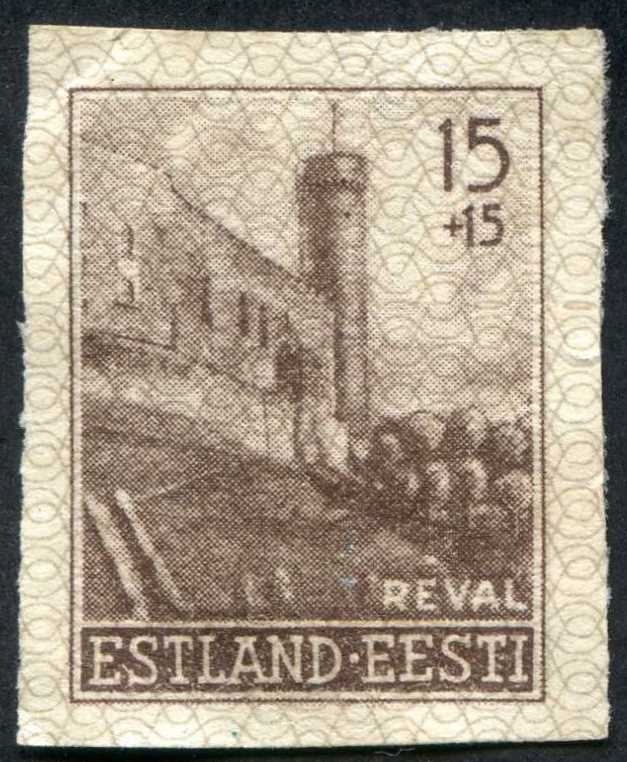
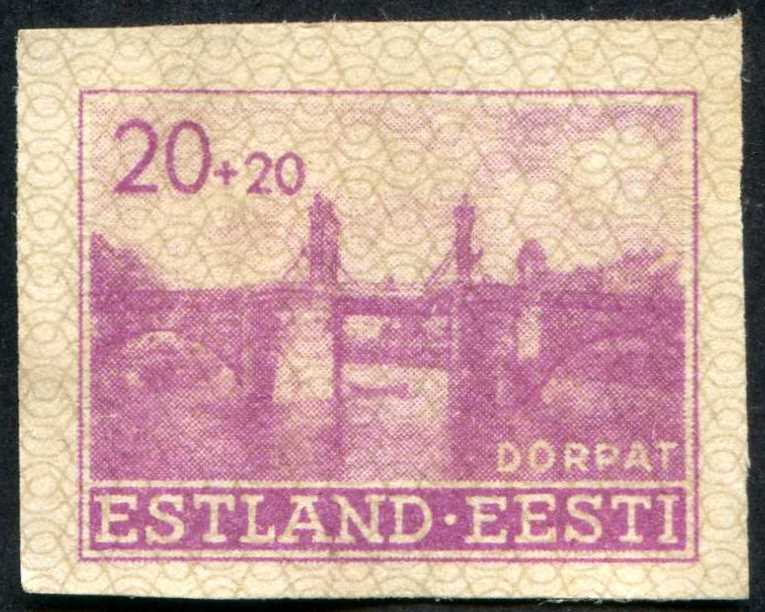
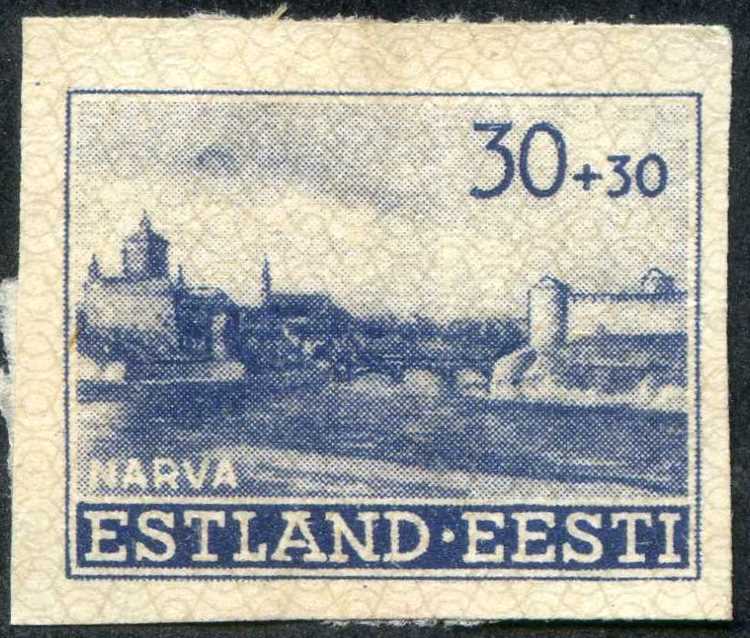
Those are the stamps issued in 1941 by the occupying German troops. Here's the complet set on a cover circulated from Tartu (Dorpat, in German) to Tallinn (Reval, for Germans).  |
|
Send note to Staff
|
|
|
Bedrock Of The Community
Australia
38679 Posts |
|
|
Nice one.
Wars, famines, occupations, floods, country occupations,
somewhere behind closed doors, stamping still goes on.
|
|
Send note to Staff
|
|
|
Bedrock Of The Community
Australia
38679 Posts |
|
|
Begs the question,
how is the moire/burele pattern printed? on the stamp paper?
Never seen this discussed on stamp forums.
|
|
Send note to Staff
|
|
|
Pillar Of The Community
United States
2547 Posts |
|
|
The numerous "safety paper" essays from U.S. were known both as under-print and over-print. The Estonia are example of under-prints. In the U.S. both Willcox and Casilear extensively used under-prints (Casilear with permanent ink and Willcox with fugitive inks) and George T, Jones with fugitive over-print. In all of these cases the design were applied with engraved steel plates. Some experiments were done by both Casilear and Jones with surface printing. |
|
Send note to Staff
|
|
|
Bedrock Of The Community
Australia
38679 Posts |
|
|
Fascinating Russ, I'll use your commentary in my write up,
have you seen such a plate before?
any images?
I would assume, looking at the accuracy of the design
it was photo etched? or some sort of rose engine?
|
|
Send note to Staff
|
|
|
Pillar Of The Community
United States
2547 Posts |
|
|
Rod, I think I have the Casilear and Willcox patents. Sent your email and I will drop them to you. |
|
Send note to Staff
|
|
|
Valued Member
United States
75 Posts |
|
|
I have just found two stamps with different color,what are they,different issues?  |
|
Send note to Staff
|
|
|
Rest in Peace
Canada
5701 Posts |
|
|
Valued Member
United States
75 Posts |
|
|
Pillar Of The Community
2340 Posts |
|
|
The first one, Scott # 212, issued on March 1992, has a face value of 20 USSR rubles; while #219, issued on June 1992, has a face value of 2 Estonian crowns (the, now extinct, Estonian currency). That's the reason of two colours. |
|
Send note to Staff
|
|
|
Pillar Of The Community
2340 Posts |
|
|
Just to revitalize a little this thread, I'm showing a cover with different shades of PPX and PPZ, for domestic and European mail, issued between September/December 1992. Printed in rolls in Kista, Sweden.  |
|
Send note to Staff
|
|
|
Pillar Of The Community
1448 Posts |
|
|
Perhaps you guys who are familiar with Estonian stamps can solve this problem.  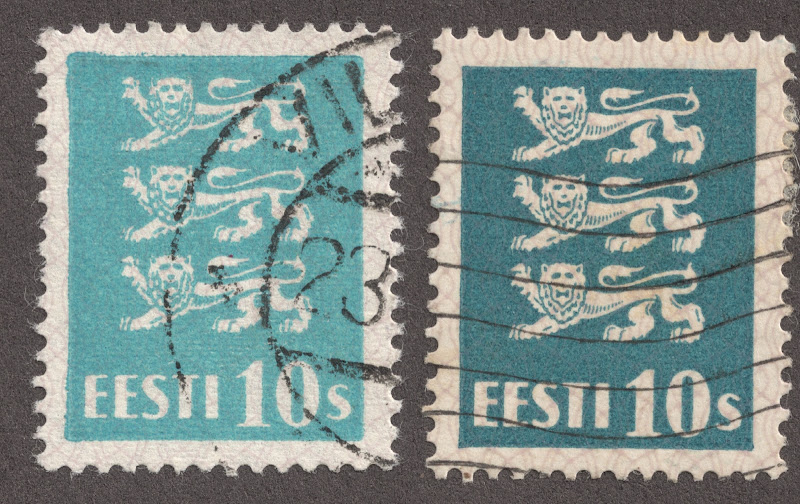 The 2011 Scott Classic Specialized catalogue (only goes up to 1940) has only one catalogue number for this denomination. 1928-40 "Arms" Scott 95 10c light blue on lilac network Well, I've two distinct colors here, and I have several samples of each color, so I don't think it is just a color changeling. Does Michel or another catalogue show more than one color of this denomination? Or was the dark blue issued after 1940 (doubtful considering historical events)?. Thanks for the help!  |
|
Send note to Staff
|
|
|
Replies: 181 / Views: 24,863 |
|




 Posted 09/05/2011 11:02 am