| Author |
 Replies: 291 / Views: 78,721 Replies: 291 / Views: 78,721 |
|
|
|
Bedrock Of The Community
United States
29045 Posts |
|
|
Croatia Fossils on the West Coast of Istria March 7, 1994 The se-tenant pair illustrates the skeletal structure and reconstructed Iguanodon and a map of the Istria Peninsula. Footprints of iguanodon have been discovered in the Early Cretaceous strata on the west coast of Istria. 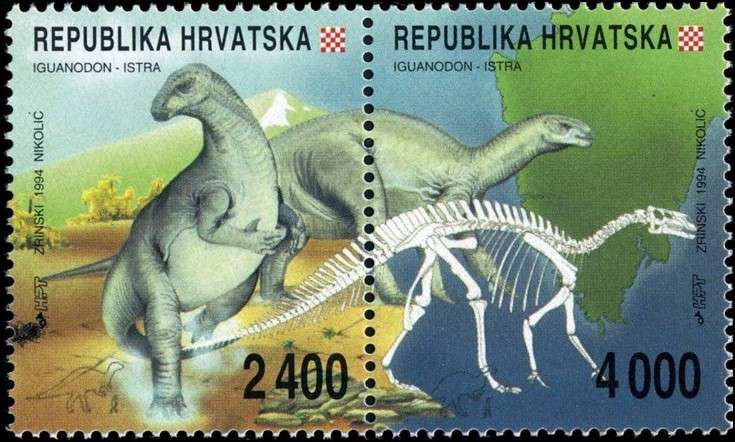 |
Send note to Staff 
|
|
|
Bedrock Of The Community
United States
29045 Posts |
|
|
Greenland Science III - Oldest Life on Earth October 1, 2007 In the rock strata of Isua, Greenland, there are fossils of small organic material which are 3.8 billion years old. The stamp depicts a reconstructed filament-like microorganism. 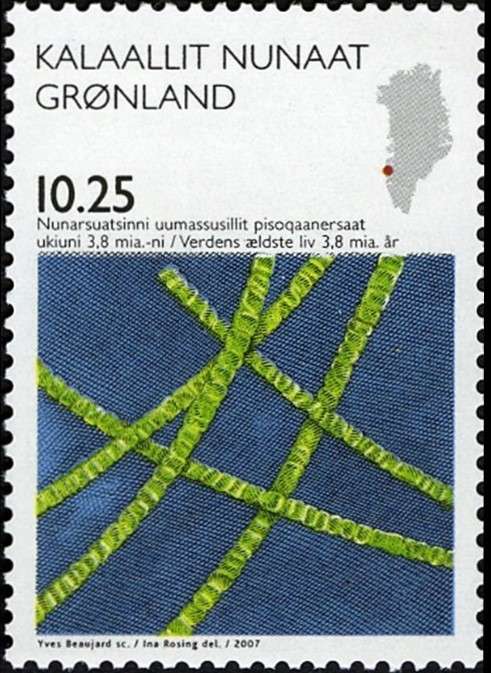 |
|
Send note to Staff
|
|
|
Bedrock Of The Community
United States
29045 Posts |
|
|
Greenland Fossils in Greenland May 24, 2008 Halkieria evangelista (Early Cambrian) ichthyostega stensioei (Late Devonian) Eudimorphodon cromptonellus (Late Triassic) January 19, 2009 Schizoneura carcinoides (Late Triassic) Scaphites rosenkrantzi (Late Cretaceous) Mallotus villosus (Quaternary) 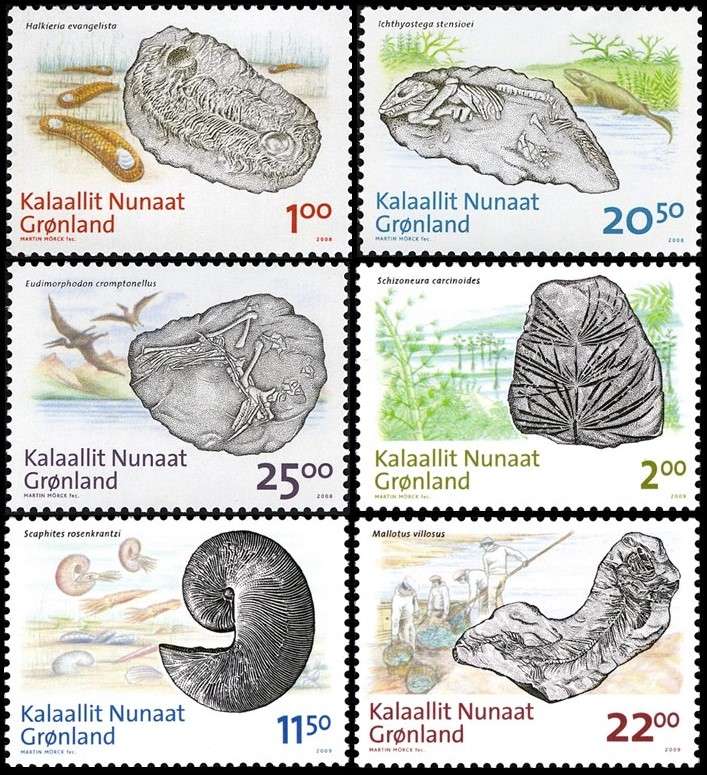 |
|
Send note to Staff
|
|
|
Bedrock Of The Community
United States
29045 Posts |
|
|
Morocco Fossils of Morocco October 9, 2015 Marrellomorphe of Zagora: arthropods known from Cambrian to the early Devonian. Stromatolite of Amane n' Tourhart: layered biochemical accretionary structures formed in shallow water 3.5 billion years ago. 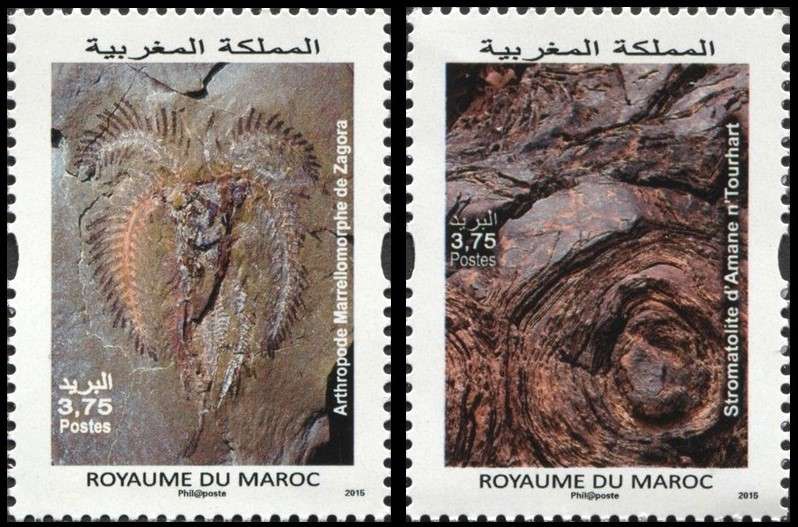 |
|
Send note to Staff
|
|
|
Bedrock Of The Community
United States
29045 Posts |
|
|
Slovenia Fossil Mammals in Slovenia - Cave Bear March 25, 2016 Cave bear remains have been discovered in a large number of sites in Europe and western Asia. The ancestors of the cave bears that inhabited the Ice Age landscape can be traced back more than a million years. The remains of Ursus deningeri (Herkova Jama), Ursus ingressus (Poto#269;ka Zijalka and many other caves) and Ursus ladinicus (Ajdovska Jama). have been identified in Slovenia. The last cave bears in Slovenia died out ca. 25,000 years ago. 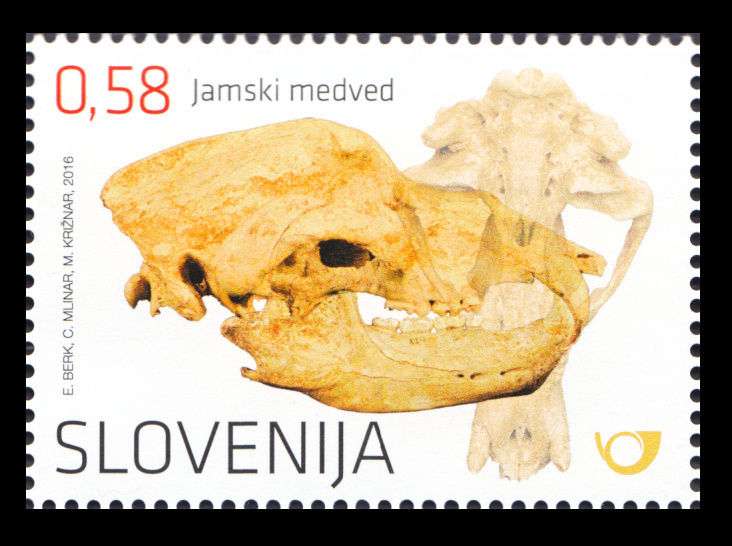 |
|
Send note to Staff
|
|
|
Pillar Of The Community
7838 Posts |
|
|
Proconsul is an extinct genus of primates that existed from 23 to 25 million years ago during the Miocene epoch. Here is an image of a stamp depicting a hand holding a proconsul skull fossil discovered on Rusinga Island in Lake Victoria, Kenya, printed by photogravure, and issued for use in Kenya, Uganda and Tanzania on May 2, 1967, Scott No. 179, plus a photo of a partially reconstructed proconsul skull. - nethryk   |
|
Send note to Staff
|
| Edited by nethryk - 04/11/2016 09:40 am |
|
|
Bedrock Of The Community
United States
29045 Posts |
|
|
Greece 7th International Congress on Neogene Period May 12, 1979 Neogene Period refers to the Upper Miocene ( ca. 23 - 2.6 million years before present) time. The stamp design shows a fossilized fish skeleton in a piece of sedimentary rock from Milos, Cyclades.  |
|
Send note to Staff
|
|
|
Bedrock Of The Community
United States
29045 Posts |
|
|
Uruguay Sesquicentennial of the National Museum of Natural History September 20, 1988 Usnea densirostra, also known as lichen beard stone or yerba stone, is a species of lichen with a tree branch morphology. It is a medicinal plant widely consumed in Brazil, Uruguay and Argentina. Toxodon platensis is an extinct mammal of the late Pliocene and Pleistocene epochs ( ca. 2.6 million to 16,500 years ago). It is one of several orders of hoofed mammals indigenous to South America. 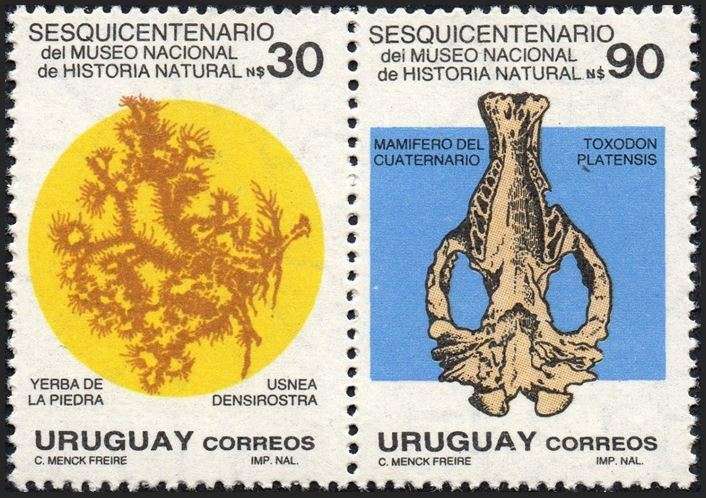 |
|
Send note to Staff
|
|
|
Bedrock Of The Community
United States
29045 Posts |
|
|
El Salvador Fossils July 26, 2006 Fossil fragments, including some from a mastodon, have been discovered at a new paleontological site in Apopa, about 12 km northeast of San Salvador. Mastodon tusks ( Mammuthus americanum) Giant sloth vertebra ( Priodontes maximus) Giant sloth jaw-bone Giant sloth foot bones (tarsals) 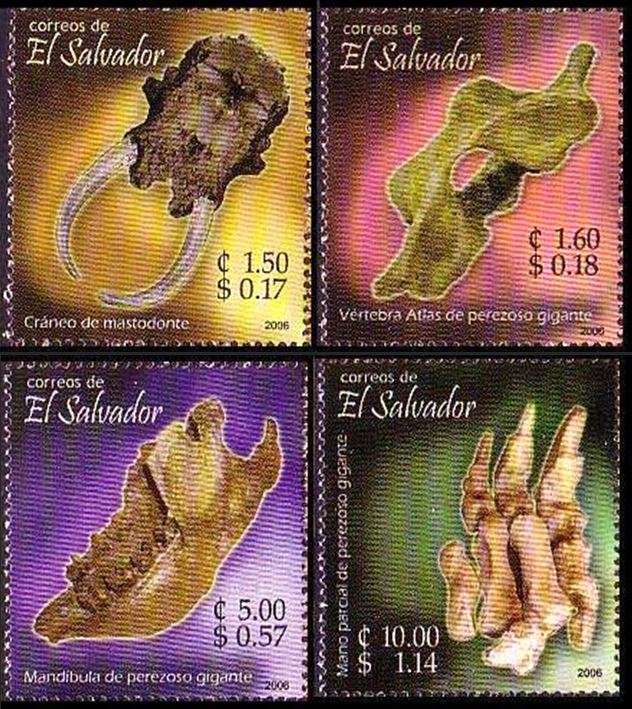 |
|
Send note to Staff
|
|
|
Bedrock Of The Community
United States
29045 Posts |
|
|
Peru Fossils of Prehistoric Animals January 16, 2007 - PurussaurusPurussaurus is an extinct genus of giant caiman that lived in South America during the Miocene epoch, 8 million years ago. The large size and estimated strength of this animal makes it an apex predator in its ecosystem. September 28, 2007 - MegatheriumMegatherium was a genus of elephant-sized ground sloths endemic to South America that lived from the Early Pliocene through the end of the Pleistocene. It was one of the largest land mammals known, weighing up to 4 tonnes and measuring up to 6 m in length from head to tail. 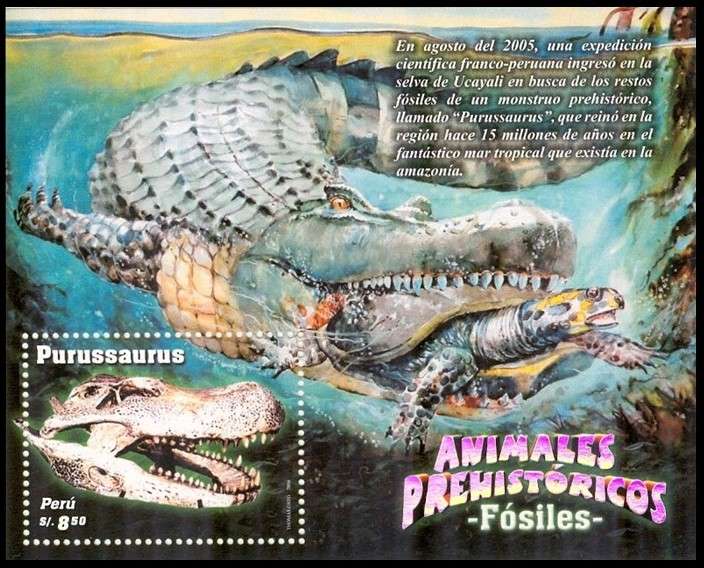  |
|
Send note to Staff
|
|
|
Bedrock Of The Community
United States
29045 Posts |
|
|
Germany UNESCO - Historical and Cultural Inheritance August 20, 1998 The Messel Pit (German: Grube Messel) is a disused quarry near the village of Messel, about 35 km southeast of Frankfurt. Bituminous shale was mined there. It has significant geological and scientific importance because of its abundance of fossils. The Messel Pit was declared a UNESCO World Heritage site in 1995. The stamp features a fossilized large crocodile Asiatosuchus lived during Paleogene. 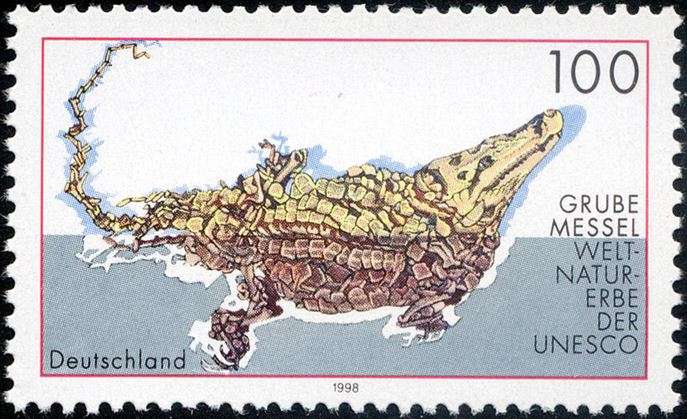 |
|
Send note to Staff
|
|
|
Bedrock Of The Community
United States
29045 Posts |
|
|
Libya Fossils and Prehistoric Animals November 25, 1996 The souvenir sheet includes the fossilized fish and lobster: Mene rhombeaMesodon macrocephalusEyron arctiformis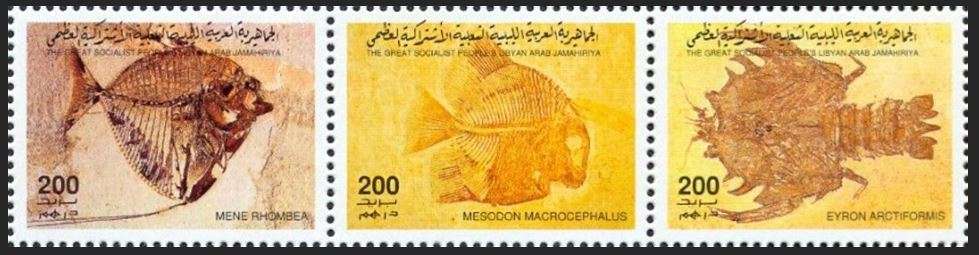 |
|
Send note to Staff
|
|
|
Bedrock Of The Community
United States
29045 Posts |
|
|
Argentina First Dinosaur discovery in the Antarctic March 9, 2015 The stamp commemorates the discovery of Antarctopelta oliveroi by Argentine geologists on James Ross Island in January 1986. The stamp design shows the fossil fragments and a reconstructed specimen. 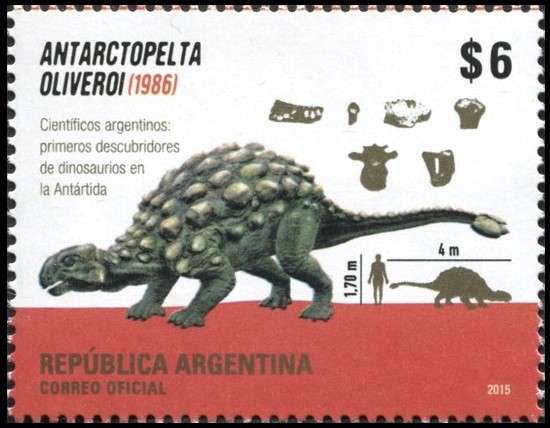 |
|
Send note to Staff
|
|
|
Bedrock Of The Community
United States
29045 Posts |
|
|
Malta Definitive Issue - History of Malta December 28, 2009 Set of 17 stamps, the 0.01 € stamp shows the fossilized skeleton of a Maltese dwarf elephant ( Elephas melitensis) of Pleistocene age. 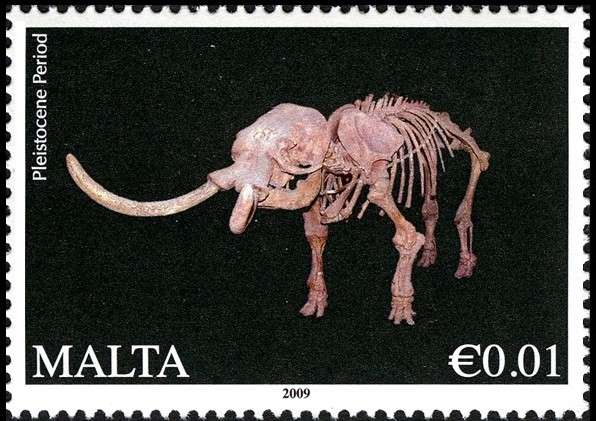 |
|
Send note to Staff
|
|
|
Bedrock Of The Community
United States
29045 Posts |
|
|
Hungary Geological Treasures of Hungary June 8, 2016 The two stamps feature the fossil of a member of the laurel family from Ipolytarnóc and the fossil of an Early Oligocene plant from Óbuda. The miniature sheet features a fossilized Late Miocene swamp cypresses from Bükkábrány. 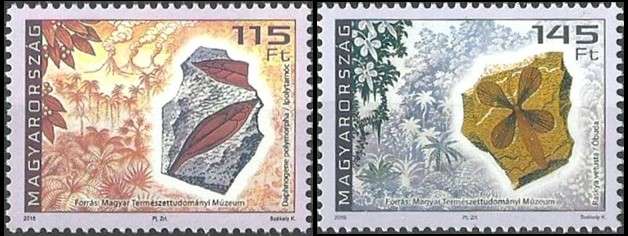 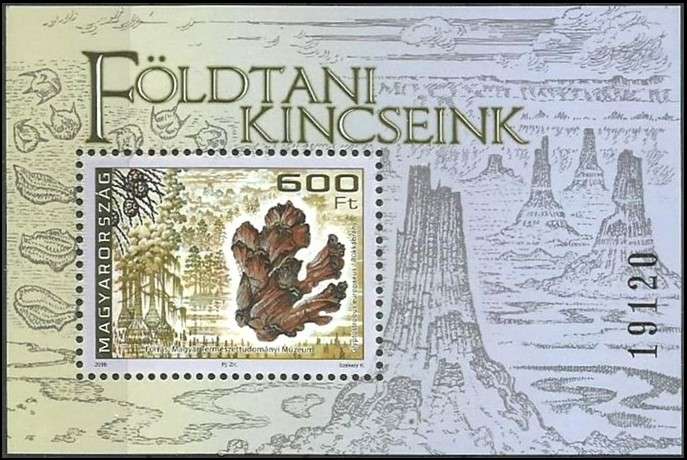 |
|
Send note to Staff
|
|
|
Replies: 291 / Views: 78,721 |
|




 Posted 02/27/2016 10:51 pm


