| Author |
 Replies: 18 / Views: 2,628 Replies: 18 / Views: 2,628 |
|
Pillar Of The Community
Australia
2156 Posts |
|
|
The date on this cancel is clear enough (FE 15 96), so it annoys me that I can't read the placename. It looks like LEXA 2, which doesn't make much sense. Does anyone know what it is? Thanks for looking and a Happy New Year to you all! 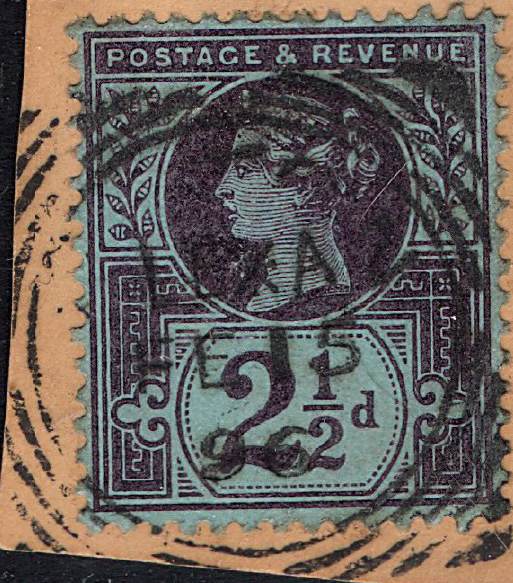 |
|
Send note to Staff
|
|
|
|
|
Bedrock Of The Community
Australia
38679 Posts |
|
|
The PO name curves around the top of the squared circle.
What you are reading is a post office code.
|
Send note to Staff 
|
|
|
Pillar Of The Community
Australia
2156 Posts |
|
|
OK, thanks rod!
It looks like the placename is completely illegible, except perhaps that the last letter is an 'N.'
I wonder if it could be derived from the post office code? |
|
Send note to Staff
|
|
|
Bedrock Of The Community
Australia
38679 Posts |
|
|
I don't think so, JJ,
Nigel may have some clue.
The LEX is a challenge in itself,
this area was usually used for the time of posting AM PM etc
yours may indicate a Late posting hammer?
I don't really know.
I cannot see any simlar pmks in my lot.
|
|
Send note to Staff
|
|
|
Pillar Of The Community
Australia
2156 Posts |
|
|
That's why I had to ask about it. I don't seem to have anything similar either. |
|
Send note to Staff
|
|
|
Bedrock Of The Community
Australia
38679 Posts |
|
|
Based on my example set ( A gigantic 10)  One can expect the following regarding postmarks... 40% unreadable 10% "hooded" pmks 20% "squared circle" pmks 20% CDS (circular date stamps) 10% "Duplex" pmks Now look at the bottom right stamp The "Aigburth" Post Office in Liverpool Check out the Post Office Code..."K" (space) fleuron "A"  I don't think we shall ever crack that one. 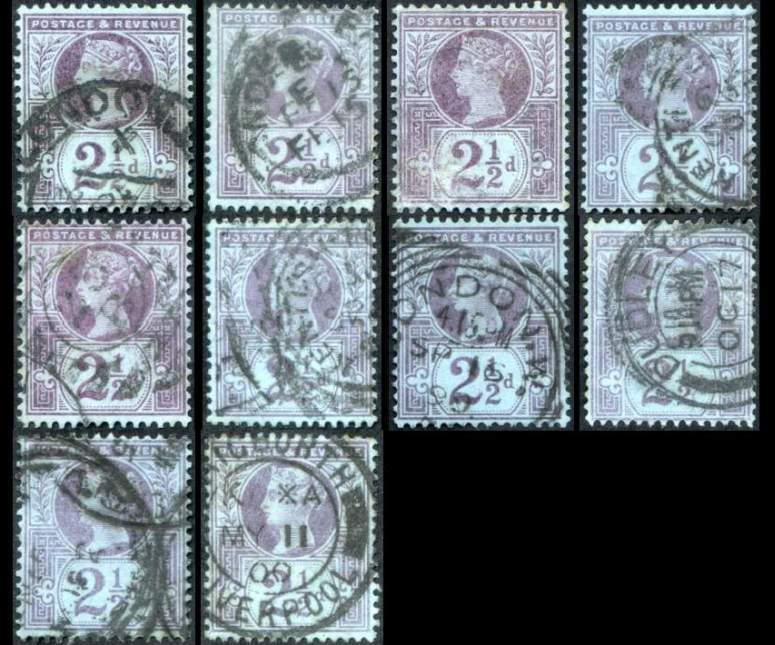 |
|
Send note to Staff
|
|
|
Pillar Of The Community
Australia
2156 Posts |
|
|
Hmmm, well the last one has 'XA, suggesting that my datestamp does in fact read 'LEXA.'
Definitely some sort of code.
Thanks for posting, rod! |
|
Send note to Staff
|
|
|
Bedrock Of The Community
Australia
38679 Posts |
|
|
Yes I still warm to a Late Posting hammer, just remember your "X" is really a fleuron not an "X" per se. Here, as an example using another currency value we have a squared circle from "Ashton-under-Lyne" a post office in manchester. The Fleuron serves as a device to seperate the code "HI" and "P" 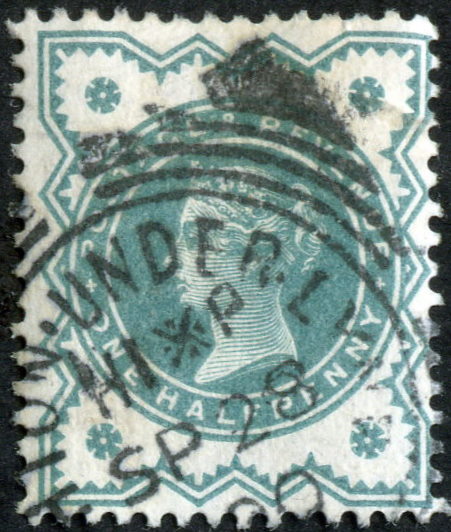 |
|
Send note to Staff
|
| Edited by rod222 - 01/01/2012 04:58 am |
|
|
Pillar Of The Community
Germany
1714 Posts |
|
|
In the early days of the GB postal service the date stamping devices were made of wood and carved new each day. The "stamper" (person) could put his initials on his stamp. Later when steel or brass ones were used they were given out each day to the stampers and had identifying letters or numbers for tracking and auditing purposes. I'd expect the LE*A is identifying that particular date stamp device. |
|
Send note to Staff
|
|
|
Pillar Of The Community
Israel
6191 Posts |
|
|
Early in 1893, the time of posting was included in the cancel in code form.
The cancel shows that the letter was posted [cancelled] at 11.25 A.M
The 'L' indicates 11 [11th letter]
The 'E' indicates the fifth lot of 5 minutes [each letter indicated 5 minutes]= 25.
The 'A' indicates AM.
So 11.25 AM
In 1894 numbers were used but this type of cancel continued to be used.
Londonbus1 |
|
Send note to Staff
|
| Edited by Londonbus1 - 01/01/2012 07:01 am |
|
|
Pillar Of The Community
Israel
6191 Posts |
|
|
jimjam I should have mentioned that the letter 'J' was not used which is why 'L' is 11. You have a similar code on your last [Liverpool] stamp so it means that this type of code was still being used in 1900. The time of posting on that one was .........well, I'll let you tell me !  Londonbus1 |
|
Send note to Staff
|
|
|
Bedrock Of The Community
Australia
38679 Posts |
|
|
Wow! Londonbus  That's made my stamp collecting so much more enjoyable I can read the heiroglyphs!  Thanks very much, that's an absolute cracker. Pssst! I'll let JimJam answer, it is his thread don't want to spoil his thunder. |
|
Send note to Staff
|
| Edited by rod222 - 01/01/2012 08:49 am |
|
|
Bedrock Of The Community
Australia
38679 Posts |
|
|
BTW Scotz...
that identifying number you referred to
is referred to as an "Index" number, in Postmark catalogues.
|
|
Send note to Staff
|
|
|
Pillar Of The Community
United States
7104 Posts |
|
|
I'm not sure that "N" is the last letter in the top postmark. There appears to be some inking after the N. I can't begin to make out enough to even guess, though. |
|
Send note to Staff
|
|
|
Pillar Of The Community
Australia
2156 Posts |
|
|
Thanks for the contributions, everyone!
I must say the idea of using code for the time, rather than the time itself, strikes me as extremely strange.
Also, glad that the matter of the 'X' has been clarified. I thought it looked a bit odd and overelaborate for an X.
I can't say I've ever heard the term 'fleuron' before. I have to wonder what the function of such a device would have been. |
|
Send note to Staff
|
|
|
Rest in Peace
Canada
6750 Posts |
|
|
A think a fleuron (from the French for flower, fleur) is a printer's floral ornament, or a knob or button using a flower for the design basis. Sometimes leaves are included. I think that the term for the X would be printer's ornament or in short, ornament. In the Canada RPO catalogue the swastika or crossed elements in this Canadian RPO cancel are referred to as ornaments. On other RPO cancels other types of crosses and printer's designs are also called ornaments. 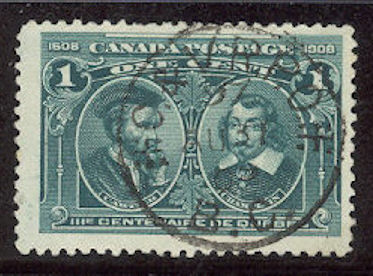 |
|
Send note to Staff
|
|
|
Replies: 18 / Views: 2,628 |
|




 Posted 12/31/2011 02:51 am


