Quote:
I am not sure what exactly the "T" is for, but I think postage due? They are not listed in Scott.
You are quite correct. T = Taxe = the French way of saying Postage Due. Whichever orifice the UPU speaks out of, it always does so in French.
So in the days before mechanisation it was standard practice in large numbers of countries for POs to have a T handstamp. When as an outgoing office they noticed an understamped letter they stamped T on the envelope to draw the attention of the receiving office (whatever language was spoken there) so they could attach a postage due stamp, if they used them.
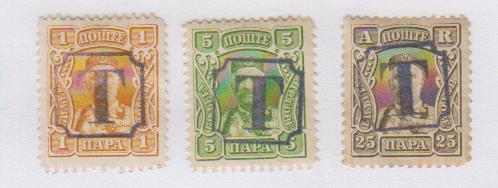
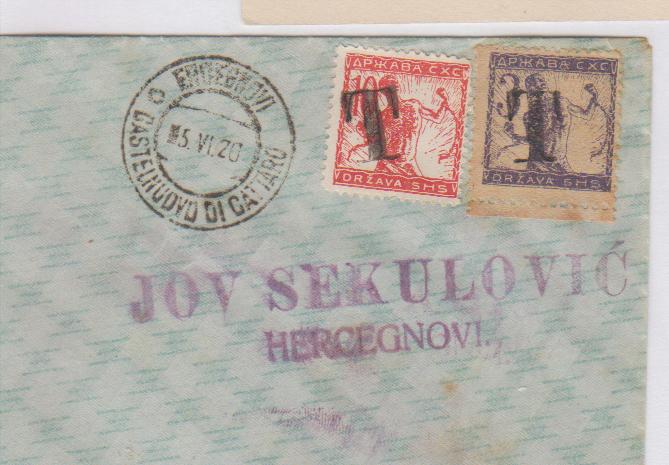
Occasionally a Post Office would run out of Postage Dues (I suspect that particularly in smaller offices this a euphemism for 'It's so long since we used them we can't remember where the damned things are.') So they would improvise a Postage Due by handstamping the T onto a postal stamp.
In some cases Postal Authorities authorized this; in other cases postmasters probably just used their initiative. The most systematic use of this was in Switzerland from the mid 50s to the 70s when they entirely abandoned postage due stamps in favour of this method. In spite of this only specialist catalogues list them. And the same is true in most other countries.
Examples from Montenegro and SHS. The cover is almost certainly philatelically produced by favour.






 Posted 08/09/2012 11:55 am