I had posted this on another forum. You might find it useful.
C.
================================
Let's see if we can't get you started in figuring out what you have when you're looking at a penny red. Start with a basic question:
1- Does it have perforations?
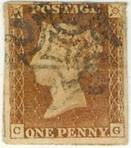
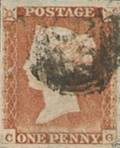
If no (like yours), it's going to be SG catalog numbers 7-12. To narrow this down, you'll have to know a bit about how to plate the imperforate penny reds (no plate numbers are on any of the issued imperforates).
You can narrow the range of possible plates down in this way:
1a- Does it have a Maltese Cross cancellation?
- If yes, it's most likely from a plate from 1-40
- If no, it most likely from a plate from about 38-177
For the plates between 1 and 40, there are a few SG numbers - those stamps printed from the plates that printed penny blacks (1-11) are SG 7 (also referred to as (Specialized Catalog Number A2).
If it was from plates 12-40, it is one of SG 8-12 (but most likely SG8) (Specialized Catalog Number B1)
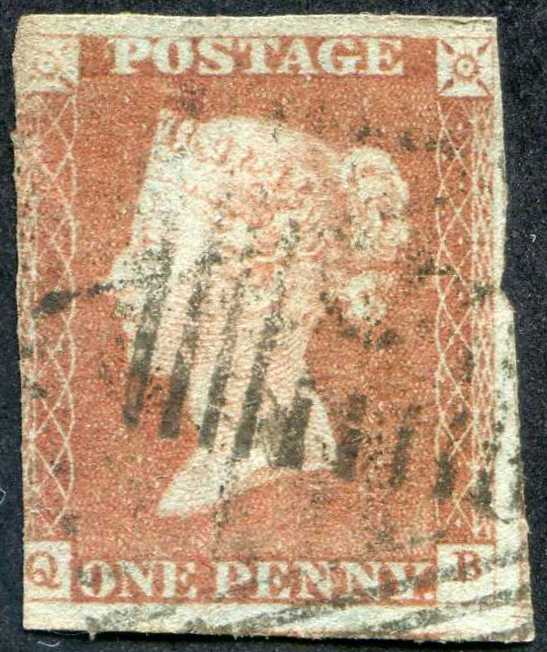
Now, moving on to the numeral-cancelled stamps (which yours is), we can look at the size and shape of the letters to put them into two batches - those printed with letters that were made with the first letter punch set - Alphabet 1 - and those made from the second letter punch set - Alphabet 2.
Alphabet 1 letters are found on plates 12-131 (still SG 8-12, but most likely SG8, and also referred to as Specialized number B1). Those printed with Alphabet 2 letters (plates 132-177) are also SG 8-12, but the Specialized numbering scheme differentiates the alphabets and calls these B2's. As a rule, the comparable letters from Alphabet 2 are larger than those from Alphabet 1 (the "G" is pretty close in both alphabets). Your stamp appears to have Alphabet 1 letters.
To further differentiate between SG8, 9, 10, and 11, you have to look at the colors. SG8 is red-brown; SG8a is on very blued paper; SG9 is pale red-brown; SG10 is deep red-brown; SG11 is lake-red (very rare); and SG12 is orange brown. Virtually everyone just calls the bulk of the stamps in this batch "SG8" unless there is a really good reason to think it's one of the others.
There are various ways to further narrow down individual stamps and match them to the plate that originally printed them. This has to do with looking at the position of the letters within the lower corner boxes, other marks that may have resulted from the plate making process, gaps in the lines around the stars at the top corners, remnants of guide lines, doubled letters, etc. Plating is about 50% science and 50% art and trying to teach how to all but the most obvious of the plates without a reference library available is beyond the scope of this note.
Now, moving on to the perforated reds:
There are many different varieties of these. I've chosen to just ignore the perforated reds in my collection (my choice). However, let me hit the high points:
2 - are there "stars" in the top corners, or letters?
If "stars," they'll fall in the range of catalog numbers SG 16-42 (Specialized numbers CE1-3 and C1-13). These are differentiated by the die used to print the profile (dies 1 and 2 were used for these issues), alphabet punch sets (1, 2, and a new set, 3, were used for these issues), perforation, paper, watermark, and color.
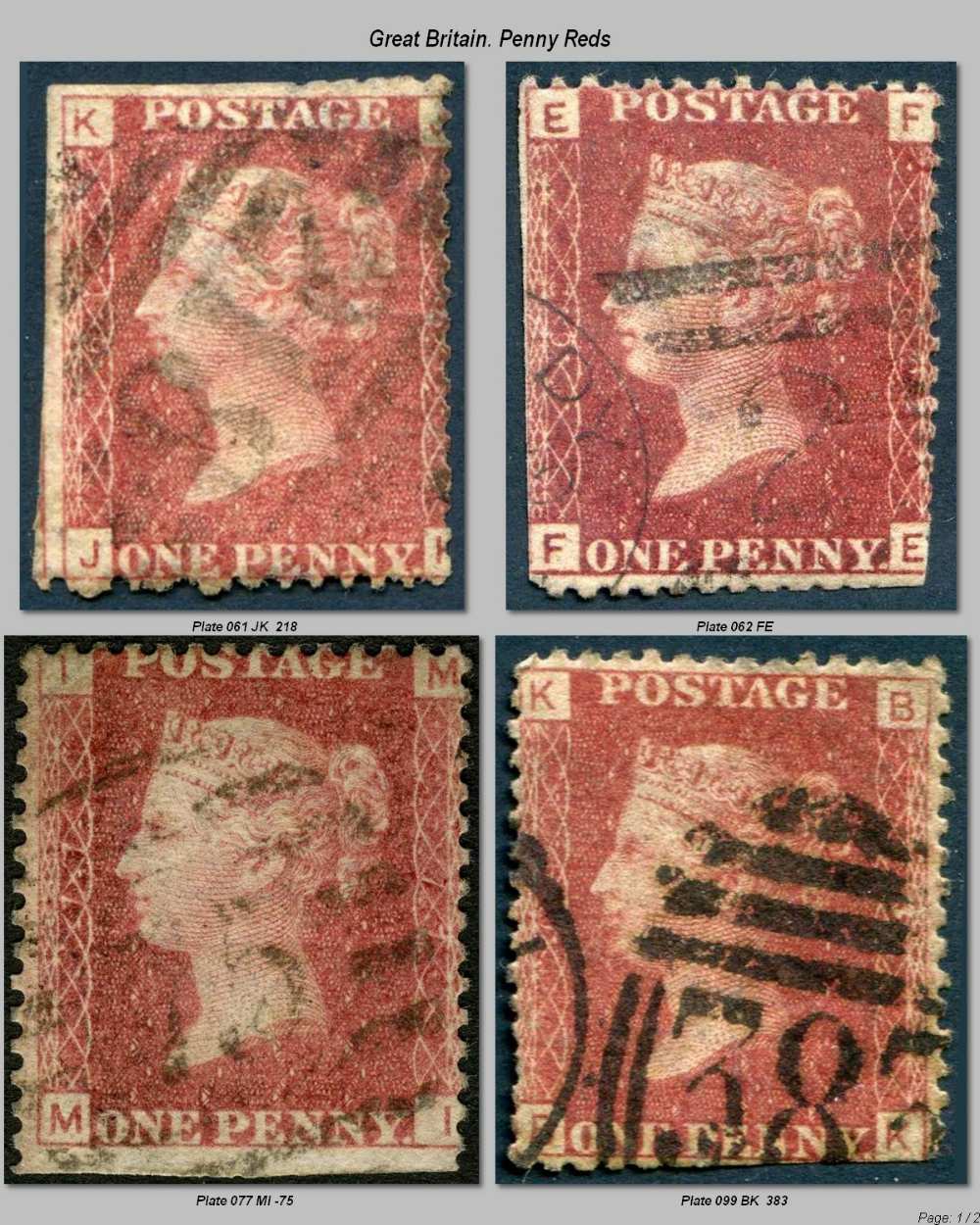
3 - If there are letters in all four corners, the stamps are SG 43-53 (Specialized category "G"). These are the stamps that have the plate numbers within the turnings at the sides of the Queen's head.
If you want a quick run down of the different stamps I'm talking about here (and relative values), you might want to check out the specialized price list put out by someone like Arthur Ryan. (
http://www.gbstamps.co.uk ). If you select his "stamp price list" link, then choose "Queen Victoria stamps." There, you'll see a list of all of the stamps with the SG number, the Scott number, and a brief description of the stamp.
Hope that helps get you started.
Chip





 Posted 08/01/2012 06:13 am






 )
)


 The postmark personalises the stamp.