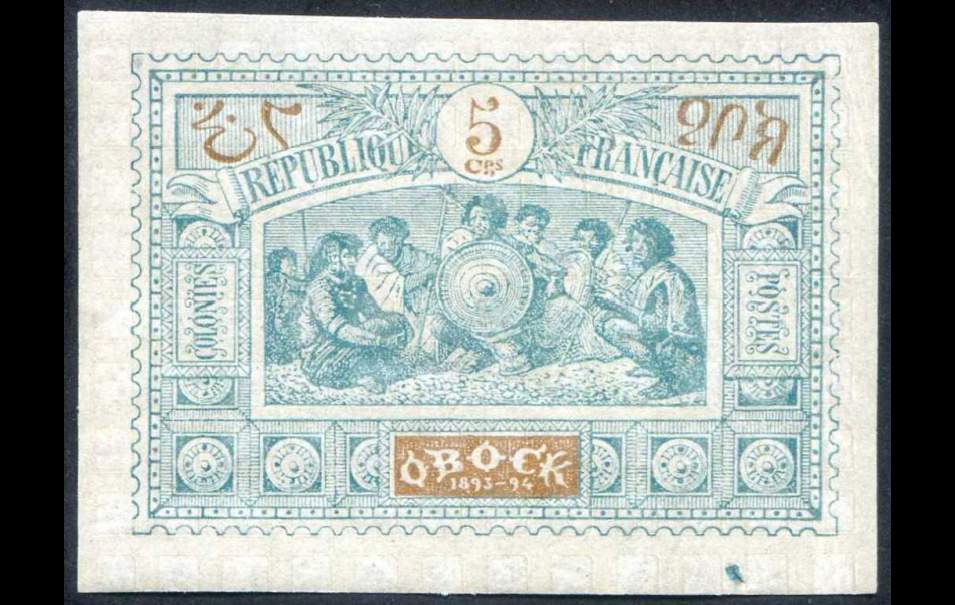
Obock was originally significant as the site
of the first French colony in the region,
established by treaty with the local Afar
rulers - March 11, 1862.
The French interest was to have a coaling
station for steamships, particularly those
of the French navy, which would become
especially important upon the opening of
the Suez Canal in 1869.
Up to that time French ships had to buy coal
at the British port of Aden across the gulf.
This was a slight to French national pride
and an unwise dependency in case of war.
The British had coal mines on Perim Island.
I expect that the French coal was
shipped in. There is no known coal
mine in the country of Djibouti, but
deposits of coal known to exist in
Ethiopia. Lignite coal resources
from three different areas in Ethiopia
are estimated to be 61 Million tonnes.
Additional deposits have been
discovered in the western part of
that country.
Virtually all of Africa's coal reserves are
in the south. They are 90% in South Africa,
with reserves of 49,520 million tonnes in
1999. Most of the remaining reserves are
shared between South Africa's neighbours,
Botswana, Zimbabwe, Mozambique and
Swaziland None of the African coal
producers north of the equator (Algeria,
Egypt and Morocco) ever produced over
200 thousand tonnes and with the exception
of minor quantities in Tanzania, no coal
production was recorded in east Africa.
Ack : Blair :RCSD.





 Posted 09/02/2012 03:39 am


