Hi browne,
don't bother apologising to ask a question,
we thrive on it, we puff out our chests and show our
amazing knowledge

Pshaw!
Actually we learn ourselves by answering questions.
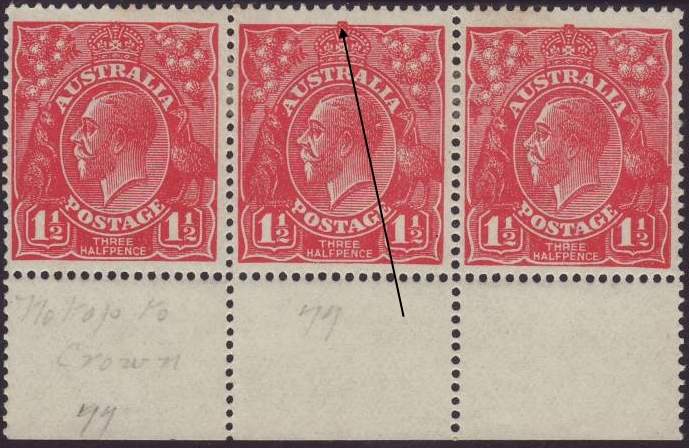
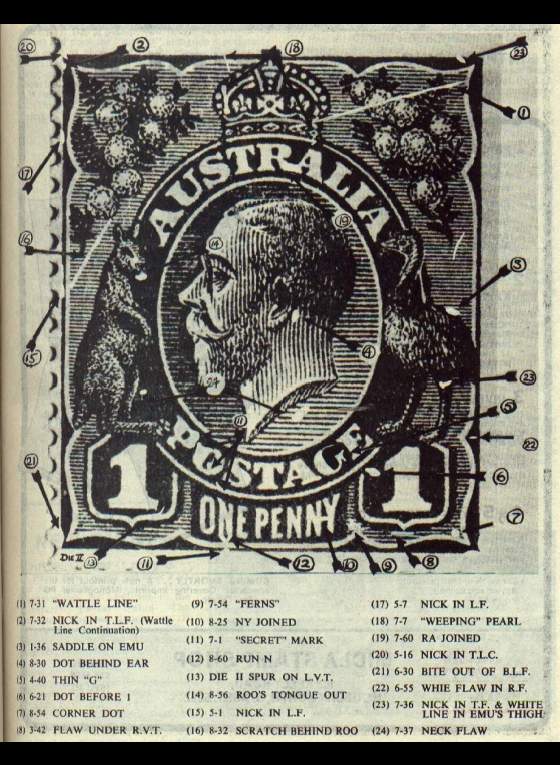
Here is your "nick" which suggests a scratch of some sort in the printing plate, I am not aware of such a variety, so I think it is probably a piece of matter caught on the plate, not allowing the ink to adhere, so we call that an EFO (error freak or oddity)
Checking specialist catalogues can confirm.
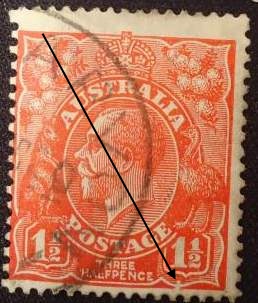
The COA is the "watermark", when the paper is made and still pulpy
an impression is made into the paper before it dries that remains with the paper generally for life, it is detectable because the paper is denser at the point of impression.
We detect the watermark by
1, immersion in water when we soak the stamp
2. if mint or a clean soaked copy we place it in watermark detecting fluid or Ronsonal
3. some wmks can be detected by placing the stamp face down on something black
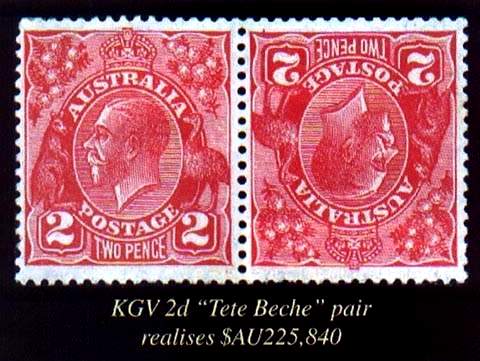
Inverted, sideways, missing watermarks can sometimes make an
ordinary $1 stamp into something worth very much more.
Some watermarks can be seen easily by eye from the back
Your sidefaces often can be seen easily.
Hope that helps.
Here is an example of the famous "nicks" of the 1d red sideface
(Going back to coins yet?

)





 Posted 09/18/2012 03:41 am