|
This page may contain links that result in small commissions to keep this free site up and running.

Welcome Guest! Registering and/or logging in will remove the anchor (bottom) ads. It's Free!
To participate in the forum you must log in or register.
| Author |
 Replies: 29 / Views: 19,221 Replies: 29 / Views: 19,221 |
|
Pillar Of The Community
United States
6668 Posts |
|
|
I am finally getting close to completing this great set of US Definitives. These were the first definitive series since 1869 that images other than portraits of statesmen had been featured on U.S. postage.The general public disapproved, complaining that the scenes were no substitute for images of presidents and Franklin. However with the release of these 1922 regular issues, the various scenes—which included the Statue of Liberty, the Lincoln Memorial and even an engraving of an American Buffalo—prompted no objections. The 1922 - 1925 Flat plate printings. Nathan Hale This was the first half-cent stamp issued by the U.S. Post Office (indeed, the first American postage stamp bearing any fractional denomination) and was issued to accommodate the new postal rates established in 1925. Hale was selected for the subject of this issue by Postmaster General Harry New. The stamp was designed by Clair Aubrey Huston who modeled the image of Hale from a photograph of a clay model of a statue of Hale located at Yale University  Benjamin Franklin The engraving of Franklin in this issue was the same one used in the previous Washington-Franklin issue, engraved by Marcus Baldwin of the Bureau in Washington, who modeled his work after a photograph of a plaster bust of Franklin created by Jean Jacques Caffieri's in 1777.  George Washington As the first-class letter rate was 2-cents, this denomination was printed in the billions. This issue continues a tradition, begun in 1847, of portraying Washington on commonly-used stamps. Like the engraving of Franklin, also by Marcus Baldwin, the engraving in this design was taken from the same die used on the previous definitive issues,  Abraham Lincoln This issue was designed by the famous stamp artist Clair Aubrey Houston who employed the engraving of Lincoln by George Smillie that had been used to produce the first 'Bureau Issues' in 1898. Smillie, an engraver at the Bureau of Engraving and Printing, based his work on a photograph of Lincoln taken in 1864 by the famous Civil War photographer Mathew Brady. The issued was first released on Lincoln's birthday, February 12, 1923, in Washington, D.C., and in Hodgenville, Kentucky, located near Lincoln's birthplace.  Martha Washington The 4-cent issue typically paid the postage on a double-weight first class letter. As with many of the other regular issues, Clair Aubrey Huston designed the Martha Washington stamp. The engraving of Martha Washington was performed by Leo C. Kauffmann, who based his work on a drawing by the French artist Charles Francois Jalabert, who in turn based his drawing, in part, on Gilbert Stuart's portrayal of the George and Martha Washington. Martha's first appearance on U.S. Postage had occurred in the Regular Issues of 1902-1903.  Theodore Roosevelt This is the first postage stamp to honor Roosevelt. It was issued on his birthday, October 27, 1922 in Washington D.C. and in his home town of Oyster Bay, New York. The stamp was commonly used on letters to foreign destinations with its blue color conforming to Universal Postal Union regulations for stamps used on foreign mail. Clair Aubrey Huston designed the stamp. The image of Roosevelt was engraved by John Eissler who modeled his engraving after a photograph taken of Roosevelt in 1907 by the Harris & Ewing firm in Washington, D.C.  James Garfield The release of the 6-cents Garfield stamp marked the sixth time Garfield would appear on U.S. Postage. Slated for release on Garfield's birthday on November 19, a Sunday, when Post offices were closed, the Garfield issue was instead released on the 20th in Washington, D.C. only, as there was no post office in Garfield's hometown of Orange, Ohio at the time of its issue. Like all of the Garfield stamps issued previously the Regular Issue Garfield stamp was based on a photograph of Garfield taken by New York photographer Edward Bierstadt. The image of Garfield was engraved by John Eissler.  |
|
Send note to Staff
|
| Edited by stallzer - 10/12/2013 9:49 pm |
|
|
|
|
Pillar Of The Community
United States
6668 Posts |
|
|
William McKinley This issue marks McKinley's second appearance on U.S. Postage; he had first appeared on the 5-cent issue of the Louisiana Purchase Exposition Issue. Clair Aubrey Huston designed the 7-cent McKinley stamp. The engraving of McKinley's image was performed by Louis Schofield of the Bureau of Engraving and Printing, who modeled his image after a photograph of the president by George Rockwood taken in 1898. The stamp was first issued on May 1, 1923 in Niles, Ohio, McKinley's birthplace and in Washington, D.C.  Ulysses S. Grant On May 1, 1923 the U.S. Post Office issued an 8c definitive issue honoring Ulysses S. Grant. Clair Aubrey Houston designed the stamp image. A photograph of Grant taken by renowned Civil War photographer Mathew Brady served as the model for Huston's vignette. The die for the vignette was engraved by Louis Schofield. Grant had appeared in five previous definitive series  Thomas Jefferson Jefferson's image is not new to U.S. Postage—he had appeared for the first time in 1856. The engraving of Jefferson's image in this issue was performed by George F.C. Simille, whose image of Jefferson first appeared on the 2-cent value of the 1904 Louisiana Purchase Exposition Series. The engraving was modeled after a portrait of Jefferson painted by Gilbert Stuart in 1805. Simille's engraving of Jefferson was transferred to a new die and restored by John Eissler and Leo Kauffmann for use in the printing of this stamp issue.  James Monroe Clair Aubrey Huston designed the Monroe stamp. For Monroe's image he used an engraving done by George F.C. Simille previously used to produce the 3-cent issue of the 1904 Louisiana Purchase Exposition Series. Edward J. Hein transferred Simille's engraving to a new die and restored it for the new stamp. Simille's engraving was probably based on an engraving by Asher Durand, which itself seems to have been based on a painting by John Vanderlyn which now hangs in City Hall, New York City.  The first stamp of the Regular Issues series was issued on October 4, 1922, the 11-cent Rutherford B. Hayes stamp, which also marked the hundredth anniversary of Hayes's birth. The issue was first released in Hayes' hometown of Fremont, Ohio, and in Washington D.C. Thus began the practice of issuing a new stamp on a specific day and in a particular city. The Hayes stamp is regarded by many collectors as the beginning of modern First Day Cover collecting.
563 & 563a  Grover Cleveland This was the first postage stamp to honor Cleveland. Clair Aubrey Huston designed the stamp and John Eissler engraved the image of Cleveland using a photo that is listed by the Bureau of Engraving and Printing as "unknown." This issue was released on March 20, 1923, two days after Cleveland's birthday, the 18th, which fell on a Sunday that year. As post offices were closed on Sunday the stamp was released the following Tuesday, in Cleveland's hometown of Caldwell, New Jersey, and in Washington, D.C.  American Indian This was the first 14-cent stamp issued by the U.S. post office. Clair Aubrey Huston designed the stamp who, drawing his inspiration from De Lancey Gill's photograph of Hollow Horn Bear (1850–1913), a Brule Sioux. The photograph was taken in March 1905 when Hollow Horn Bear was in Washington, D.C. for the inauguration of Theodore Roosevelt. The Smithsonian Institution is now the owner of the photo. The die which produced the image of Hollow Horn Bear was engraved by Louis Schofield.  *EDIT* When this was first posted our very well respected member Chasa had pointed out that the 8¢ Grant was actually the Rotary press issue, he was correct and the Flat plate Grant has now been updated. Thanks Chasa. |
Send note to Staff 
|
| Edited by stallzer - 10/12/2013 9:47 pm |
|
|
Pillar Of The Community
United States
6668 Posts |
|
|
Statue of Liberty This is the first U.S. Postage stamp to feature the Statue of liberty. The design for this issue is unlike any other in the series with its arrangement of lettering and ornaments. Clair Aubrey Houston designed the stamp taking his inspiration from an 1888 engraving by Charles Skinner, formally of the American Bank Note Company. Louis S. Schofield engraved the die for the image of Liberty. Edward Hall and Joachim Benzing engraved the frame, which is unique in the series.  Golden Gate The stamp was issued at both Washington, D.C., and San Francisco on May 14, 1923. The engraving was performed by Louis S. Schofield who modeled it after a painting by W.A. Coulter. The sailing ship in the painting and on the stamp is the 'W.F. Babcock'. This was the last U.S. postage stamp to be approved by President Harding's outgoing postmaster general, Hubert Work.  Niagara Falls Clair Aubrey Huston designed the 25-cent issue, Charles Chalmers engraved the image of the Falls.  American Buffalo The 30-cent Buffalo issue is the only stamp of the series that does not have a ribbon-banner and title directly below the central image (vignette) of the stamp. This issue was also designed by Clair Aubrey Huston who chose a drawing of a bison by artist Charles R. Knight in 1901, famous for his paintings of dinosaurs, while the actual engraving of the Buffalo was done by Louis Schofield of the Bureau of Engraving and Printing.  Arlington Amphitheater The 50-cent stamp depicts the Arlington Amphitheater. Clair Aubrey Huston designed the stamp after a photograph of the Amphitheater. The engraving of the Amphitheater was performed by Louis Schofield.  Lincoln Memorial This first stamp to feature the Lincoln Memorial was issued in Springfield, Illinois and in Washington D.C, on Lincoln's birthday, February 12, 1923. This 1-dollar issue was released only a few months after the completion and dedication of the Memorial. Clair Aubrey Huston designed the image using a U.S. Army photograph taken of the Memorial upon its completion. The engraving of the building was performed by Louis S. Schofield.  US Capitol The stamp was designed by Clair Aubrey Huston and released in Washington, D.C., on March 20, 1923. The image of the U.S. capitol was engraved by Louis A. Schofield. U.S. Post Office. The issue was printed with the Flat-plate printing press only.  Allegory of Freedom The 5-dollar and highest denomination of the series features the Head of Freedom Statue which stands atop of the U.S. Capitol dome in Washington, D.C.. The bi-colored stamp with its blue colored vignette and red frame required the manufacture of two plates, one for the vignette and one for the frame and required two separate passes through the printing press. The image of 'America' was engraved by John Eissle and was modeled after the Statue of Freedom by Thomas Crawford which was erected on December 2, 1863, atop the Capitol building in Washington D.C.  More to follow More to follow |
|
Send note to Staff
|
|
|
Pillar Of The Community
Canada
5821 Posts |
|
|
Heh stallzer, congrats on all your acquisitions. If I was as young as you and had your money I'd go after them too.  Epecially love those high values with the scenes. Werent you the guy who just started collecting a couple of years ago? You've come a long way Pilgrim. |
|
Send note to Staff
|
|
|
Pillar Of The Community
United States
1614 Posts |
|
|
Pillar Of The Community
United States
1947 Posts |
|
|
Rest in Peace
United States
7097 Posts |
|
|
Wow! This is almost certainly one of my favorite sets! I love the information you have with these. Great stuff and great looking centering and perfs, but you knew that!
I too have the set however, mine is all used and like everything else a work in progress.. |
|
Send note to Staff
|
|
|
Pillar Of The Community
United States
8956 Posts |
|
|
Stallzer, these are beautiful stamps the way you brought them to us. You mentioned that you are getting close to completing this set. Forgive me of asking a stupid question but are there any more?
Pete |
|
Send note to Staff
|
|
|
Pillar Of The Community
United States
6668 Posts |
|
|
Yes, there are the 1925 issues, 17 cent Woodrow Wilson and the 13 cent along with a couple of the Harding issues. Then there are the Rotary press printings which I will be updating this thread with shortly. |
|
Send note to Staff
|
|
|
Pillar Of The Community
Canada
4648 Posts |
|
|
Beautiful set Stallzer.
I have it complete used but not mint. I like the centering too.
Chimo
Bujutsu |
|
Send note to Staff
|
|
|
Pillar Of The Community
United States
2547 Posts |
|
|
Pillar Of The Community
United States
6668 Posts |
|
|
Thanks Russ, may I ask what exactly the break is ? 1923 - Flat Plate Print. With the sudden death of Warren G. Harding on August 2, 1923, the U.S. Post Office was quick to release a memorial stamp in his honor only one month later, a record. By and large, it incorporated the same design as the Regular Issues of this time, the only differences being 1) that the dates of Harding's birth and death were inscribed in the upper two corners of the stamp, 2) that no cross-hatching appears in the rectangular frame and 3) that the corner circles are a solid color. Clair Aubrey Houston designed this issue in one day using a modified version of the existing frame to surround an image taken from a copperplate etching of the late Harding. The issue was first released on September 1, in Harding's hometown of Marion, Ohio, and in the District of Columbia. The black colored memorial stamp itself is not considered a Regular Issue by collectors, however its basic design and theme was used in the three separate printings of the 1½-cent stamp that was added to the regular Issue a year and a half after the memorial issue.  1925 - 1926 - Flat plate print. Woodrow Wilson This issue was the first 17-cent stamp to be issued by the U.S. Post Office. It was also the first issue to honor Woodrow Wilson who had died less than a year from the day this stamp was released on December 28, 1925. When a postage stamp is issued shortly after the passing of a President it is generally considered a memorial to that President. Clair Aubrey Houston designed the stamp image basing it on a photograph provided by the Late President's widow, while John Eissler of the Bureau of Engraving and Printing engraved Wilson's image on the steel die using the same photo as a model  Benjamin HarrisonThe 13-cent Harrison stamp was designed by Clair Aubrey Huston. John Eissler engraved the vignette image of Harrison, basing it on the same photograph of Harrison (one provided by Harrison's widow) that had been the source of the 1902 stamp. This would be Harrison's second appearance on U.S. Postage, released Jan. 11th, 1926  |
|
Send note to Staff
|
|
|
Pillar Of The Community
United States
2547 Posts |
|
|
This issue is known with 4 different relief breaks. The breaks all occur in the area where the ribbon hits the portrait oval. The break on the left is the most common. There is a variety that is break on the right, a break on left and right and a 2 breaks on the left one break right. The relief break is highlighted below 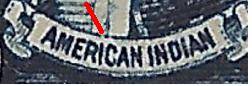 |
|
Send note to Staff
|
|
|
Pillar Of The Community
1545 Posts |
|
|
An excellent post stalzer. You went to a lot of work to give us something really great to look at!
-IBFS |
|
Send note to Staff
|
|
|
Pillar Of The Community
3865 Posts |
|
|
Since I study different aspects of printing and perforating, I have found Scott # 551 flat press and Scott # 653 rotary press the most affordable for plate blocks, sheets, etc. |
|
Send note to Staff
|
|
|
Pillar Of The Community
United States
517 Posts |
|
|
Very nice set there Stallzer with some really nice centering. A lot of hard work went into this you can tell. Thanks for sharing.
Also thanks to you Russ for the relief break info. Now I know where to look. |
|
Send note to Staff
|
|
|
Replies: 29 / Views: 19,221 |
|
|
To participate in the forum you must log in or register. | |
 Weird Covers, 1885,1886, And 1982 For Users Of Two-Post Blue International Albums What Is Your Experience With Binders. New Member Posting Image Of Avatar, Front And Back Of U2 Cut Square, Market Value Or References? Working On An Offline Collection George Washington 3 Cent 1861 With Print On The Back Hello From The Netherlands - New Member Then And Now, From Old Postcards New Member Wanting To Add An Avatar Sparks Auction Fees? 163 VF Nyfm Vertically Ribbed 163 XF Quartered Cork, Labeled Jumbo 136 VF Quadruple Split H Grill Nashville Philatelic Society-Your Invitation To Our Auction Night Meeting Monday, October 26, 2026 Nashville Philatelic Society-Your Invitation To Our Meeting Monday, October 19, 2026 Christmas Around The World 2026 C.e. In The Large Queen Cancel A More Condensed Album Page Experiment. US Scott #3 Postmarked Or Fake? Linn's Is Back - The Newspaper Is Back In Print Lots Of 1867 Grills On Sale Ajman Michel 1292A (1294A?) International Postage Stamp Album, Junior Edition By Scott C. 1928 Need Help Finding Original Source Of This Patriotic "paste-On" Cutout It's Now Cheaper To Use Fedex Ground Than USPS Ground For Some Zip Codes Share Your New South Wales Two Pence Emu Centennial Stamp Varieties Weird Covers, 1885,1886, And 1982 For Users Of Two-Post Blue International Albums What Is Your Experience With Binders. New Member Posting Image Of Avatar, Front And Back Of U2 Cut Square, Market Value Or References? Working On An Offline Collection George Washington 3 Cent 1861 With Print On The Back Hello From The Netherlands - New Member Then And Now, From Old Postcards New Member Wanting To Add An Avatar Sparks Auction Fees? 163 VF Nyfm Vertically Ribbed 163 XF Quartered Cork, Labeled Jumbo 136 VF Quadruple Split H Grill Nashville Philatelic Society-Your Invitation To Our Auction Night Meeting Monday, October 26, 2026 Nashville Philatelic Society-Your Invitation To Our Meeting Monday, October 19, 2026 Christmas Around The World 2026 C.e. In The Large Queen Cancel A More Condensed Album Page Experiment. US Scott #3 Postmarked Or Fake? Linn's Is Back - The Newspaper Is Back In Print Lots Of 1867 Grills On Sale Ajman Michel 1292A (1294A?) International Postage Stamp Album, Junior Edition By Scott C. 1928 Need Help Finding Original Source Of This Patriotic "paste-On" Cutout It's Now Cheaper To Use Fedex Ground Than USPS Ground For Some Zip Codes Share Your New South Wales Two Pence Emu Centennial Stamp Varieties
Lighthouses On Stamps Happy Halloween 2018 Lakes, Marshes, Mangroves, And Wetlands On Stamps World Post Day And International Letter Writing Week Working On An Offline Collection New Member Posting Image Of Avatar, Front And Back Of U2 Cut Square, Market Value Or References? What Did You Do Philatelically: Today Or Recently? Weird Covers, 1885,1886, And 1982 For Users Of Two-Post Blue International Albums What Is Your Experience With Binders. International Postage Stamp Album, Junior Edition By Scott C. 1928 Hello From The Netherlands - New Member Odd Shapes On Stamps (Including Hexagons) Pushing 330,000 All Different Worldwide Stamps In One Collection . Venues For Art And Culture: Museums, Theatres, Galleries, Concert Halls, Etc. US Slogan Cancels Christmas Around The World 2026 Science-Fiction/Fantasy Stamps George Washington 3 Cent 1861 With Print On The Back Old Picture Postcard Mining Scenes Then And Now, From Old Postcards Going Ape Amusement Parks & Bath Houses Alaska Postcard Collectors: I've Started A New Group Just For You. 1904 St. Louis Worlds Fair Postcards 163 VF Nyfm Vertically Ribbed
Disclaimer: While a tremendous amount of effort goes into ensuring the accuracy of the information contained in this site, Stamp Community assumes no liability for errors. Copyright 2005 - 2026 Stamp Community Family - All rights reserved worldwide. Use of any images or content on this website without prior written permission of Stamp Community or the original lender is strictly prohibited.
Privacy Policy / Terms of Use Advertise Here |
| Stamp Community Forum |
© 2007 - 2026 Stamp Community Forums |
| It took 0.28 seconds to lick this stamp. |
 |
|
|
|


 Posted 12/17/2012 10:37 pm


