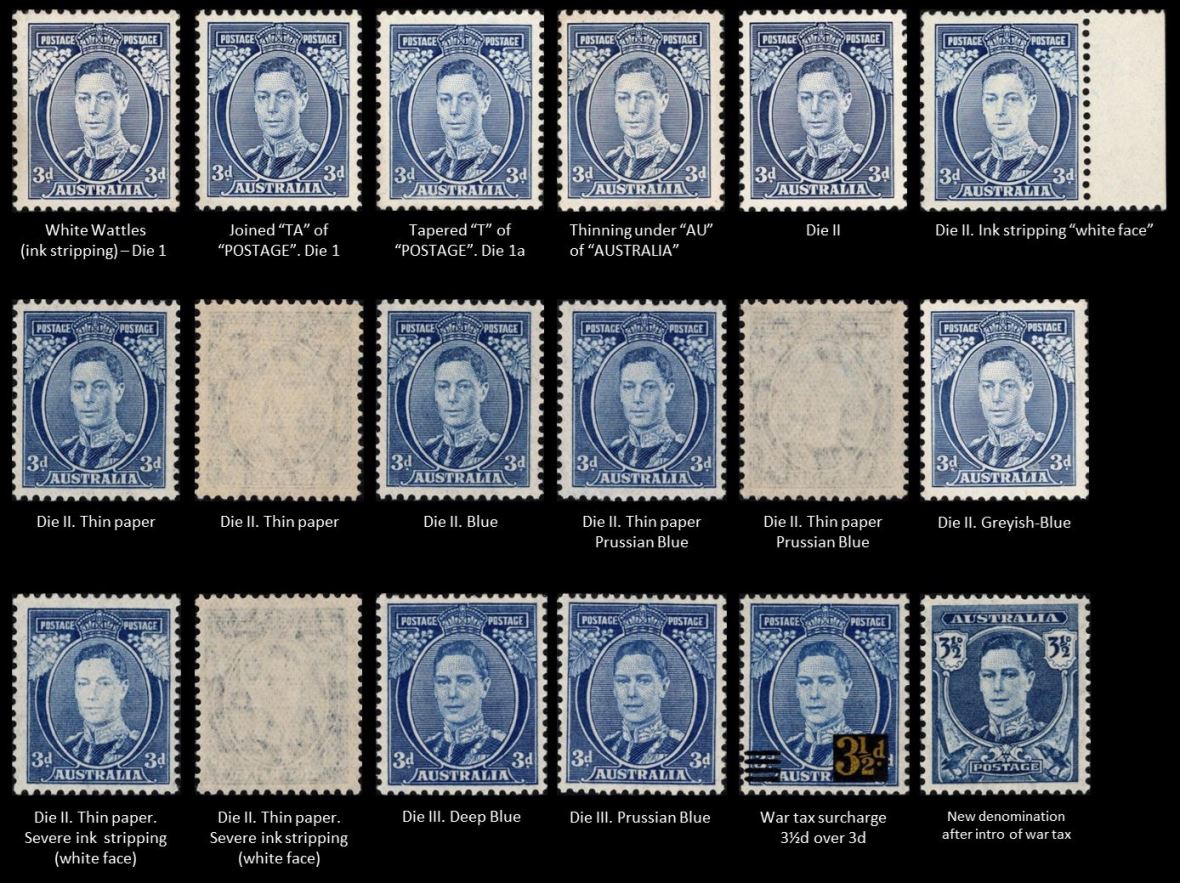
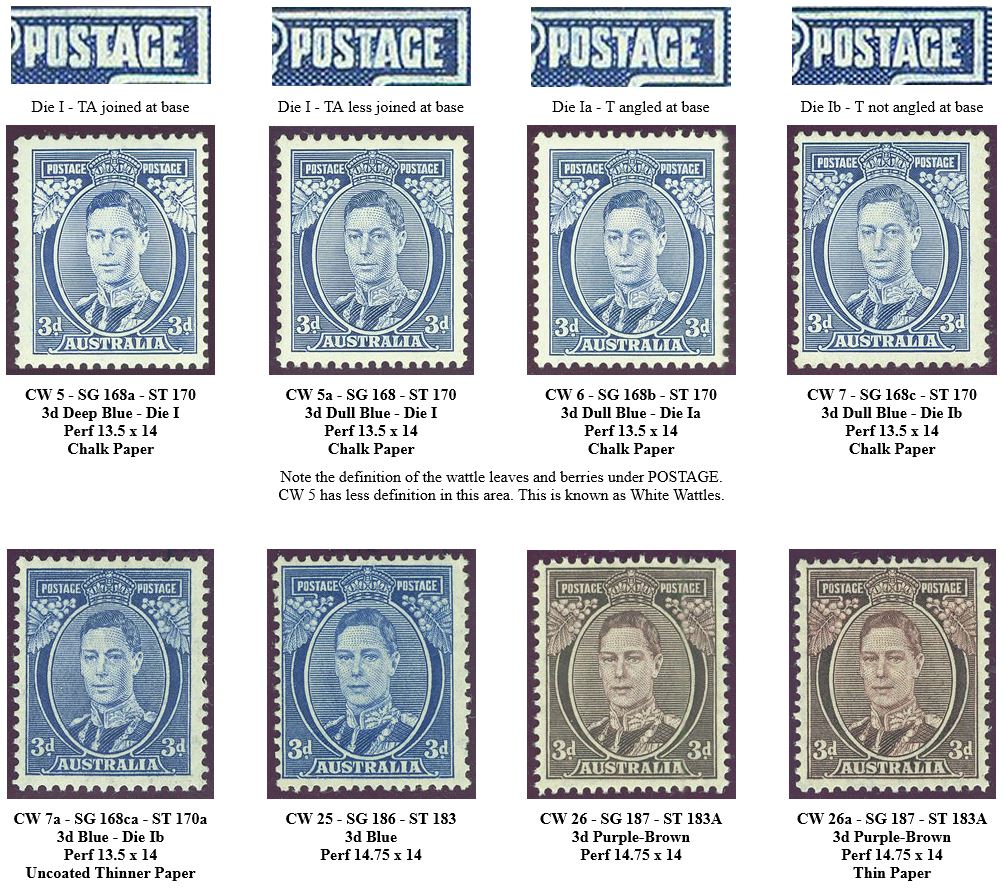
That website is very informative, but I am also confused about the Scott (ST) listings. Here is a screenshot from that website:
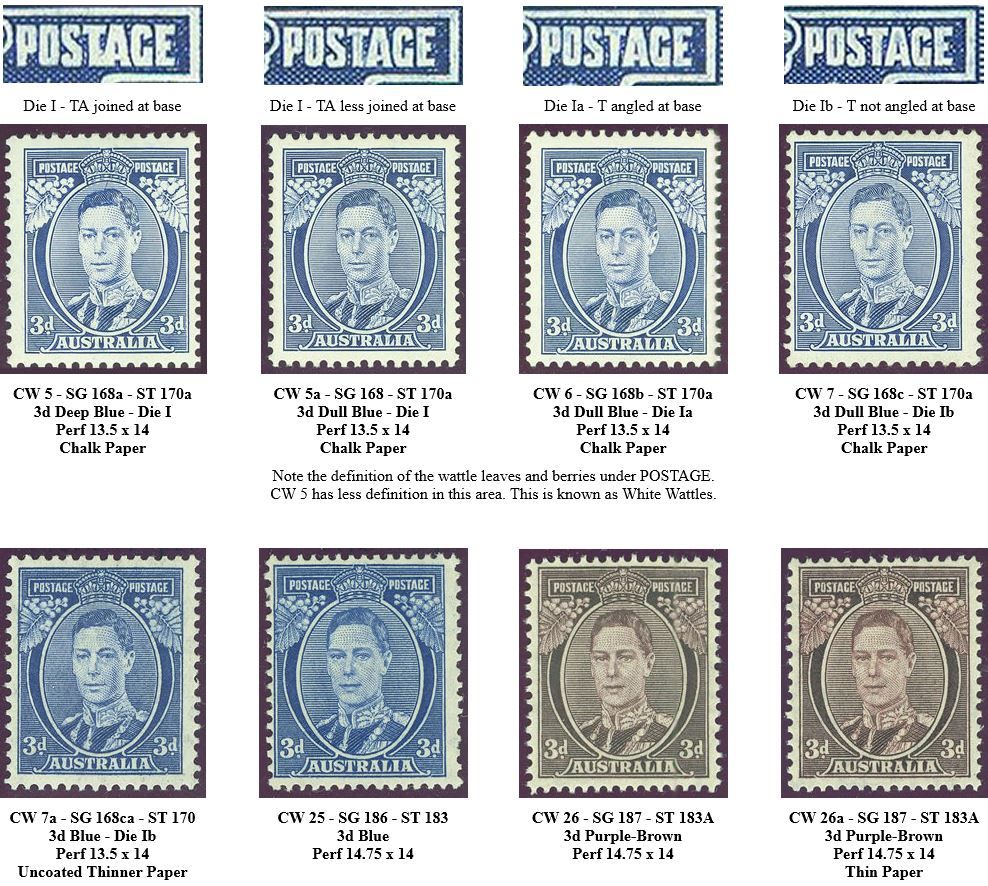
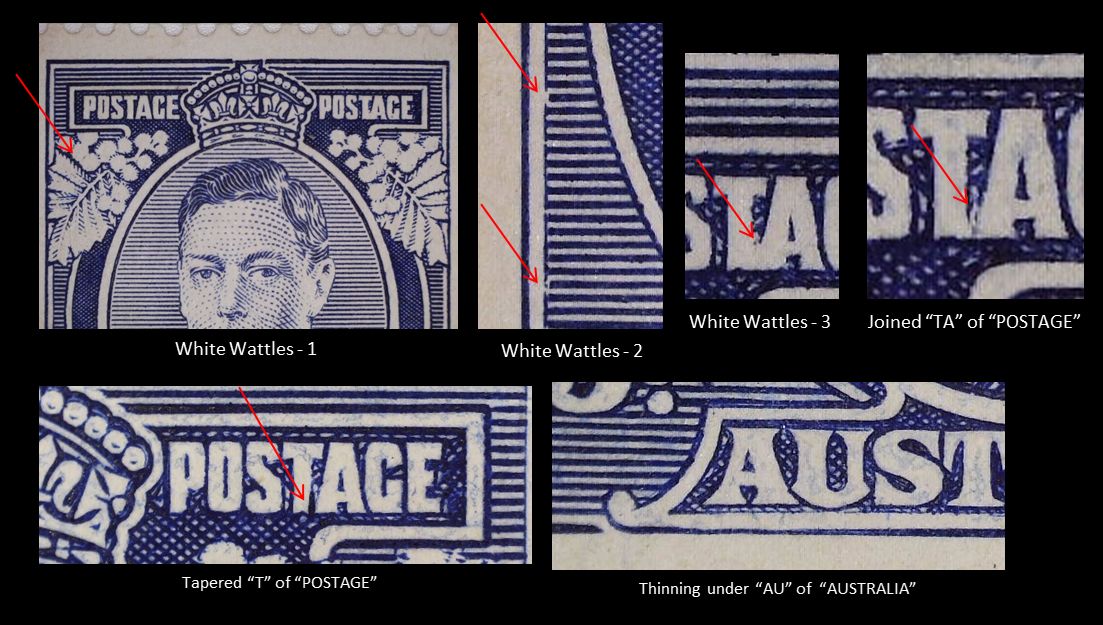
ACSC (Australian Commonwealth Specialist Catalogue) calls the first one Die 1, White Wattles. The second is just Die 1. The third is Die 1A, and the fourth is Die 2. They do not list a thickness for the first 3, but the fourth (Die II, perf 13.5 x 14) is listed as paper being 0.112-0.117 mm thick. This is the thickest listing I could find, so this is probably Scott 170.
ACSC then lists a Die II, perf 13.5 x 14 on un-surfaced paper and implies that it is thin (thickness 0.099-0.104 mm). This looks like the fifth stamp in the website. Since this is the thinnest listing that I could find, this one is probably Scott 170a. So right here, you have a discrepancy between that nice website, and Scotts.
Edit: Scott 170a says a release date of 1938. ACSC has more complete records, and shows that the fifth stamp was released on December 20, 1938 so this also points to the fifth stamp matching Scott 170a. BUT, the fourth stamp was printed in August 1937, but shipment was delayed until March 1938. Grr ...
The sixth item is correctly listed as Scott 183. This is known as Die III in ACSC and is further confusing as it is listed as semi-surfaced paper with a thickness of 0.114 mm. However, since it is the only blue one with perf 14.75 x 14, then it is easy to differentiate. This is also the stamp that was used for the 3 1/2d surcharge (Scott 189).
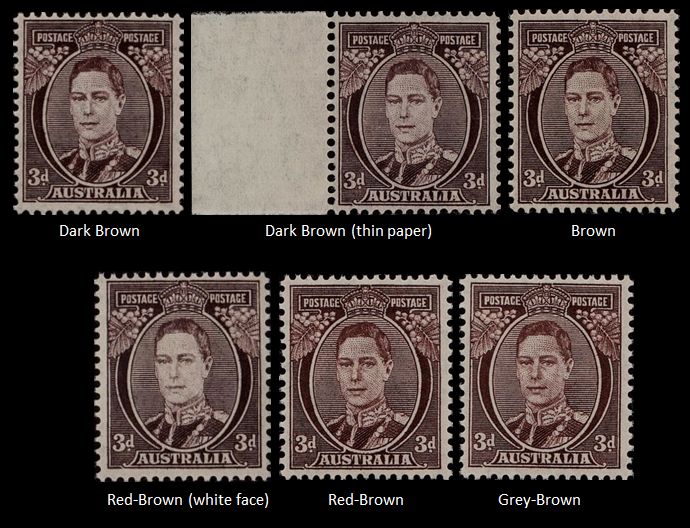
The last two items are the brown version in Scott (183A). One is shown as "thin paper". Per ACSC, this would be 0.075 mm or less, and has quite a significant premium if you find this one.
So, the website does not agree with Scott, nor with ACSC in some cases. We also don't know how "thin is thin" for the blue stamp. Good luck.





 Posted 02/14/2014 12:41 am