Stamp Community Family of Web Sites
Thousands of stamps, consistently graded, competitively priced and hundreds of in-depth blog posts to read


Stamp Community Forum
 
Username:
Password:
Save Password
Forgot your Password?

This page may contain links that result in small commissions to keep this free site up and running.

Welcome Guest! Registering and/or logging in will remove the anchor (bottom) ads. It's Free!

The Stamp Hinge Experiment

Next Page    
 
To participate in the forum you must log in or register.
Author Previous TopicReplies: 64 / Views: 11,843Next Topic
Page: of 5
Valued Member

United States
440 Posts
Posted 03/19/2014   12:19 pm  Show Profile Bookmark this topic Add vacuum man to your friends list Get a Link to this Message
Ok. I have started to see if I can produce my own peelable stamp hinges.

First I needed to find the right materials for this. The criteria was inexpensive and readily available. Which amounts to some sort of water soluble adhesive and a paper source. Came up with some possible alternatives to gum Arabic and glassine paper.

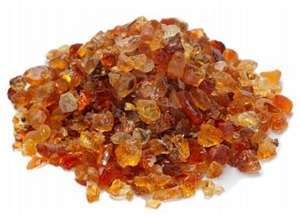
I started by going to my local craft store. Near me it was Hobby Lobby. I checked out some of the art supplies and they had a cheap tracing paper. It was 8 1/2 by 11 - 25# - and acid free. Cost was $4.99 after their 40% coupon cost was a little over $3. Next was the binder. HL had gum Arabic in a 2oz bottle used for watercolor painting. Cost was too expensive over $13. Next I checked out the cake decorating supplies because I read somewhere that gum Arabic is used in decorating cakes. No gum Arabic but they did have gum karaya. I am of the thinking this stuff is similar to Arabic but from a different source anyway it was too expensive as well. Especially since this was just and experiment and needed to be cheap. I also found through research that yellow dextrin is sometimes used for stamp glue as well. Looked on line and I could buy a lot of it in a 3lb tub but was still too expensive. In research I found out that gum Arabic was also used as a food binding agent in some cultures. I checked out the local Pakistani / Indian store and found a product called Gum Edible. After some more research it indeed was gum Arabic and looks somewhat like this:


Cost was $4 for 200g well within my budget.

So now I have my paper and adhesive. Now onto Experiment #1
Send note to Staff
Edited by vacuum man - 03/19/2014 12:21 pm

Valued Member
United States
440 Posts
Posted 03/19/2014   12:44 pm  Show Profile Bookmark this reply Add vacuum man to your friends list  Get a Link to this Reply
Experiment #1

I used the gum Arabic right out of the package. Started with a 1 to 3 gum to water mixture. After everything dissolved together the mixture looked a little like mucilage. Which it probably was. It was a little dark which maybe I can improve if I take out the darker bits out of the mix. Anyway I painted a small piece of tracing paper with a q-tip.
The paper wrinkled a little but was still usable. Next I added more water,1/4 teaspoon at a time, and painted the paper till I got to a 1 to 10 mixture. I let the whole thing dry and cut out strips about the size of a hinge and stuck the strips to some old low value stamps I had and let dry.

Results were:

The strips stuck to the stamps. But at all dilutions the strips broke away from the paper easily with out much force. Not very much stick between the stamp and the strip. Also probably because it was dark it left a brown splotch on the stamp where it was stuck. All in all it had prospects to work. For the next experiment I will try 2 coats. So I guess on to experiment #2.


* Just to make clear I used a 1/4 teaspoon measure for amounts.
Send note to Staff  Go to Top of Page
Edited by vacuum man - 03/19/2014 1:10 pm
Pillar Of The Community
United States
2055 Posts
Posted 03/19/2014   3:48 pm  Show Profile Bookmark this reply Add TheArtfulHinger to your friends list  Get a Link to this Reply
Good luck to you in your experiment, VM. I've often wondered why they can't just take the existing adhesive used on modern adhesives and just....dilute it a little. There may be a valid chemical reason it won't work, but I often think of that.
Send note to Staff  Go to Top of Page
Moderator
Learn More...
United States
12330 Posts
Posted 03/19/2014   4:15 pm  Show Profile Bookmark this reply Add 51studebaker to your friends list  Get a Link to this Reply
I believe that the process of texturing the gum was absolutely critical in the making of the older peelable hinges. Note that many people have attempted to do this, some with quite sizable budgets, but perhaps this was due to their desire to do it on a commercial level. Hope you can figure something out, keep us posted.
don
Send note to Staff  Go to Top of Page
Rest in Peace
United States
4052 Posts
Posted 03/19/2014   4:44 pm  Show Profile Bookmark this reply Add ikeyPikey to your friends list  Get a Link to this Reply
vacuum man, Greetings:

Please accept my encouragement.

The two ends of a stamp hinge may not be identical, eg, the formulation for the stick-to-smooth-glue end might be different that the formulation for the stick-to-rough-paper end.

Q/ Where is Abby Sciuto and her toys, now that we need them?

Cheers,

/s/ ikeyPikey
Send note to Staff  Go to Top of Page
Pillar Of The Community
United Kingdom
1187 Posts
Posted 03/19/2014   5:11 pm  Show Profile Bookmark this reply Add Terence Collins to your friends list  Get a Link to this Reply
The reason your gum arabic glue is dark and leaves stains is because it is a low grade poorly refined gum arabic substitute. That is why it is cheap. Good high grade gum arabic is virtually clear. Sudanese is one of the best commercial grades. If you are trying to make top grade peelable hinges I doubt you will do it with cheap materials and substitutes. I would also avoid tracing paper, it is too thick and acid free is not archival. It needs to be lignin and sulphur free as well. Get some glassine and try starting with a thicker mixture of gum arabic, glycerine and water. Then make up a set of dilutions varying from thick to thin mixtures and do a batch test. Try double coating some glassine, allowing the first coat to dry fully before applying the second. Once stuck to the stamps and pages the hinges should be left for a few days to set before trying your peelability tests. Good luck.

Terry
Send note to Staff  Go to Top of Page
Valued Member
Canada
414 Posts
Posted 03/19/2014   5:32 pm  Show Profile Bookmark this reply Add NBSTAMPER to your friends list  Get a Link to this Reply
First of all, thanks to Vacuum Man for this daring experimental adventure. Many stamp collectors still use hinges but, notwithstanding the fact that most collecting materials from the 50's and 60's are still readily availbale (manilla stock sheets, for example), no-one seems to have successfully occupied Dennison's niche. Is the demand really there? Will Vacuum Man and others on this quest for the perfect hinge eventually succeed? I think those who use hinges will have to accept the fact that "the perfect hinge" is going to cost a lot more than in earlier times. I think it would be interesting to see what would happen if Vacuum Man abandoned economy and found the best materials possible for his experiments. As one who has been working lately with a lot of stamps so solidly hinged that soaking was required to rescue them, I hope he succeeds!!
Send note to Staff  Go to Top of Page
Pillar Of The Community
United States
845 Posts
Posted 03/19/2014   5:56 pm  Show Profile Bookmark this reply Add HungaryForStamps to your friends list  Get a Link to this Reply
I always thought rice paper with rice starch paste was the archivist's choice for hinges (though I suppose most hinges use glassine). Don't know where I picked this up.

Maybe I made this up. I also "remember" using household citrus concoctions as watermark fluid, but maybe I made that up too. I mentioned that to a dealer once and he suggested some white wine to go with it, as if it was a fish course with a hint of lemon juice.
Send note to Staff  Go to Top of Page
Valued Member
United States
440 Posts
Posted 03/19/2014   6:56 pm  Show Profile Bookmark this reply Add vacuum man to your friends list  Get a Link to this Reply
Hi all.

Thanks for all the encouragement.

In reply to some of the comments, which I appreciate greatly, I will try to answer to my thinking on the subject.

TheArtfullHinger -- In researching adhesives there is a lot of water soluble stuff out there but most is the snotty kind. Like the stuff on the back of a sticky note or the stuff that holds credit cards to the paper. I figured the best may be the same stuff that has been used on stamps for years. Once I am done I might need to PH the final mixture as well. Just to be safe.

51 - Texturing might be the ticket which I will try next as well as picking out the dark bits. The only question I would have if the adhesive is water soluble I would think that a second layer of the same mixture just might dissolve a little and just make a thicker whole. But then again I am no chemist.

Terrence -- On a testing level I am just checking out what all the pieces of the puzzle do. Sort of like a kid playing with water and sand and eventually voila a sandcastle. But being acid free with all the other nasty's that go with a non archival sourced paper I would think there might be layer of adhesive between the tracing paper and what one adheres it to. Would the lignin / sulphur leach through? Don't know. I do have some glassine envelopes that I can give up for the cause but I have also seen glassine yellow with age. Adding glycerine don't know yet might help with the tack. But yes I will let it dry for a few days on my next go round.

NBS -- With the way I am coming at this I am trying to be consistent with my mixing without having to go to a molecular level. I don't think that it should or can be an exact science but what the hey I figured I will give it a go and see what happens. Maybe will have to go the exact if it does work.

HFS- I know that some archival book bindings go the rice paper route. Might be an idea for paper instead of tracing paper but will keep the information available.

Again thank you for the encouragement and don't think my ramblings are being critical of your intentions. Its just good to know that one can share knowledge.
Send note to Staff  Go to Top of Page
Valued Member
United States
440 Posts
Posted 03/22/2014   12:55 pm  Show Profile Bookmark this reply Add vacuum man to your friends list  Get a Link to this Reply
Ok before I get into the second go round for my experiment I did some more checking on edible gum from an Indian source. I found out that it could be one of two kinds. The gum Arabic or it could be gum katira. First one is from an acacia tree the second from a plant. Though the plants are different the gums look similar. The katira is also known as tragacanth. I have included a scan of the actual package. The one picture I showed you before was not of the actual product but one I got off of the web which looks similar. If it is the katira gum it might prove better at separating than the Arabic one article I read stated that the gum had less attraction to itself than gum Arabic.
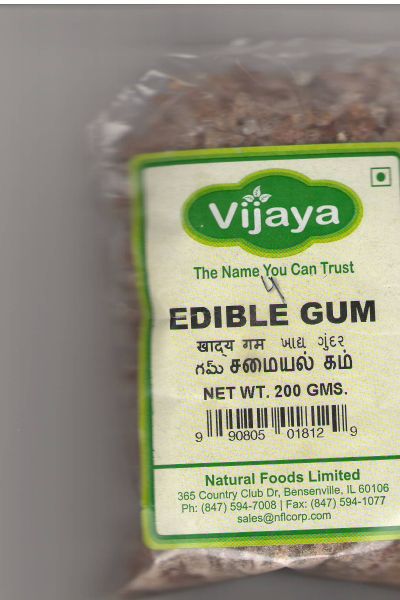
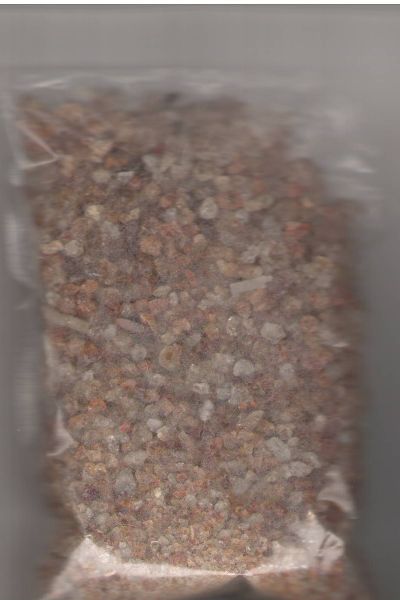


They also sell what looks like it on ebay here:


http://www.ebay.com/itm/TRAGACANTH-...400543383655

That said what this experiment is checking for a peelable stamp hinge.

The method is not scientific but totally kitchen table.

What I am using for this Experiment II is a mixture of - Edible Gum and water at different concentrations from 1 to 3 gum/water to 1to8 gum/water. For lack of getting into using glassine paper I am still using the same tracing paper from the first experiment. Like the first time I am also using a cotton swab to distribute the mixture/s to the tracing paper.

The purpose is to check the adhesion of a double coat of gum mixture for the paper strips.

On to the Experiment.

To get a proper double thick coat on all swatches I started with a mix of 2 separate mixtures. The starting mix consisted of one 1/4 teaspoon measures of gum and three 1/4 teaspoon water. This time I took out the darker bits which made a very light brown mixture. To speed up the dissolve rate of the gum I also powdered the bits before I measured the one teaspoon gum. Besides drying the dissolving of the gum is what took longest, about half an hour.

Once I got the mixture/s ready I took first container and a cotton swab and painted the paper with the 1:3 mixture. I then added one 1/4 teaspoon water mixed and took a new cotton swab and painted again till I got to an 1 to 8 mixture. I then let the paper dry (about 1 hour). I took then took the second container and repeated the above painting and adding this time I let the paper dry overnight before I cut and attached the strips to some stamps. Then let them dry for a few hours before I pulled them off.
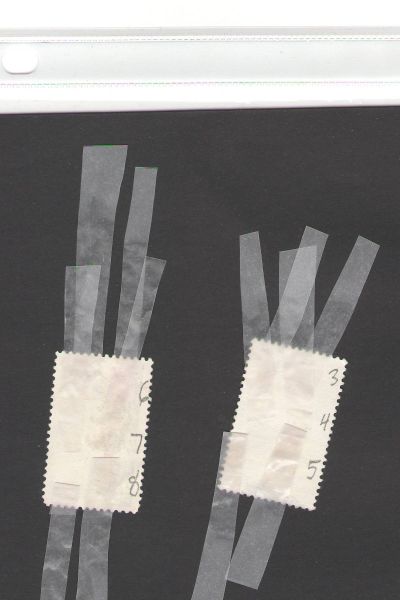


Results:

Well the hinges came off without leaving much of the adhesive on the stamp. For obvious reasons the higher concentrations of adhesive, 1:3, were more stronger than the 1:8 mix. One thing that I noticed was that the separation of the adhesive seemed that it peeled off at the strip instead of pulling the paper off of the hinge but it still seemed weak that a minor brush or tug might loosen / remove whatever it was attached to.

Conclusion:

The adhesion was better with the double coat but I didn't think it was strong enough yet to do the job. For try #3 I will try to use something else in the mix. Glycerin was suggested. Also I think I will bring down the mixture once more. Maybe not go over a 1:5 mix. I also think I better find some PH paper somewhere to test levels of the mixture.

Well so far it looks promising the strips peeled without tearing the stamp. Next - Experiment III.
Send note to Staff  Go to Top of Page
Edited by vacuum man - 03/22/2014 12:57 pm
Pillar Of The Community
United Kingdom
1187 Posts
Posted 03/22/2014   3:15 pm  Show Profile Bookmark this reply Add Terence Collins to your friends list  Get a Link to this Reply
Keep going. You are doing well.

Terry
Send note to Staff  Go to Top of Page
Pillar Of The Community
United States
8414 Posts
Posted 03/22/2014   4:30 pm  Show Profile Bookmark this reply Add floortrader to your friends list  Get a Link to this Reply
two suggestions ----first if you heat the glue before applying it would go on as a thinner layer . Second instead of brushing on the glue concider going to a art store and using a rubber roller to apply the glue -----heat and a roller will give you a more even and thinner layer . Also part of the secret of DENNISON was the two layers of glue very thin but also the two coatings I suspect were different types of glue .
Send note to Staff  Go to Top of Page
Pillar Of The Community
United States
1624 Posts
Posted 03/22/2014   6:21 pm  Show Profile Bookmark this reply Add sdtom to your friends list  Get a Link to this Reply
you need to do an article for APS on this.
Tom
Send note to Staff  Go to Top of Page
Valued Member
United States
440 Posts
Posted 03/29/2014   12:12 pm  Show Profile Bookmark this reply Add vacuum man to your friends list  Get a Link to this Reply
Ok everyone stamp hinge experiment time.

In this go round the mixture used a combination of Edible gum and Stevia sweetener. Why? Well I was thinking of the other types of materials available I found is used for adhesive. One was yellow dextrin, which is made out of corn. From a corn base other stuff includes dextrose and corn syrup (fructose). Also mentioned from Terence glycerin, which can also be produced through other chemical reactions with corn oil. (see the production of bio-diesel). I don't know if it was good being stuck on corn stuff may take another route on further experiments.

So off to the grocery store to find something. Since glycerin is used as sweetener as most of the other stuff mentioned is sweet as well I ended up looking through the baking / sugar section of the store. In looking through ingredients on packages there was a whole lot of different stuff. But the most / least harmful looking stuff was a stevia product with just stevia extract and dextrose, Pure Via. It came in packages of 1gm per packet and the packet contained mostly dextrose. When I measured it out it gave me my approx. 1/4 teaspoon measure.

As stated before I am not making this a precise controlled experiment just kitchen table mixing and seeing what happens. I do like all the suggestions like the brayer and such and may incorporate some of them in future attempts.

On to EX3.

It's mostly same as before in EX2 but with 1 packet of stevia sweetener thrown into the mix. So starting I have 1/4 teaspoon sweetener(dextrose), 1/4 teaspoon edible gum, and 3/4 teaspoon water.
then spread on tracing paper with a cotton swab at that mixture strength.

Then I added 1/4 teaspoon water and spread out mixture again. An again giving me a mixture of 1/4 teaspoon stevia, 1/4 teaspoon edible gum, and (5) 1/4 teaspoons of water. After which I let the whole thing dry.

To speed things up I mixed up another batch and spread a second layer on some to give a double mixture to test as well.

Results:

The single layer was a little better or same as the double layer in EX2. The strips held but did not hold strong enough. But the double layer in this try did much better. Sometimes too good. The double (3) 1/4 teaspoon water mixture it pulled a little thin in the stamp.

Conclusion is that yes its improved but will need some tweaking. I guess when I have time I will adjust the sweetener concentration.

Double the coatings seems to work much better and the concentrations of 1 to 3 stuff to water and 1 to 5 stuff to water are a good norm.

Thickness may be an issue but also an even coat is necessary so the brayer might be the route. Or maybe sprayed onto the paper with a spray bottle. If everything fails in this I at least will have the secret formula for Coca Cola down pat.

In searching I also found a product that is dextrin. Sugar free fiber laxative. so I might try that instead of or including what I have available now. What I do know it looks like it will take a lot of different try's and a lot of time. Maybe I will report next when I have a breakthrough. Again thanks for the encouragement.


Send note to Staff  Go to Top of Page
Pillar Of The Community
United States
1624 Posts
Posted 03/29/2014   12:31 pm  Show Profile Bookmark this reply Add sdtom to your friends list  Get a Link to this Reply
keep this topic going.
Tom
Send note to Staff  Go to Top of Page
Valued Member
United States
238 Posts
Posted 03/29/2014   1:26 pm  Show Profile Bookmark this reply Add Buck49 to your friends list  Get a Link to this Reply
Note that gelatin is the "sticky" ingredient in hide glue. You can even build furniture with Jello as the glue (in a "dry" mix) if you want to go to that much trouble. Unflavored gelatin is available in the grocery store if you want it.

I mention this because adding a little bit of gelatin to your mix may make it stick a bit better while retaining the peelability. Gelatin glue can be dissolved in water and "restuck" after it dries. It might be worth a bit of experimentation and trial.
Send note to Staff  Go to Top of Page
Page: of 5 Previous TopicReplies: 64 / Views: 11,843Next Topic  
Next Page
 
To participate in the forum you must log in or register.

Go to Top of Page

Disclaimer: While a tremendous amount of effort goes into ensuring the accuracy of the information contained in this site, Stamp Community assumes no liability for errors. Copyright 2005 - 2026 Stamp Community Family - All rights reserved worldwide. Use of any images or content on this website without prior written permission of Stamp Community or the original lender is strictly prohibited.
Privacy Policy / Terms of Use    Advertise Here
Stamp Community Forum © 2007 - 2026 Stamp Community Forums
It took 0.24 seconds to lick this stamp. Powered By: Snitz Forums 2000 Version 3.4.05