| Author |
 Replies: 14 / Views: 3,266 Replies: 14 / Views: 3,266 |
|
|
Rest in Peace
7742 Posts |
|
|
Hi guys..Maybe some one can help me to classify this Newfoundland Scott # 270...See below..It has one classification of Scott # 270iv...Wonder if this is what they call BLOTCHY PRINT...? Thanks Robert 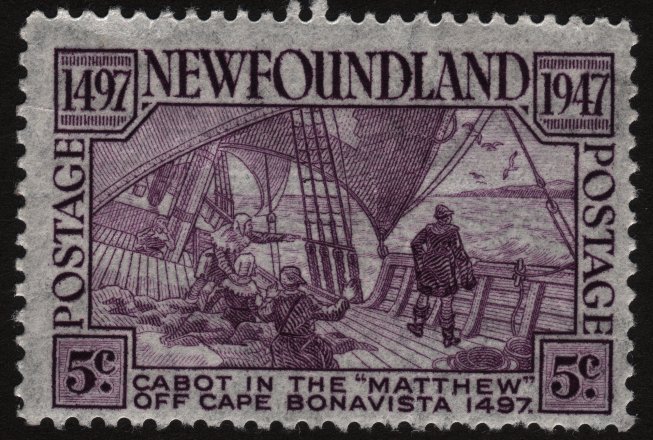 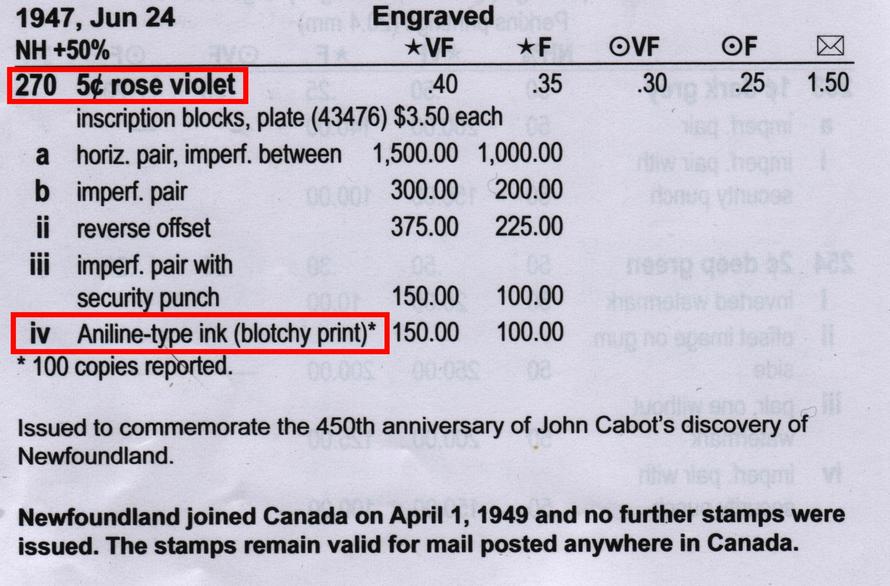  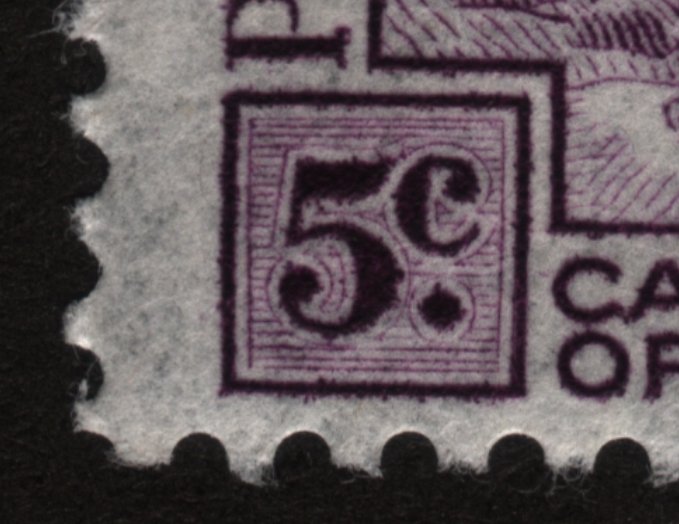 |
|
Send note to Staff
|
|
|
|
|
Pillar Of The Community
United States
8956 Posts |
|
|
Robert, I am not trying to be discouraging, but can you compare it to another one?
Peter. |
Send note to Staff 
|
|
|
Pillar Of The Community
Canada
528 Posts |
|
|
Hi Robert, Aniline ink tends to bleed, so having a 'blotchy' print is normal for this variety. As any stamp could be over-inked and produce blotchy results, I would suggest you proceed to determining that your stamp was printed with aniline ink, as this is the basis of this variety. A prior thread on this subject is https://goscf.com/t/8208Another reference site is http://en.mimi.hu/philately/aniline.html- stamporator - |
|
Send note to Staff
|
| Edited by stamporator - 09/25/2014 7:35 pm |
|
|
Rest in Peace
7742 Posts |
|
|
Well guys....I am even more confused....I think I will put it back in the box for now and drag it out again much later...thanks for your help.
Robert |
|
Send note to Staff
|
|
|
Pillar Of The Community
United States
8956 Posts |
|
|
Now come on Robert, it's not all bad! If you read the two threads above it will make it easier. As a matter of fact, look on the back of your stamp. If there is a lot of bleed it is aniline ink. And please be careful. If it is aniline ink don't get it too close to water!
Peter |
|
Send note to Staff
|
|
|
Rest in Peace
7742 Posts |
|
|
Yes Peter I can see the design (about 50% of it) on the back.
Robert
It is mint...so I will keep away from water. |
|
Send note to Staff
|
| Edited by wert - 09/25/2014 9:01 pm |
|
|
Pillar Of The Community
New Zealand
731 Posts |
|
|
Wert,
I will post a side by side comparison, as I bought one last year with a certification just so I would know. Its one of those things that once you see it, it is clear.
As an aside, this is one of my favorite ones to look for a trade shows, or online because (1) many collectors have no idea (2) the value differential of 40 cents versus $150 makes this return incredible if you find one and (3) there are tons of the plain one around... In fact, i've now been looking for a Unicorn of this stamp--ie, in use on a cover. Its not listed in Unitrade or NSSC, but my guess is that since the stamp bled later and its variety may not have been known, that there is one out there in some grandma's box in St Johns |
|
Send note to Staff
|
|
|
Rest in Peace
7742 Posts |
|
|
Ya tommy...I would appreciate it if you post side by sides so that I can see that mine is just an ordinary stamp...Thanks. Robert P.S. I have got about 200 NFLD stamps lately from Scott #1 to Scott #270...man are they hard to classify when there are as much as 3 different classifications for just one stamp...  |
|
Send note to Staff
|
|
|
Pillar Of The Community
New Zealand
731 Posts |
|
|
Wert and others, Here is an image of both, side by side, from my collection. Unitrade/Scott number is 270 and 270iv. Also, a bonus sharing of 270iii. Enjoy 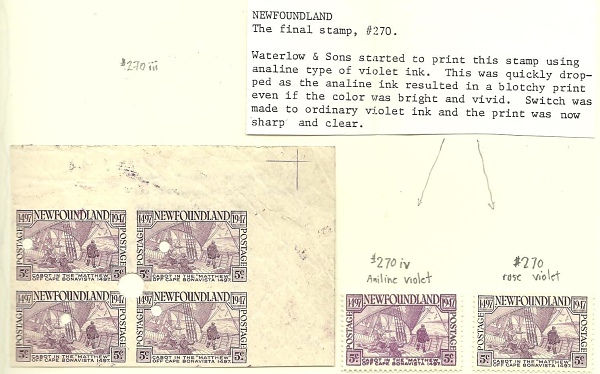 |
|
Send note to Staff
|
| Edited by tommy - 09/30/2014 10:37 am |
|
|
Rest in Peace
7742 Posts |
|
|
Hi tommy....Thanks for posting that picture...But I cant see any details when I blow it up...Guess I will have to just call mine ORDINARY.
Robert |
|
Send note to Staff
|
|
|
Pillar Of The Community
New Zealand
731 Posts |
|
|
Wert,
In this particular case, I would suggest not blowing the image up, but rather just take a "gander" (Pun intended) at the two from desktop level. The aniline to me clearly looks different, more diffuse than its ordinary one on the right. its denser. the color seems different shade. less white area. not as distinct edges--like the sailor is more blotchy.
Admittedly, I am an idiot without technology to even blow up the image to nanoscale level, so sorry for that.
|
|
Send note to Staff
|
|
|
Rest in Peace
7742 Posts |
|
|
Thats ok tommy..not sure what I got..I will just call it a normal stamp and put it back in my filling system...thanks again.
Robert |
|
Send note to Staff
|
|
|
Pillar Of The Community
United Kingdom
1361 Posts |
|
|
Try using a UV light source, short wave if you have both. Aniline looks very different to regular ink under UV. |
|
Send note to Staff
|
| Edited by AnthonyUK - 10/01/2014 08:40 am |
|
|
Rest in Peace
7742 Posts |
|
|
Well AnthonyUK...I tried it with #270 and #260 with the UV light, almost the same colour but I dont see any difference...Dont know if you call this bleeding on the back or not..??...Thanks though... Robert 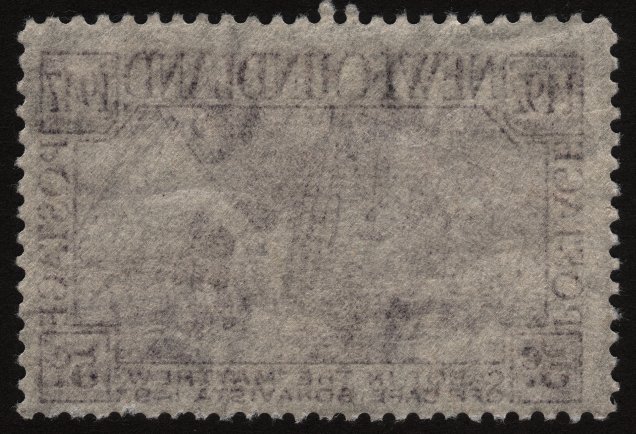 |
|
Send note to Staff
|
| Edited by wert - 10/01/2014 09:29 am |
|
|
New Member
Sweden
3 Posts |
|
|
Dear Robert, The top stamp is normal showing some feathering. The aniline stamp is very blurred and have little detail. Reaction to UV and bleeding through on back can vary. See Newfie Newsletter 171 (2018) for picture. Tony |
|
Send note to Staff
|
|
| |
Replies: 14 / Views: 3,266 |
|




 Posted 09/25/2014 6:46 pm


