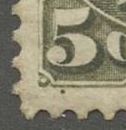
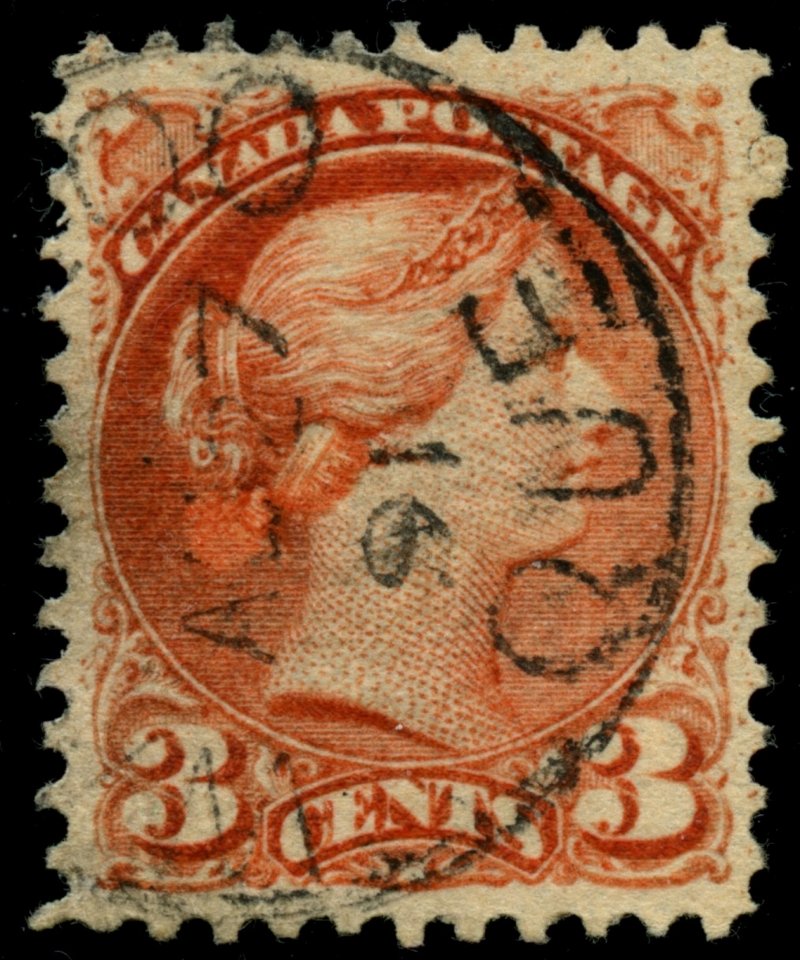
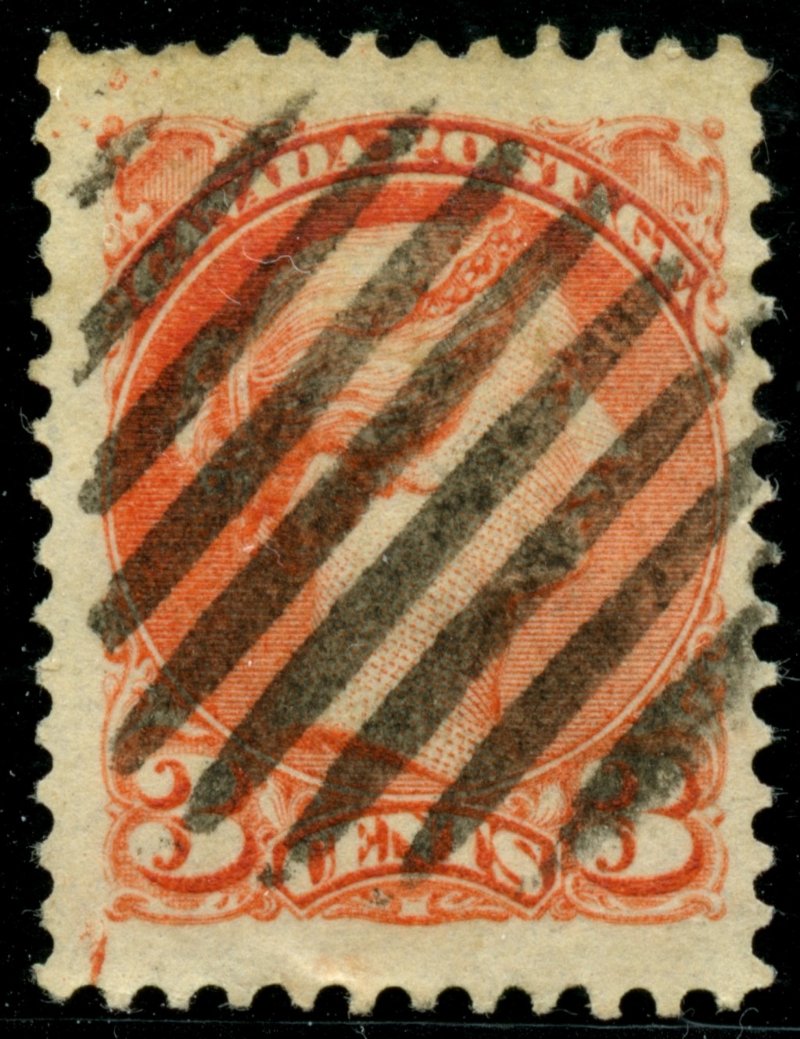
@BeeSee - Thanks, I'll consider them as ink blubs then

Quote:
That is an odd perforation.
So I thought as well. Maybe the poor scanner available to me is not accurate enough. I got your custom made Small Queen perforation gauge, excellent tool! After painstaking study using magnifying glass I ended at 12 x 12.25, just as you suspected

According to Unitrade's Identification table, 12 x 12.25 indicates it's a late Montreal print. However as I understand various sources, the 12 x 12.25 perforation will not necessarily point to either Montreal printing or last Ottawa, despite what is listed in the table in Unitrade. Other sources indicate that 12 x 12.25 was also used the very last years (1896-97), so I suppose the table in Unitrade has been simplified?
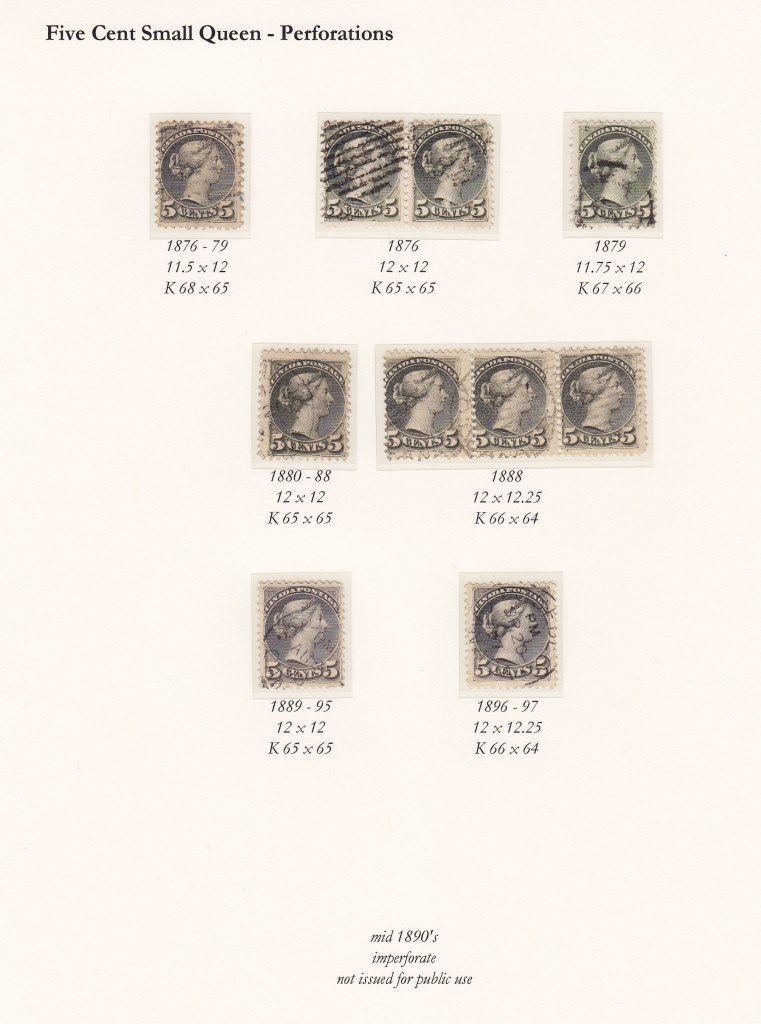
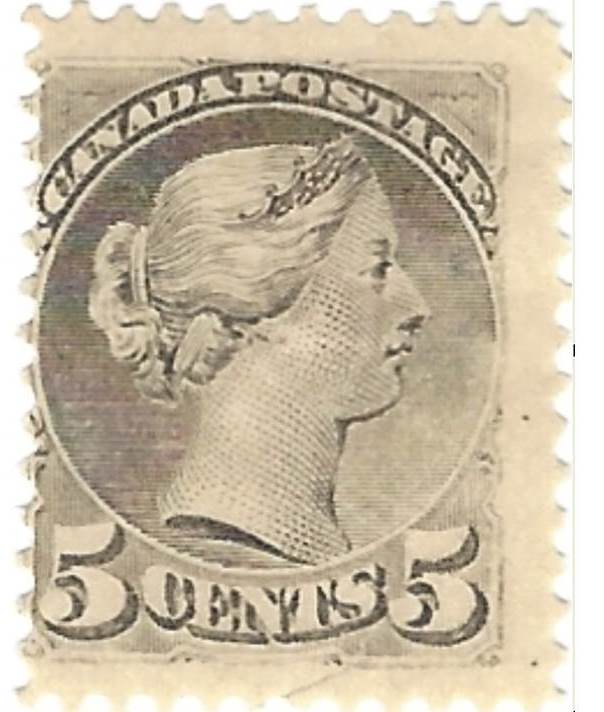
This perforation chart for the 5c was shared to me by gportch (Vice President at Vincent Graves Greene Philatelic Research Foundation), and he also generously supported the chart to be shared with 'collecting friends'
. It is supporting that my 5c 'double ink blob' may be #42 from 1896/97 - again just as indicated BeeSee. I'll go for a shade of #42 then.
All of this leave me thinking it is hard to use the paper for identification - or I am simply very bad at it. The paper in my stamp certainly looks a bit better than my other 42's and rather equal to the #38's.... And it also hard to use some of the known perforations for identification, more complicated than indicated by Unitrade. Furthermore these ink blubs indicate that also the position dots may be misleading, as they might be confused with ink blubs!

Thank you for bearing with all my plundering with the Small Queens - I would suspect many others recognise the confusion?





 Posted 01/09/2015 01:05 am


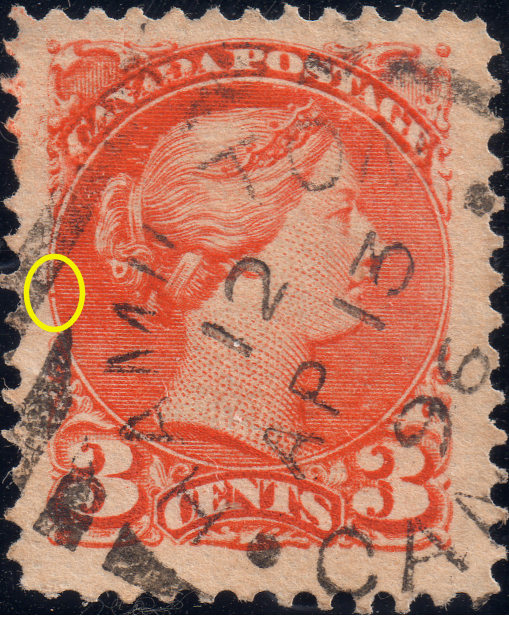

 . Due to the dots my opinion is that it is #38. My theory so far is that the upper dot is a freak ink blub - and the lower is a LL dot at wrong location due to misaligned perfs.