Hello Tin1Gin2,
Counting perforations can be tricky to do. One of the members here (51studebaker) created a perf gauge that you can print. It's not as easy to use as a manufactured gauge, but it is free:
http://www.stampsmarter.com/learnin...rfGauge.htmlSave that file to your computer, then open it to print it. Since your stamps are on cover, you can fold the paper at the tips of one of the sets of teeth and then hold it up next to the stamp.
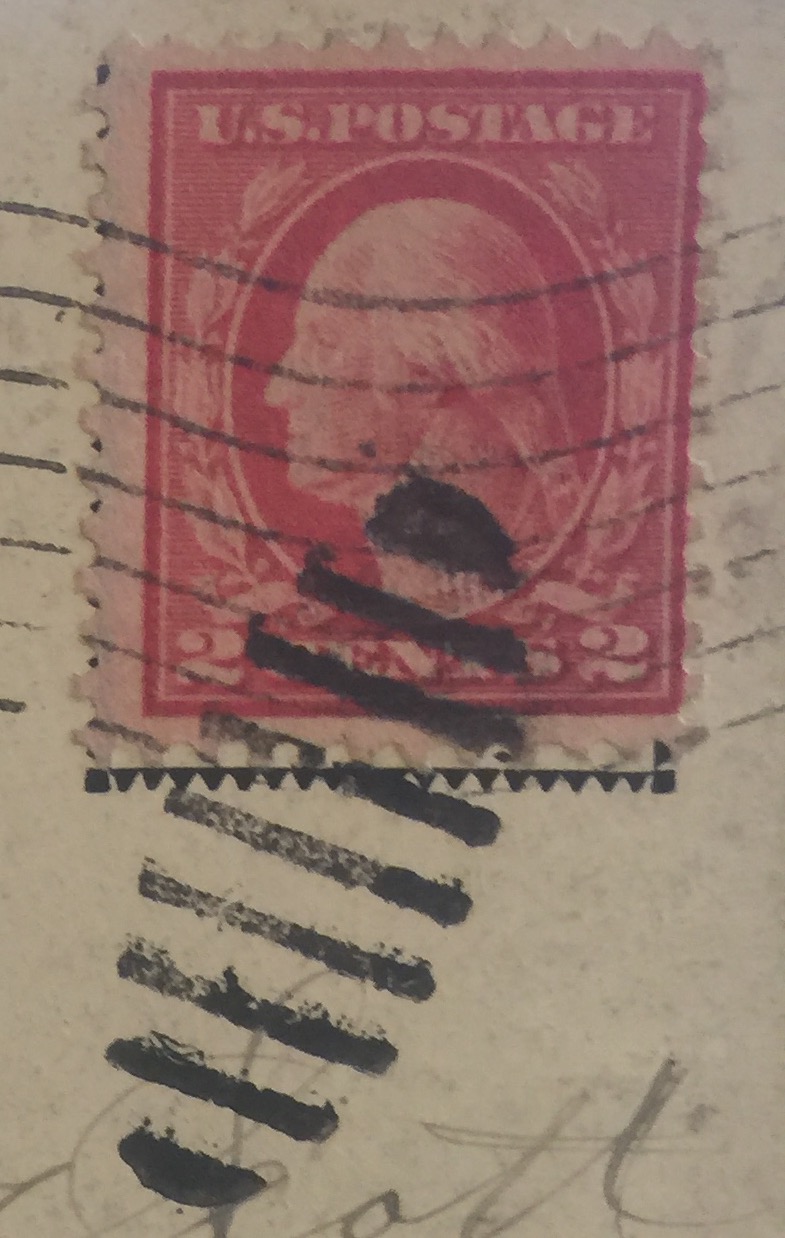
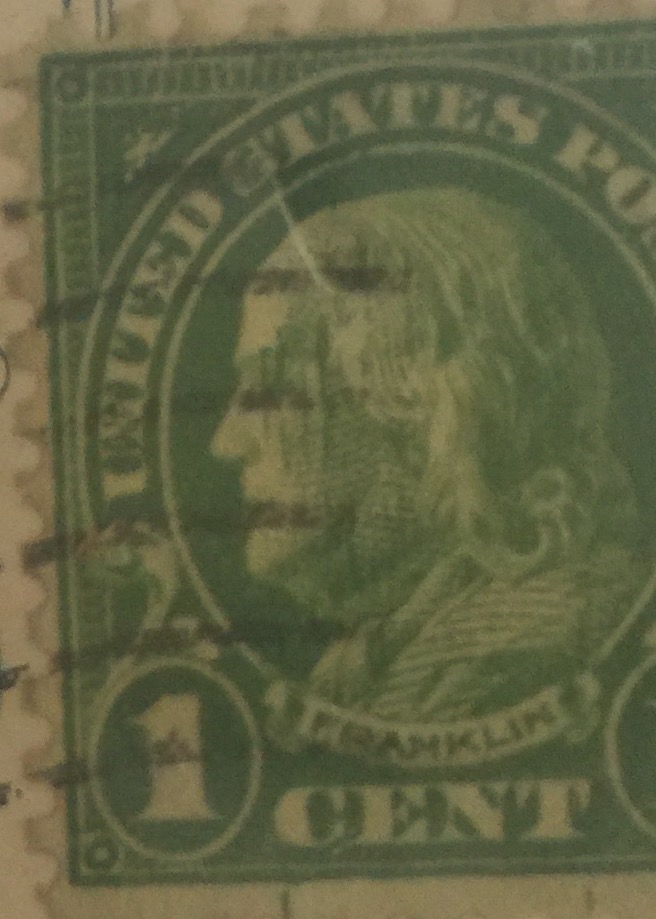
The #331 will have perf 12 on all sides. The #632 will have close to perf 11 on the top and bottom and perf 10.5 on the left and right sides.
The #331 is a flat plate printed stamp. The #632 is rotary printed and is taller than flat plate stamps.
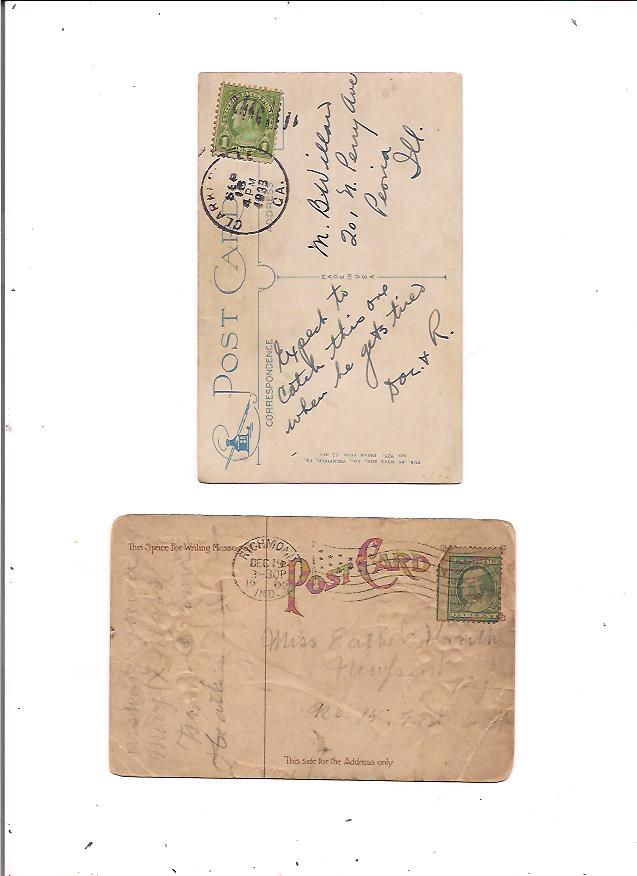
Having dated postmarks provides great clues. The top postcard is postmarked as 1933 which is well into the date range that the #632 was produced. The bottom postcard is postmarked as 1909. The next stamp after #331 is the #374 which was first used in November, 1910. Normally you would need to check which watermark it has, but you don't need to do so because that is the "only" stamp with that design produced at that time.
However, the #357 was first used in 1909 but the chances of your stamp being one is very low. That is one of the bluish paper stamps and is difficult to identify over the Internet and especially difficult when it is on cover and stained. It's pretty safe to assume that your stamp is not a #357.
Knowing typical stamp colors for a particular Scott # is also very useful, but takes seeing a lot of each type to become familiar with.





 Posted 03/16/2015 09:00 am