I have no idea why they are called the "Gniezno" issue, they were printed in Poznan due to a shortage of 5 & 10 fen. denominations. By the time they were issued in August 1919 regular Polish issues had become available. There has always been a "speculative" smell about these two stamps, virtually all covers are philatelic.
Little was known about the printing of these even up to 1938 when the first major Polish catalogue, "Polskie Znaki Pocztowe" was published & incorrectly listed both stamps as being overprinted both typo & offset. It wasn't till the great Polish philatelist Wladimir Rachmanow found the original printing formes & studied them that all was revealed. Life-size illustrations of the formes were included in the 1960 edition of "Polskie Znaki Pocztowe" vol 1.
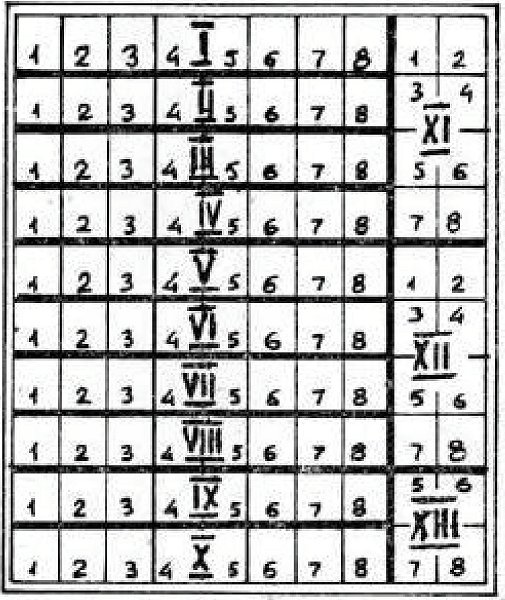
The 5fen was printed by L. Kapel of Poznan, they only had 8 figure 5s so there are 8 types of the overprint. They were printed typo so under decent magnification you can clearly see where the edges have been squeezed out forming a thicker border of ink around the figure 5. If the printing is offset, no border edges, then you've got a forgery. Typo forgeries were also made.
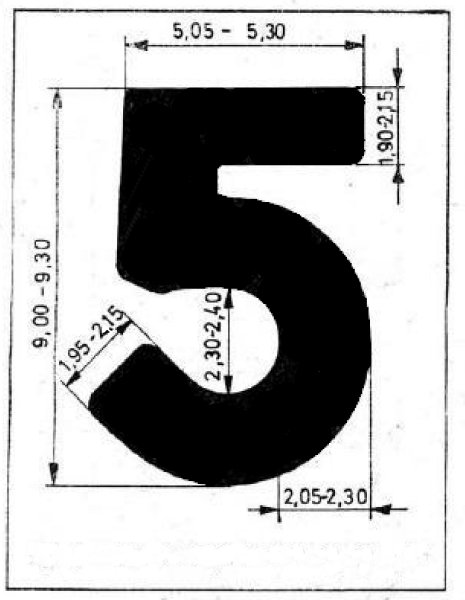
Here's the measurements of the 5Fen
The printers only had 8 figure 5s so this is how the sheet was printed in 13(!) operations
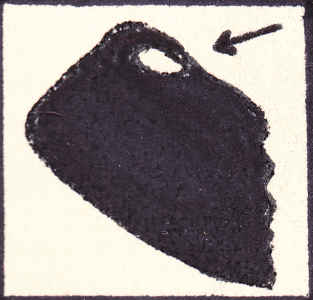
This is Type VI Position 96 with a constant flaw in the lower hook
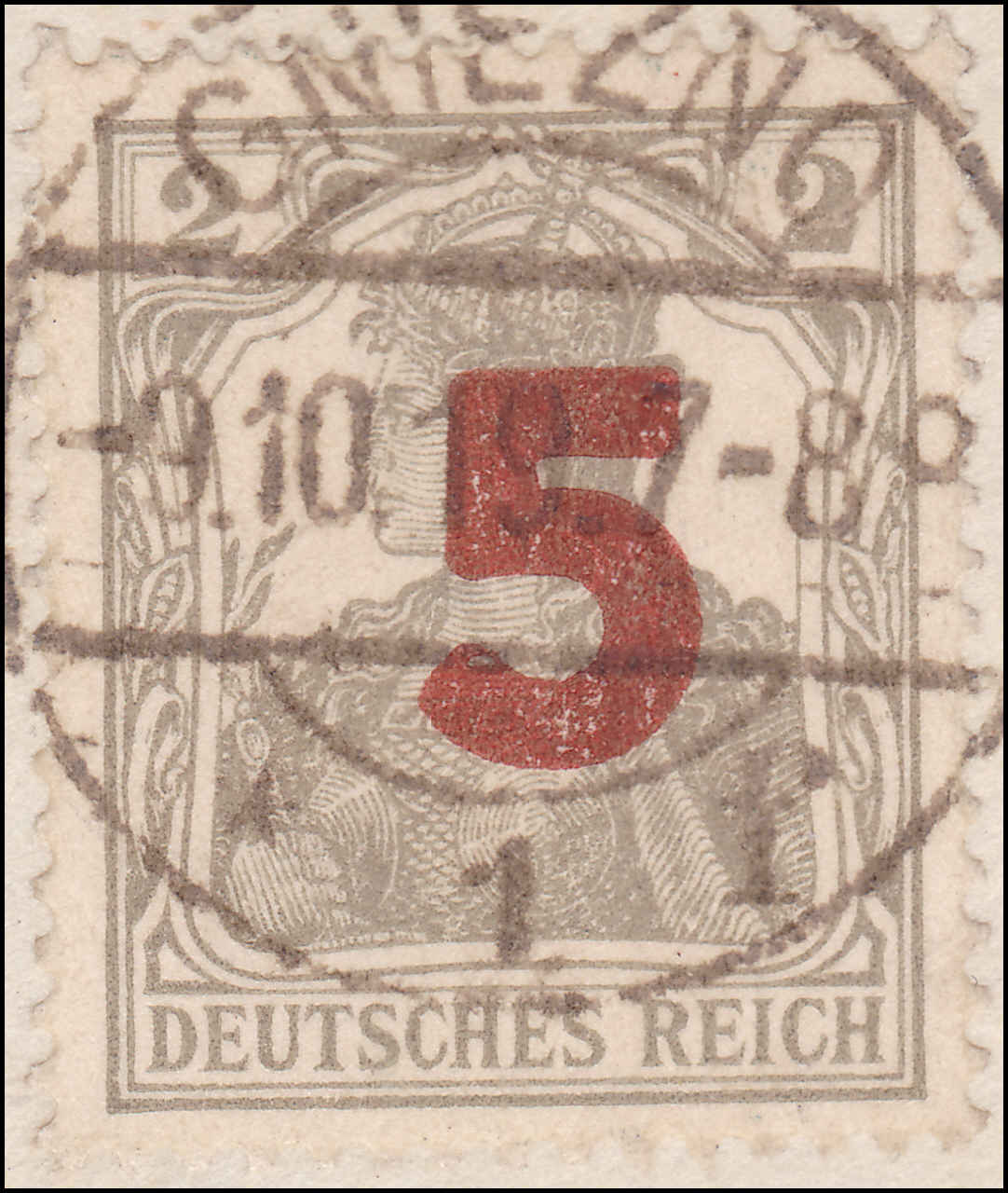
An example of a Litho forgery
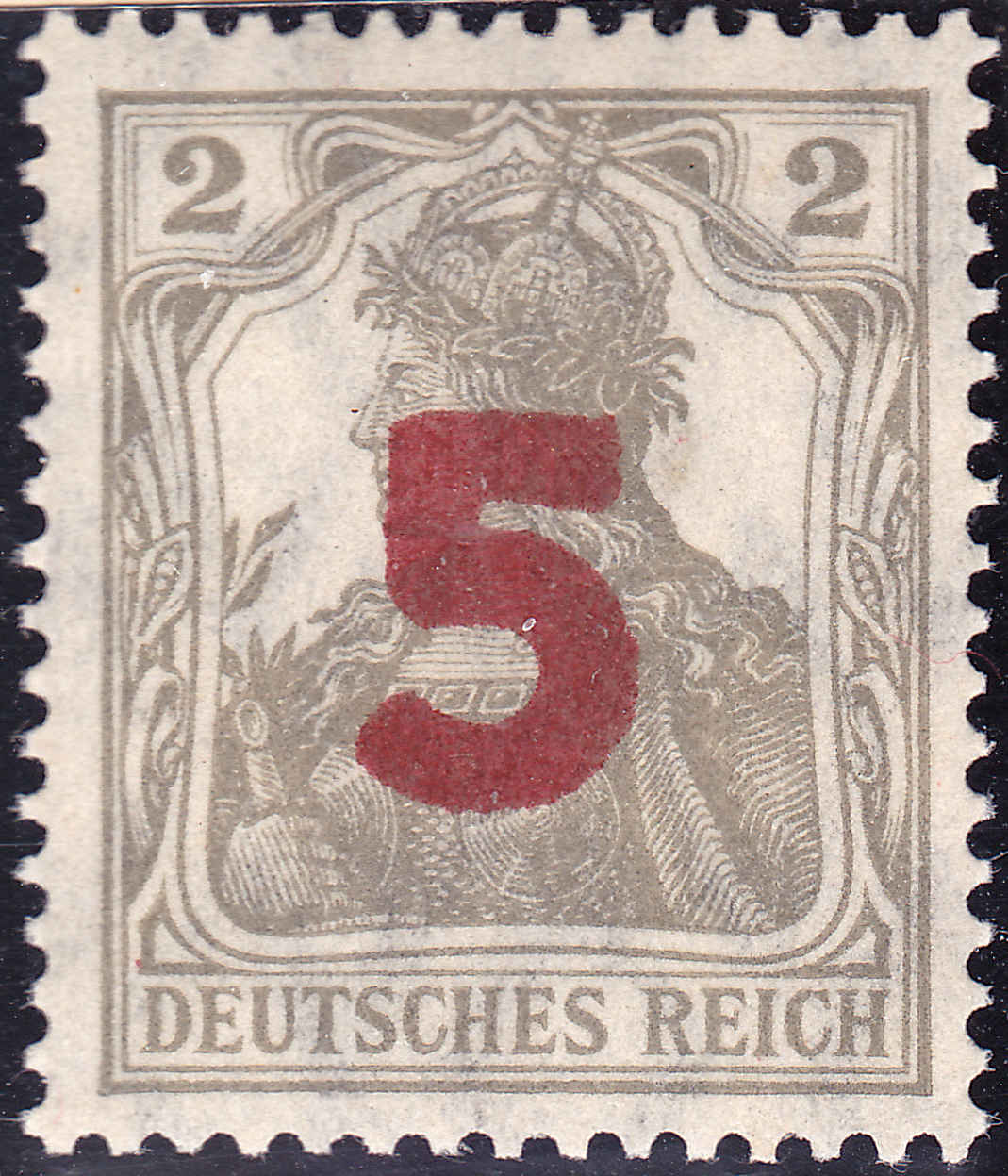
An example of a Typo forgery
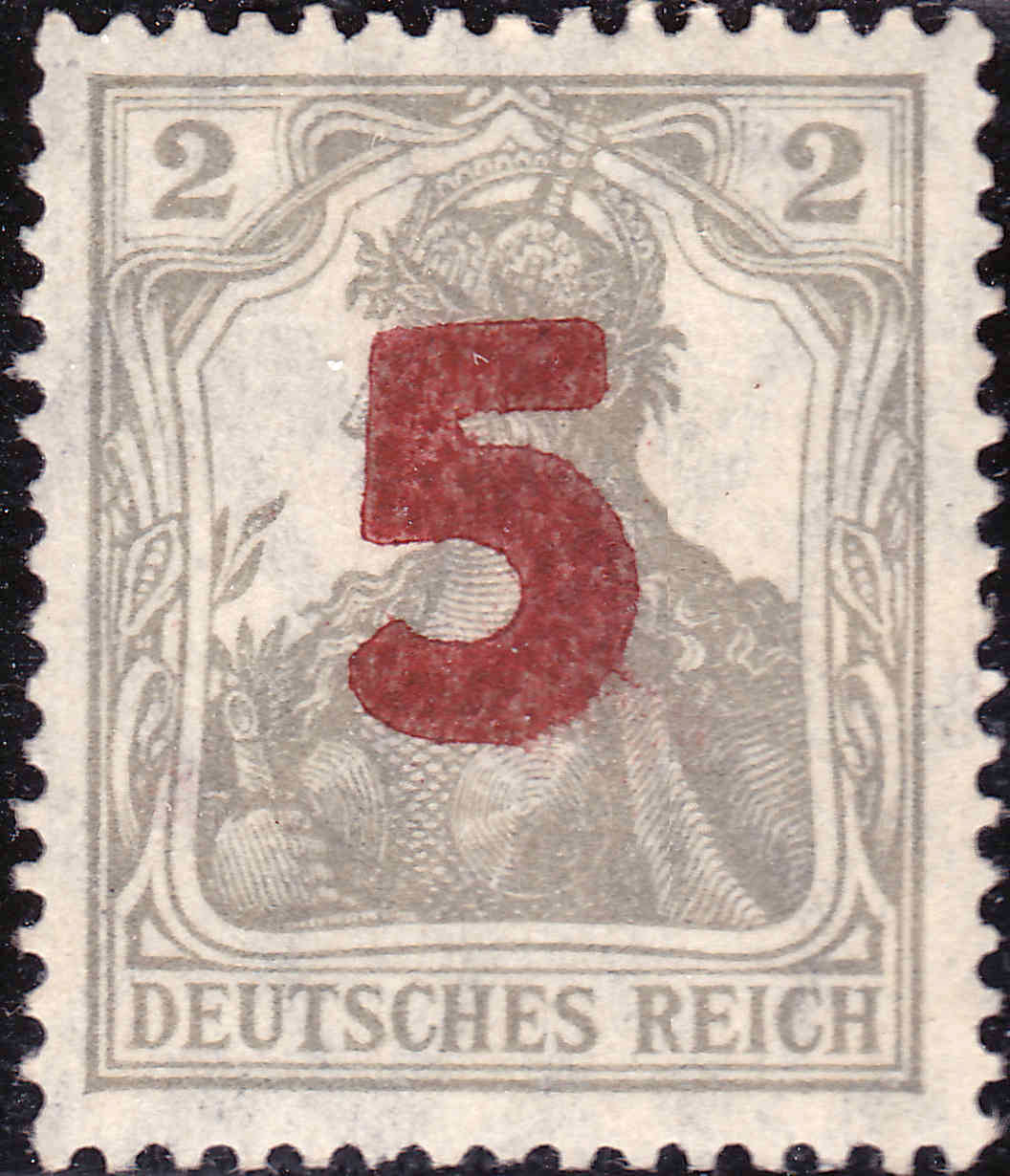
The 10fen was printed by I. Goldberg of Poznan & there are 100 types of the 10 Fen, each one is different on the sheet & plateable by measurement to the tenth of a millimetre, a binocular microscope with x20 magnification is ideal. These were printed offset as were forgeries although typo forgeries are known. One characteristic of the ink is that it wasn't mixed properly so that shiny blobs show throughout the overprint. This is best seen when viewing the stamp at an angle at eye level or under a microscope.
Here's the measurements of the 10Fen, I've Anglicized the headings
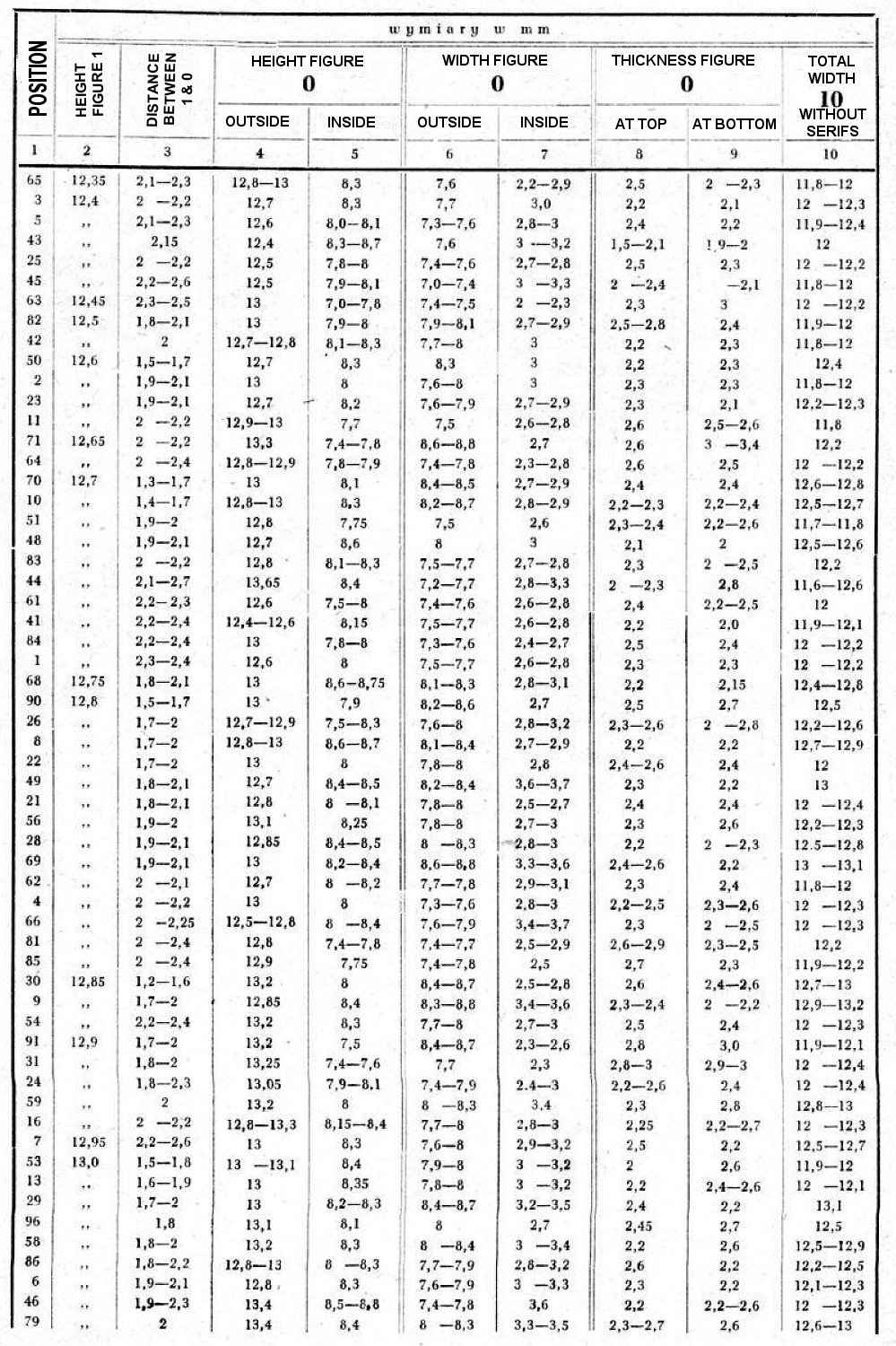
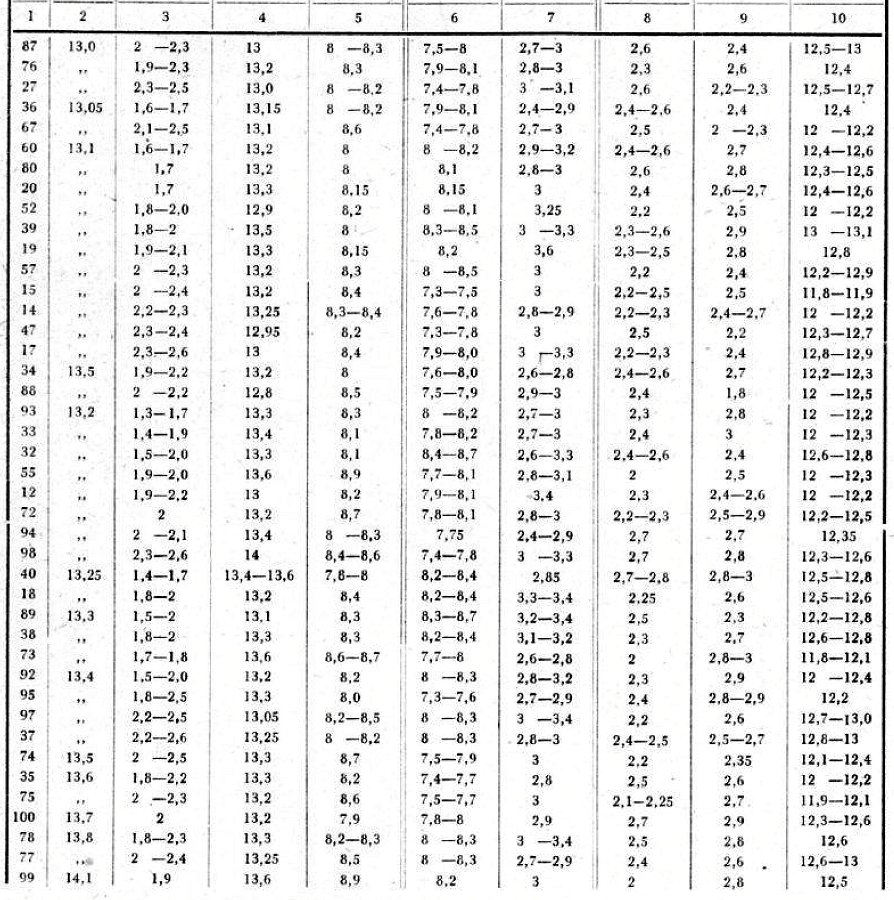
During WW II a cache of both values was found in the ruins of the Poznan post office, some badly water-damaged others quite OK, some of the better ones are known re-gummed or with back-dated cancels.
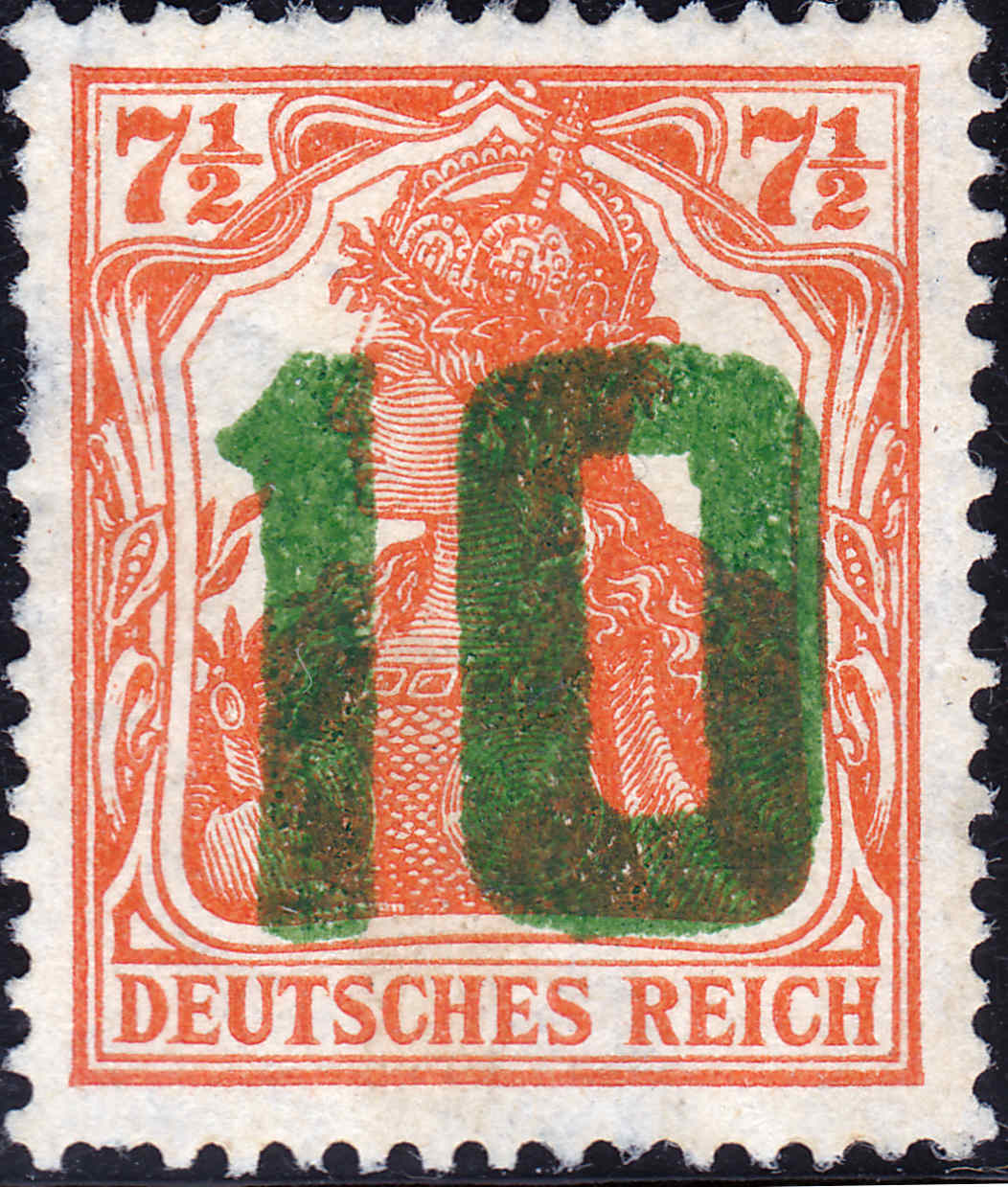
Here's an example of the 10fen position 96 from the Poznan "find", perfs a bit damaged & no gum, but a genuine copy for $8, yes please.
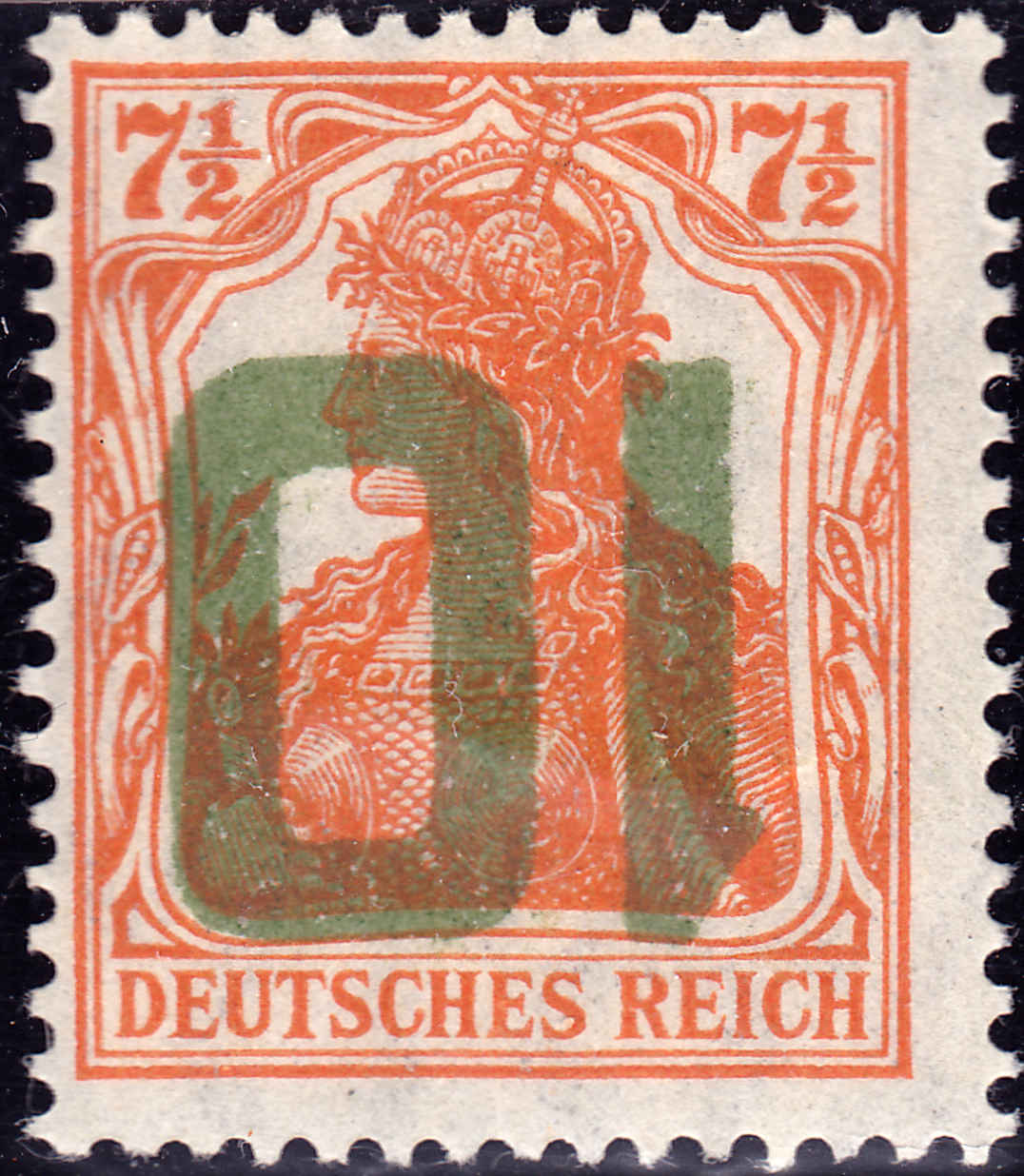
The 5 Fen is known overprint inverted, mucho dollars here, the 10 Fen not so although bogus copies show up on
ebay & for $5 I couldn't resist
A note about
Wilhelm HeinzeYou will commonly find copies signed "W.H" on the reverse. "W.H"= Wilhelm Heinze was a part-time stamp dealer & postal clerk at one of the Poznan post offices when these stamps were issued in 1919. He also had a daughter, Margarette. Margarette worked at the Berlin post office. You can see where this is leading.
Now, the first of these "Gniezno" issues that Heinze sold & produced covers with were genuine, but they sold out within a week & Heinze had forgeries made very quickly. He then produced covers with a mix of genuine Polish unoverprinted stamps & forged Gnieznos, put registration labels on them with genuine cancellations on the stamps, off to Berlin under separate cover where his daughter dutifully gave them genuine German backstamps. They look really, really nice & there's heaps of them around. The problem is that there are Heinze covers that are genuine.
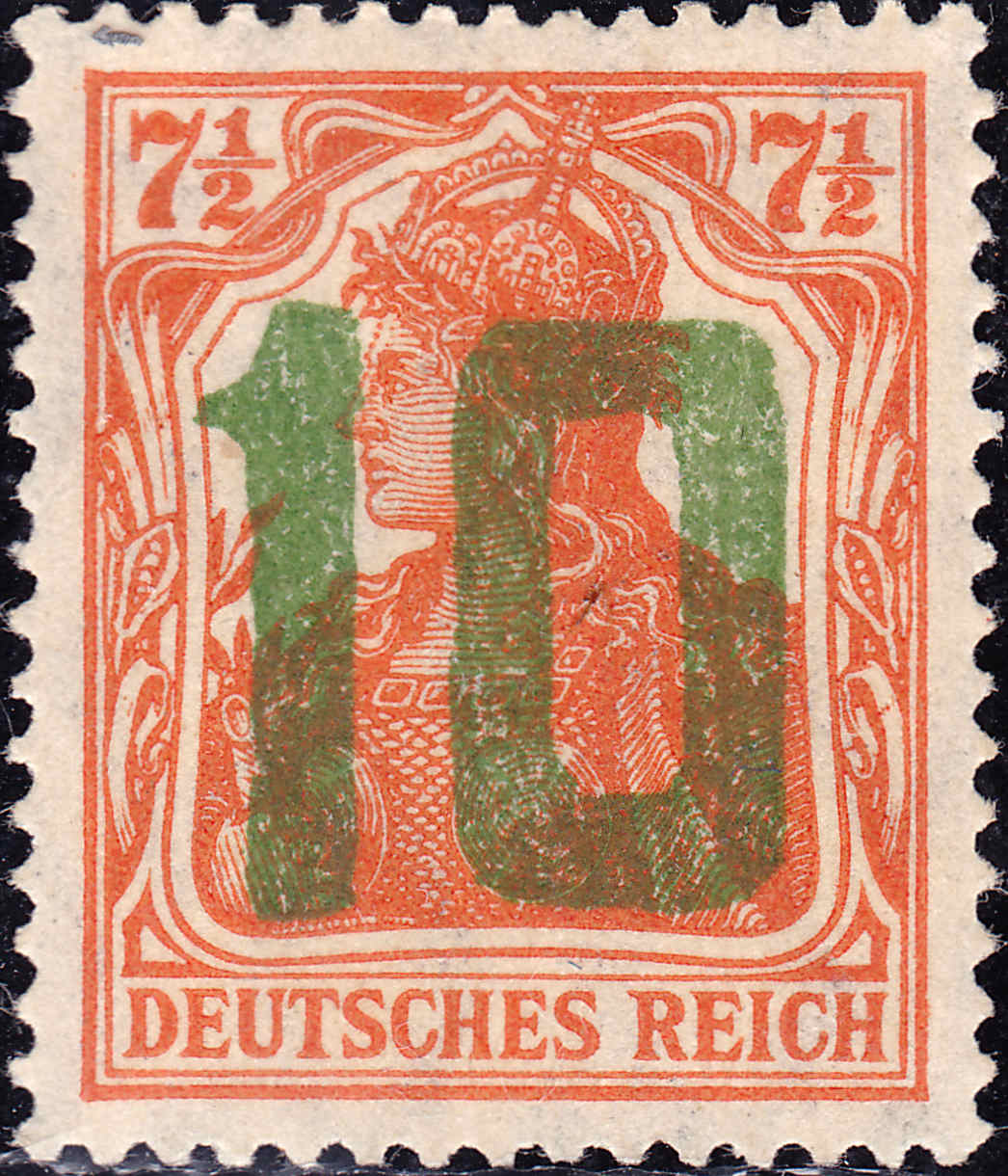
A 10fen Heinze forgery
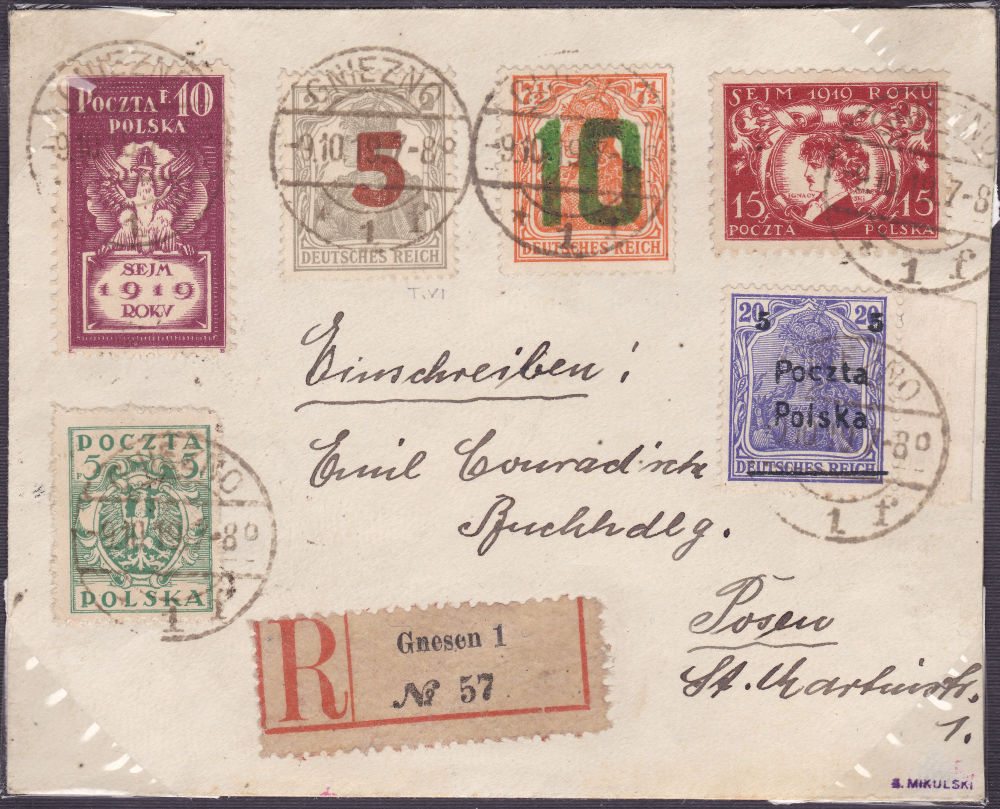
A final anectode. Before I moved away from Melbourne I attended the Polish Philatelic Society & they kept me financially poor but immensely rich with their knowledge. I bought a pile of 30-40 Polish philatelic magazines from one of the members who had a nice collection of the Gniezno stamps & covers. A month or so later I was going through the mags when a cover with both values on it fell out. I contacted him to return the cover & he figured he might have been reading the mag, someone came to the front door & he might have put the cover in as a bookmark (!). Next Christmas he gave me a used pair as a gift & when I scraped together the money he sold me a cover at a very reasonable price.
Here it is. 5fen Type VI pos96. 10Fen pos14
Bibliography:-
Polskie Znaki Pocztowe, Bialytsock 1938
Polskie Znaki Pocztowe Vol 1 ,Warszawa 1960
Filatelista #4 1957, Warszawa
Filatelista #4 1973, Warszawa
Polonus Bulletin December 1974, Berwyn Ill.





 Posted 04/05/2015 1:47 pm


