| Author |
 Replies: 12 / Views: 2,217 Replies: 12 / Views: 2,217 |
|
|
Valued Member
Bulgaria
216 Posts |
|
|
|
I would like to have your opinion about the following:
A stamp with a cancellation of the 1st day of issue can be found:
1- On a special envelope( not travelled) as FDC
2- On a traditional envelope ( which has travelled)
3- The stamp isolated with a cancellation with that date.
Scott: I din't see in their standard catalogue any value with 1st day cancellation
Michel : It is indicated only a FDC value
Zumstein : It is indicated only a FDC value
An isolated stamp with a cancellation of the date of issue (point 3 hereabove) can it be considered ( point of vue of its value) as a FDC ?
Thank you
|
|
Send note to Staff
|
|
|
|
|
Pillar Of The Community
Canada
1324 Posts |
|
|
Rest in Peace
United States
4052 Posts |
|
|
Some folks collect 'EKU' ('Earliest Known Use').
These are mostly of interest for stamps where the FDoI (First Day of Issue) is unknown, unknowable, etc.
There is great joy to be had in finding one of these, of whatever era, on cover, or off.
There is great risk in paying a premium for one of these, as an even earlier could surface, like, tomorrow.
For modern US, these can be challenging to find, as the policy for some decades was to only sell the stamp in one city for that first day. Then, of course, you must wrestle with your conscience about philatelic contrivances (covers created by a local stamp club in the 'first day' city) versus truly 'innocent' everyday usage.
<rude>When an FDC did not travel thru the mail, the 'C' stands for 'cargo'.</rude>
That having been said, every so often I look at a set of cacheted & unaddressed FDCs, admire the effort that went into creating them and the effect created by the art, and wish I liked them more.
Cheers,
/s/ ikeyPikey |
Send note to Staff 
|
|
|
Valued Member
Bulgaria
216 Posts |
|
|
@Canada Stamp
Yes, of course C means Cover and first day is the date of issuing of the stamp.
But what is the difference between:
1- a cover with a stamp with the date of issue (let's take for example the 01 st december 1913)
2- The same stamp than 1,isolated ( not on a cover) with the same date of cancellation.
|
|
Send note to Staff
|
|
|
Moderator
1589 Posts |
|
|
Quote:
But what is the difference between:
1- a cover with a stamp with the date of issue (let's take for example the 01 st december 1913)
2- The same stamp than 1,isolated ( not on a cover) with the same date of cancellation.
Well the difference is that one is on cover, and the other is not. But I think you are asking if it makes a difference as to value. And there is no hard and fast rule about that. First, most FDC's (at least in the US) have, since the late 1930's, a special cancellation. It would be unusual to find a stamp with such a cancellation off cover, and it wouldn't be worth much. Sometimes, FDC's receive "UO cancellations," meaning "unofficial." Those will be ordinary postmarks at some location other than the official location for the first day of issue. On cover, those can be worth more than the official postmark if it is unusual in some respect. But a "UO cancellation" off cover, at least for modern issues, probably has no value relative to any other used copies of the stamp. The exception would be what ikeyPikey described as "EKU's." Or, if you found a stamp, off cover, with a postmark dated before the official first day of issue; that would be unusual and likely of some value. The problem with an unofficial first day cancellation off cover is that there is no way to tell whether the usage was philatelic or commercial without the cover it was on. Hope this helps. Basil |
|
Send note to Staff
|
|
|
Pillar Of The Community
Canada
1324 Posts |
|
|
Interesting comment above about collecting first day of use of an issue. Personally - were I to collect such things - stamps from FDCs would not be in that collection. I'd want postal - not philatelic usage. |
|
Send note to Staff
|
|
|
Moderator
1589 Posts |
|
|
Quote:
Interesting comment above about collecting first day of use of an issue. Personally - were I to collect such things - stamps from FDCs would not be in that collection. I'd want postal - not philatelic usage. Well, the number of collectors of FDC's must range in the thousands, or even tens of thousands, though they seem to be thought of as somehow less "authentic" by many here. But stamp collecting is a big tent, and there are lots of ways to collect, so do what you want, and don't worry about what others think. Both have a place in my collection. |
|
Send note to Staff
|
|
|
Rest in Peace
United States
4052 Posts |
|
|
Quote:
... But stamp collecting is a big tent ... so do what you want, and don't worry about what others think ... I don't even worry about what I think, and I have a nice pile of FDCs to prove it. |
|
Send note to Staff
|
|
|
Bedrock Of The Community
United States
12128 Posts |
|
|
Just adding my two cents: A US FDC is not really a "first day" cover in the sense that the FDOI postmark is not necessarily applied on the exact first day of issue. There are simply too many requests for that to be possible. So, in modern times we have a couple of months window to send in requests for them but they still get postmarked with the "first day of issue" dated postmark. Although collectors still prefer that sort of postmark, and it is probably the one for which any future collectible value will be based, I view it more as a "philatelic" usage as the covers didn't really flow through the mail representing true payment of postage, but were just cancelled and returned (depending on how many one processed, they may be returned singly or in bulk).
On the other hand, if you buy a newly issued stamp at your local post office on the day it comes out and apply that stamp to a cover addressed to yourself (or others) and place it in a mailbox for delivery, that "unofficial" postmark actually proves that the cover was delivered through the mailstream to you on the first day the stamp was issued. Not that it means a whole lot, as FDCs are usually worth pennies on the dollar, but I like to think that the "unofficial" postmark represents a cover that was actually used to pay the required postage rate and the cover went through the mailing process.
As mentioned in the previous post, there are lots of ways to collect stamps and covers, and no one is right or wrong, just collect the way you want to and disregard what others might think. The only one you have to please is yourself. |
|
Send note to Staff
|
| Edited by wt1 - 05/12/2015 9:00 pm |
|
|
Moderator
1589 Posts |
|
|
wt1,
That's a good point about how an FDC is not necessarily actually postmarked the day of first issue. But a lot of UO first day postmarks, though made on the first day of issue, are "hand backs" so there is no assurance it went through the mail stream. Most "collectible" UO postmarks likely did not go through the mail stream. These are postmarks that have some ostensible relationship to the stamp being issued, like a postmark for "China, TX" on a cover for the Chennault stamp. Taking covers to a post office for a postmark on the first day of issue, and getting them handed back, has been around for a long time. I don't know when it started, and since my collecting focuses on airmail and aviation topical stamps I can only speak to those, but I'd say the practice goes back to at least the 1920's. And back then, that was even how the "official" first day postmarks were handled; you had to physically deliver your covers to the post office for marking on the first day of issue. The "window" of opportunity for getting the postmark came some time later, if I recall correctly, as the popularity of FDC's increased.
Basil |
|
Send note to Staff
|
|
|
Moderator
1589 Posts |
|
|
Quote:
I don't even worry about what I think, and I have a nice pile of FDCs to prove it.  |
|
Send note to Staff
|
|
|
Pillar Of The Community
United States
3287 Posts |
|
|
Quote:
But what is the difference between:
1- a cover with a stamp with the date of issue (let's take for example the 01 st december 1913)
2- The same stamp than 1,isolated ( not on a cover) with the same date of cancellation. Quote:
Just adding my two cents: A US FDC is not really a "first day" cover in the sense that the FDOI postmark is not necessarily applied on the exact first day of issue. Good question. As wt1 says, an official First Day cover, like I show below was not nesessarily applied on the first day, but the replica Official Trans Mississippi Exposition card that I mailed to my self was the first day of use. I recieved the set of Fleetwood "First Day" covers about July 20th, 1998, the nine different replica cards that I mailed from nine different Post Offices arrived in Little River on the 2oth of June, 1998. Which was the first day cover or card? I also sent large covers with the Tran Mississippi sheets, but I'll post those in another thread. 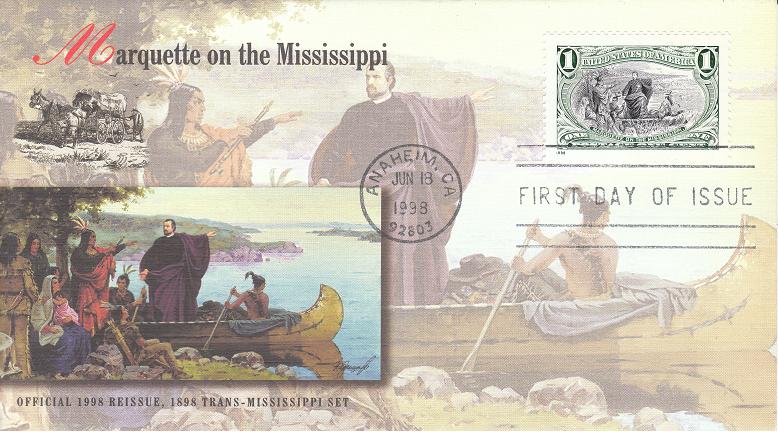 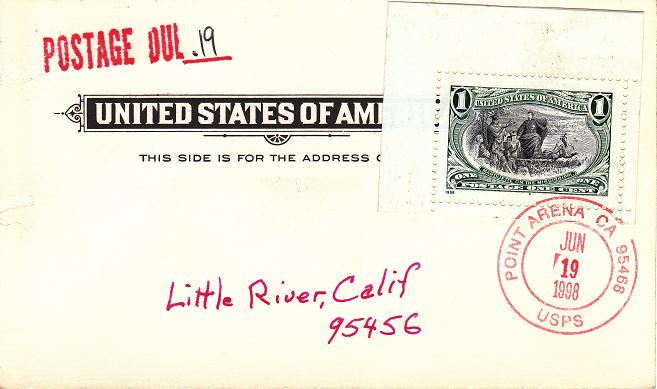 |
|
Send note to Staff
|
| Edited by littleriverphil - 05/13/2015 11:29 am |
|
|
Moderator
1589 Posts |
|
|
Quote:
Which was the first day cover or card? Who decides the answer to the question? Or, to whom does the answer to the question matter? Often what matters most to an FDC collector is the cachet, and only secondarily the postmark and last of all whether it was "really" postmarked the day of first issue. If you were to put the two up for auction on ebay, to those who collect FDC's of this stamp the first would likely draw more buyers than the second. Even though the second was "really" postmarked on the first day of issue, it is still "contrived" (a word I really don't like for reasons we've discussed before, but I'm using it here in the "accepted" philatelic sense). It will not appeal to "purists" as "postally used" since it was "contrived" to get the first day of issue postmark. Since it lacks a cachet, it really doesn't have anything to offer a typical FDC collector. I'm not saying that is right or wrong. It is just the way it is. Basil |
|
Send note to Staff
|
|
| |
Replies: 12 / Views: 2,217 |
|




 Posted 05/12/2015 02:06 am


