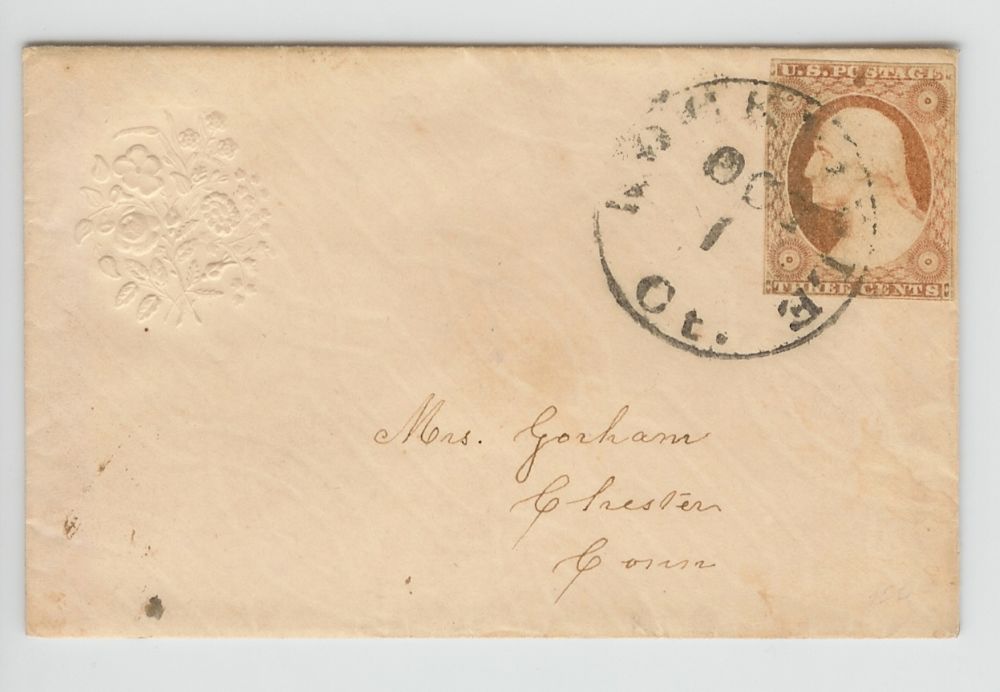
I agree that the lady's cover from Connecticut is something that I would put in a $1 box, mainly for the cost of handling it. It is not rare, the postmark is too degraded, the stamp is degraded, and there is nothing special about the delivery or destination.
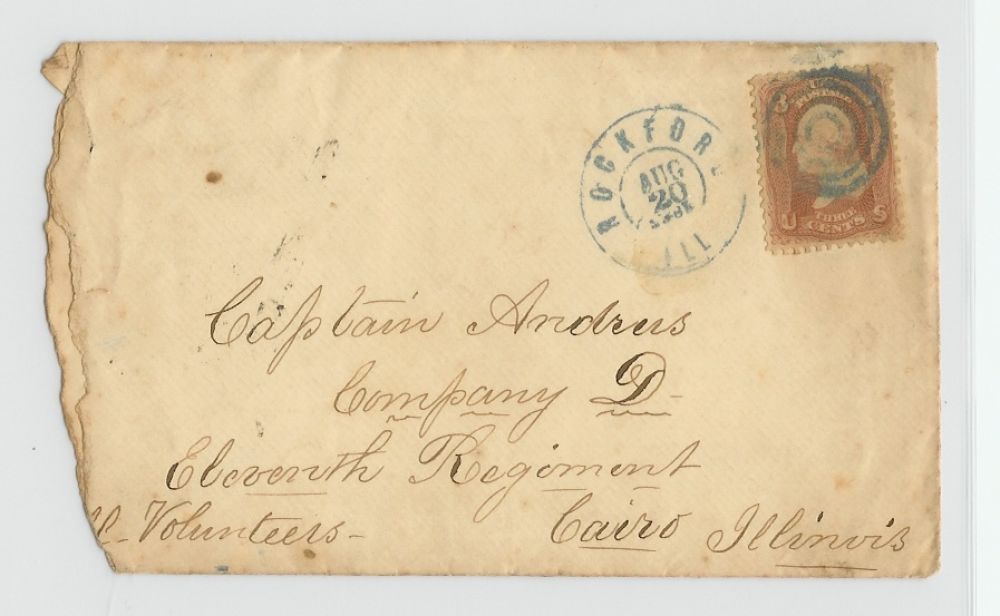
On the second cover I might put that one in a $5 box, though, solely because it is addressed to a Union Army captain. I can not quite make out the date which might increase or decrease the value slightly, but the rough opening and the degraded stamp are negatives. Also fact that it is addressed to the soldier in Illinois is a big detraction as the ones collectors pay extra for are the ones where the soldier was at a location in the field fighting the war. The good thing is that pretty much every soldier and sailor from the war can be researched.
In this case the soldier is Captain William D. E. Andrus who was the officer in charge of Company D in the 11th Illinois Volunteer Infantry Regiment. The 11th was formed in 1861 as a 3 month only unit and at that time Andrus was a 2nd Lieutenant in charge of Company D, but then when the war did not end in a few months as Lincoln predicted it was greatly expanded and formed into a unit that would last throughout the war. In this second incarnation, the 11th Illinois lists Andrus now as a Captain though still only in charge of Company D. The 11th Illinois was made up of men mostly from Winnebago County, Illinois which is up on the northern border of the state. The positive collector interests in the 11th Illinois is that they did fight in 5 engagements which though relatively few by some unit's standards they did include two well known battles: Vicksburg and Shiloh along with three not well known battles: Fort Donelson, Champion Hill, and Fort Blakely. The regiment only suffered 186 killed in action during its entire time in the war which suggests that they did not see much front line action even in the battles in which they participated especially since the main Union army tactic was to throw masses of men at Confederate positions hoping to overwhelm them and which resulted in horrendous casualies for the Union regiments. By the end of the war Andrus was still only a Captain which suggests that perhaps he did not distinguish himself very much.
Here is a period photo of Captain William D. E. Andrus.





 Posted 12/05/2015 08:31 am