| Author |
 Replies: 51 / Views: 6,276 Replies: 51 / Views: 6,276 |
|
|
|
Pillar Of The Community
621 Posts |
|
|
"The pinch is a normal artifact of printing. . ."
If you mean the printing process follows the laws of physics, then, yes, it is normal (i.e., should be expected, given all the circumstances). If by "normal" you mean "the quality of product the government expects from its envelope contractor", then no, I don't think the crease should be called normal.
When the envelope contractor submitted its bid for the envelope contract, I'm guessing they didn't submit die pinch creases in the bid samples.
|
Send note to Staff 
|
|
|
Valued Member
Netherlands
154 Posts |
|
|
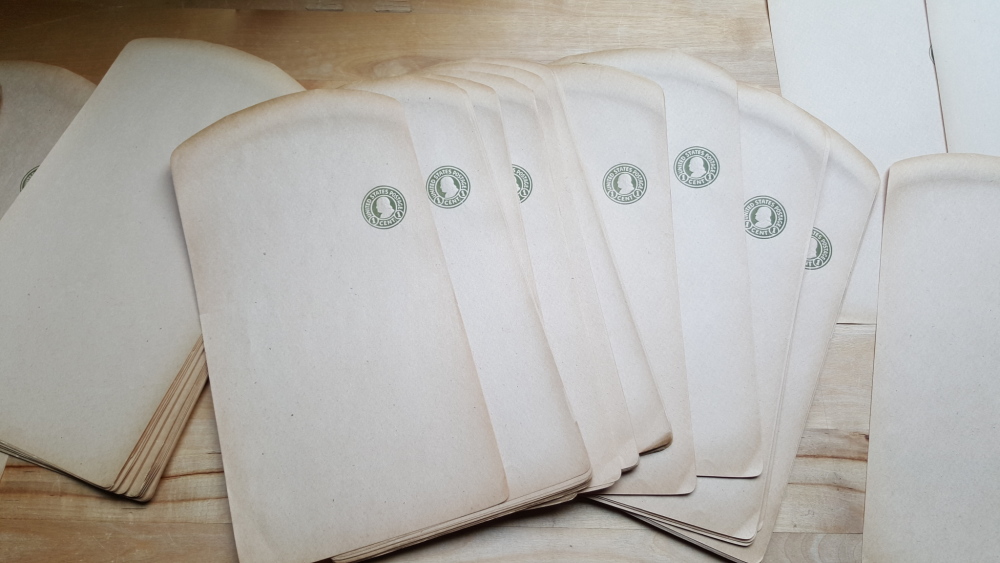
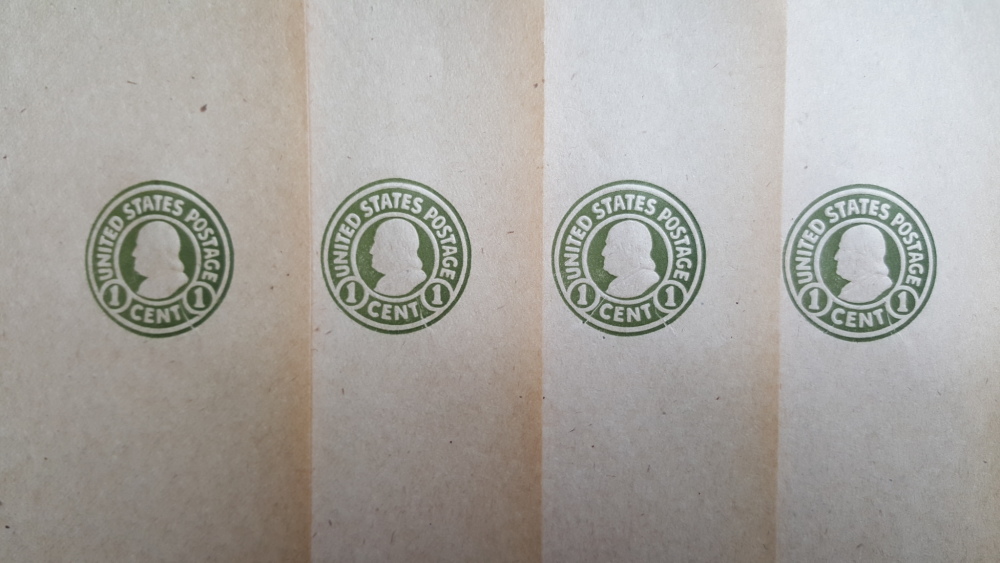
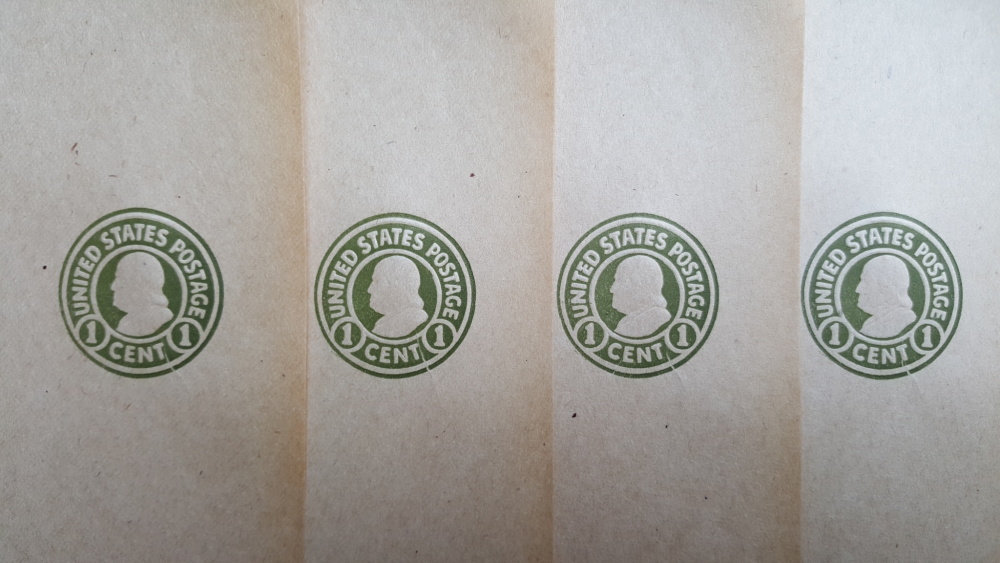
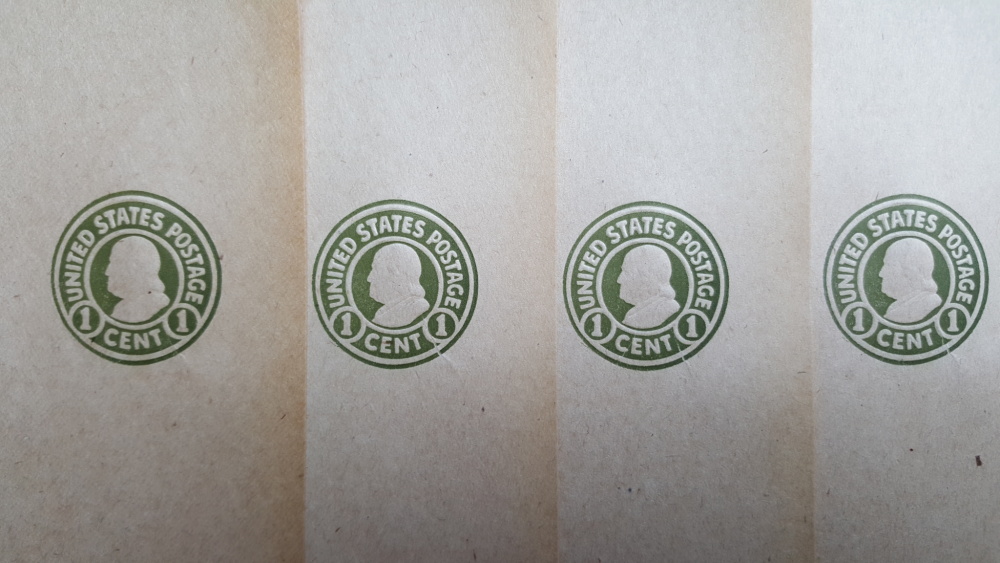
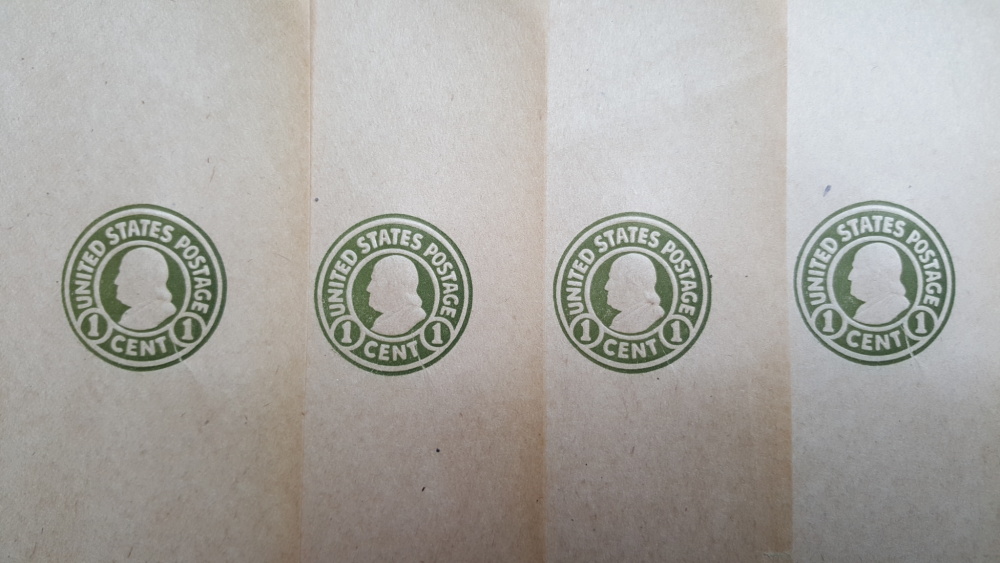
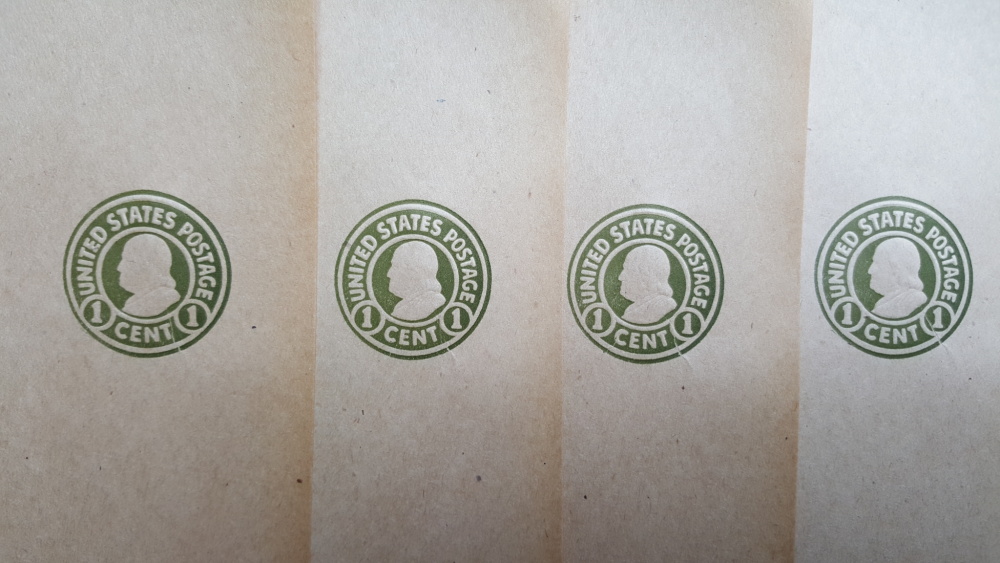
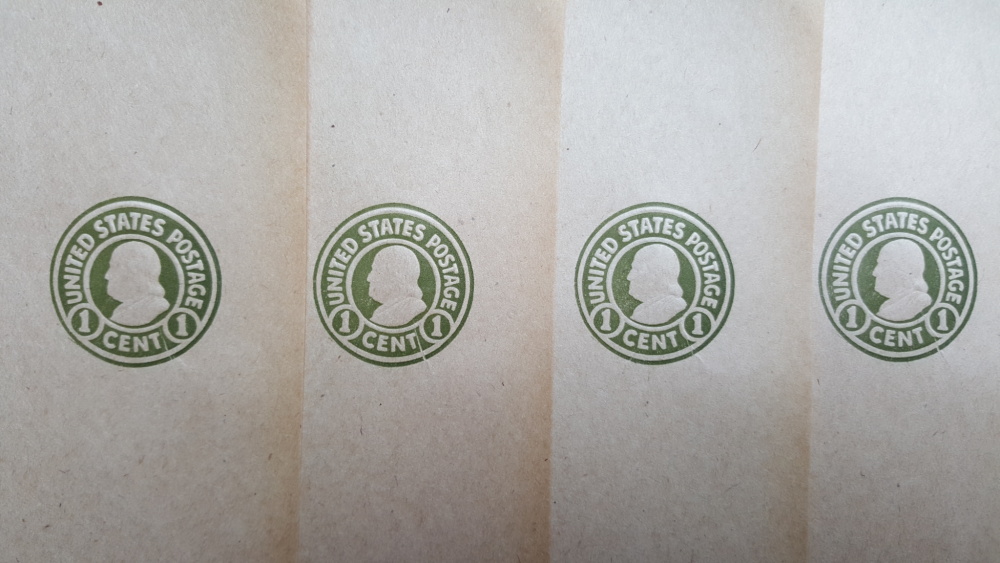
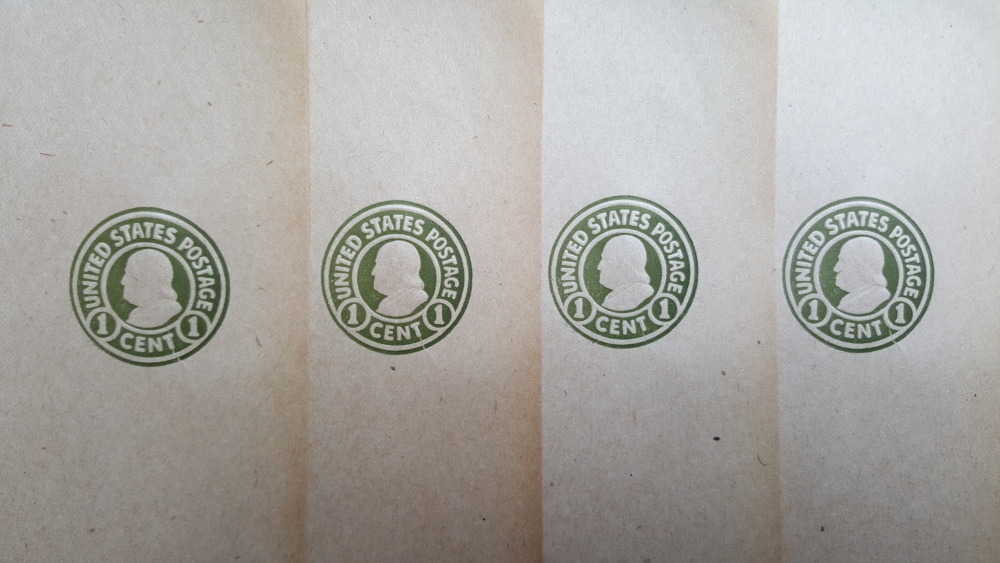
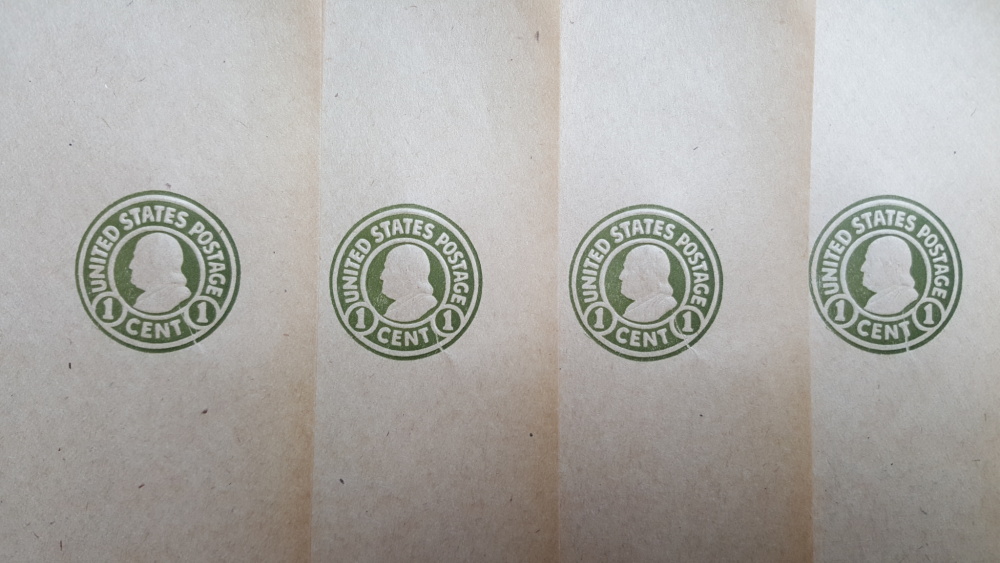
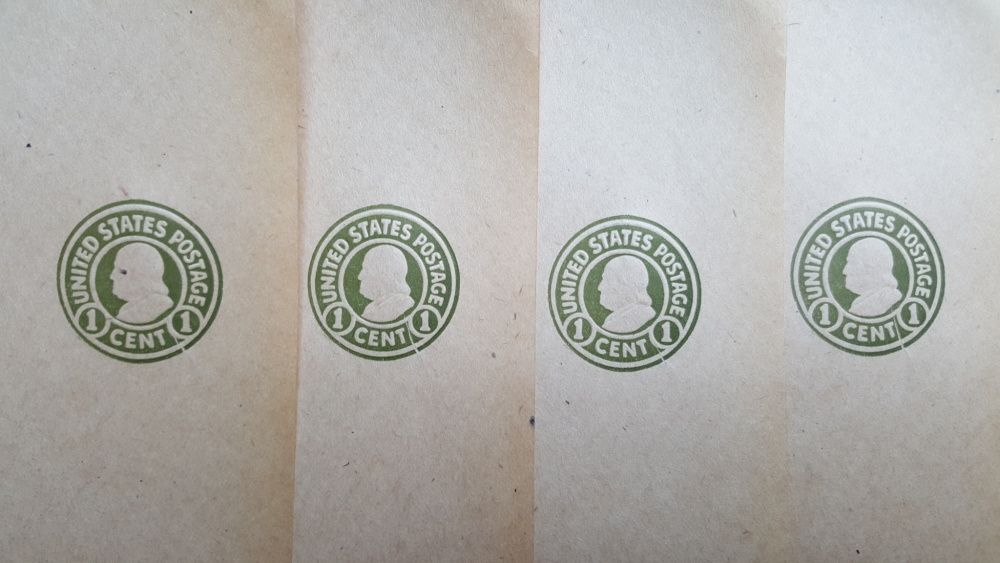
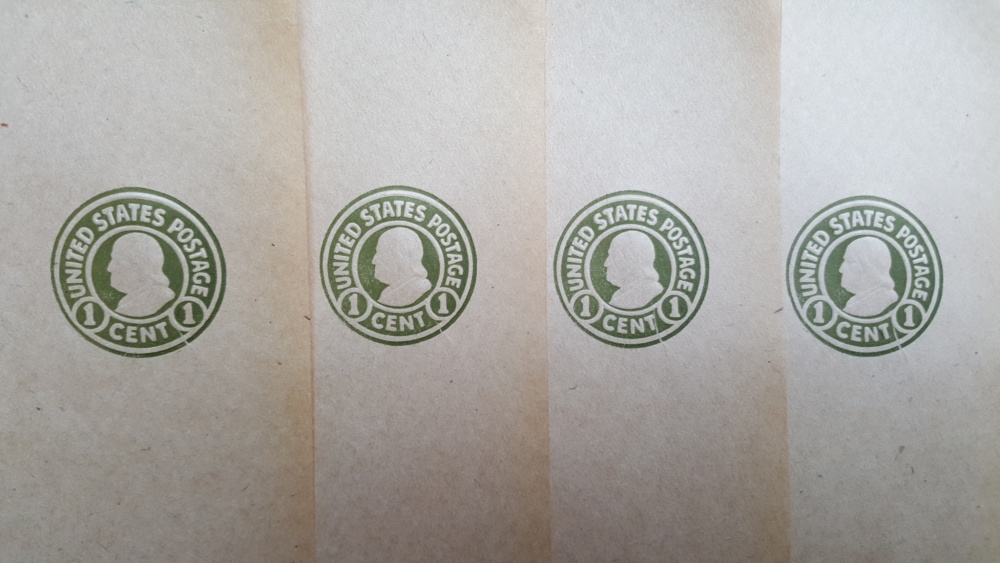
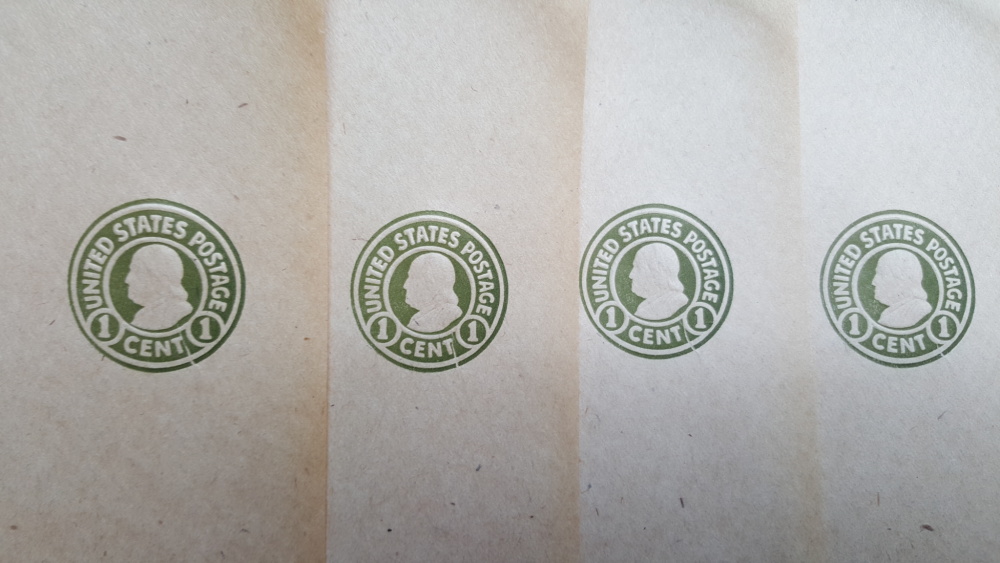
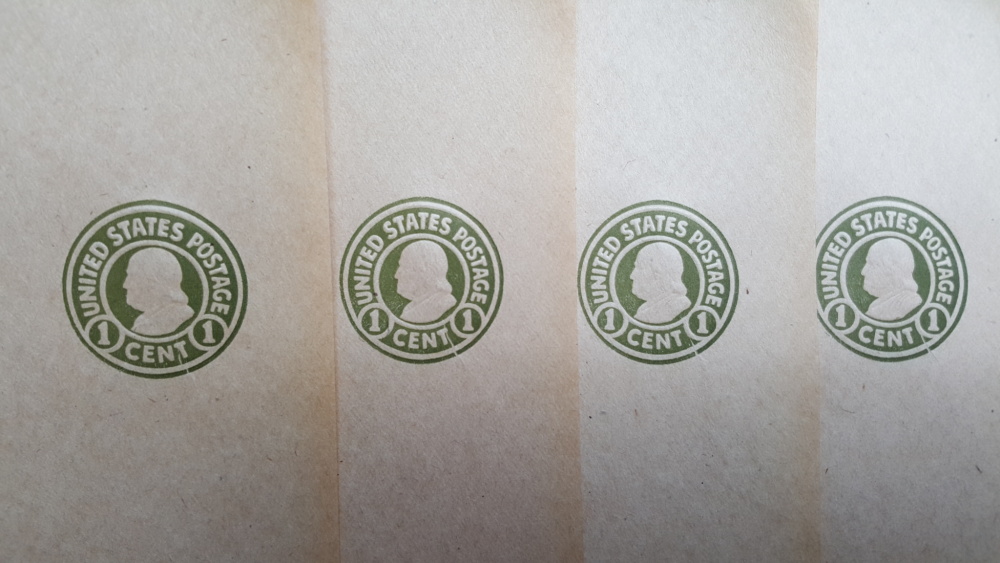
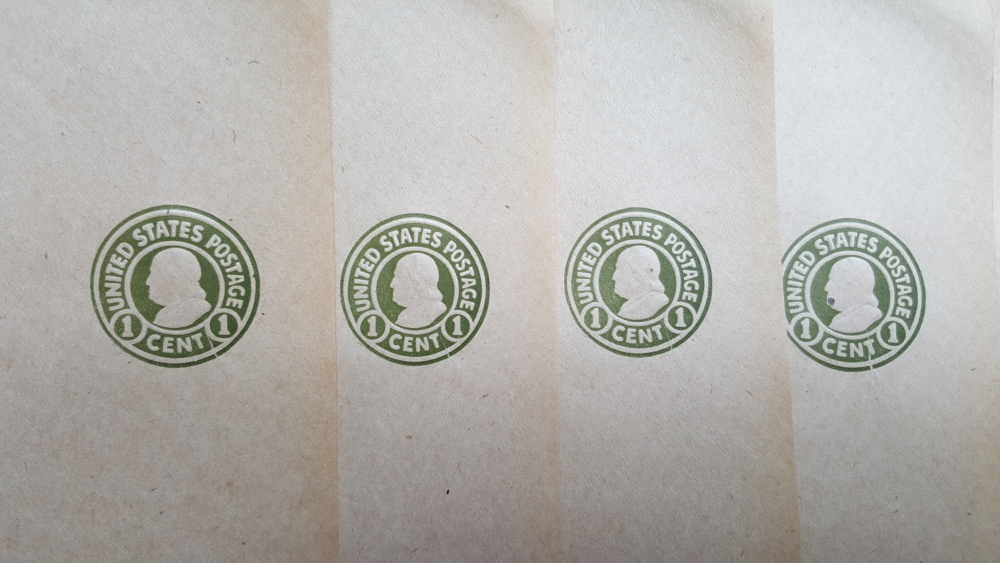
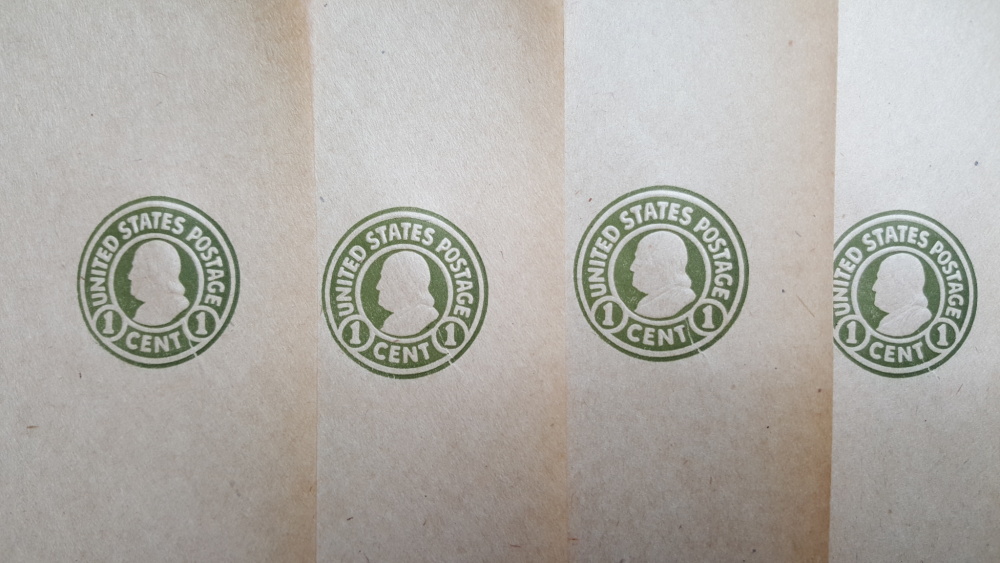
Maybe nice for you to see.
I will make pictures of the ones here. It seems to be an small batch from some printing run.
But you can see color changes in the paper and the abnormality shifting place as you walk around the bundle/batch of wrappers.
Thanks again for your time, should I send you one so you can take a look at it?
Remco |
|
Send note to Staff
|
|
|
Valued Member
Netherlands
154 Posts |
|
|
Bill. Thank you also for looking. Maybe I can send you one also to check if you have time. Guess there are around 70/100 pcs here still in the batch as they were printed..i think ;).
Regards
Remco |
|
Send note to Staff
|
|
|
Moderator

United States
12330 Posts |
|
|
Quote:
If by "normal" you mean "the quality of product the government expects from its envelope contractor", then no, I don't think the crease should be called normal. Interesting point. Has anyone ever seen the actual specifications that the government contactors had to meet or exceed? Surely they had these documents and were what was used to do quality inspections against. They would have specified dimensional tolerances, color/shade requirements, etc. Other documents must have been in place to define things like perforation and adhesion properties. We have essays, proofs, and other production information but I have never seen even a mention of any actual specification documents. Am I clueless or have these documents never been found or uncovered? Don |
|
Send note to Staff
|
|
|
Pillar Of The Community
621 Posts |
|
|
". . . any actual specification documents. . . "
The members-only area of the UPSS website (www.upss.org) has a number of documents reproduced from the National Archives pertaining to envelope contracts.
I did not do an exhaustive study of what is there, but I read about a dozen letters (during the period of the die pinch creases) to/from the people in Washington responsible for contracting the manufacture of stamped envelopes. Almost all of these letters were about embossing quality. It is apparent that the government was unhappy with the quality of the embossing on the product.
None of these letters made reference to specific contractual standards. Essentially, the Stamped Envelope Agent seems to wring his hands and bemoan the fact that the high speed of operation and the fact that the contractor was having a hard time keeping up with demand, prevented the ability to improve things.
No specific criticism of what constitutes poor quality was given.
One letter did have the following as part of its complaint: ". . ."The highest style of the art" that the contract calls for. . .".
It seems pretty clear that nothing more specific exists in the words of the contract. |
|
Send note to Staff
|
|
|
Valued Member
Netherlands
154 Posts |
|
|
Pillar Of The Community
621 Posts |
|
|
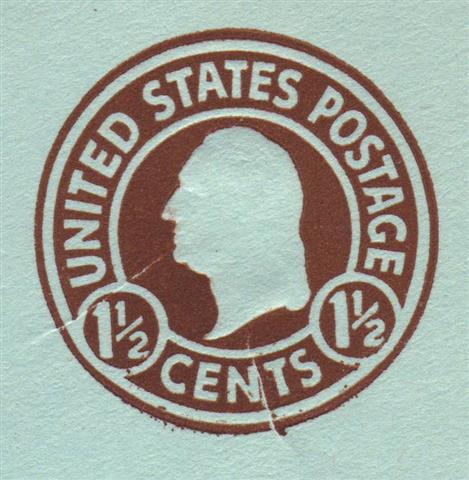
"Why didn't the 1 1/2 cent have this issue btw?"
Probably the same reason other 1 cent circs didn't have the problem: better quality paper and/or different machine conditions (cylinder pressure, state of the die, state of the make ready, etc.) |
|
Send note to Staff
|
|
|
Valued Member
Netherlands
154 Posts |
|
|
Hmm. Stange that they could not fix the problem. But then again, time money delivery pressure..
Should I offer thus as a single lot maybe, or isn't it interesting enough to preserve as a bundle of wrappers maybe?
Remco |
|
Send note to Staff
|
|
|
Pillar Of The Community
United States
607 Posts |
|
|
Different dies were used on different presses. The wrappers shown above were printed on the Huckins rotary press. The 1 1/2c wrappers were also printed on the Huckins rotary press, but years later. Changes in paper and printing techniques, including moisture content of the paper, may account for the lack of pinches in the 1 1/2c envelopes and wrappers. |
|
Send note to Staff
|
Bill Lehr
US Postal Stationery Specialist |
|
|
Pillar Of The Community
621 Posts |
|
|
"Strange that they could not fix the problem"
Well, they did eventually. You don't see these creases by mid-century.
". . . I offer thus as a single lot. . ."
A dealer might take them off your hands. I doubt a collector would want more than one.
Bill, who contributed earlier in this thread, might offer a dealer's perspective.
(edt: composed before Bill's latest) |
|
Send note to Staff
|
| Edited by ThomasGalloway - 12/22/2015 10:12 am |
|
|
Valued Member
Netherlands
154 Posts |
|
|
Ok. Sorry, did not got the part that they eventually fixed the problem.
Thanks again for all your support sofar. I only want to keep one of each. And indeed it no real suprise if a collector does not want a whole batch of these. Just thought it might be interesting though. But maybe there are loads of these around, stacked away with dealers or simulair. |
|
Send note to Staff
|
|
|
Pillar Of The Community
621 Posts |
|
|
Valued Member
Netherlands
154 Posts |
|
|
Pillar Of The Community
621 Posts |
|
|
"And a bad one also . . ." One collector's "bad", is another's "find". Send those bad boys my way  |
|
Send note to Staff
|
|
|
Valued Member
Netherlands
154 Posts |
|
|
Aha. You like these "flaws" on wrappers. Or cut squares?
Have some more stuff in a box here. Would you mind taking a quick look at it?
|
|
Send note to Staff
|
|
|
Replies: 51 / Views: 6,276 |
|




 Posted 12/19/2015 3:19 pm