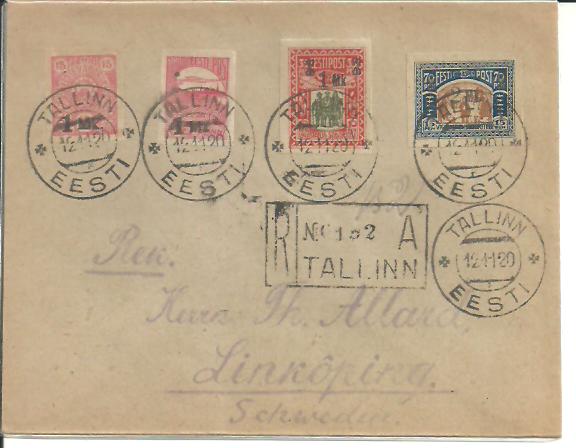
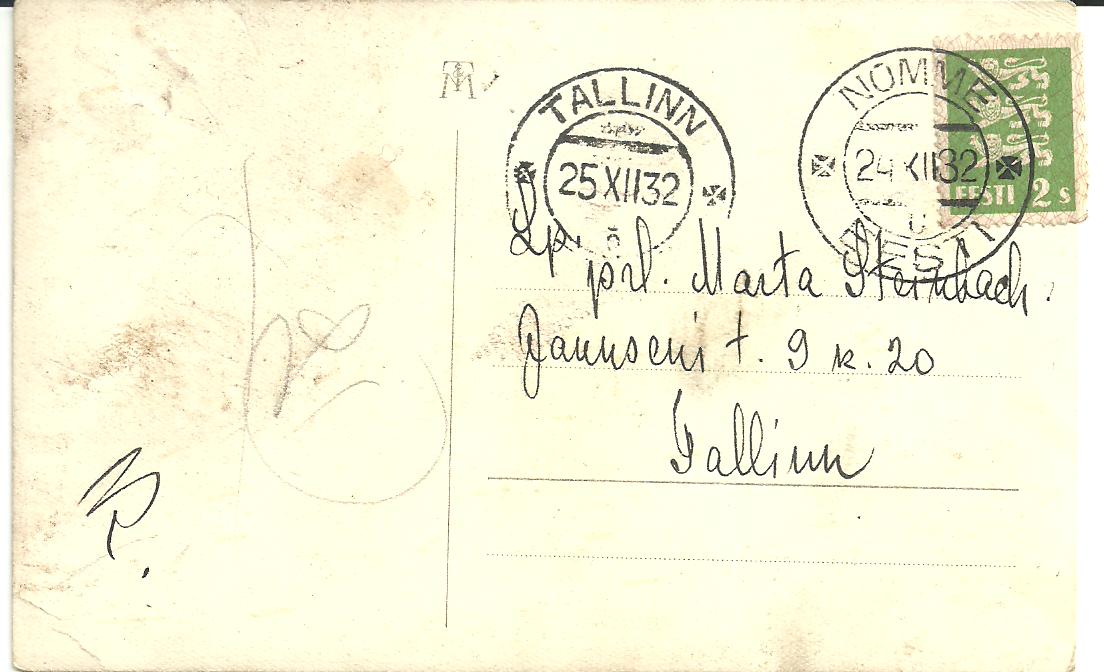
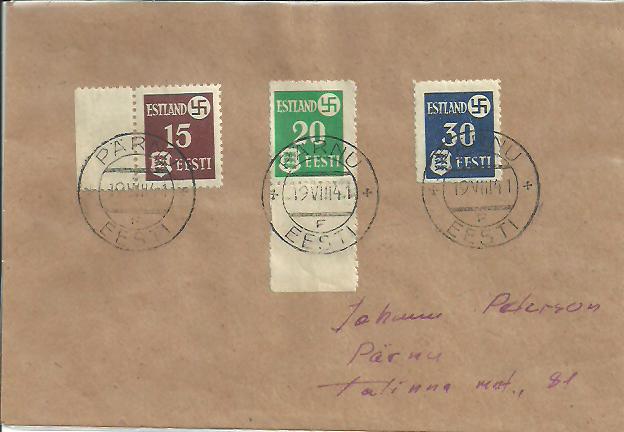
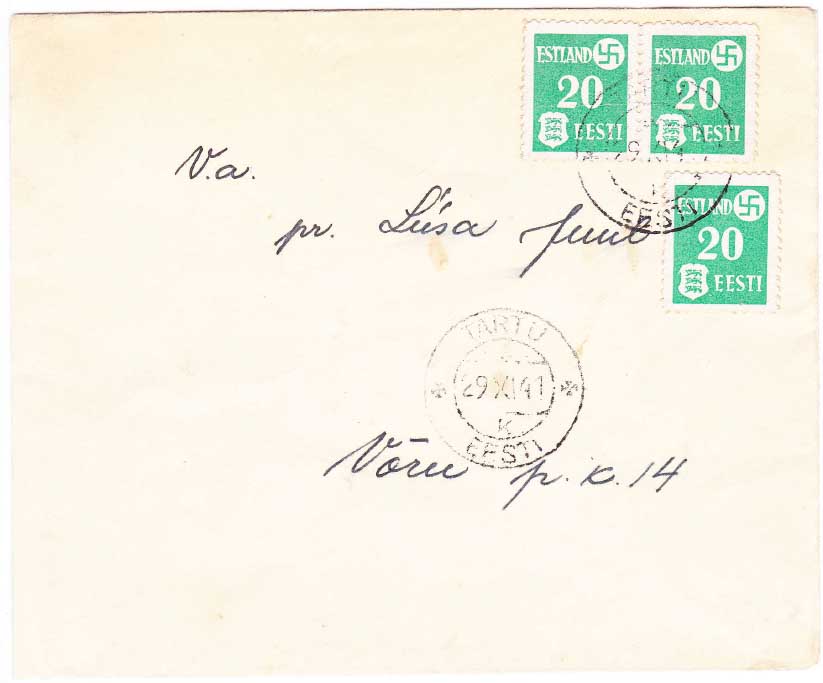
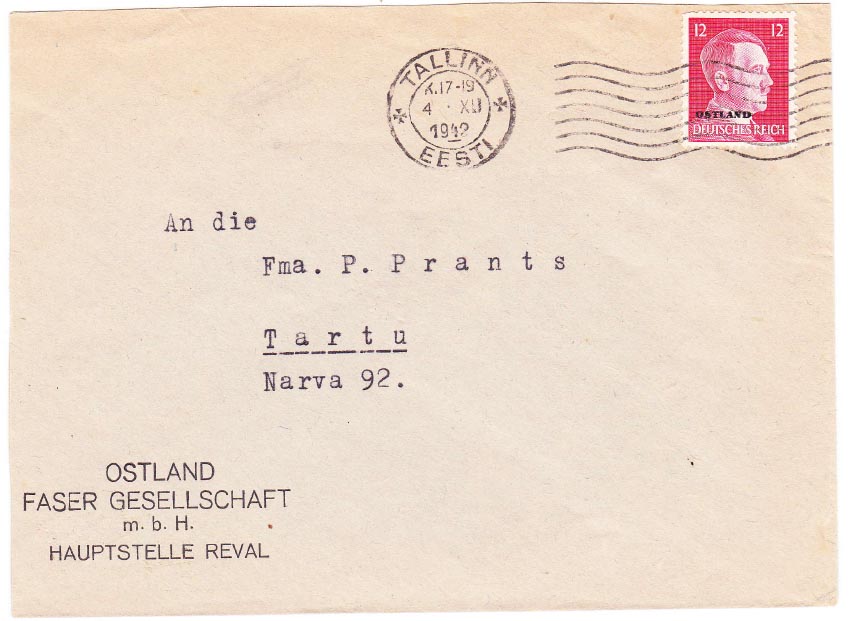
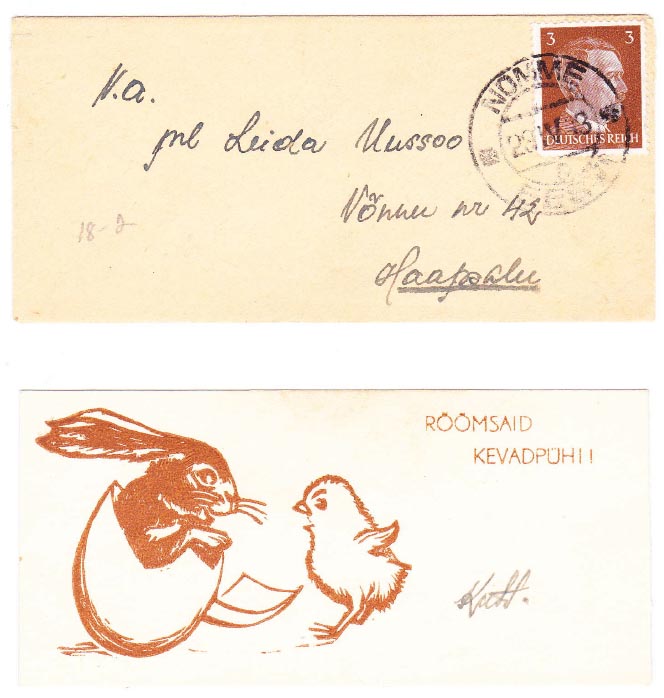
A couple of weeks ago I acquired an accumulation of several hundred covers and cards from Estonia. They will take months (years??) to write up, so apologies if I haven't got enough information on some of them yet. I'd like to share a few of them with you, tracing the early postal history of this country.
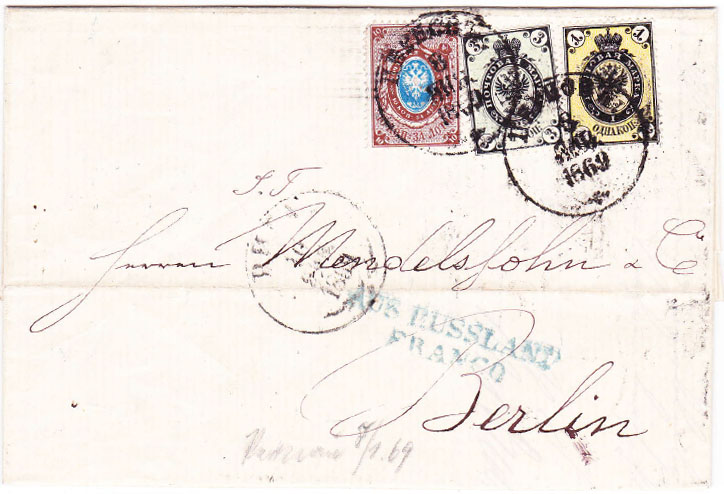
Prior to 1918, Estonia was part of the Russian Empire. Here's a letter sent from Pernau (now known as Pärnu) to Berlin, in 1869. The adhesives are the 1864-1865 issue, perf. 14 1/2 x 15, on unwatermarked paper.
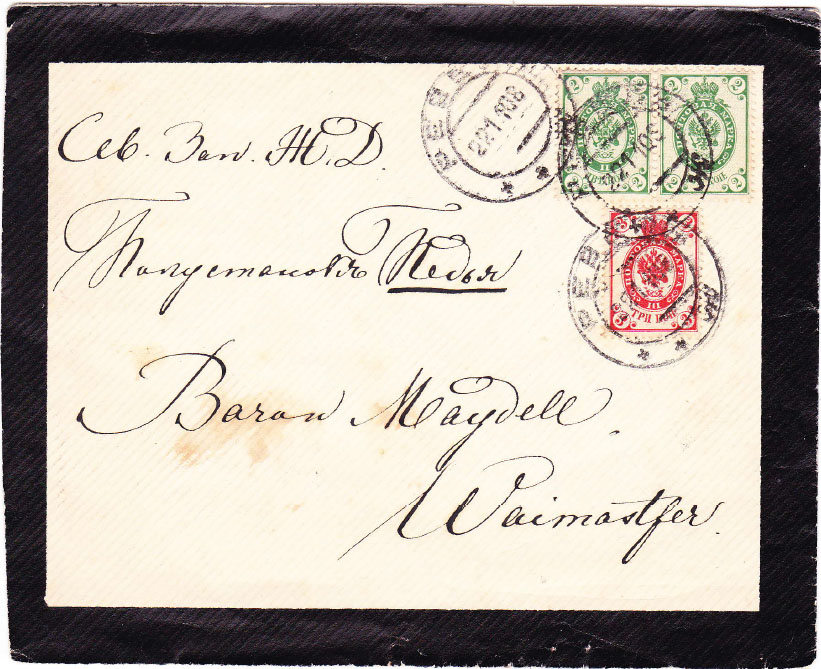
Next is a mourning cover posted in Reval' (Tallinn) in January 1908. I'm not sure where it was posted to. Anyone help with deciphering this??
Between 1917 and 1918, mainland Estonia was occupied by Imperial German troops, displacing the Bolshevik Russians. The country was put under military administration with the remaining former Russian Baltic provinces, using stamps overprinted Ob. Ost (Ober Ost). I'm not sure what the "Re" cachet means.
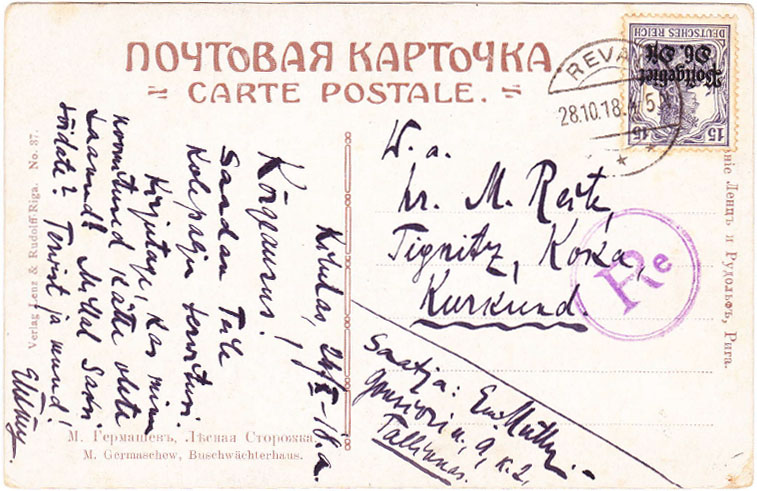
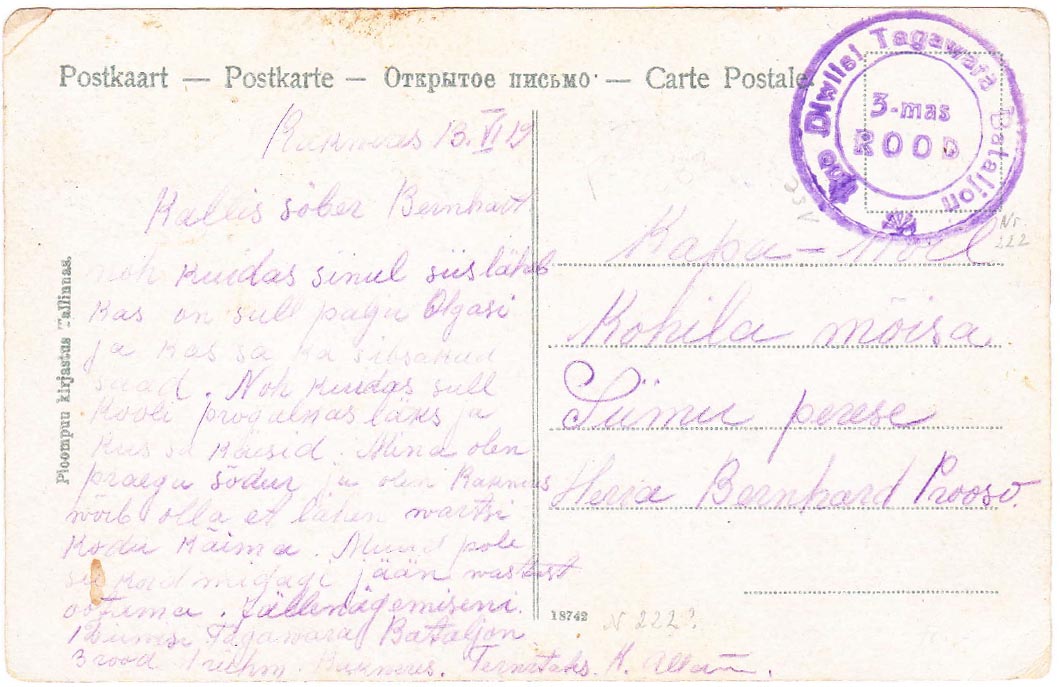
Estonia declared independence in 1918, and issued its first stamps at this time. However, the War of Independence was ongoing, and military cachets were also used. This postcard dated 18th June 1919 is from Rakmaas, and shows the cachet of the 1st Division Tagawara Battallion in violet.
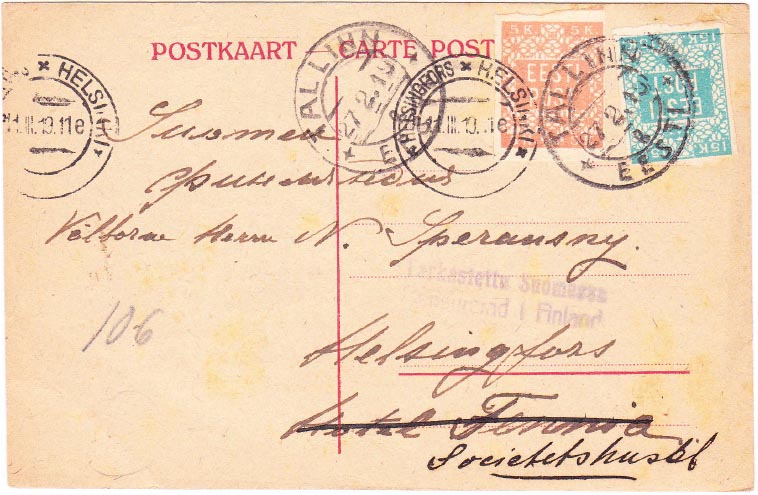
Here's an example of the first issue of the Estonia stamps, "The Flower Design" based on a German fiscal stamp design. This cover, sent from Tallinn to Helsinki (Helsingfors) also bears the stamp of the Finnish military censor.
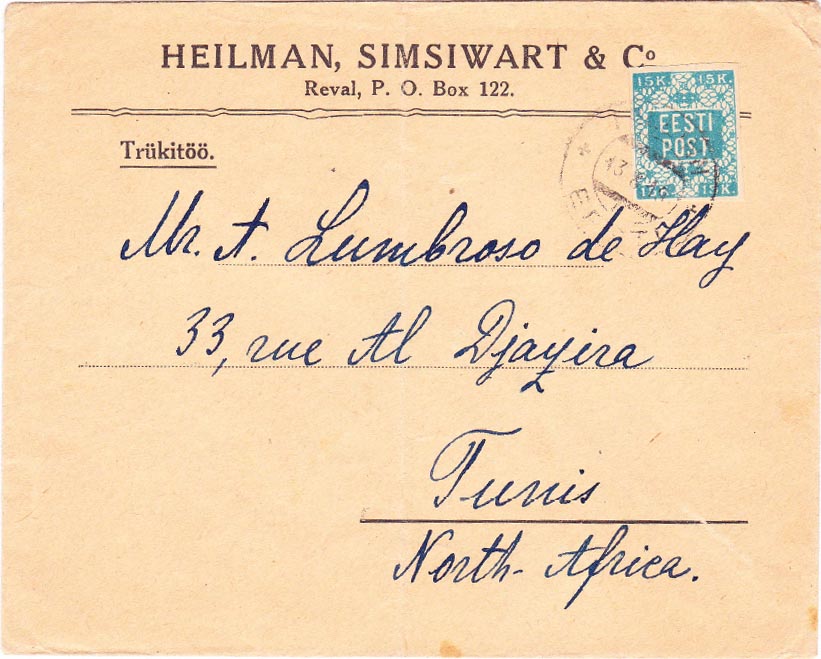
Another of the "Flower Designs" this time on cover sent to Tunisia. The address is in the centre of Tunis, where many embassies used to be situated. I assume Heilman, Simsiwart & Co are a trading company.
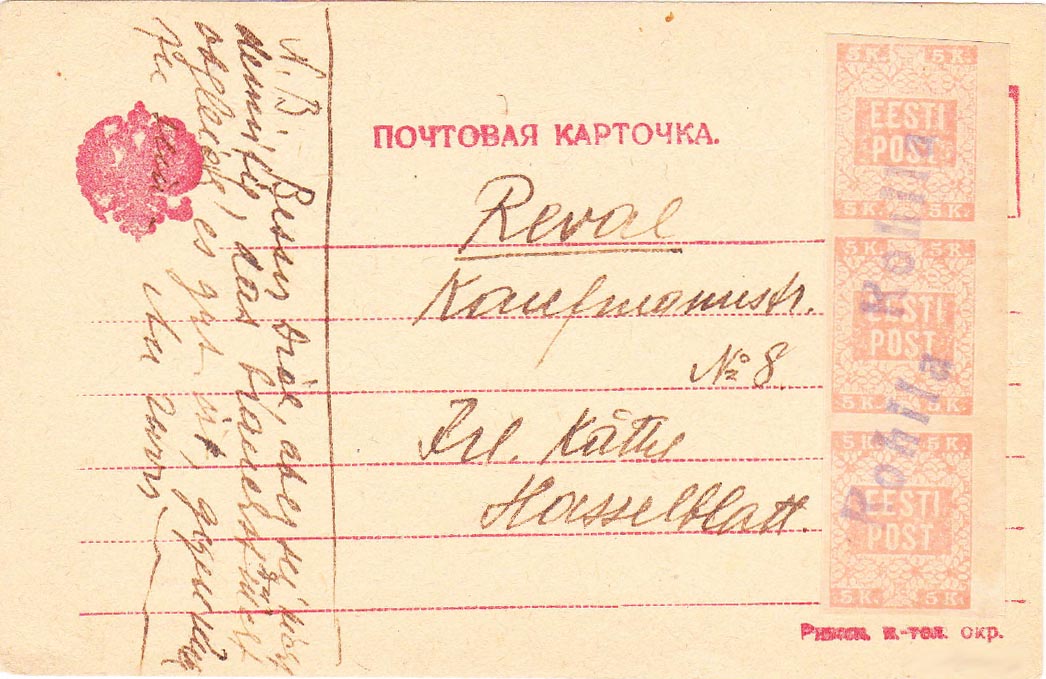
The postal system was set up quite rapidly after independence, and with the war ongoing, there were a number of issues with the postal system. Many post offices didn't have proper cancellers, and used violet rubber stamps. This card was sent from Pohila to Tallinn. Note that it's still the Imperial Russian design.
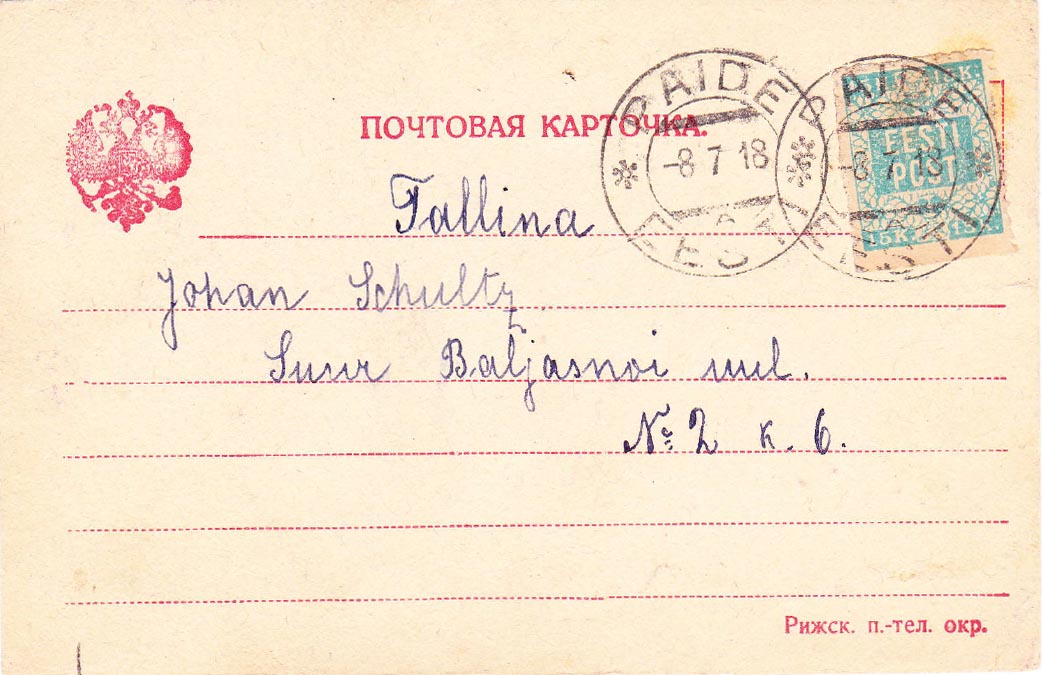
Another problem was that a perforator wasn't available, so stamps were issued imperforate. Postmasters are known to have rouletted the stamps in several post offices, notably Paide. Here's an example of the 15k blue, rouletted on three sides (probably from the bottom of a sheet).
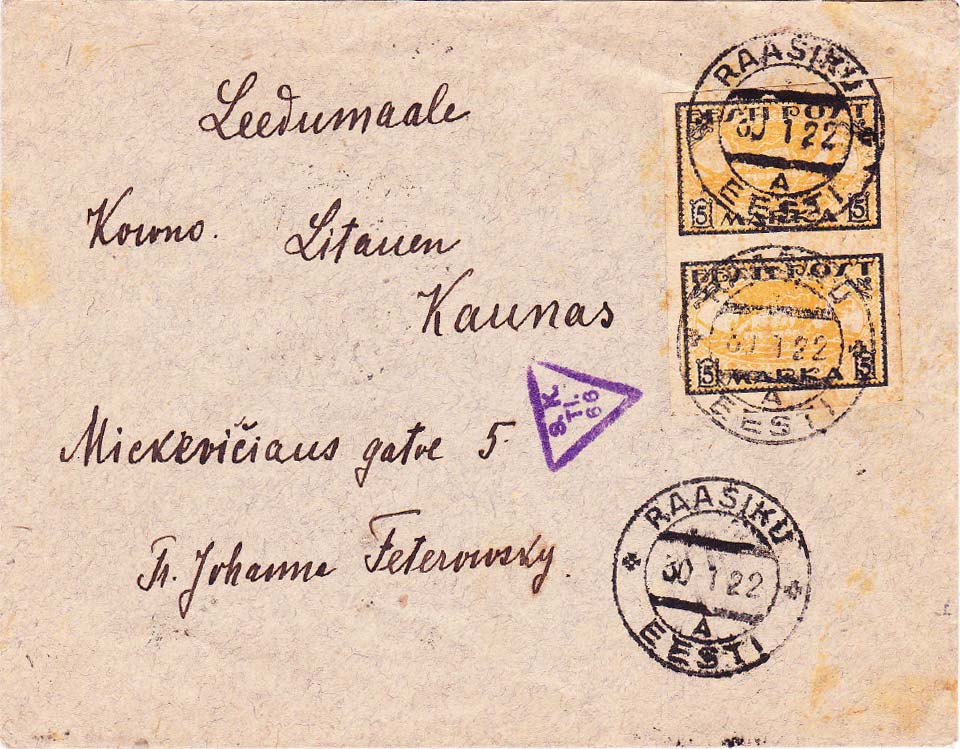
Perhaps the most famous design of stamp from Estonia is the viking ship. These were issued imperforate (although they too were unofficially rouletted). This pair are on a cover from Raasiku to Kaunas. The cover also bears the Tallinn censor's office triangular stamp in violet. Censorship of the mail ended in August 1922.
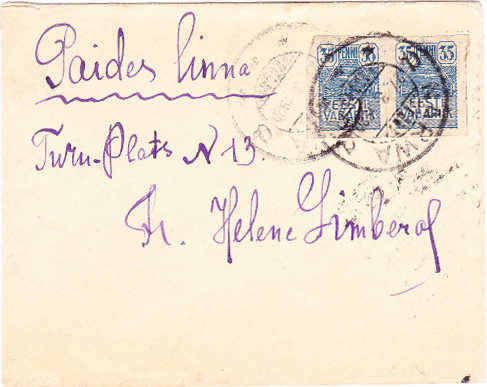
Here's the "Seagull" issue from 1919, on a cover from Narwa to Paide.
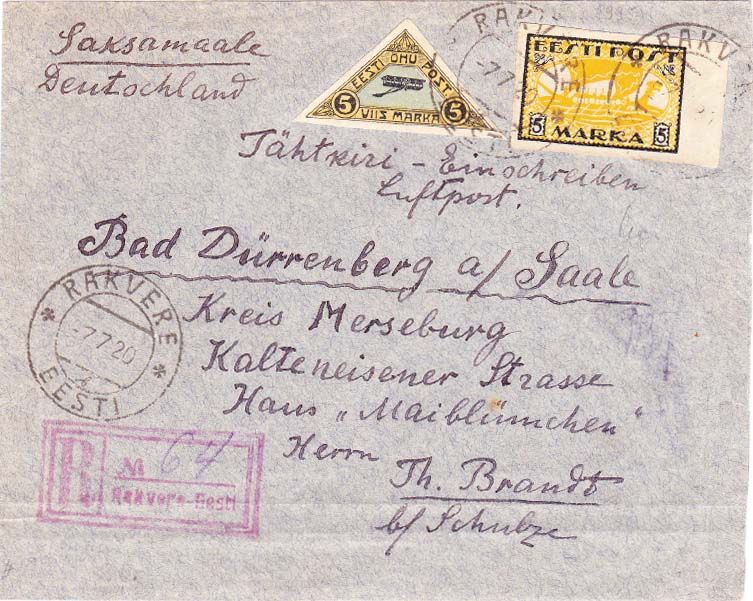
Estonia issued its first airmail stamp in 1920, but it was only ever used for one flight from Tallinn to Helsinki on 15th March. The remainders were largely used as a surcharge for foreign post rather than airmail. This cover claims to have been sent by airmail to Germany in 1920; I'll need to verify this, but it certainly looks genuine.
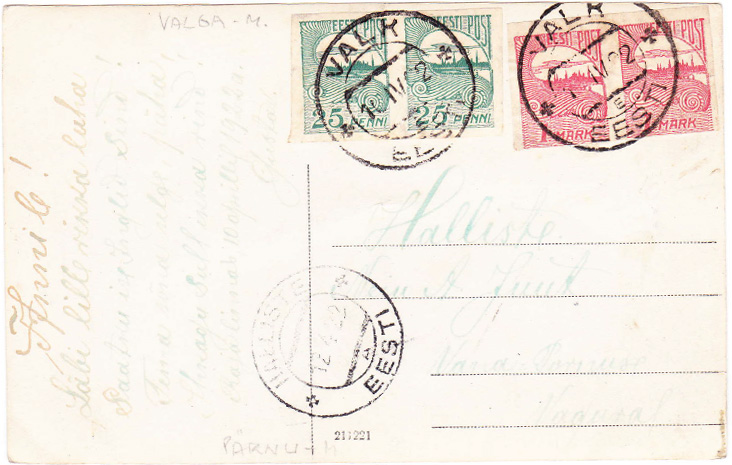
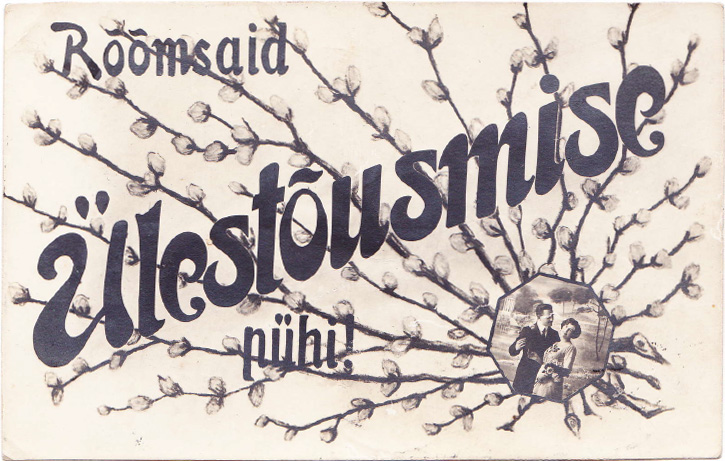
This rather bizarre-looking Easter greeting card from Valk to Halliste has the 1920 definitive issues showing a view of Tallinn. The card shows a couple suppounded by sprigs of willow, whose fluffy buds herald the start of spring.
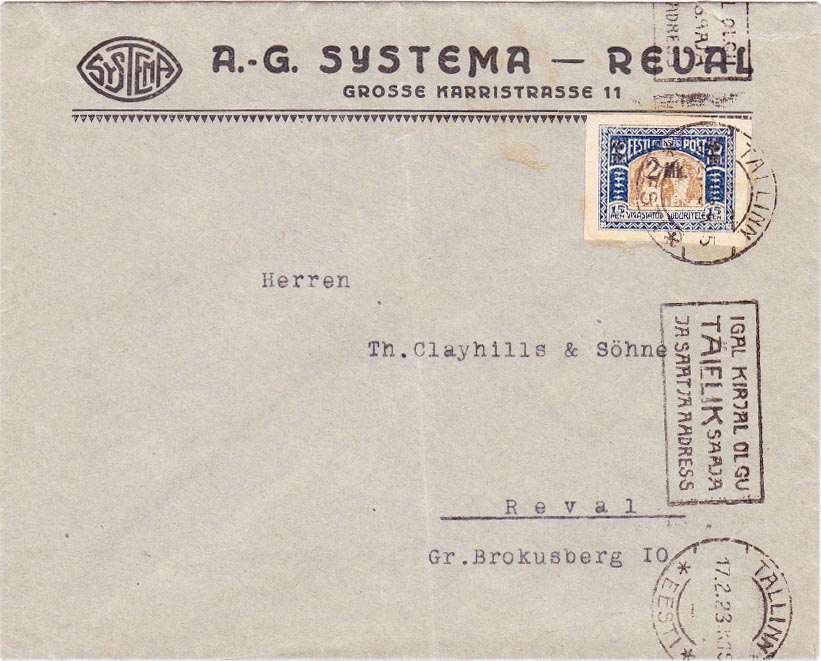
In June 1920, stamps were issued with a surcharge to aid war victims. These were surcharged a few months later. This cover with a machine slogan Tallin cancel tells senders to include their address.
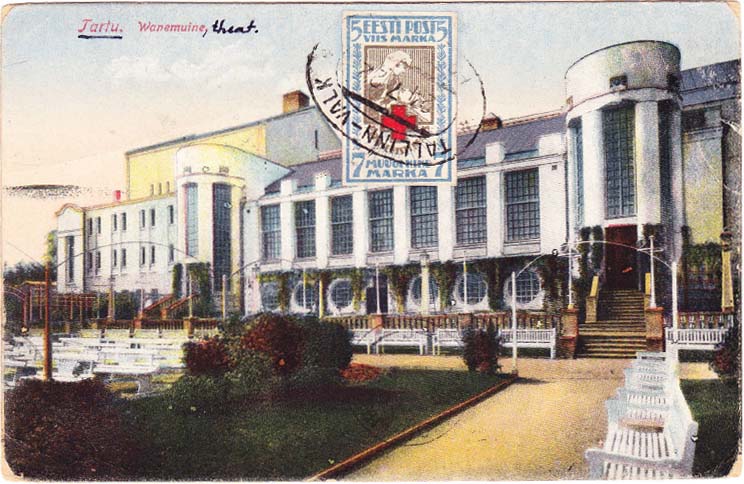
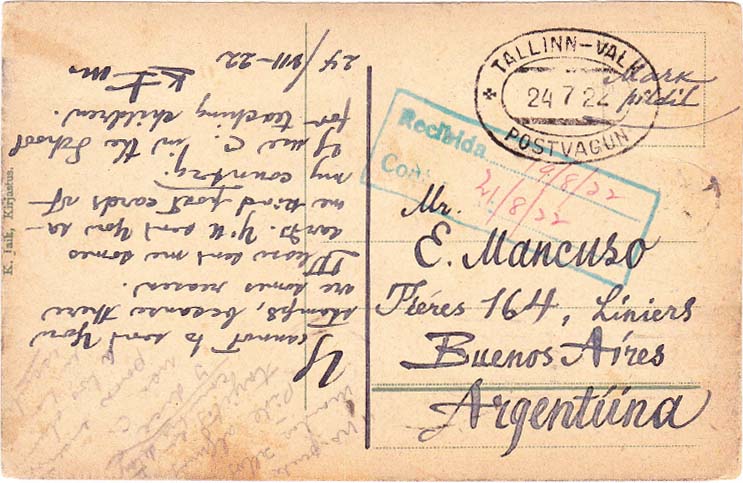
Here's a nice picture postcard sent to Buenos Aires, using the first Red Cross charity issue. It's been posted in a mobile post office on the Tallinn-Valk train, with the distinctive double-oval canceller. The card may be from a teacher (possibly associated with the Catholic Church?).
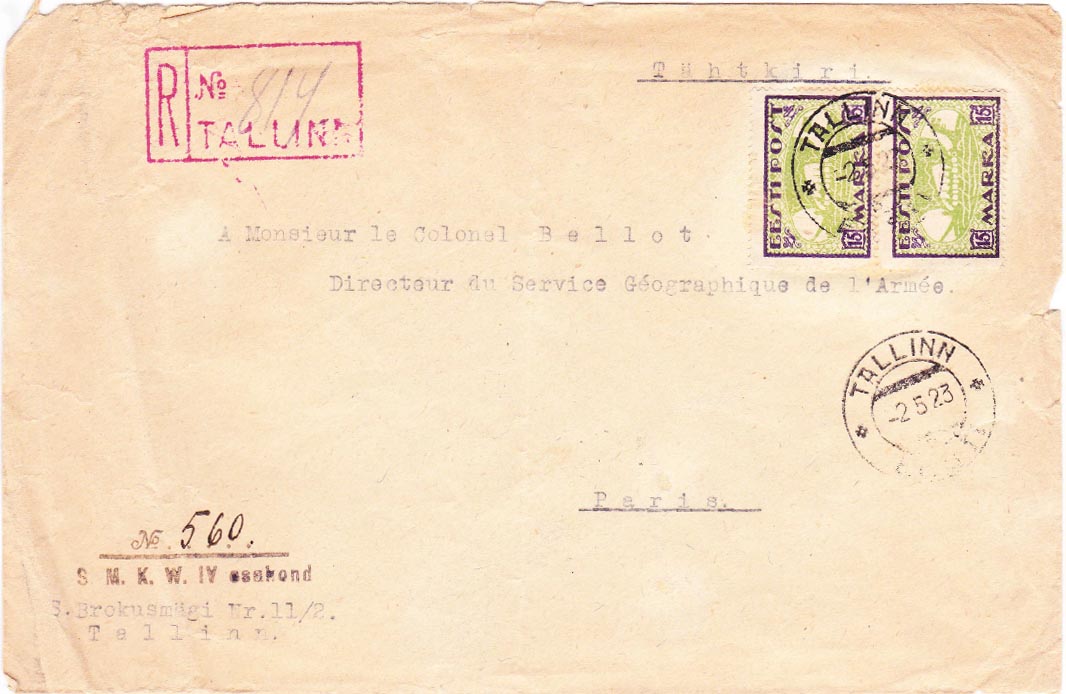
In 1922, the viking ship design was issued perforated 14 x 13 1/2, in new higher values which reflect increasing inflation. This cover is 30m, from Tallinn to Paris.
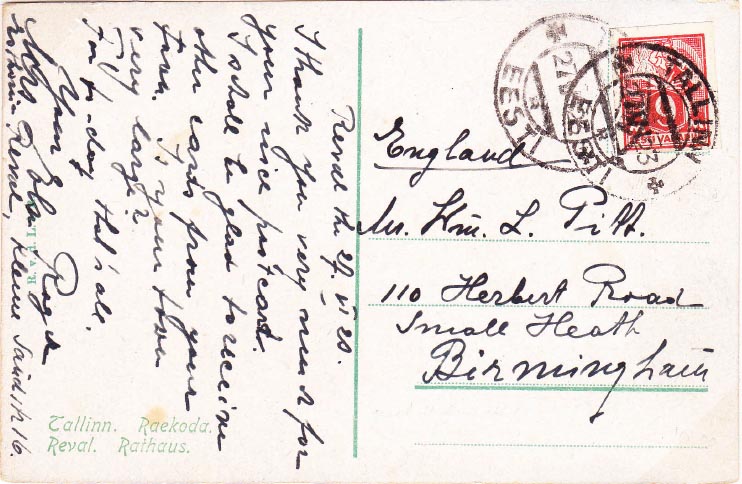
Also issued in 1922 were the "Weaver and Smith" definitives. There was a severe shortage of low value stamps at the time and they were initially issued imperforate so as not to prolong the shortage by perforating them. This 9m value was for foreign postage, and is used here on a picture postcard from Tallin to Birmingham, England. The writer quaintly asks "Is your town very large?" It's the UK's second city!
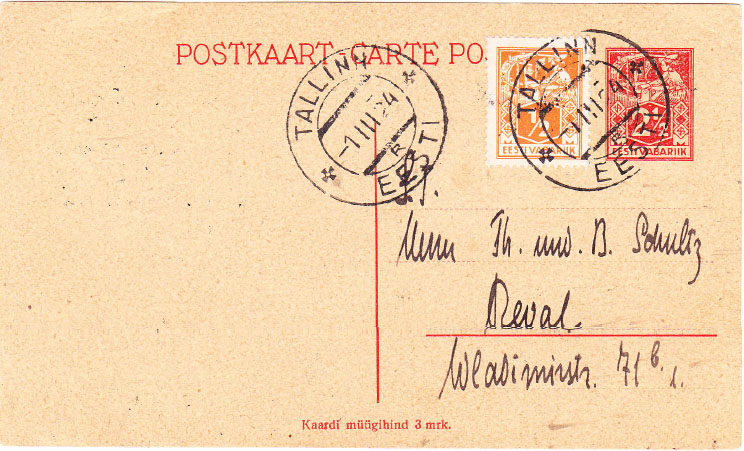
Here's a postal stationery card from Tallinn uprated to 3m with a perforate 1/2m definitive. This is the reply portion of the card; the sender's portion was only 2 1/2m.
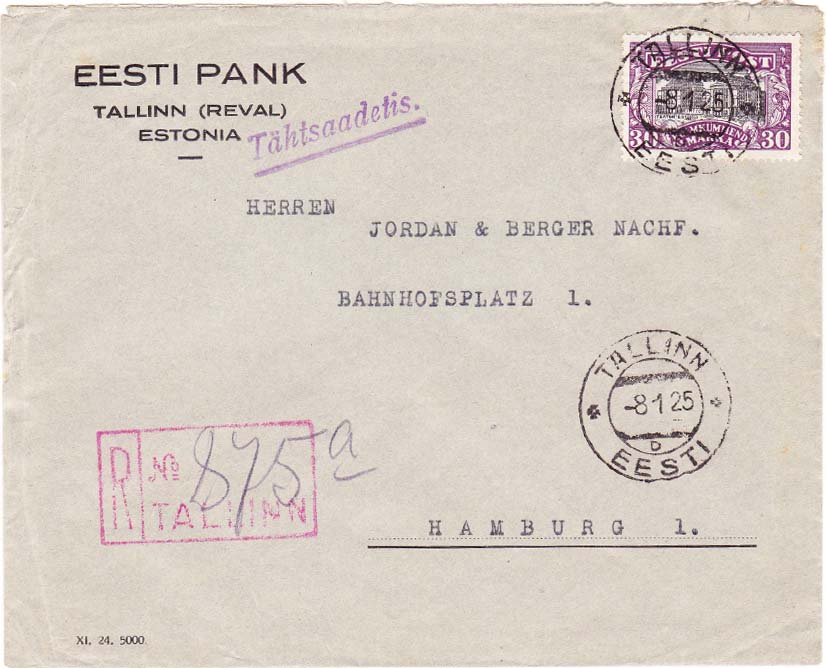
In 1924, high value definitives were issued for international use. This 30m stamp, showing the national theatre in Tallinn, is on a registered cover from the Estonian Bank in Tallinn to a company in Hamburg.
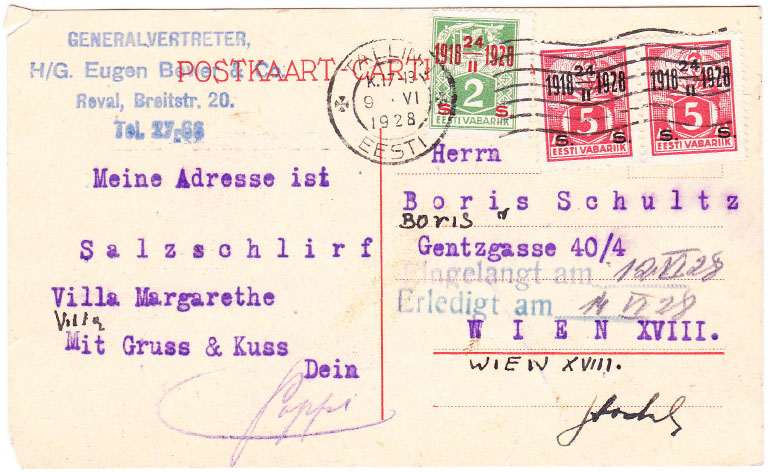
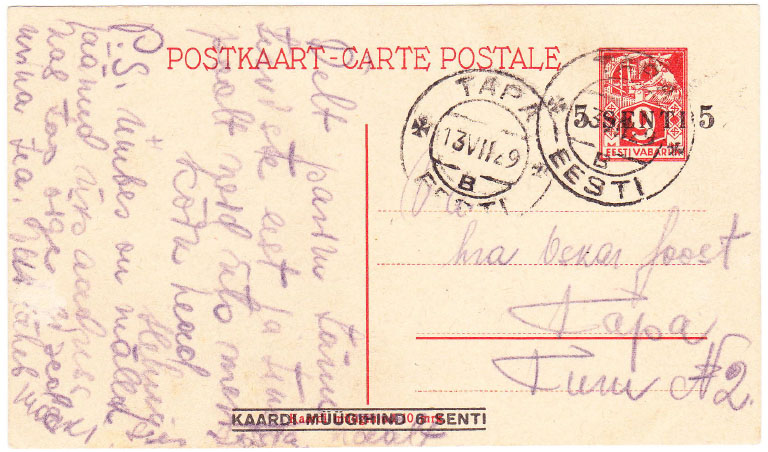
In 1928, there was a change of currency from 100 penni = 1 mark to 100 senti = 1 kroon. The "Weaver and Smith" definitives were surcharged, as was the postal stationery. Here are firstly a cover posted in 1928 using the correct 12s international card rate from Tallinn to Vienna, and secondly a 9m postal stationery card surcharged 5s and used in Tapa, a small town east of Tallinn.
This is where I'll end the post. I've got more issues, but from hereon in there are quite a few gaps in the story mostly in the commemorative issues. If I remember, I'll post a few WW2 German occupation issues when I've sorted them out.





 Posted 03/05/2016 12:26 pm