| Author |
 Replies: 11 / Views: 7,124 Replies: 11 / Views: 7,124 |
|
|
New Member
United States
2 Posts |
|
|
The standard way of differentiating the 1879 postage due stamps (J1 – J7) from 1884 postage due stamps (J15 – J21) is color. The 1879 stamps are brown and the 1884 stamps are red brown. The problem is that with years of fading, the two colors are sometimes very difficult to tell apart. I was wondering if there was an alternate way to tell the stamps apart. I have noticed that some of the stamps have lines in the frame along the border and others are shaded (see pictures below). This implies to me that there were two different plates used to produce the stamps. Does anyone know if this characteristic can be used as an alternate method to identify 1879 vs. 1884 postage due stamps? If so, which is which? 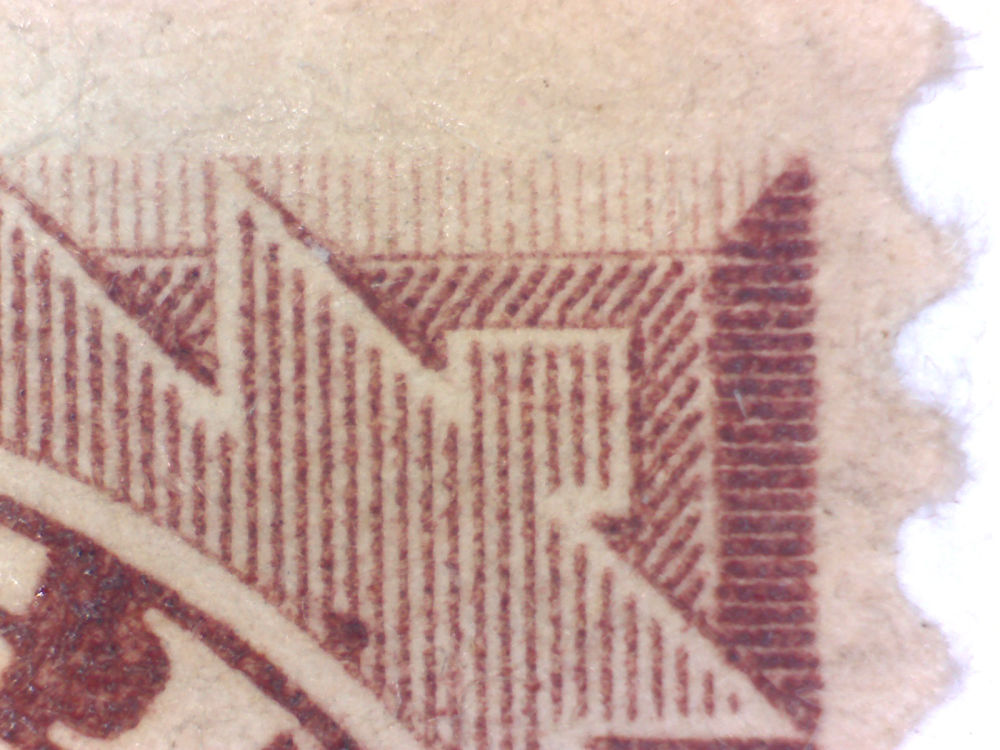 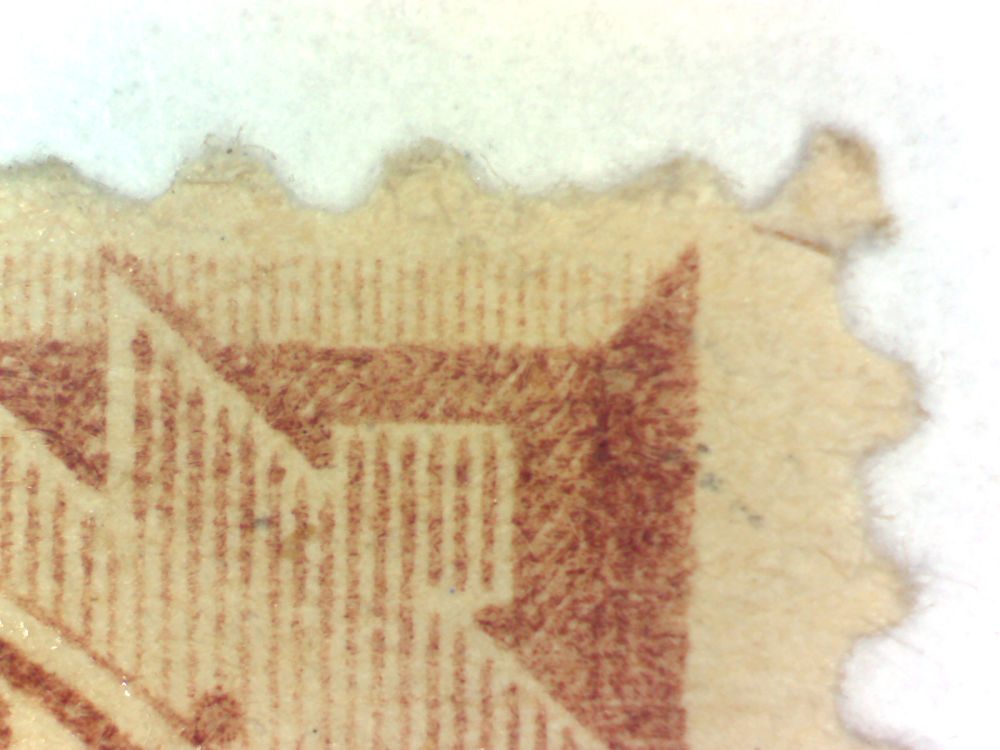 |
|
Send note to Staff
|
|
|
|
|
Pillar Of The Community
United States
2423 Posts |
|
|
One of our American experts will have to weigh in on this one with any authority. What little experience I have, though, makes me think that the later special issue would be of a higher quality and would have better resolution. The top stamp fits that bill. |
Send note to Staff 
|
|
|
Pillar Of The Community
United States
850 Posts |
|
|
It's easy. (J1 – J7) is brown and (J22 - J28) is bright claret (red) and everything else is (J15 – J21). Don't worry about (J8 - J14) you won't find one of those. 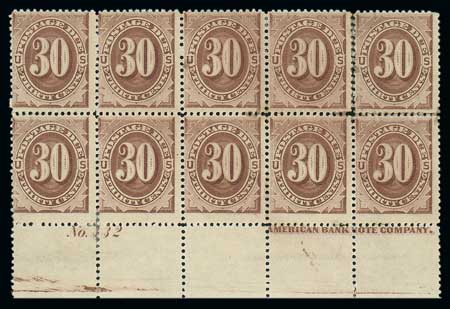 J6 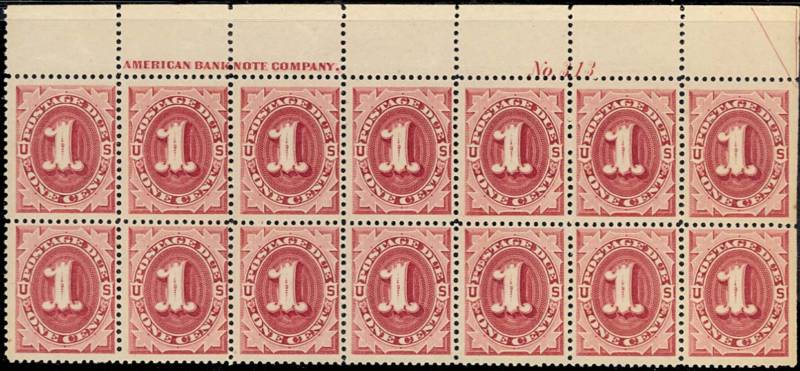 J22 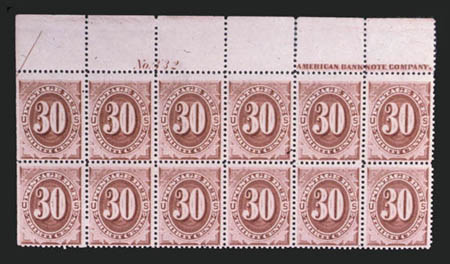 J20 |
|
Send note to Staff
|
| Edited by postagedueguy - 04/13/2016 3:19 pm |
|
|
Bedrock Of The Community
United States
10862 Posts |
|
|
Ah, if only it was that easy. One has to see a lot of them to start with And even then the only way to tell the browns from the red browns can be to have a group of them at one time, and even then it can be very tough if the stamps are not fairly fresh. |
|
Send note to Staff
|
|
|
Valued Member
United States
304 Posts |
|
|
Bedrock Of The Community
United States
10862 Posts |
|
|
True, but the clarets tend to be more obvious. It's the browns vs the red browns that tend to be the big problem most of the time. |
|
Send note to Staff
|
|
|
Valued Member
United States
10 Posts |
|
|
jpm1025 - postage due plates did not change with color changes
1 cent - 313, 314
2 cent - 315, 464
3 cent - 316, 317
the rest only had one plate each
plate 464 was added in 1883 when the rates changed and there was an increased need for more 2 cent stamps.
the color changes fluctuated wildly, but the main problem with brown and red brown are the transitional colors used in 1884-1886. By May 1887 the color had become a deep red brown and continued to more red and non fluorescent claret by 1891. After 1891 the fluorescent clarets became known, but was dependent on the denomination. Some denominations were in surplus so the clarets were not printed until later.
Not to go into a more detailed visual analysis of color, but as suggested by another poster, you should be able to segregate by color rather easily. Always test the clarets to verify fluorescence, and test suspicious very red/claret red browns for possible fluorescence. |
|
Send note to Staff
|
|
|
Pillar Of The Community
United States
628 Posts |
|
|
I started sorting my duplicates in a plastic tray and it helps once you have other stamps in hand to compare them to. Sometimes I will take the tray over to the window in the natural sunlight to see if they all still look right. |
|
Send note to Staff
|
|
|
New Member
United States
2 Posts |
|
|
Thanks for the answers about the plates. That was useful info. What I must have been seeing is the result of wear on the plates.
Color differentiation between the brown and red-brown is still an issue for me. If you had a lot of these stamps, you could keep a supply on hand to compare, but I do not. Even if you did, you would need to start with a calibrated source before you could start sorting them. You would also have to consider the ink fading factor. Unless both the photograph and the viewer's monitor are color calibrated, digital photographs may not be the best way to differentiate the stamps. By eye, the difference between brown and red-brown is extremely small. That is the reason I was hoping to find an alternate way.
I have looked at online pictures of (J1 – J7) and (J15 – J21) stamps for sale. There is no consistency in the color of these pictures. Either the seller has misidentified the stamps, the color calibration is off or both.
I never had any trouble identifying the clarets. The comments about fluorescence where very interesting. It provides another data point to confirm that they are truly clarets. |
|
Send note to Staff
|
|
|
Valued Member
United States
10 Posts |
|
|
jpm1025
Claret - I believe modern students have arbitrarily defined claret banknotes dues to be those which fluoresce. The reason is some stamps included in the red-brown group are claret. Thus to make the distinction they have to be tested.
You are correct regarding monitor display and your comment regarding misidentification is accurate. Unless the dealer is a student of dues, they will make mistakes. One current mistake is a J17 in a large national dealer auction misidentified and the proof is the evidence itself. There is a cancel used only before red browns were ever used and the description mentions the fact and yet still misidentified it.
"the difference between brown and red-brown is extremely small" .... this is not accurate. A more accurate statement would be the transitional colors are difficult to separate as brown or red-brown. If you compare stamps from 1879-1880 with stamps in 1887, you would see a huge difference.
Try something like this: try to find cheap examples of what you believe is brown and red brown to be used as your benchmark. I think what you would find is in a comparison the stamp will be closer to one or the other of the benchmarks.
I do not have White's book on colors and it is a little expensive but I will mention it as a possible source for color comparisons.
I also think that with a little practice you should be able to readily tell the difference with high probability.
Sorry can not be of more help. |
|
Send note to Staff
|
|
|
Valued Member
United States
11 Posts |
|
|
Quote:
postagedueguy:
Don't worry about (J8 - J14) you won't find one of those. I believe I have a brown J10 3c 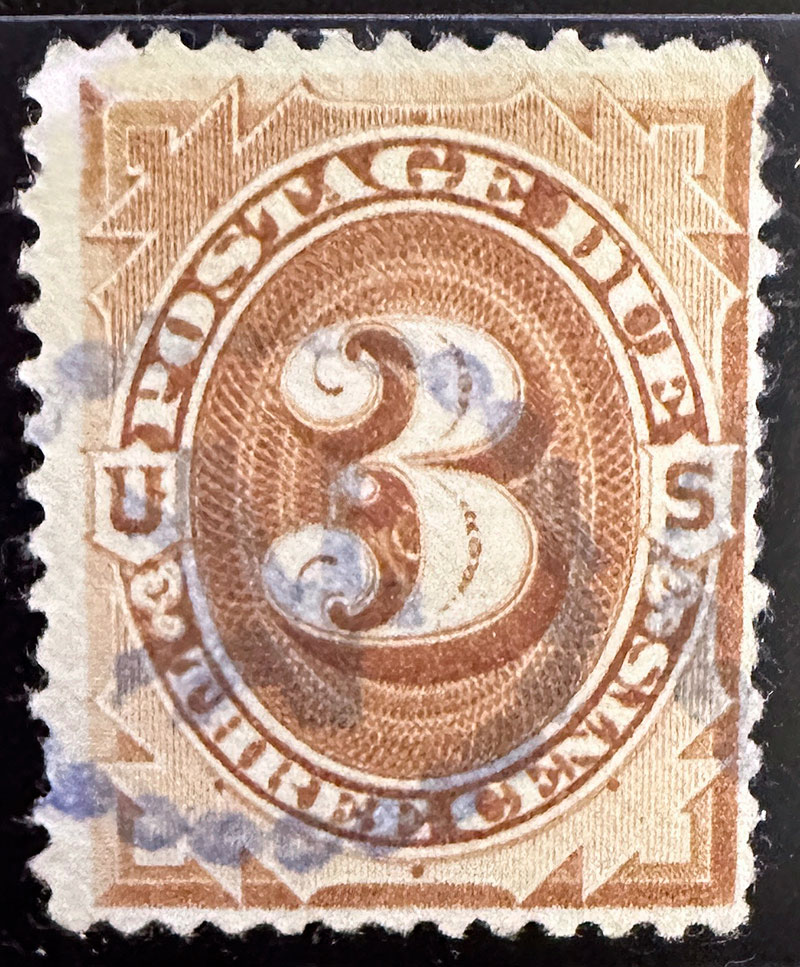 |
|
Send note to Staff
|
|
|
Pillar Of The Community
United States
1434 Posts |
|
|
Quote:
I believe I have a brown J10 3c You don't. There are no recorded used J10's AFAIK, and (depending ofc on the resolution of your scan), the detail of your specimen doesn't seem to measure up the standards of the J8-14 special printing. |
|
Send note to Staff
|
|
| |
Replies: 11 / Views: 7,124 |
|



 Posted 03/09/2016 12:59 pm


