Hi all.
Was away yesterday - thanks for the comments. Let me address the value one as best I can.
In my mind, there are a pile of "levers" that ratchet the value of a cover, whether stampless or stamped up. Obviously, on a cover with stamps, the biggest lever is the stamps themselves. However, even here, the other factors can take a cover with a $10 stamp on it and turn it into a $1000 cover.
Here's how I might think about the value of a stampless cover:
First, start with a base value - let's say $10.
Now, ratchet it up based on the things that make this cover different (the "levers"):
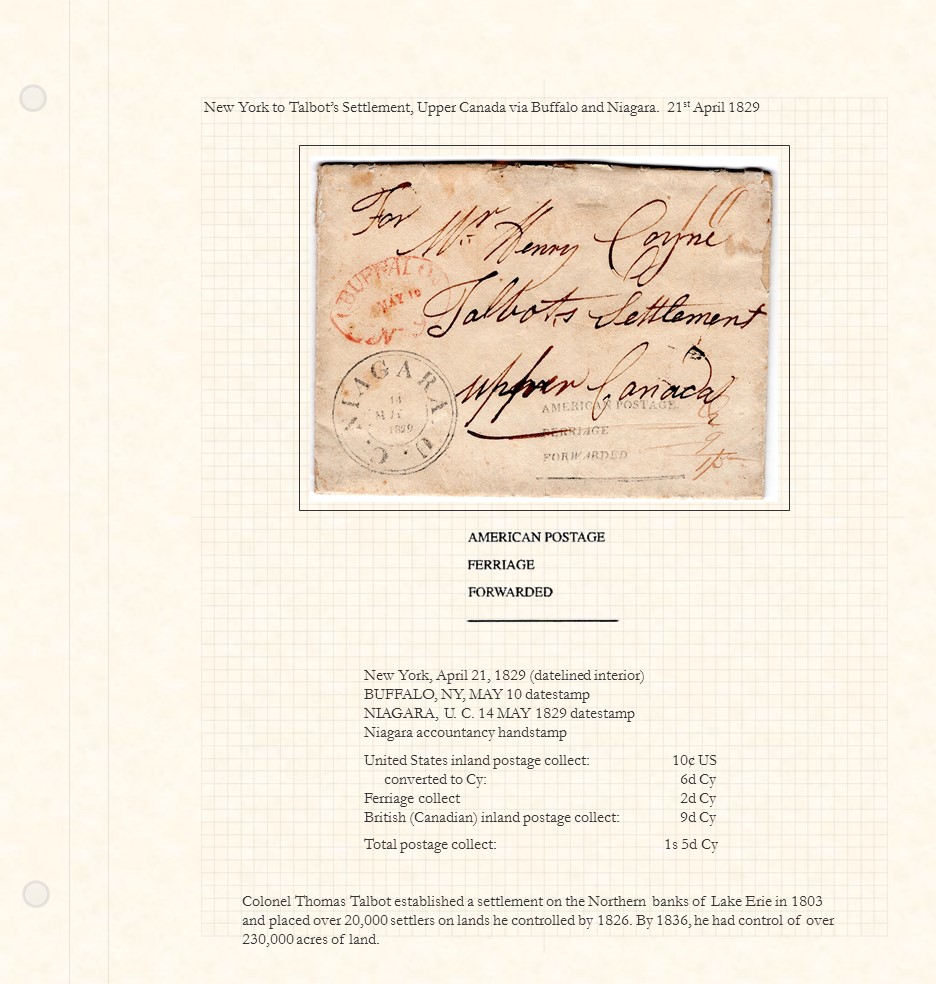
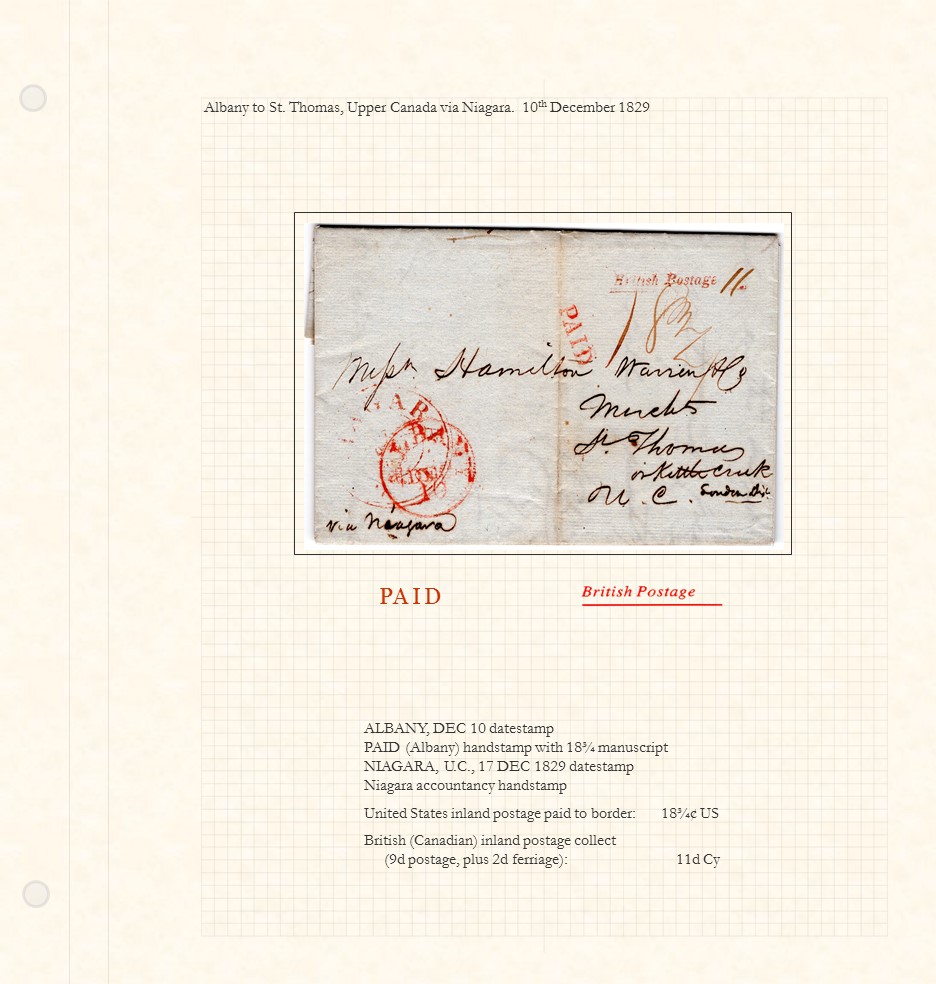
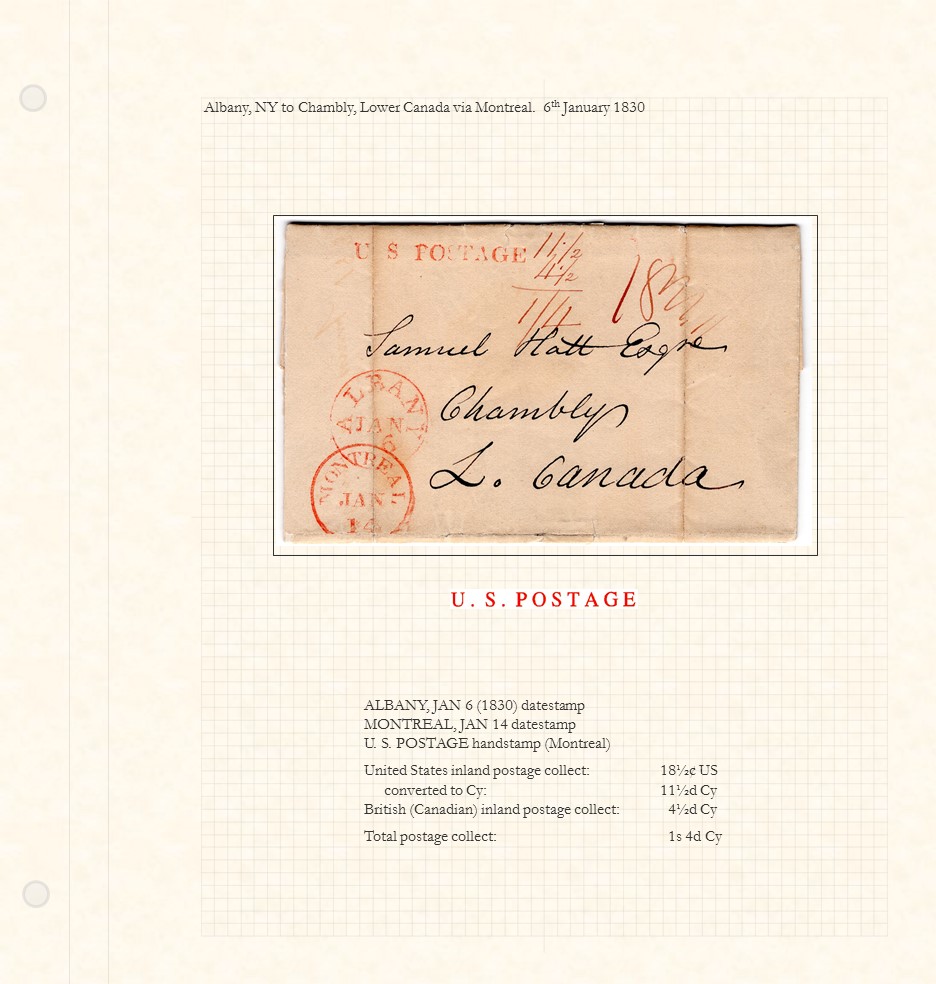
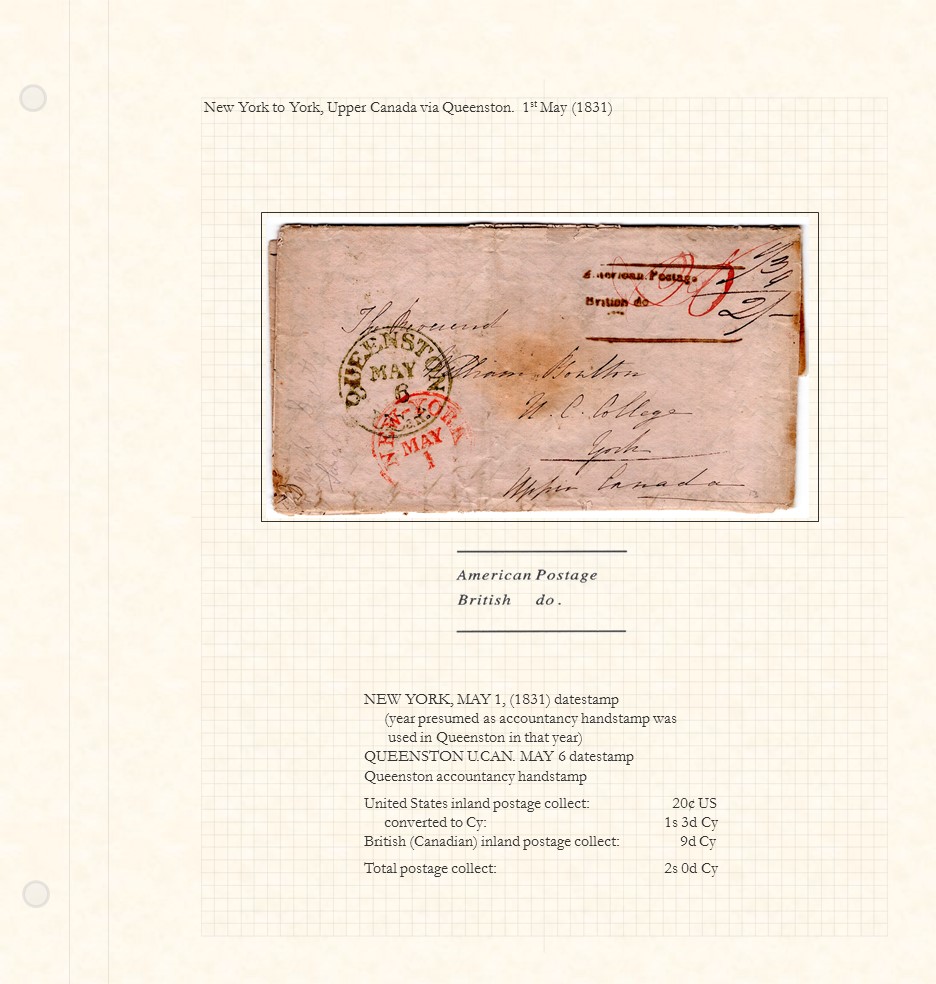
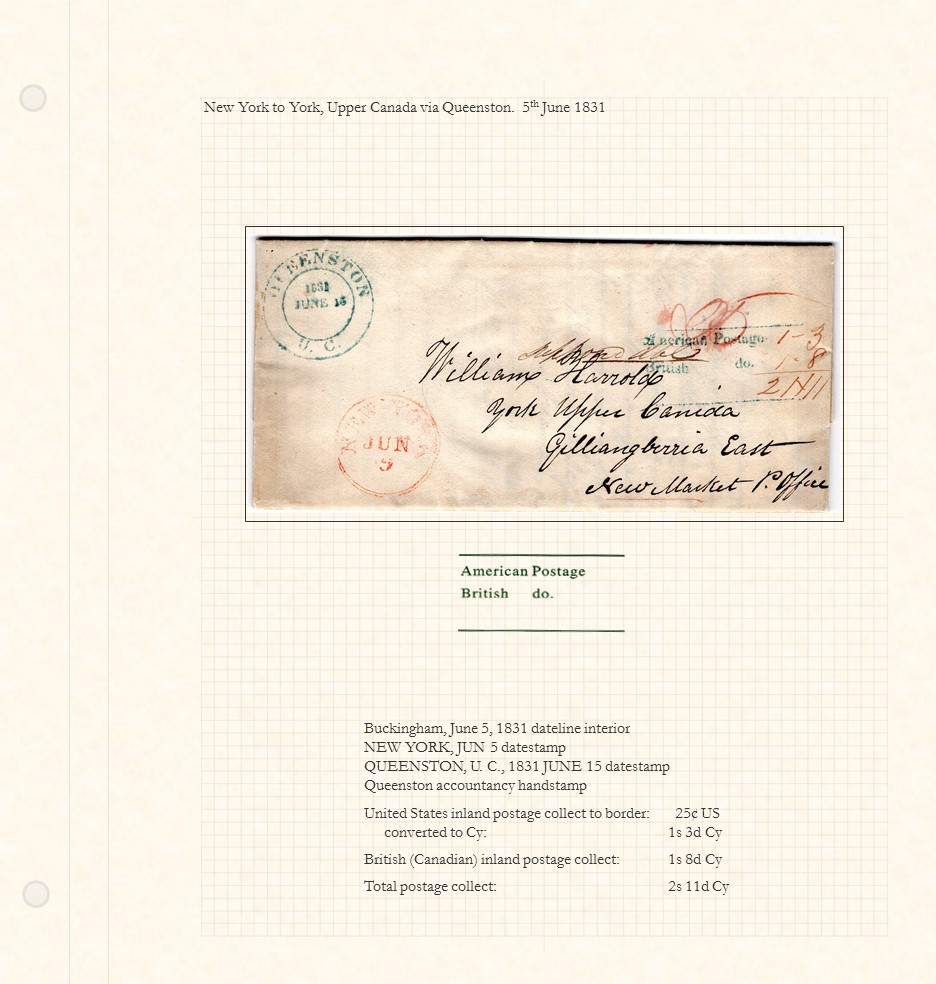
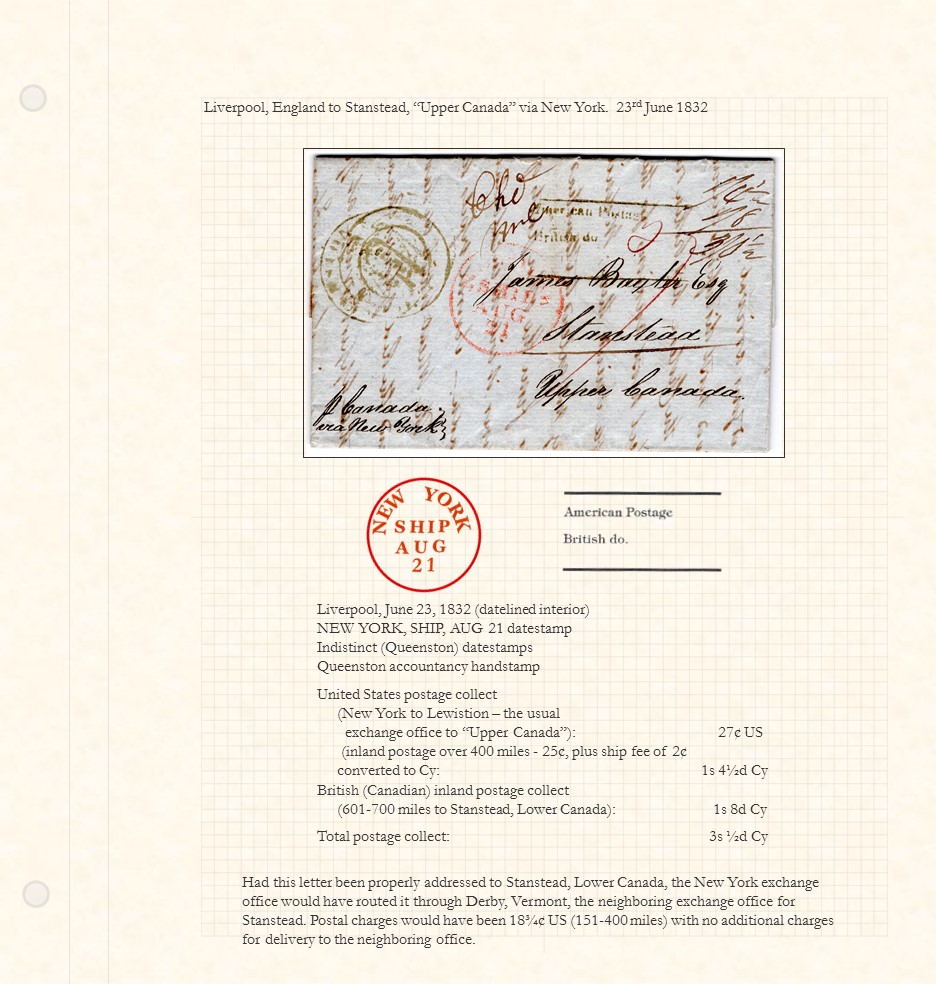
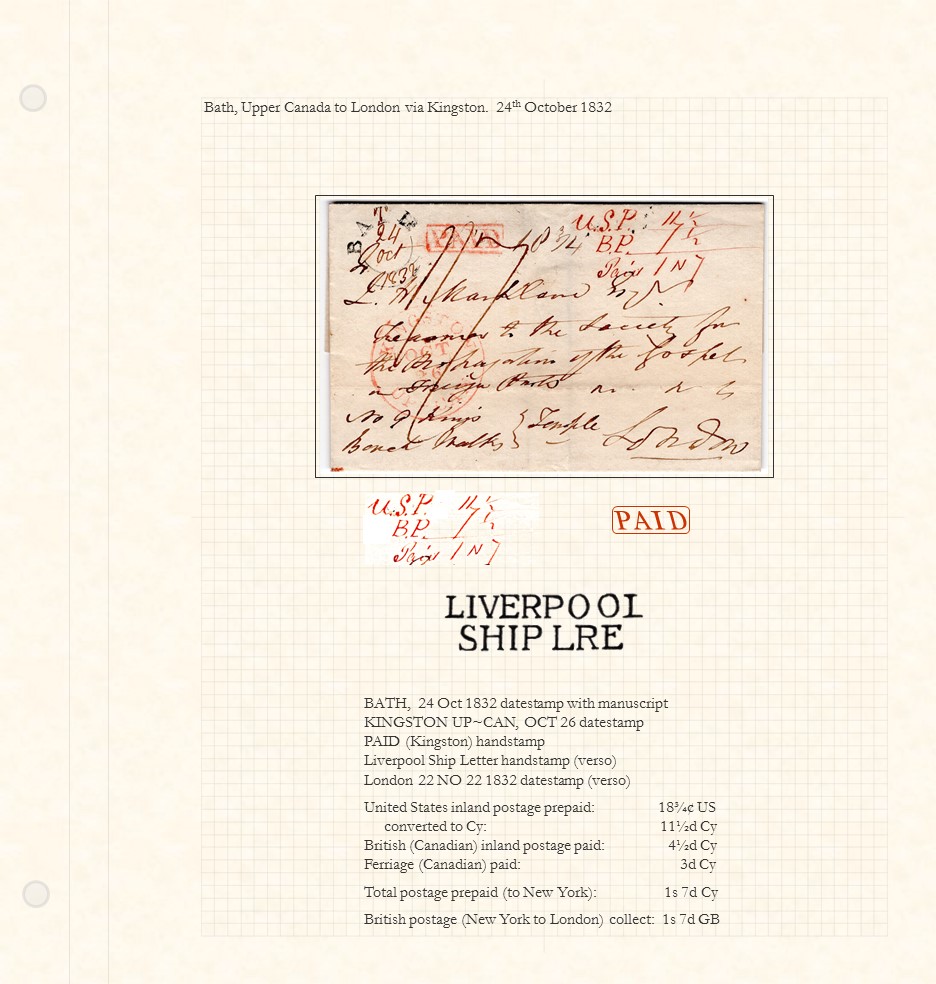
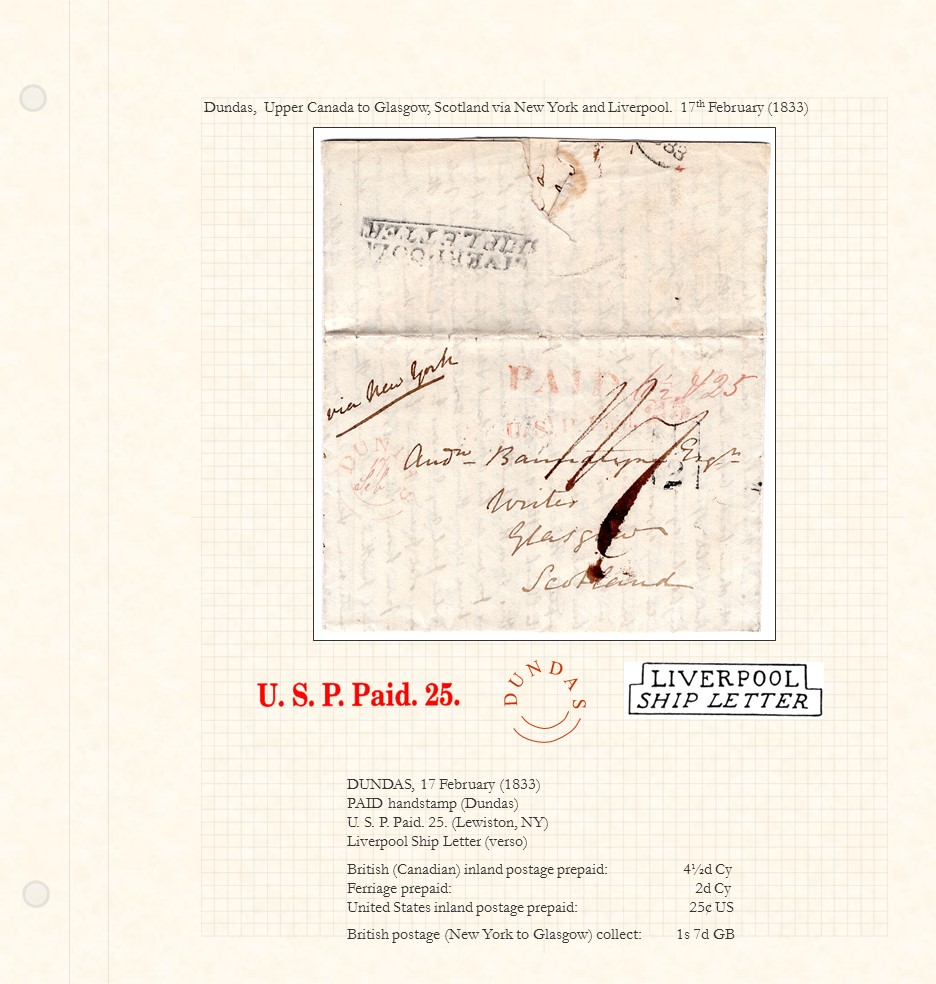
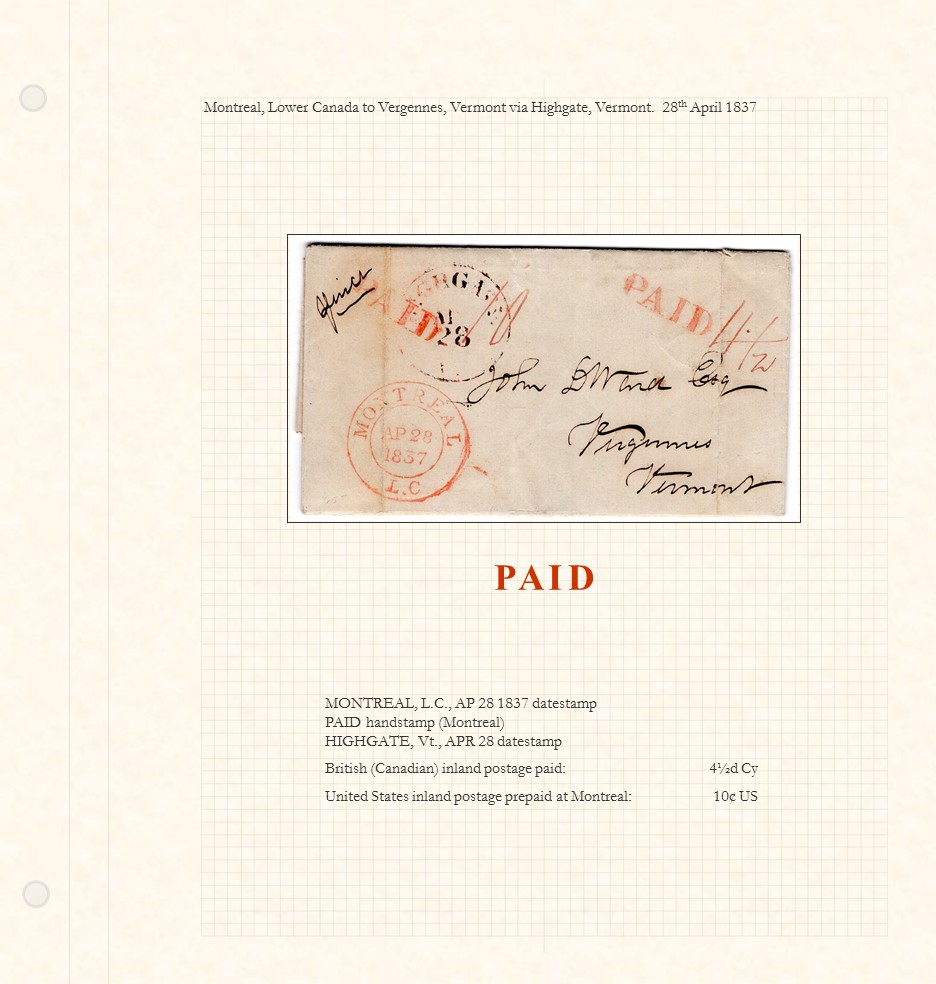
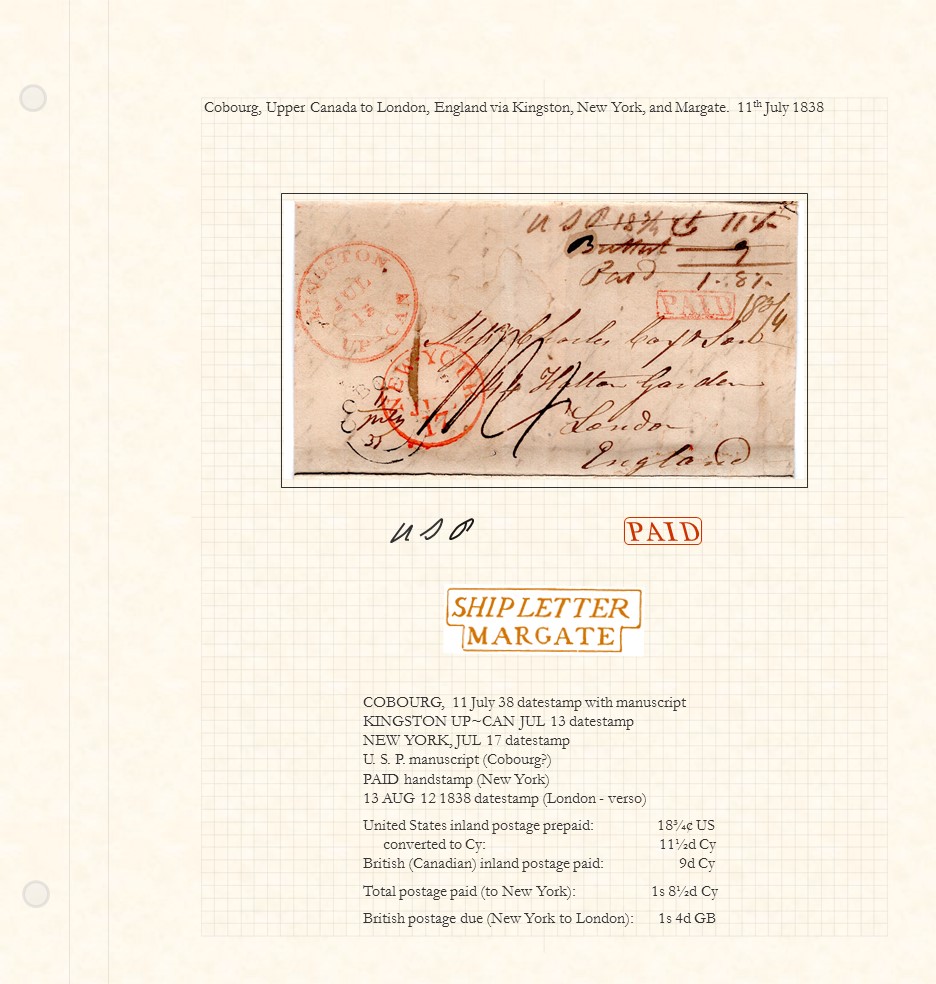
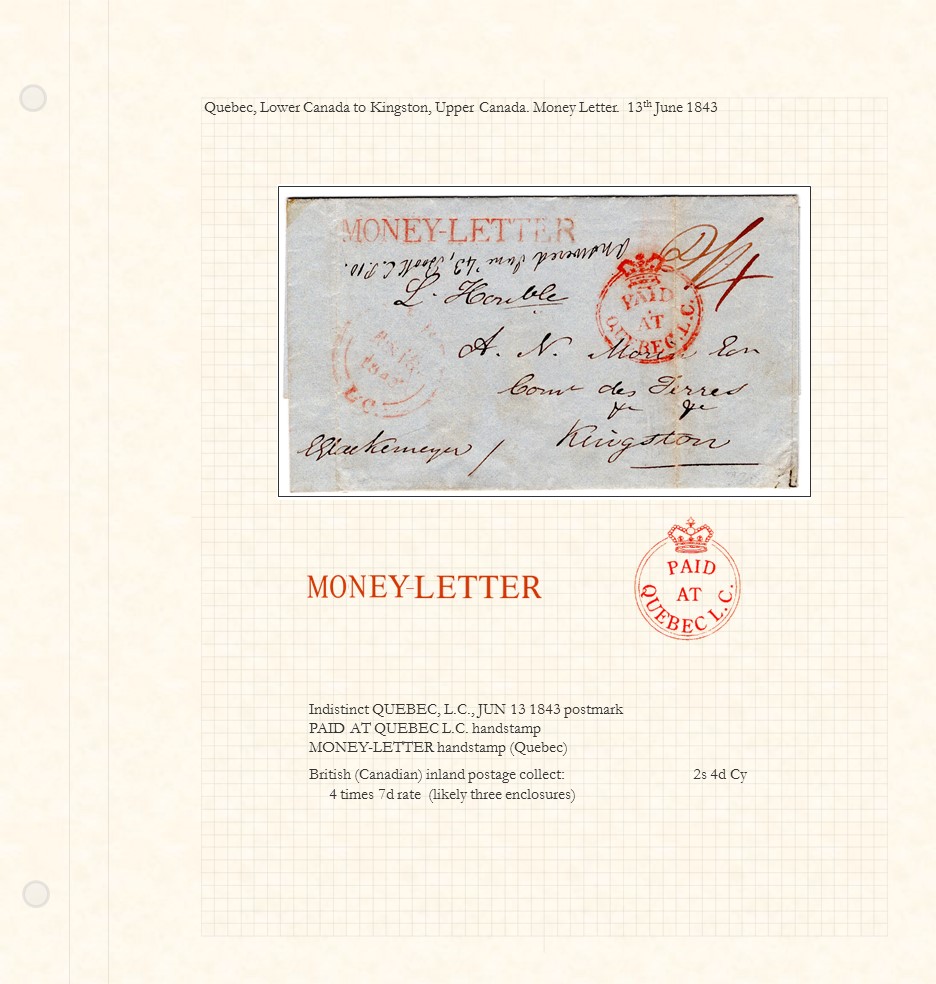
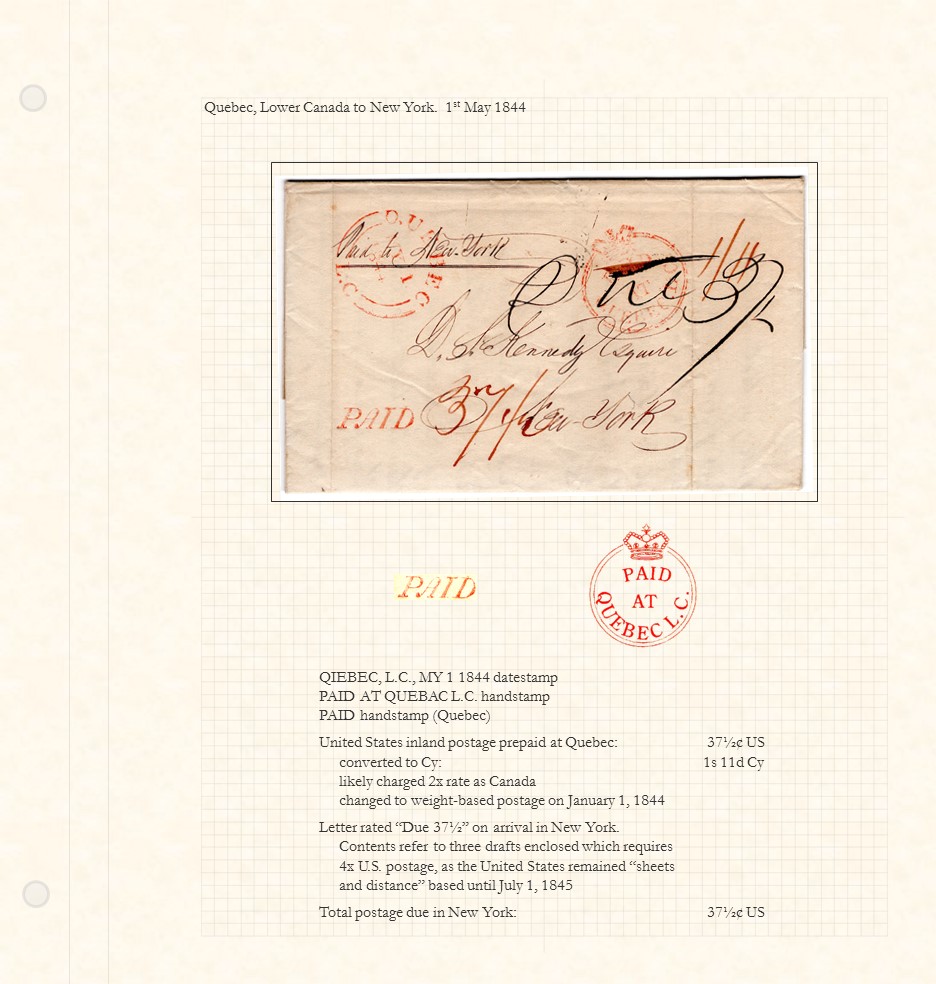
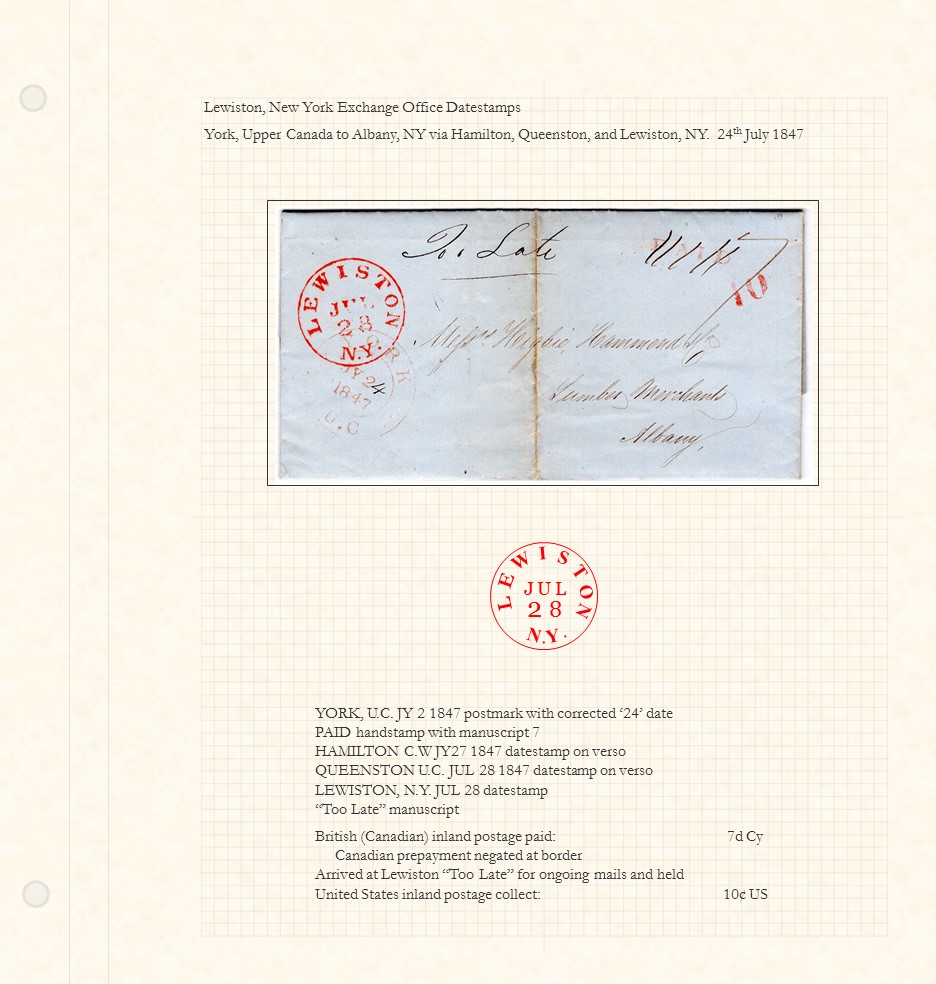
- Does it have markings on it that you don't often see (such as the Queenston accountancy markings)?
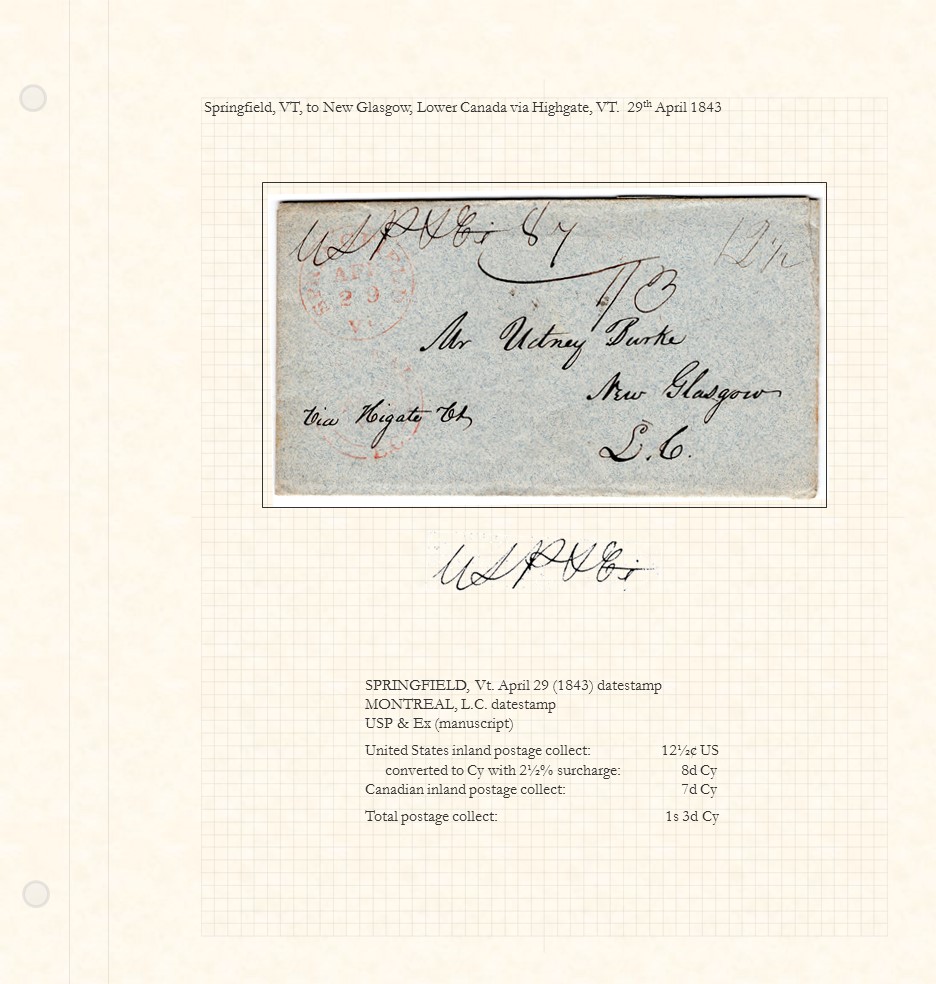
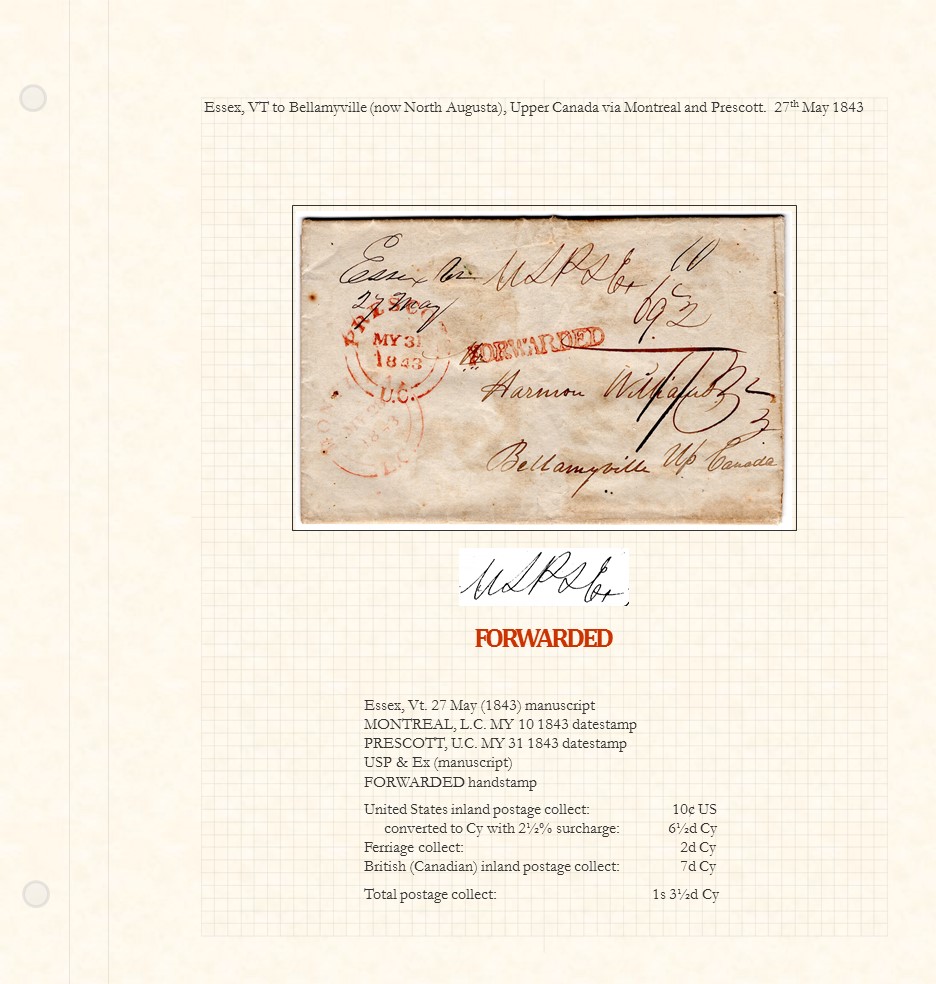
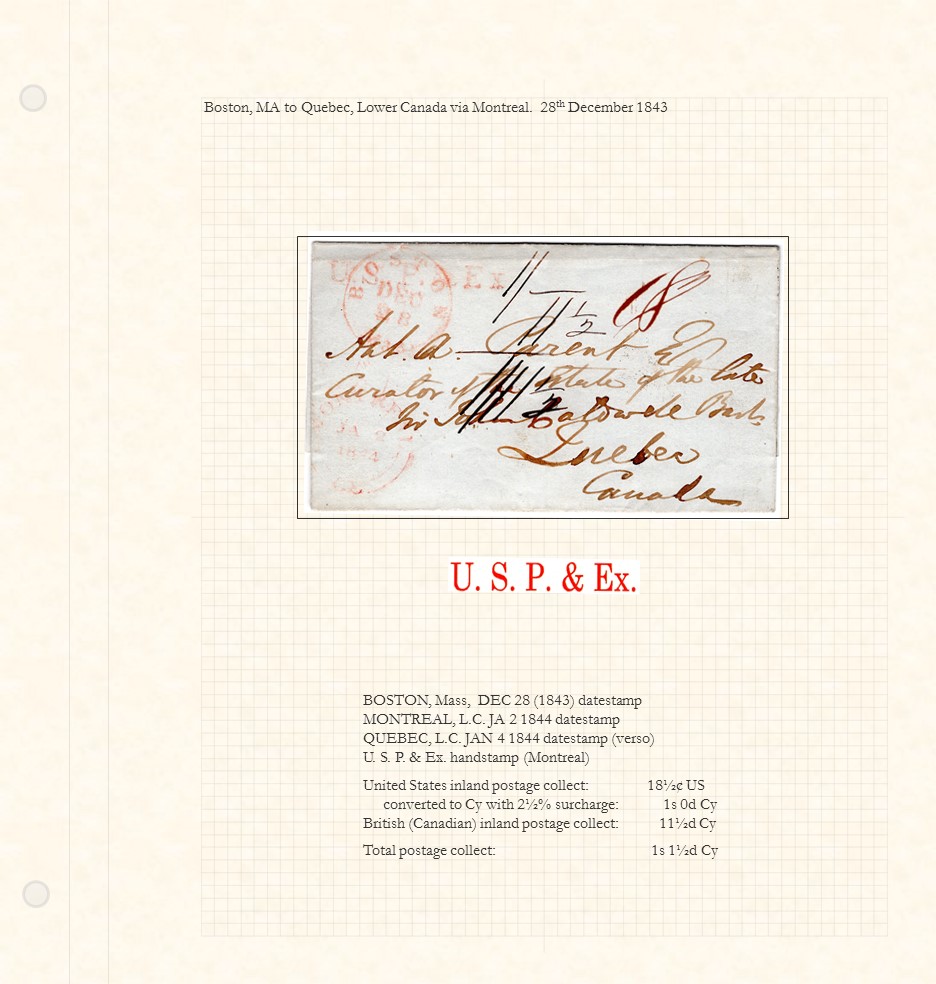
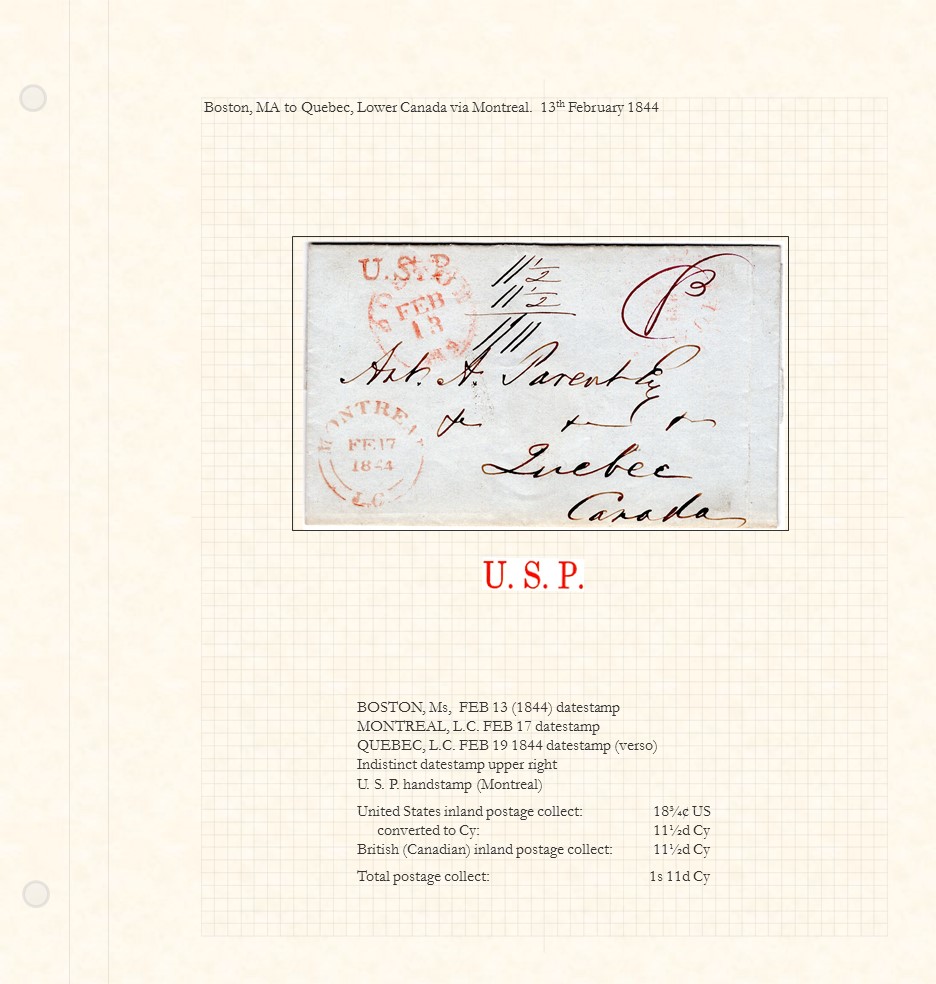
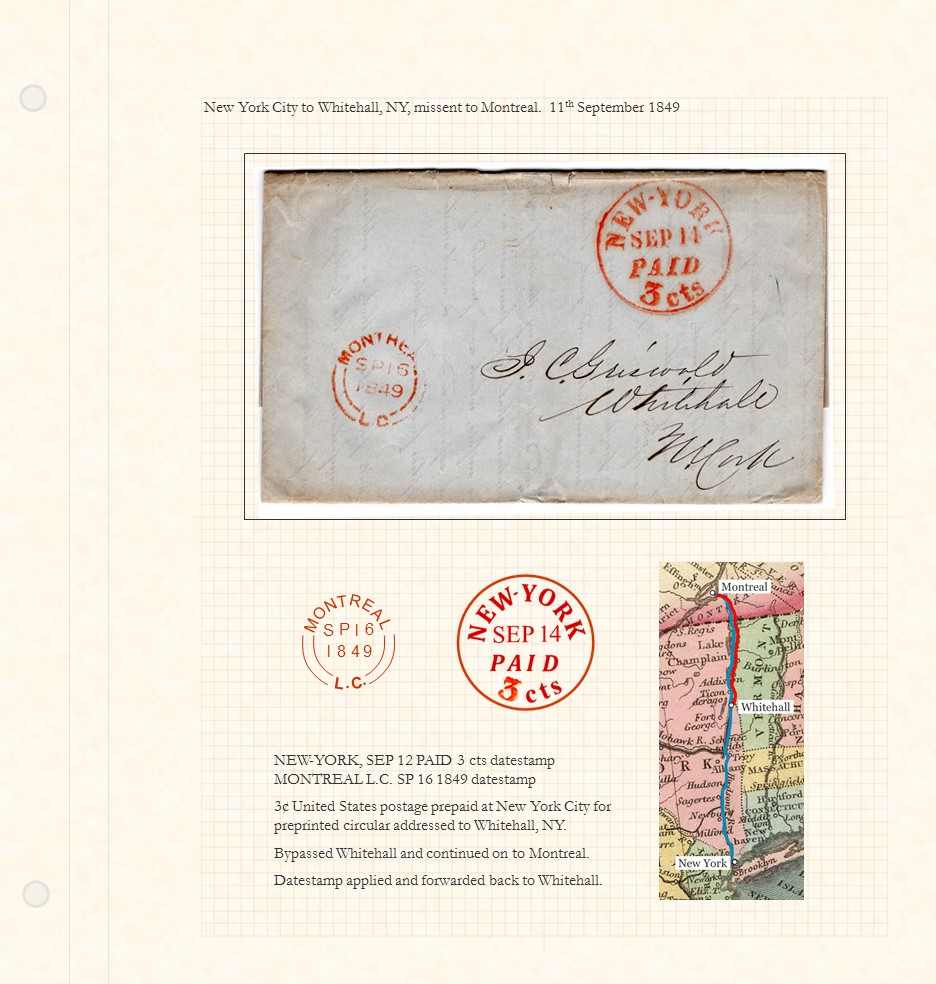
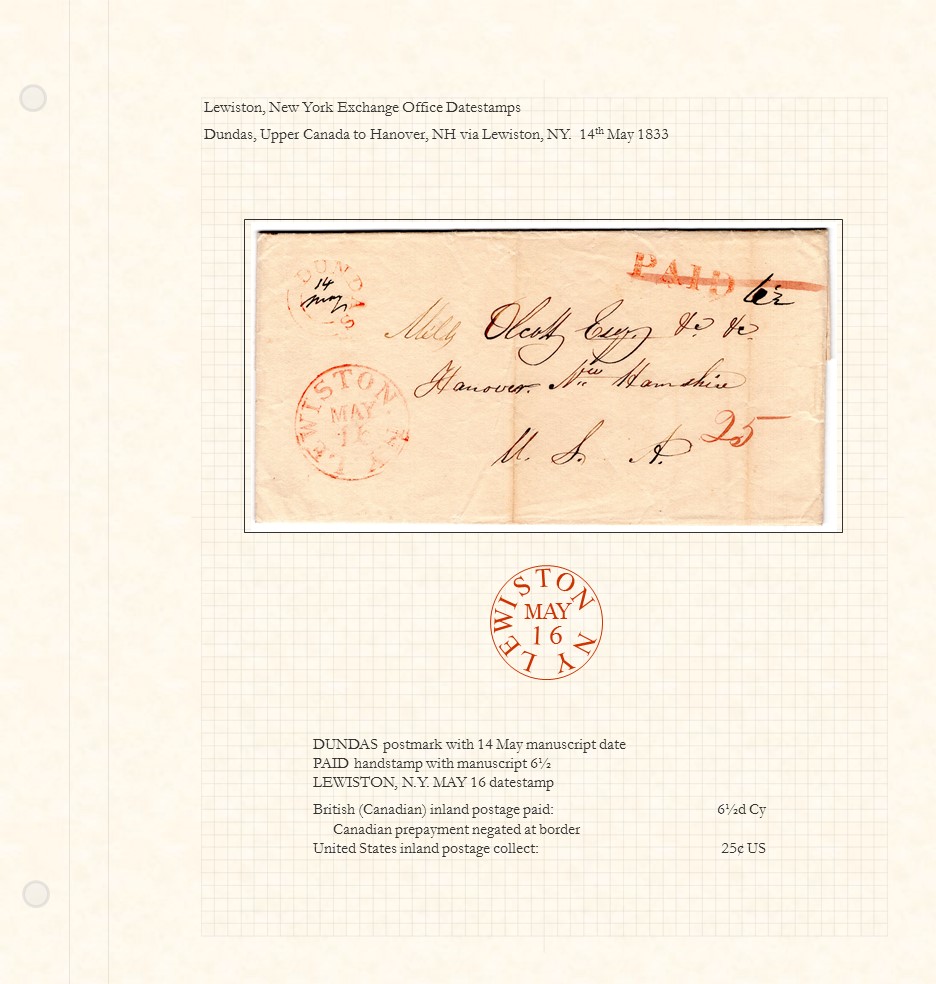
- Does it follow an a-typical routing (such as the 1841 cover to Stanstead or the one from NYC to Whitehall via Montreal)?
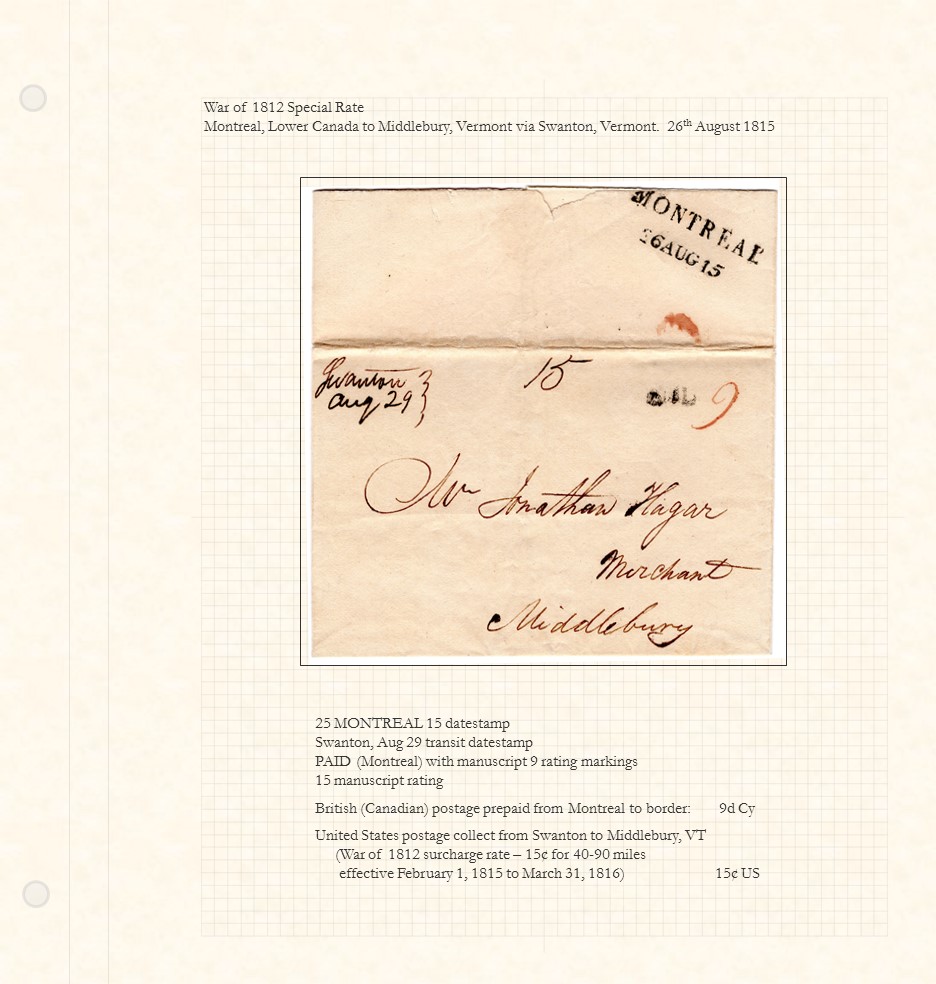
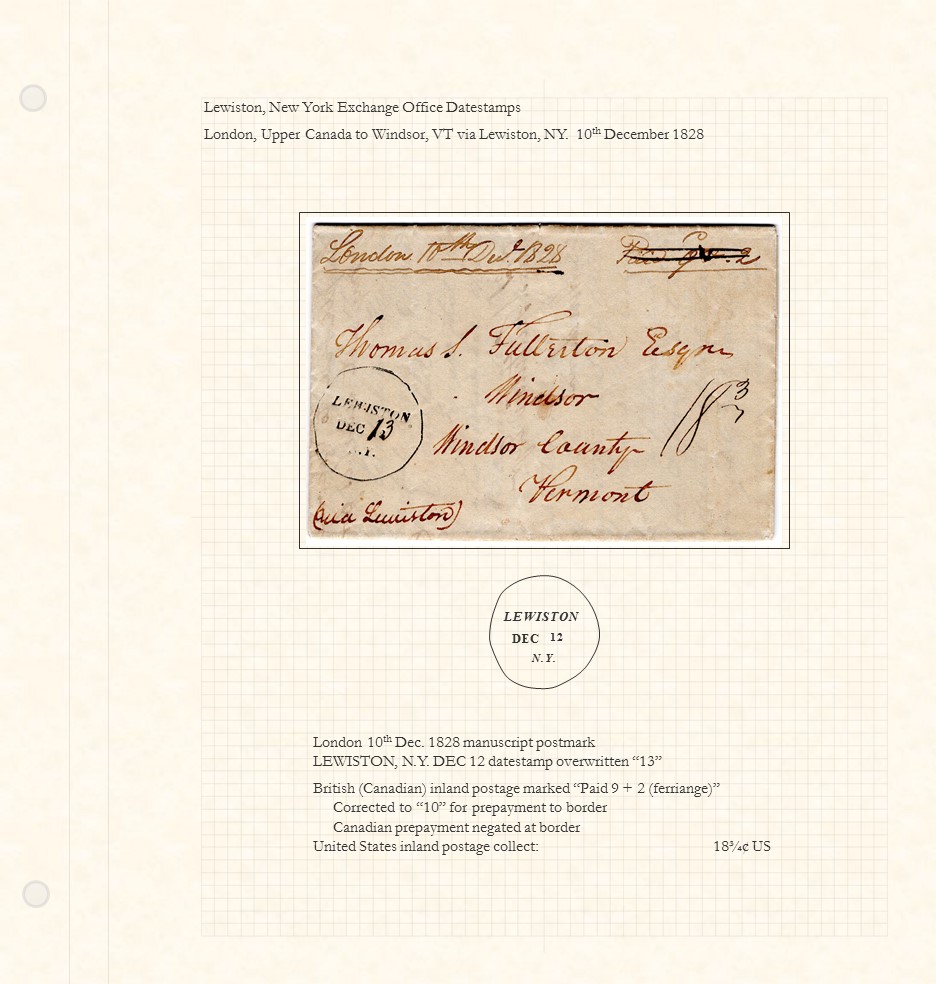
- Does it show an a-typical rate (such as the 1812 War rate or an adjoining exchange office rate)?
- Is it from or to a really obscure location (19th century covers to Greece are much rarer than covers to Italy during the same periods)?
- How sexy is it? (clear markings, no holes/tears, etc; multiple stamps of multiple denominations)
- How many times over the next 10 years am I going to kick myself for not having stretched to acquire it?
I am a firm believer in study prior to acquisition. I've probably invested as much in research material as in any individual cover. As a start, there are probably a few books I refer to more than any others (from brain - don't hold me to names/spellings/forgetting something):
A History of Cross-Border Communications between Canada and the USA (Sanderson and Montgomery)
Decimal Era (Arfkin/Legget)
Large Queens (Duckworth)
The Wilson/Firby guide to cover values (for the relative rarity of various rates/uses):
http://www.bnaps.org/ore/WillsonFir...terGuide.htmHope that helps.
More to follow.
Chip





 Posted 03/14/2016 7:46 pm