Here is a summary of what I have learnt from various sources on
intaglio presses using the "dry" process for printing postage stamps at the BEP:
Huck-Cottrell Pressesa group of high speed, intaglio, web-fed presses first used to print the bi-color International Red Cross stamp of
1952 ( Scott 1016). From
1956 until the
late 1980s, Cottrell Presses were the mainstay of postage stamp printing at the Bureau of Engraving and Printing. These presses were designed by the Huck Corporation and built by the Cottrell Co. (thus the name). Most stamps of the Liberty, Prominent Americans, Americana, Transportation, and Great Americans series, as well as numerous commemoratives, were produced on these presses. The BEP owned five of these presses, officially designated as
presses 801, 802, 803, 804, and 805. These single-color intaglio presses (4 of them at the BEP) were similar to a
Stickney press, but faster. The method of printing, with two plates fastened together to form the printing cylinder, created joint lines on the stamps, with a line and plate number every 24 stamps. The last Huck-Cottrell presses were decommissioned in
1985. Progressively
from 1955 the Huck-Cottrell presses — which allowed the BEP to improve amongst other things the crispness of images by moving from "wet" to
"dry printing" — became the workhorses for the production of commemorative stamps of one color. The new process required a thicker, stiffer paper, special types of inks and greater pressure to force the paper into the recessed plates. The "dry" printings show whiter paper and a higher sheen on the surface, feel thicker and stiffer and the designs stand out more clearly than on the "wet" printings. The first commemorative stamps so produced were the
1954 Lewis and Clark Expedition Issue (Scott 1063) and the
1956 Wheatland Issue (Scott 1081). All postage stamps have been printed by the
"dry" process since the
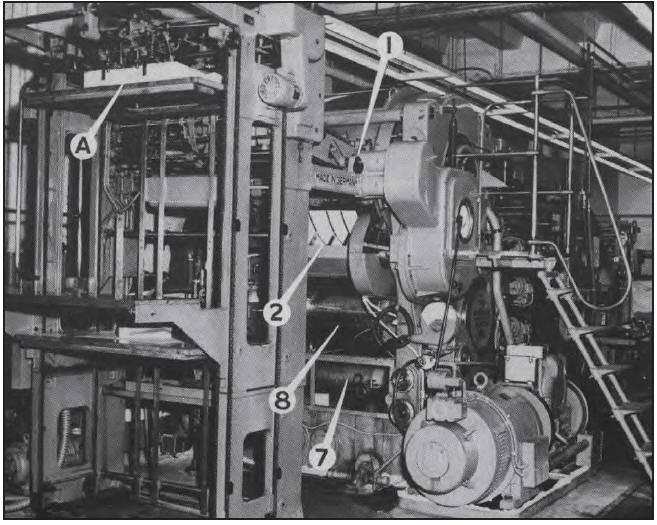
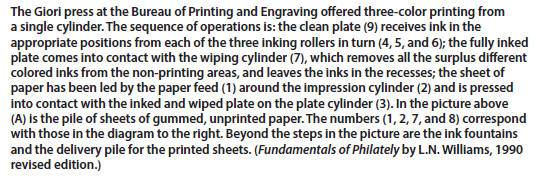
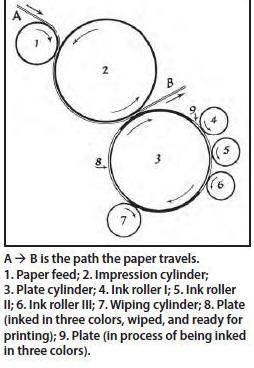
late 1950s.Giori Pressessheet-fed, single-station three-colour, intaglio, rotary presses that were first used to print the American Flag stamp of 1957 (Scott 1094). Acquired in
1955, the new machine could produce stamps in two or three different colors, all in one pass. Different rollers each applied a different color. A second and improved Giori press was brought into use in
1959. These presses are best known for the bright, multicolored commemorative postage stamps of the
late 1950s through the
1970s.
(Giori) "B" Presswebfed, single-station three-color, intaglio press used exclusively to print coils and booklet panes from seamless cylindrical sleeves. Used at the BEP from
1973-1993.
(Goebel) "C" Presswebfed, single-station three-color, intaglio press used exclusively to print coils and booklet panes from seamless cylindrical sleeves. Used at the BEP from
1982 to
1996.
Sources:
http://www.philatino.com/pages/Defi...20Terms.htmlhttp://alphabetilately.org/PNC-2.htmlThe Scott Specialized Catalog (Edition 2009)
https://www.mysticstamp.com/Listing/United-States/http://stamps.org/userfiles/file/AP...ary_2015.pdf : Cataloguing U.S. Commemoratives: An Overview of Philately in the 1950s by Charles M. Posner
Any corrections, additions, etc. are welcome.





 Posted 03/18/2016 06:47 am